How Dialogue and Incidents Reveal Character
Students analyze how specific lines of dialogue and key incidents reveal character traits, influence decisions, and propel a story’s action.

Illustrations are auto-generated and may be placeholders. They can be refreshed to match the narration.
Identify the Key Character
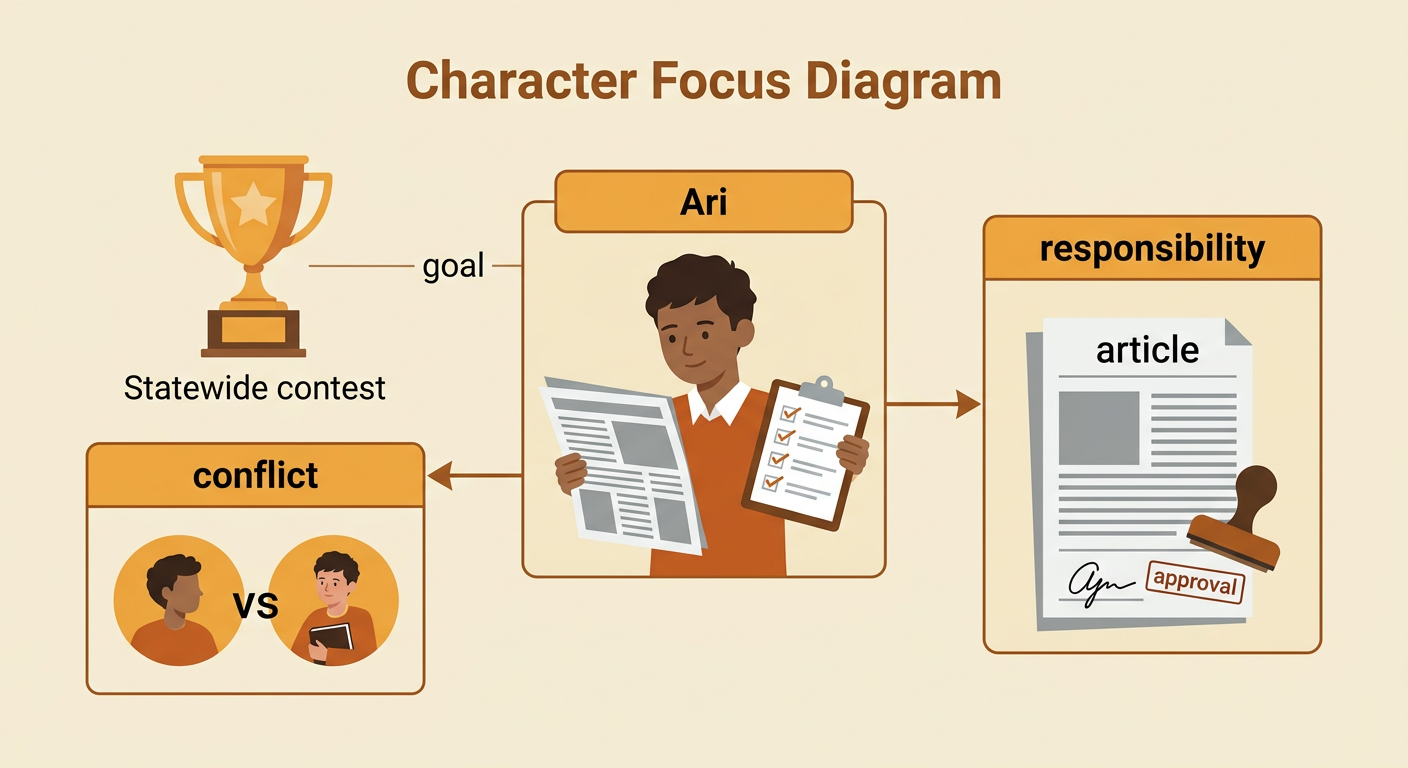
Begin by identifying the character whose traits, choices, or conflicts matter most in the scene. Ask what the character wants, what stands in the way, and what actions the character takes. For example, Ari is the editor of a school newspaper preparing an article for a statewide contest. Ari wants the newspaper team to win, but also believes every article must be honest and original. Because Ari is responsible for approving the final version, Ari is the key character in the scene. Details about Ari’s goal and responsibility help readers notice which dialogue and incidents will be important. Focus on evidence from the text rather than simply labeling Ari as “good” or “honest.” A strong analysis explains how the text demonstrates a trait and why that trait matters to the developing conflict.
Examine a Revealing Line of Dialogue
A revealing line of dialogue gives evidence about a character’s beliefs, feelings, motives, or relationships. Look closely at the character’s word choice and the situation in which the words are spoken. In the newspaper story, Ari discovers that part of the contest article may have been copied. Ari says, “Winning is not worth printing someone else’s words.” This statement reveals that Ari values honesty more than recognition. It also suggests determination because Ari is willing to risk losing the contest. The line matters more than a casual greeting because it directly addresses the central conflict. When analyzing dialogue, explain both what the line reveals and how you know. Instead of writing only that Ari is honest, connect the trait to the exact contrast Ari makes between winning and using another person’s words.

Analyze a Pivotal Incident
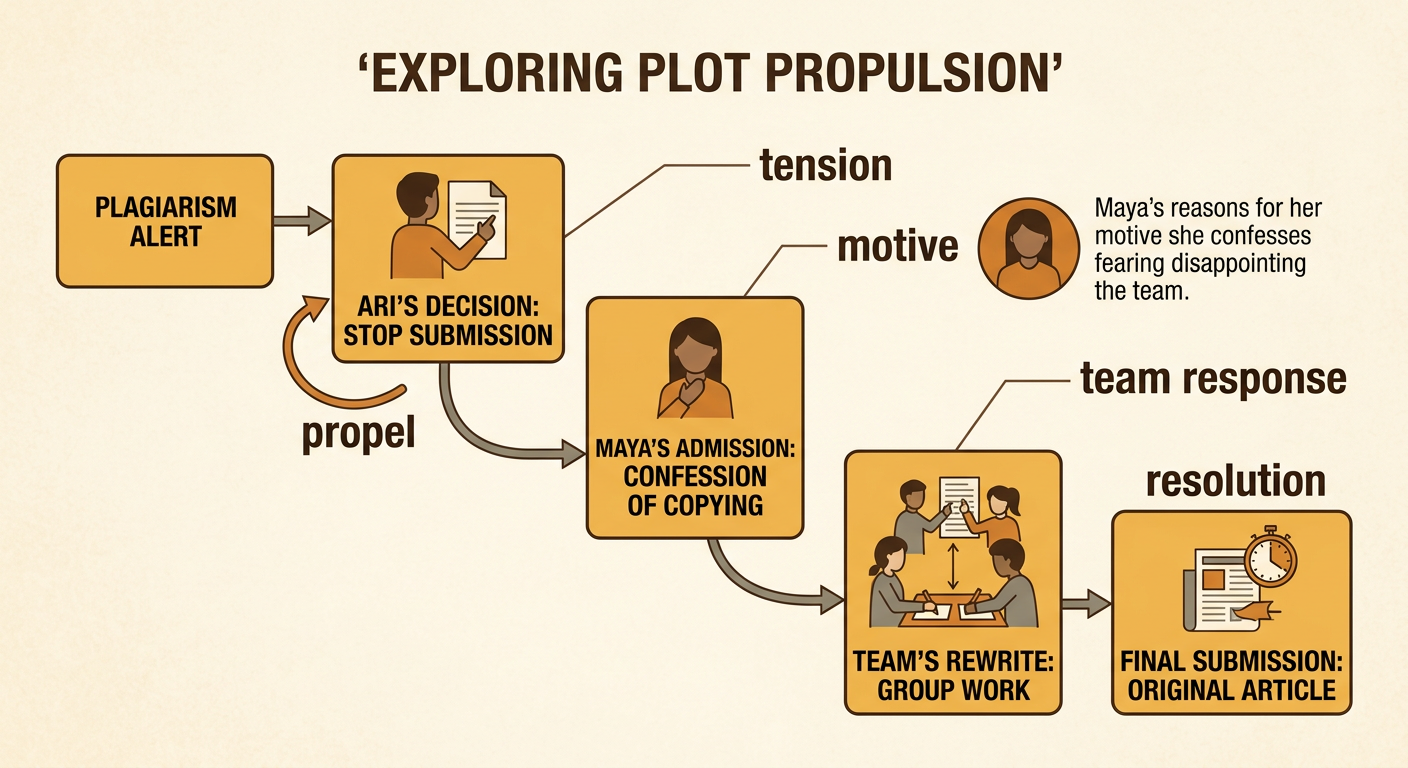
A pivotal incident is an event that changes the situation and creates new pressure, conflict, or opportunity. Readers should ask what was true before the event and what becomes true afterward. In the example, the newspaper team is ready to submit its article when a plagiarism checker flags an entire paragraph. Only ten minutes remain before the contest deadline. Before this incident, the team expects to submit the article without difficulty. Afterward, the article’s originality is in question, and the team must act quickly. The incident is pivotal because it forces the characters to face the story’s main conflict between winning and behaving honestly. It also tests Ari’s values under pressure. A useful analysis names the event, describes the change it causes, and explains why that change matters to the character and plot.

Connect Character to Decision
Characters make decisions based on their traits, goals, emotions, and circumstances. To analyze a decision, connect evidence about the character to the pressure created by an incident. Ari values original work, as shown by the statement that winning is not worth using someone else’s words. The plagiarism alert then creates an urgent problem. Ari decides to stop the submission and asks the writer, Maya, to replace the copied paragraph. This choice follows logically from Ari’s values, even though it may cost the team the contest. The decision also shows courage because Ari acts while teammates are demanding an immediate submission. A complete explanation uses a cause-and-effect chain: dialogue reveals a trait, the incident tests that trait, and the character makes a choice. This approach explains why the decision occurs instead of merely summarizing what Ari does.

Explain How the Action Moves Forward
Dialogue and incidents propel the action when they cause something new to happen in the plot. After Ari stops the submission, the story cannot remain in the same situation. Maya admits that she copied the paragraph because she feared disappointing the team. The students divide the research, rewrite the section, and race to meet the deadline. Ari’s decision therefore creates new actions, raises tension, and leads Maya to reveal her motive. The team submits an original article with only seconds remaining. To explain how action moves forward, trace the sequence clearly: the plagiarism alert creates a problem, Ari’s dialogue reveals a firm value, Ari makes a decision, and the team responds. Avoid saying only that an event is “important.” State the specific consequences that follow and show how they lead toward the story’s next conflict, turning point, or resolution.