How Genes and Environment Influence Growth
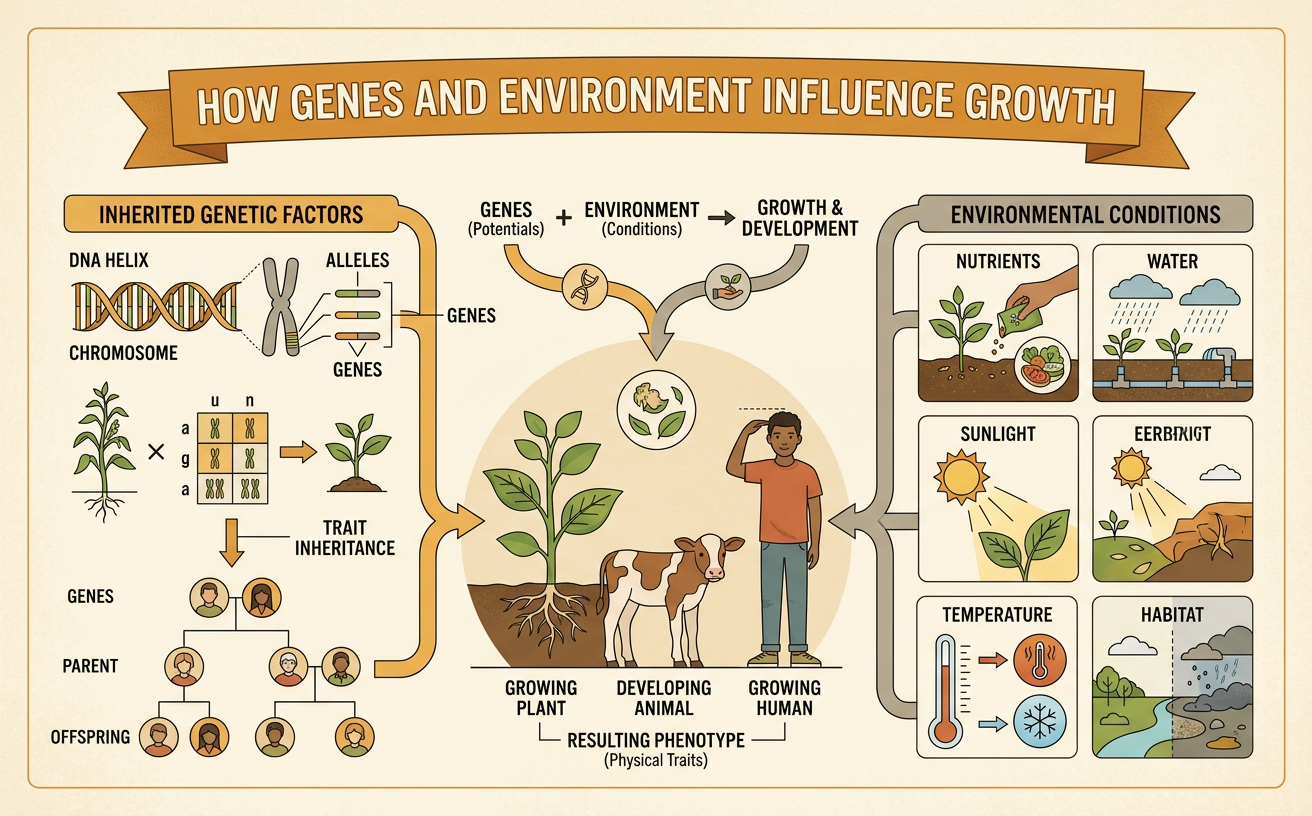
Students analyze evidence to explain how inherited genetic factors and environmental conditions work together to affect the growth of organisms.
Illustrations are auto-generated and may be placeholders. They can be refreshed to match the narration.
What Growth Means in Living Organisms
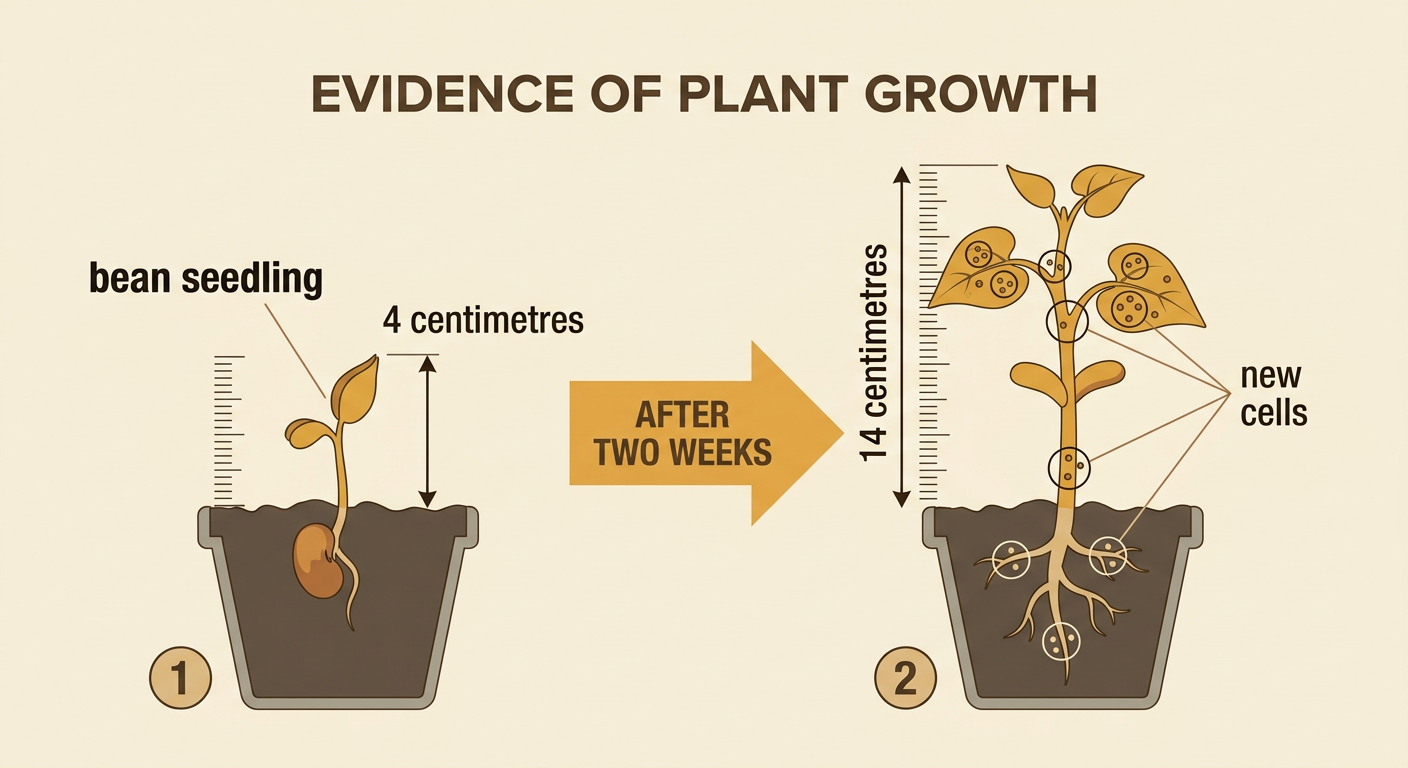
Growth is a lasting increase in the size, mass, or number of cells in an organism. It can be measured by recording features such as height, length, body mass, leaf area, or stem thickness over time. Growth is different from movement or temporary swelling because it results from cell division and the production of new body material. For example, a bean seedling may increase from 4 centimeters to 14 centimeters in two weeks as its roots, stem, and leaves form new cells. Scientists measure the same feature at regular intervals and record the results in a table or graph. They often compare organisms of the same age because age affects growth. Accurate measurements provide evidence for deciding whether an organism grew and how quickly that growth occurred.
Genetic Factors That Influence Growth
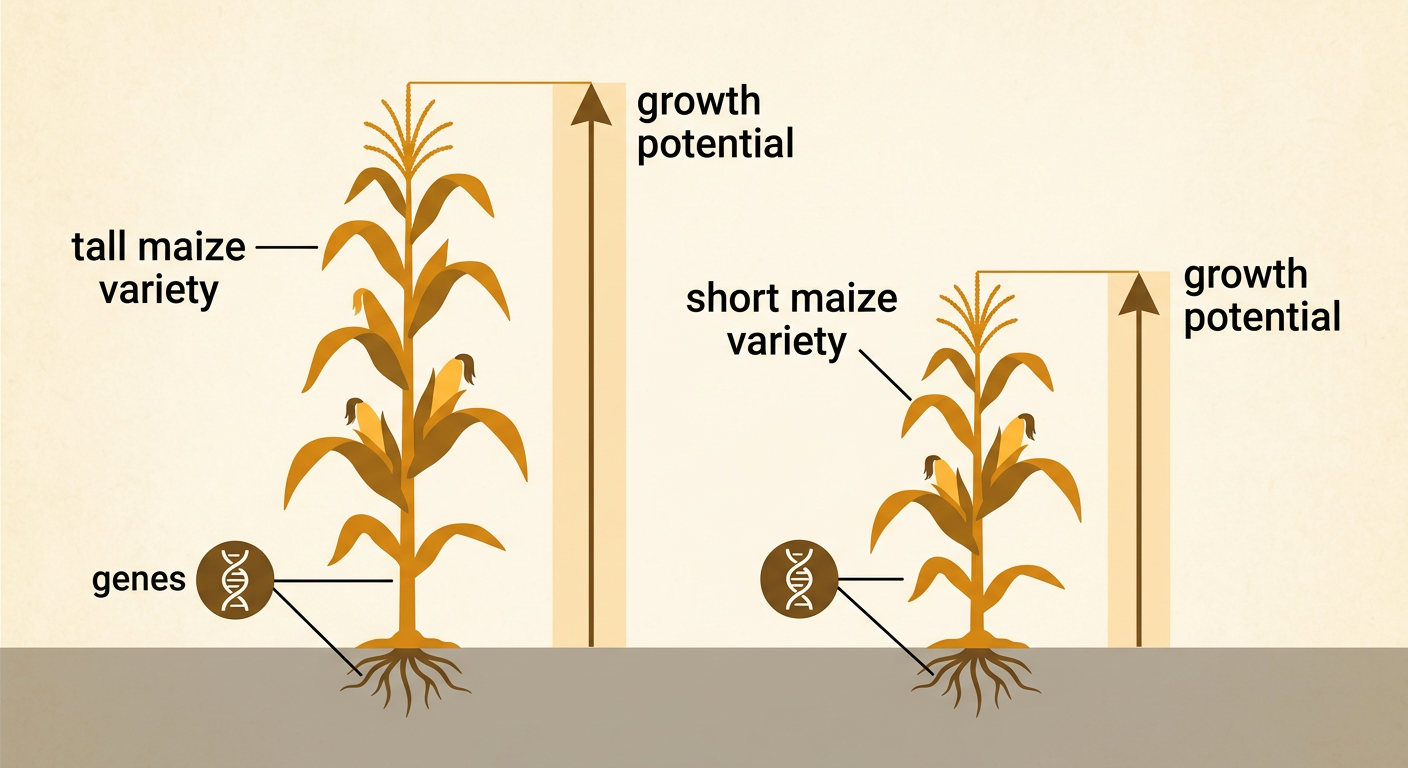
Genes are units of inherited information passed from parents to offspring. They contain instructions that help control traits, including possible height, body shape, rate of development, and the size of leaves or fruits. Different varieties of the same species may carry different forms of genes, so they can grow differently even under similar conditions. For example, a tall maize variety and a short maize variety may be planted in the same type of soil, receive equal water, and experience the same temperature. If the tall variety repeatedly reaches a greater average height, the evidence suggests that inherited genetic differences influence growth. Genes do not guarantee one exact final size. Instead, they help set a range of possible growth, while environmental conditions affect how much of that potential is reached.
Environmental Factors: Nutrition, Water, Light, and Temperature
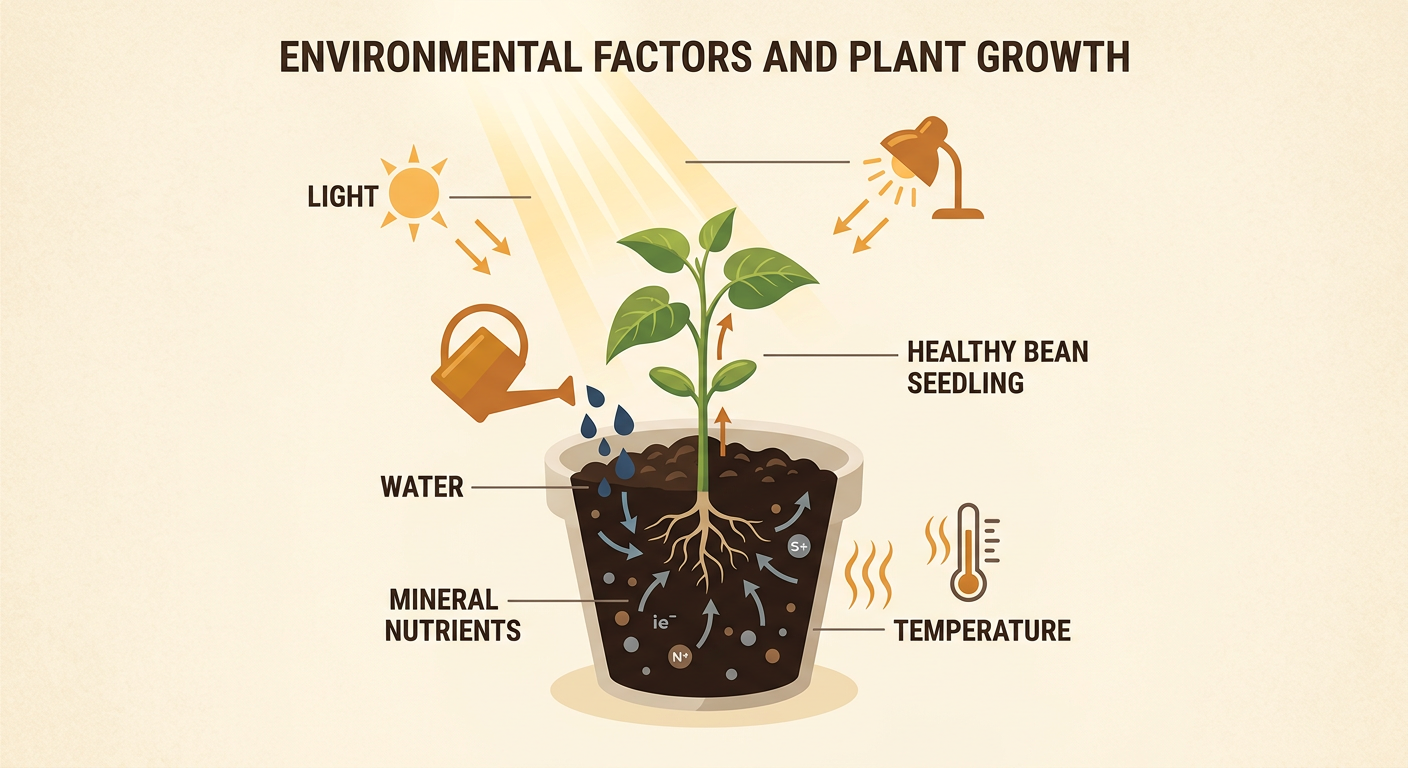
Environmental factors are conditions outside an organism that affect its growth. Plants need mineral nutrients, water, suitable light, and an appropriate temperature. Mineral nutrients support the production of new cells and tissues. Water is needed for photosynthesis, transport, and keeping cells firm. Light supplies the energy used in photosynthesis, while temperature affects the speed of chemical reactions. For example, identical bean seedlings grown in nutrient-rich soil with enough water and light usually develop taller stems and larger green leaves than seedlings kept in poor soil or deep shade. Too much of a resource can also be harmful: flooded soil may reduce oxygen around roots, and very high temperatures may damage cells. Animals likewise need balanced food, clean water, suitable temperatures, and protection from disease for healthy growth.
Comparing Growth Evidence
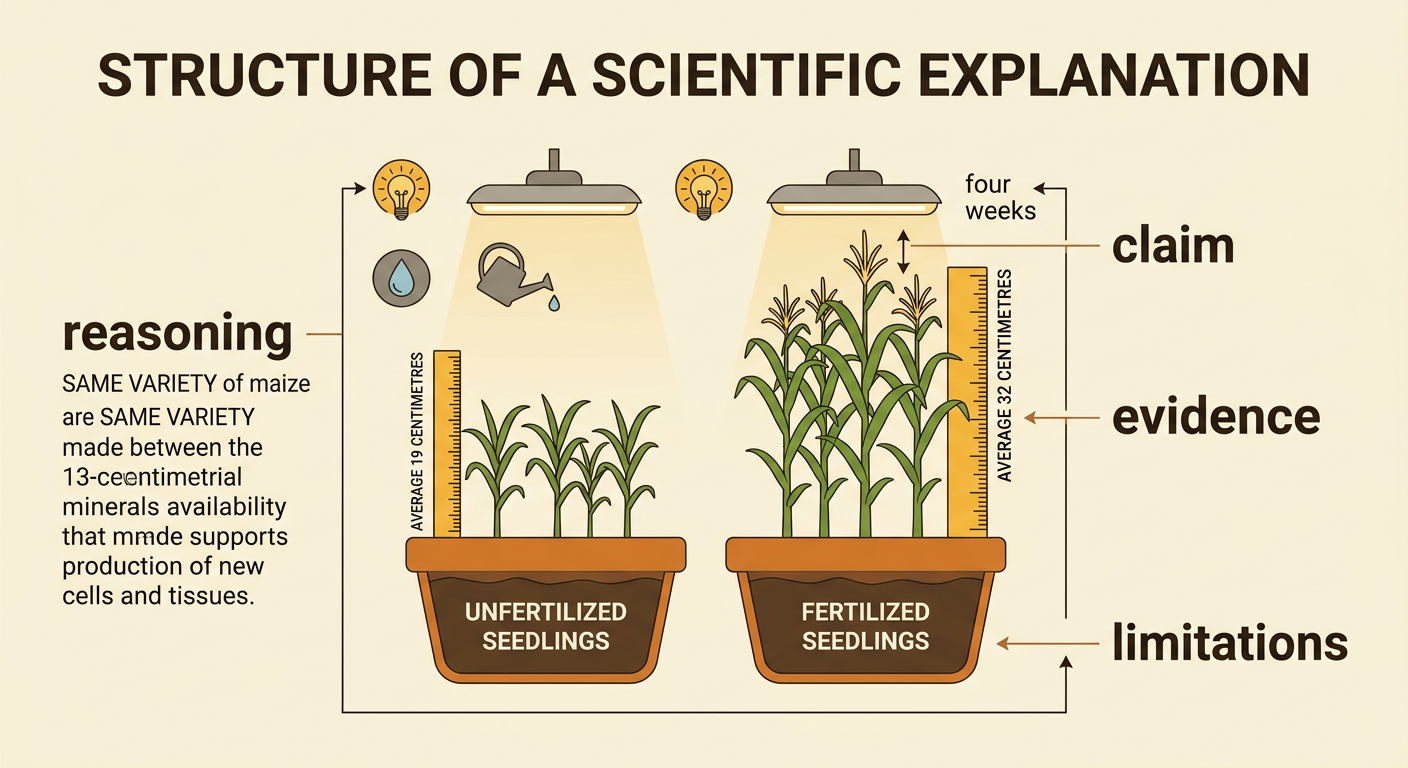
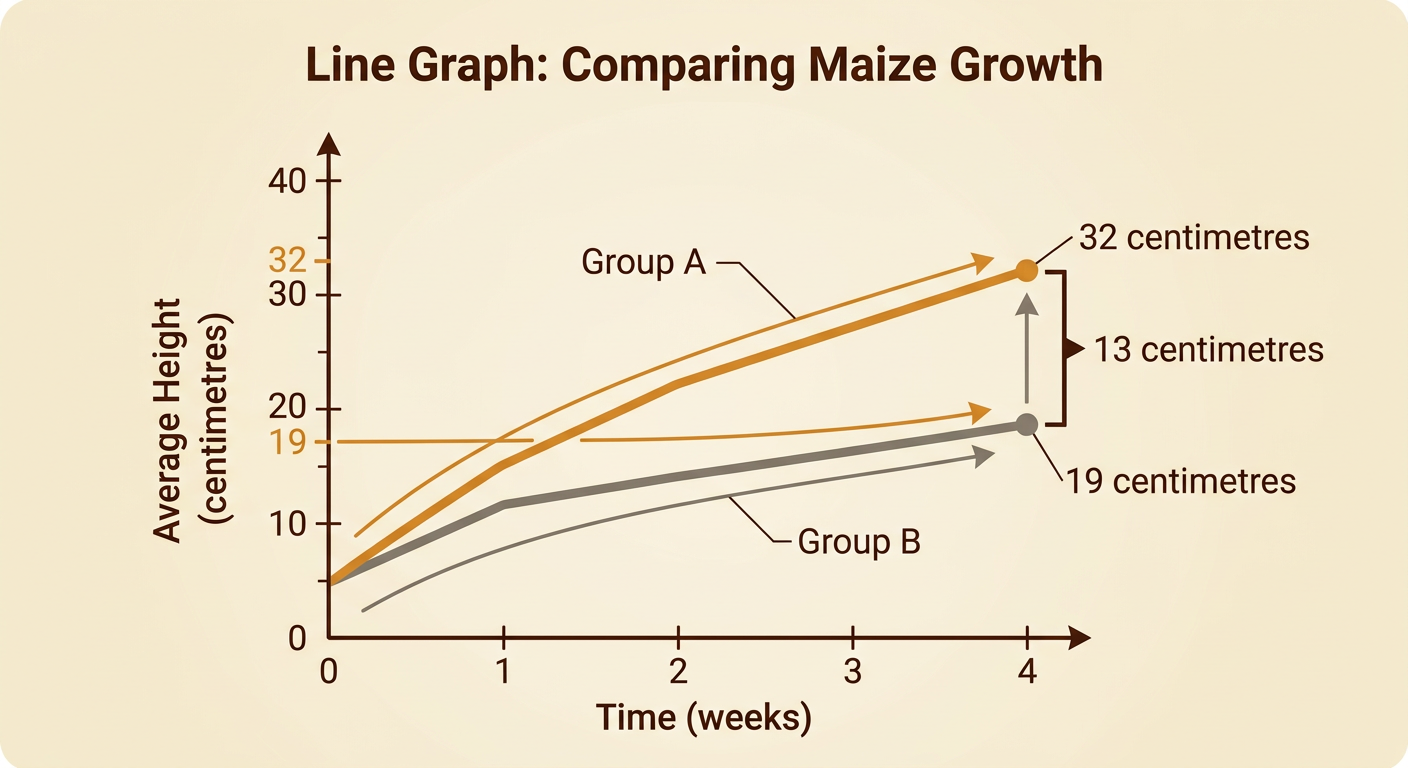
Scientists compare measurements to identify factors that may influence growth. A fair investigation changes one factor while keeping other important conditions the same. Suppose two groups of maize seedlings are the same variety and age and receive equal light, water, soil, and temperature. Group A receives a complete mineral fertilizer, while Group B does not. After four weeks, Group A has an average height of 32 centimeters and Group B has an average height of 19 centimeters. This difference is evidence that mineral availability affected growth under those conditions. A line graph can show changes over time more clearly than one final measurement. Using several plants and calculating an average reduces the effect of unusual individuals. Evidence is stronger when the investigation is repeated and produces a similar pattern.
Genes and Environment Working Together
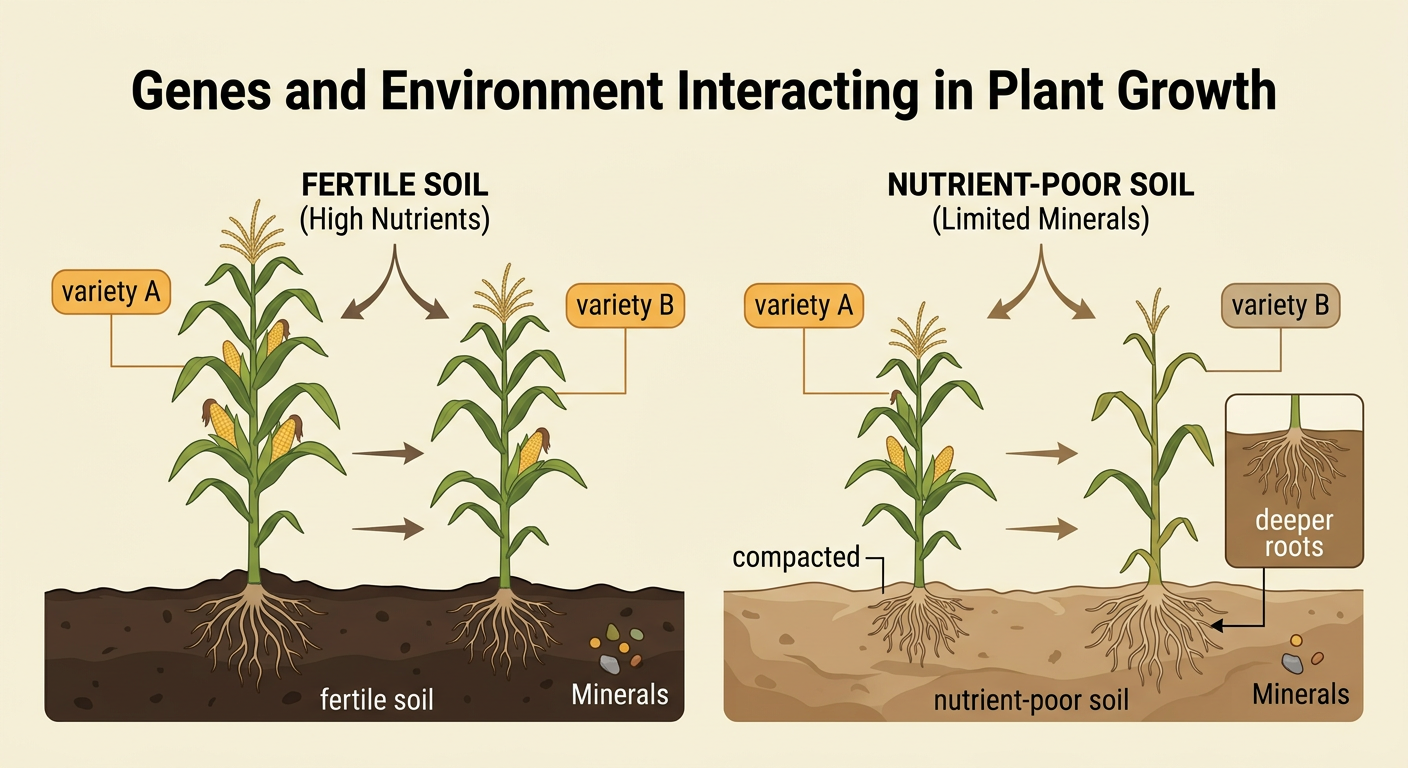
Growth usually results from an interaction between genes and the environment. Genes provide instructions and influence an organism’s growth potential, but environmental conditions affect how fully that potential is expressed. For example, two maize varieties may differ genetically in their possible height. In fertile soil, both may grow well, and the genetically taller variety may become the tallest. In nutrient-poor soil, both varieties may remain shorter because limited minerals restrict cell production. The varieties can also respond differently to the same condition; one may tolerate drought better because of inherited traits such as deeper roots. Therefore, a large plant is not produced by genes alone, and good conditions do not make every organism identical. To understand growth, scientists compare several genetic varieties across several environments and look for consistent patterns in the measurements.
Constructing an Evidence-Based Explanation
A scientific explanation includes a claim, relevant evidence, and reasoning that connects the evidence to scientific ideas. First, state a clear claim about how a genetic or environmental factor affected growth. Next, give measured evidence, including units and comparisons. Finally, explain why the evidence supports the claim. For example: “Mineral nutrition increased maize growth. After four weeks, fertilized seedlings averaged 32 centimeters, while seedlings without fertilizer averaged 19 centimeters. Both groups were the same variety and received equal water and light, so the 13-centimeter difference is most reasonably linked to mineral availability. Minerals support the formation of new cells and tissues.” A strong explanation also recognizes limitations. It should not claim that fertilizer is the only influence because genes, temperature, disease, and measurement error may also affect growth.