
How Geography Shapes Communities
Students use maps, climate information, and short texts to explain how physical geography affects where and how people live.
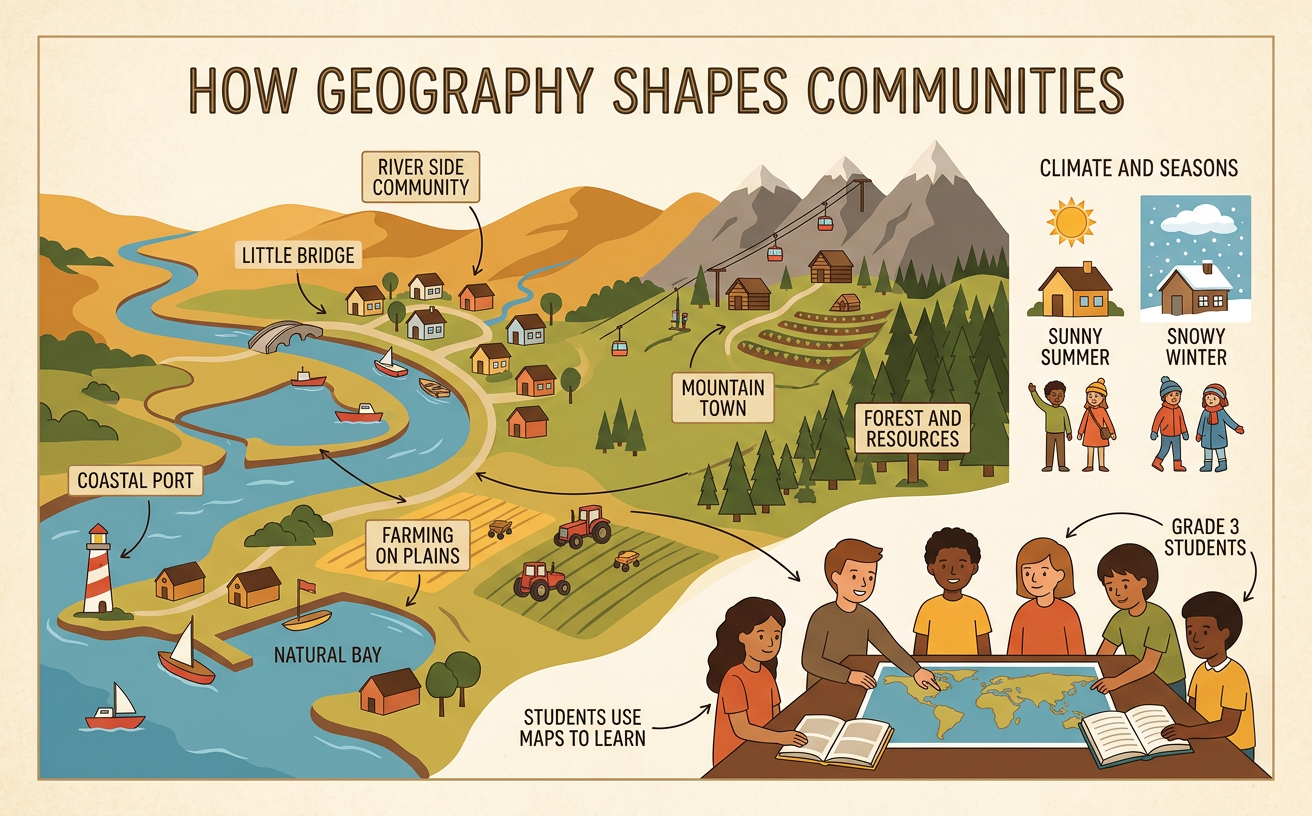
Illustrations are auto-generated and may be placeholders. They can be refreshed to match the narration.
Observe Physical Features on a Map
A physical map shows natural features of Earth’s surface. Colors and symbols may represent mountains, plains, rivers, lakes, oceans, and deserts. Begin by reading the map title and key. Use the compass rose to find direction. Then ask questions: Where is the land flat? Where is water nearby? Which places may be difficult to cross? For example, a town might develop in a wide river valley because people can find water and build on flatter land. A steep mountain range may make travel and construction harder, so roads often follow lower passes or valleys. Maps do not explain everything about a community, but they provide useful clues. Look closely at the location of physical features before deciding how they might affect where people live.

Compare Regional Climates
Climate describes the usual weather patterns of a region over many years. It includes typical temperatures, rainfall, snowfall, and seasons. Climate is different from today’s weather. To compare climates, study information from the same months or seasons. For example, coastal Oregon generally has mild temperatures and frequent rain, while the Arizona desert is much drier and often hotter. These patterns affect communities. Oregon communities may need raincoats, storm drains, and roofs designed for frequent rain. Arizona communities may conserve water, use shade structures, and plan outdoor activities for cooler times of day. Climate does not make every day the same, and conditions can vary within a region. Combining a climate map with a temperature or rainfall chart gives stronger evidence than using only one source.

Identify Community Needs
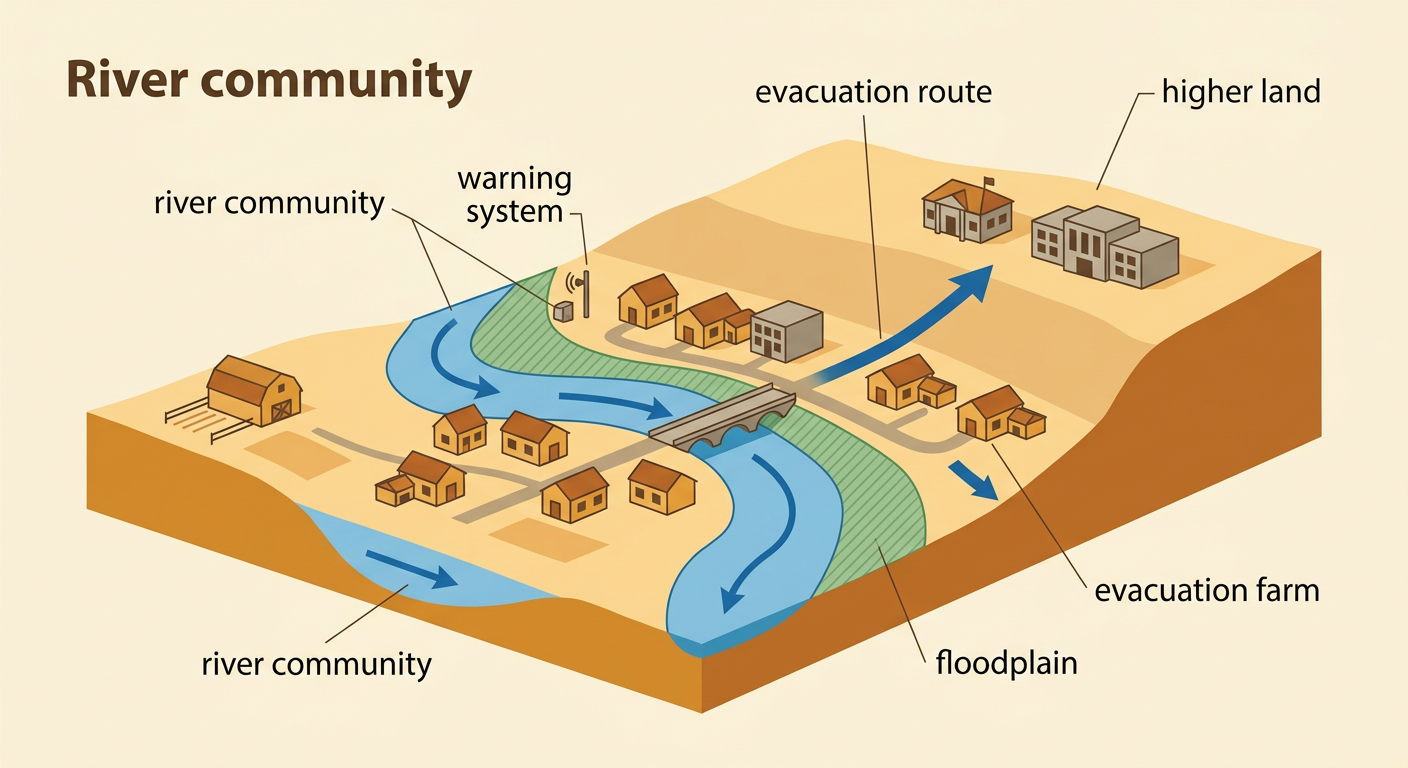
Every community needs water, food, shelter, transportation, and ways to stay safe. Geography affects how people meet these needs. A community near a river may use the water for homes, farms, or businesses. The river can also create a transportation route or support recreation. However, heavy rain may cause flooding, so the community may need warning systems, safe evacuation routes, and buildings placed away from high-risk areas. In a dry region, people may store water and choose plants that need less irrigation. In a snowy region, communities need snowplows and warm, well-insulated buildings. People use knowledge, tools, and planning to respond to local conditions. Geography creates opportunities and challenges, but people make choices about how to design and improve their communities.
Connect Geography to Daily Life
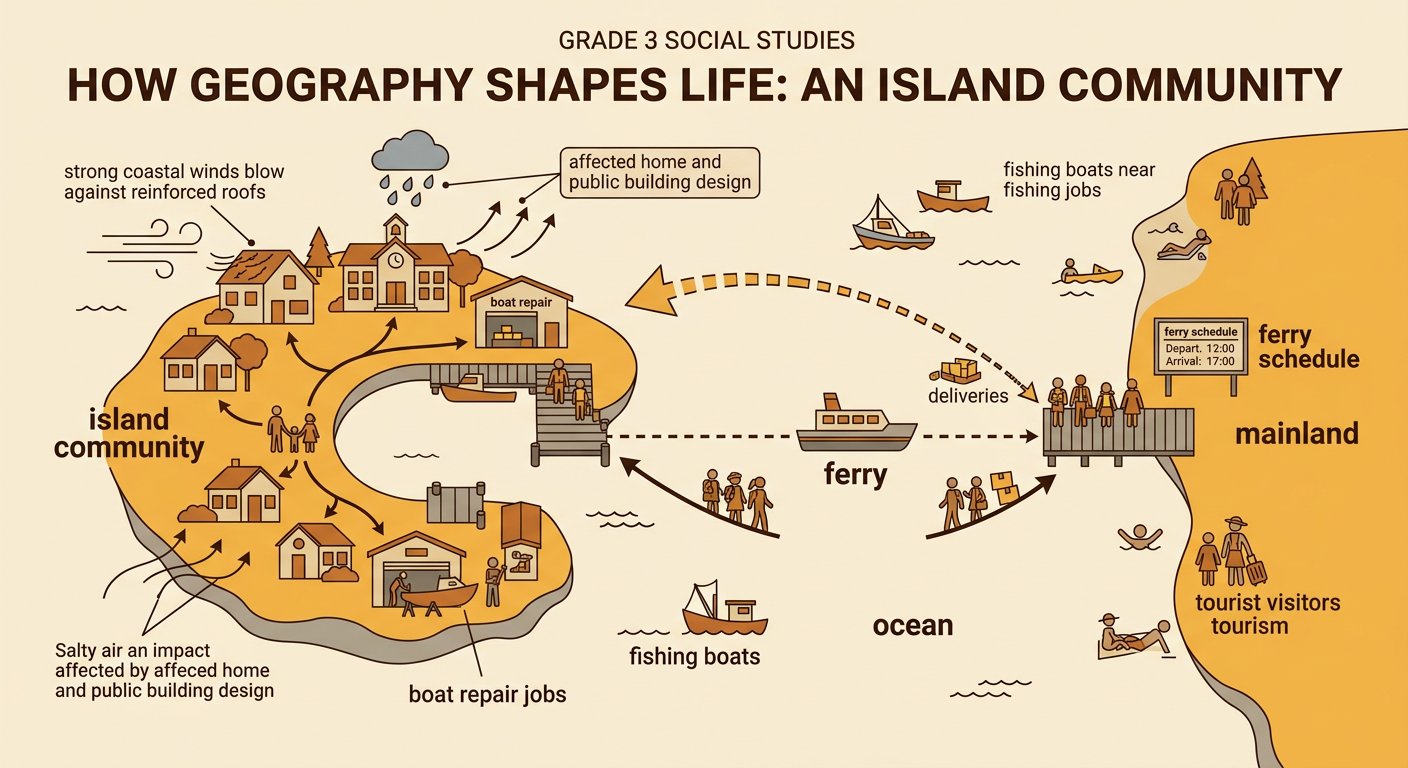
Physical geography can shape daily routines, jobs, transportation, recreation, and the kinds of buildings people use. Consider a small island community. Water surrounds the island, so residents may travel by ferry or boat to reach the mainland. Deliveries and school trips may depend on ferry schedules and weather conditions. Some residents may work in fishing, tourism, or boat repair because the nearby ocean supports those activities. Homes and public buildings must be planned for strong coastal winds, rain, and salty air. People may also enjoy swimming, boating, or visiting beaches. Not everyone in the community has the same job or routine, but the island’s location affects many choices. By connecting map features with short texts about local life, students can see how geography becomes part of everyday decisions.
Explain with Map and Text Evidence
A strong explanation answers a question with evidence from more than one source. First, state a clear claim. Next, include map evidence and text evidence. Finally, explain how the evidence supports the claim. Suppose a map shows a town beside a river on a flat plain. A short text says that local farms use river water and that a bridge connects neighborhoods. You might write: “The river affects where and how people live in this town. The map shows homes and farms on flat land beside the river. The text explains that farmers use river water and residents cross the bridge. This evidence shows that the river supports farming and transportation.” Ask whether each detail truly comes from the sources. Use phrases such as “the map shows” and “the text states” to make your evidence clear.
