How Insulation Slows Thermal Energy Transfer
Students build and test a simple insulated container, calculate its rate of temperature change, and recommend an insulation material based on performance and cost.
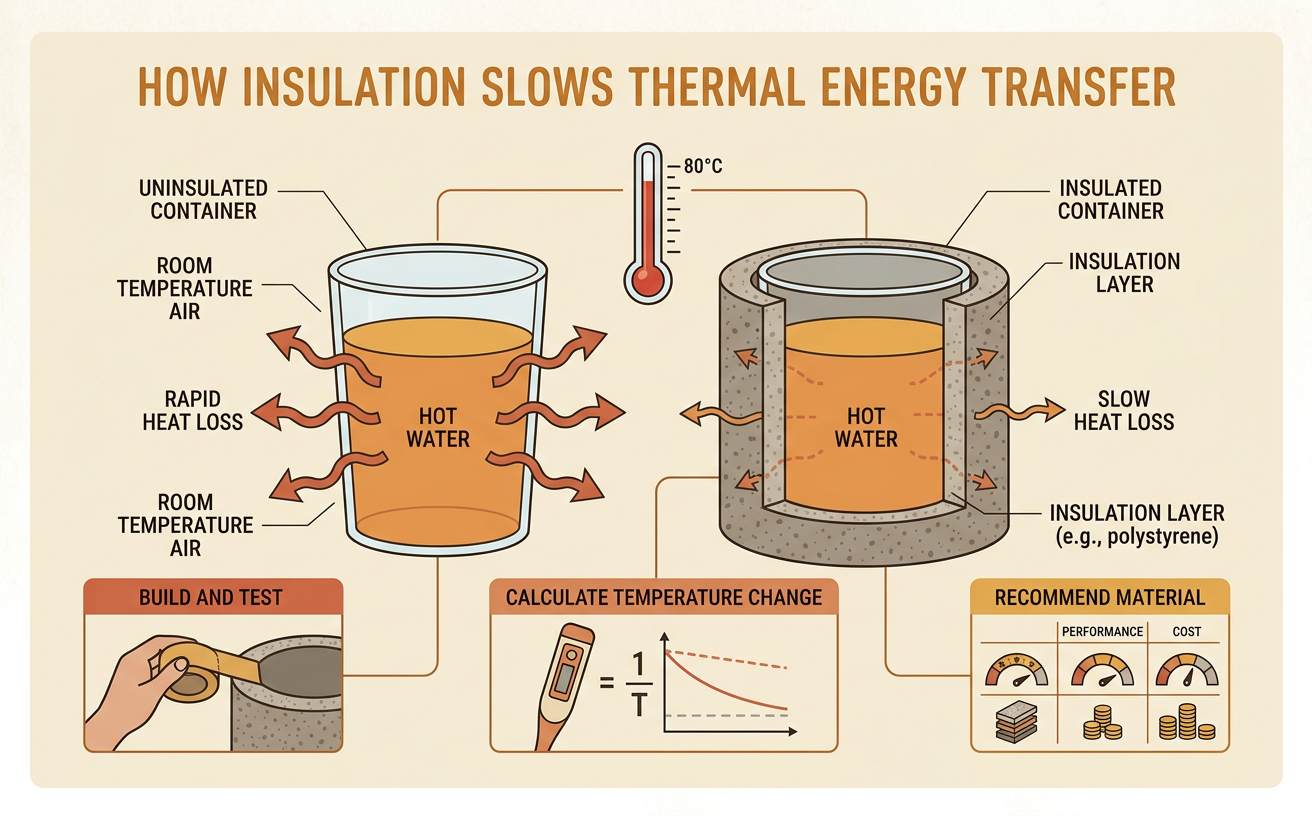
Illustrations are auto-generated and may be placeholders. They can be refreshed to match the narration.
Thermal Energy and Temperature
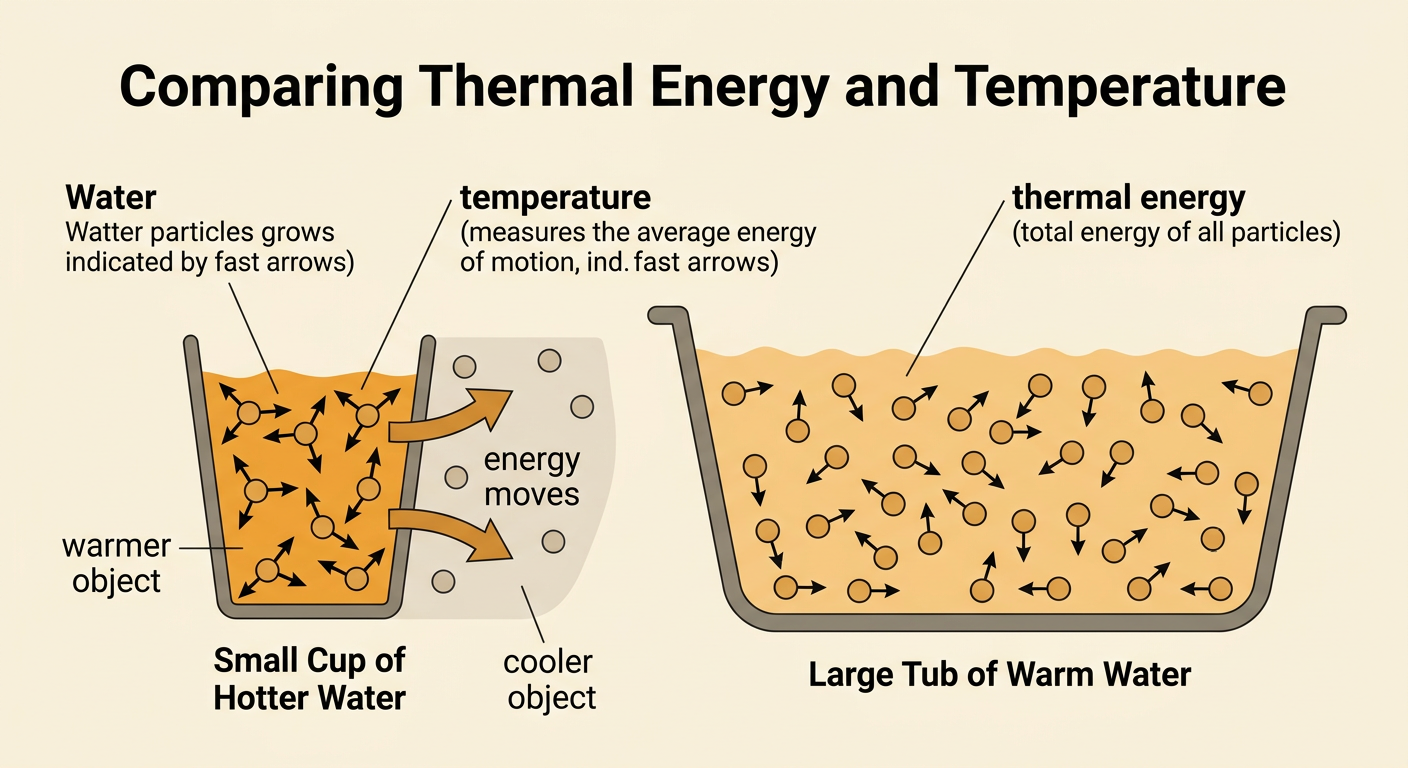
Thermal energy is the total energy of moving particles in matter. Temperature measures the average kinetic energy of those particles. These ideas are related, but they are not identical. A large tub of warm water can contain more thermal energy than a small cup of hotter water because the tub contains many more particles. When objects at different temperatures touch or interact, thermal energy transfers from the warmer object to the cooler object. For example, a cup of hot cocoa transfers thermal energy to the cooler air, table, and cup. The cocoa’s temperature decreases as this transfer occurs. Eventually, the cocoa and its surroundings move toward the same temperature. Insulation slows this energy transfer, but it does not stop it completely.
Conductors and Insulators
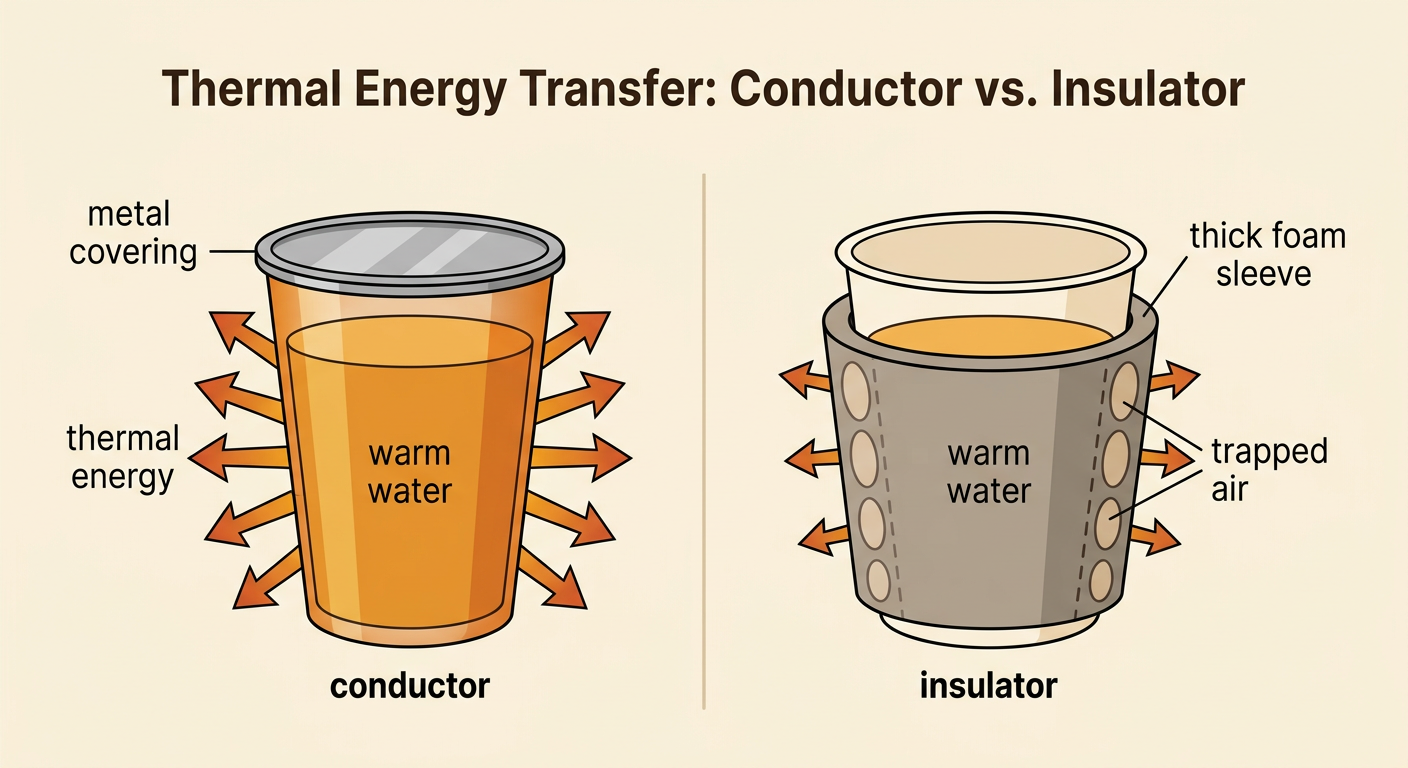
Materials transfer thermal energy at different rates. A conductor allows thermal energy to move through it easily. Metals are usually good conductors, which is why a metal spoon in hot soup soon feels warm. An insulator slows thermal energy transfer. Foam, felt, trapped air, and some plastics are useful insulators. Their structures make it harder for energy to pass from particle to particle. A thick foam sleeve around a warm cup reduces transfer from the drink to the cooler surroundings. The best insulator depends on its material, thickness, shape, and ability to trap air. Insulation cannot keep an object warm or cool forever. It only decreases the rate at which the object approaches the temperature of its surroundings.
Build an Insulated Container
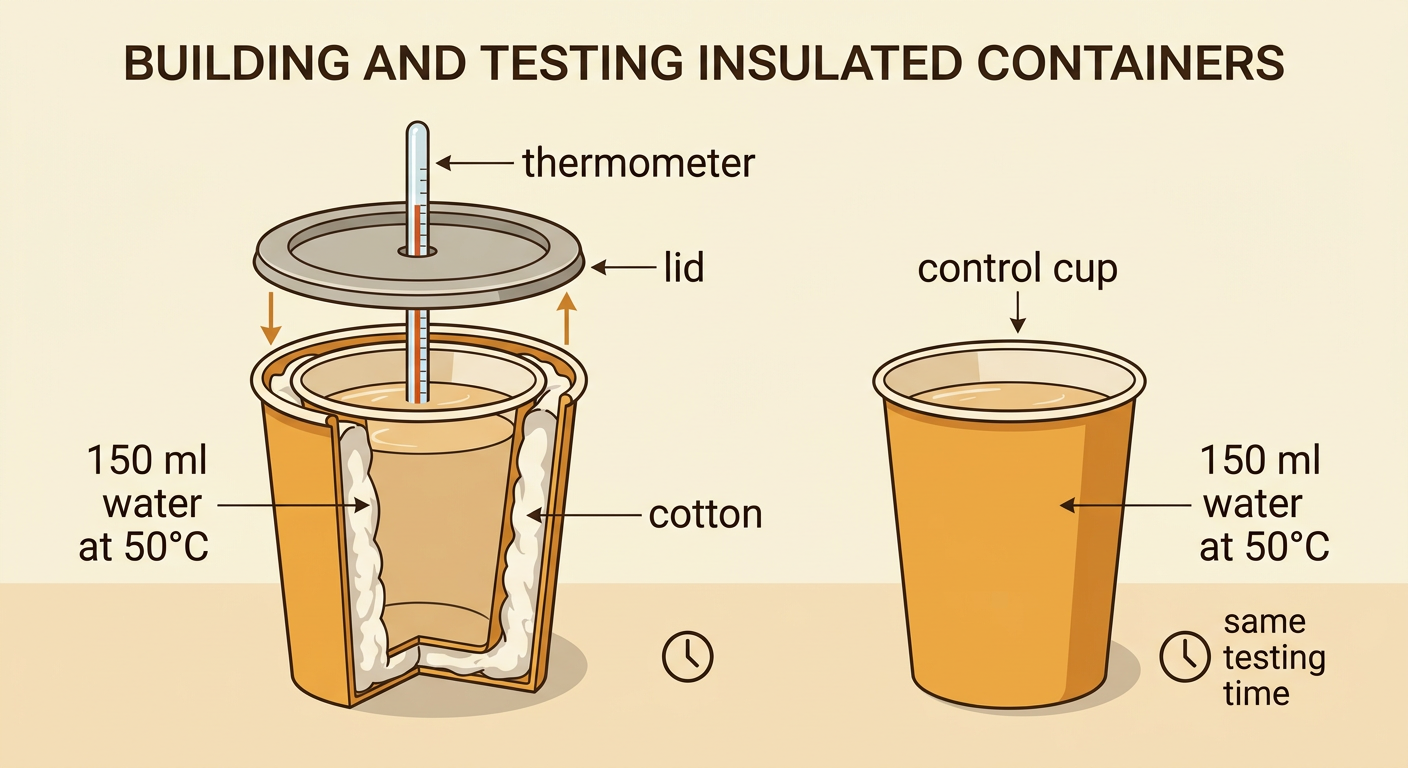
Build a container that slows the cooling of warm water. Place one paper cup inside another, then fill the space between them with one test material, such as cotton, felt, crumpled paper, or bubble wrap. Use the same amount or thickness of each material so the comparison is fair. Add a lid with a small opening for a thermometer because uncovered tops can lose energy quickly. Prepare an uncovered or uninsulated cup as the control. Each cup should have the same size, water volume, starting temperature, location, and testing time. For example, place 150 milliliters of warm water at 50 degrees Celsius in each cup. An adult should handle very hot water. Change only the insulation material so differences in cooling can be linked to that material.
Measure Temperature Change
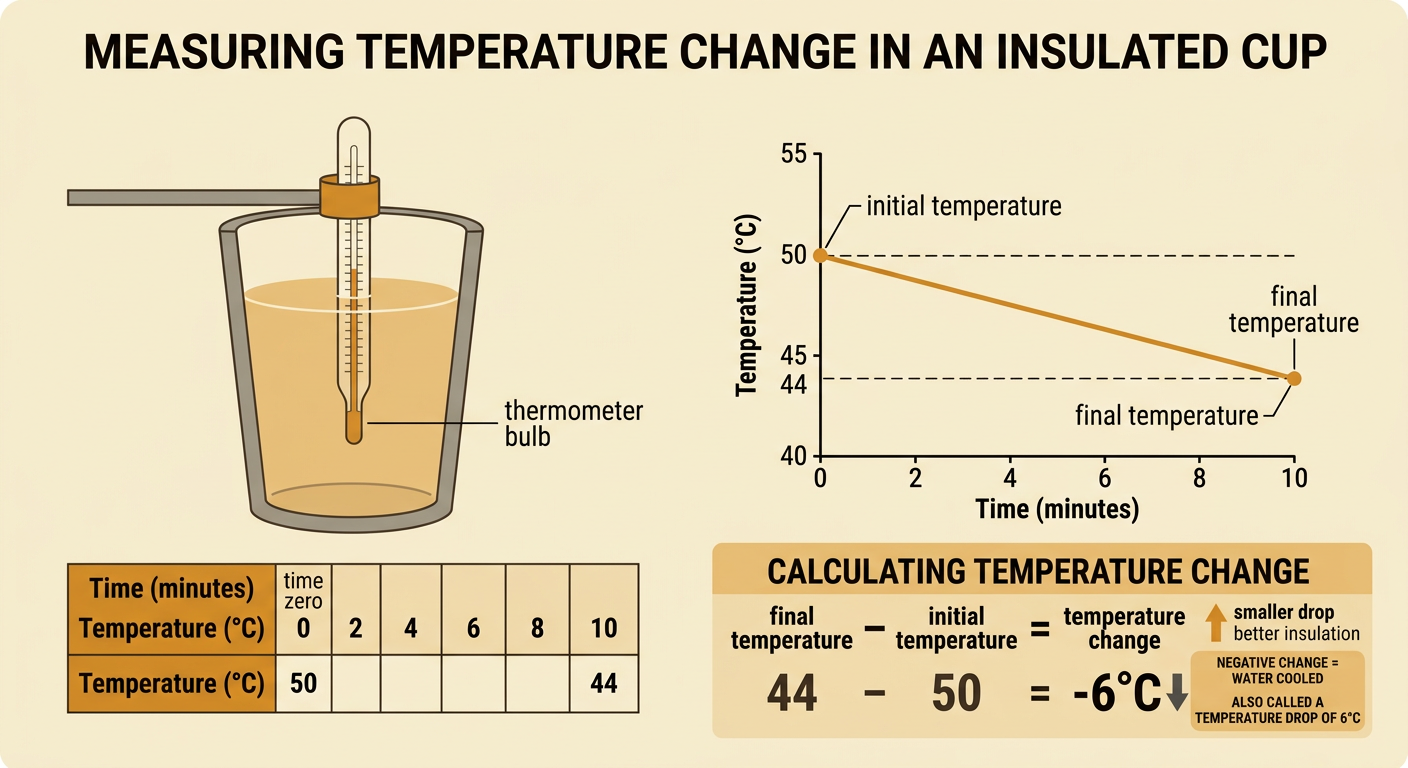
Measure temperature at regular time intervals to determine how quickly the water cools. Record the starting temperature at time zero, then measure again every two minutes for at least ten minutes. Keep the thermometer bulb in the water without letting it touch the cup’s bottom or sides. Read the scale at eye level and record every value with the same unit. Temperature change equals final temperature minus initial temperature. For example, if water cools from 50 degrees Celsius to 44 degrees Celsius, its temperature change is negative 6 degrees Celsius. The negative sign shows cooling. You may also describe this as a temperature drop of 6 degrees Celsius. A smaller temperature drop during the same amount of time usually indicates more effective insulation.
Calculate and Compare Rates
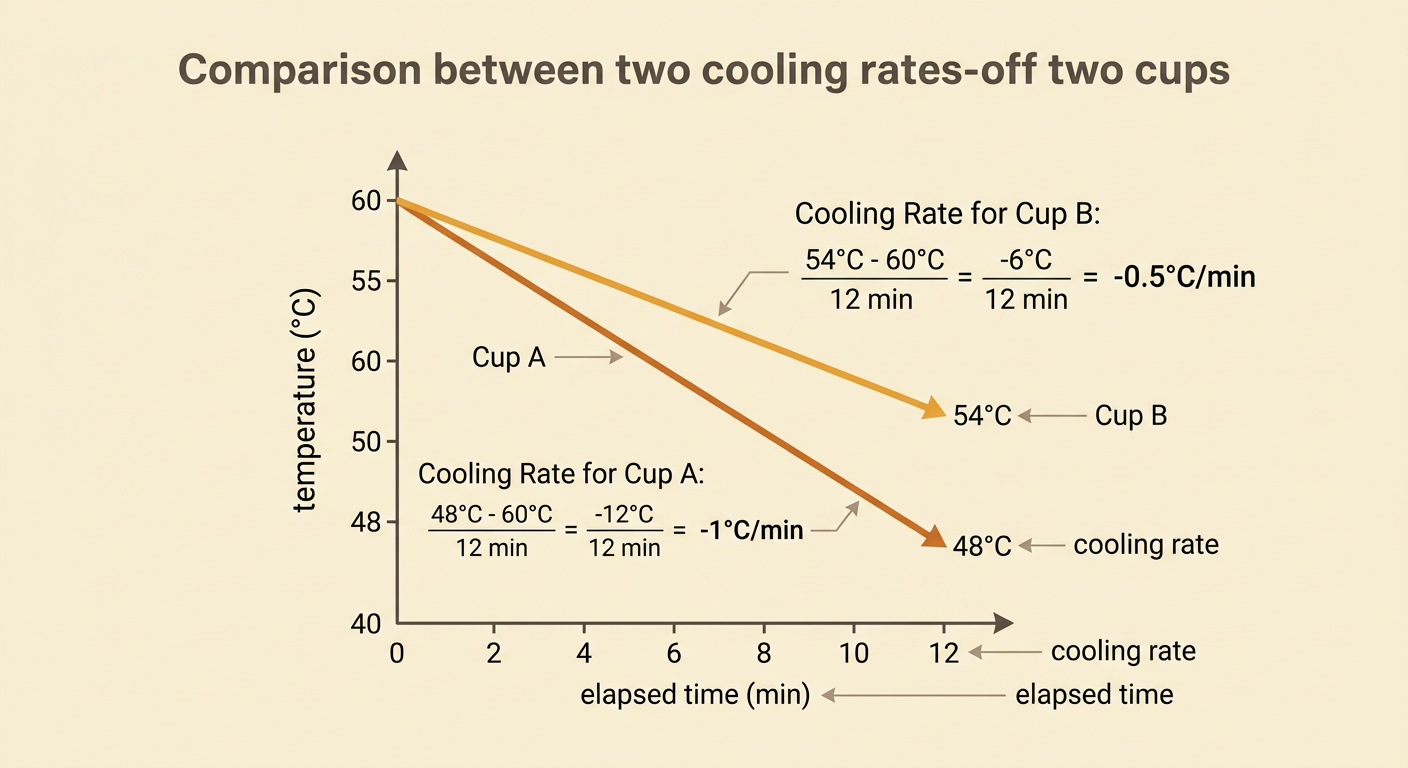
A rate compares the temperature change with the elapsed time. Calculate the rate of temperature change by dividing the final temperature minus the initial temperature by the number of minutes. Suppose Cup A cools from 60 degrees Celsius to 48 degrees Celsius in 12 minutes. Its rate is negative 12 divided by 12, or negative 1 degree Celsius per minute. Cup B cools from 60 degrees Celsius to 54 degrees Celsius in 12 minutes. Its rate is negative 6 divided by 12, or negative 0.5 degree Celsius per minute. The negative rates show that both cups cooled. Cup B has the smaller cooling-rate magnitude, so its insulation performed better. Comparisons are valid only when the cups are tested under the same conditions.
Recommend a Cost-Effective Material
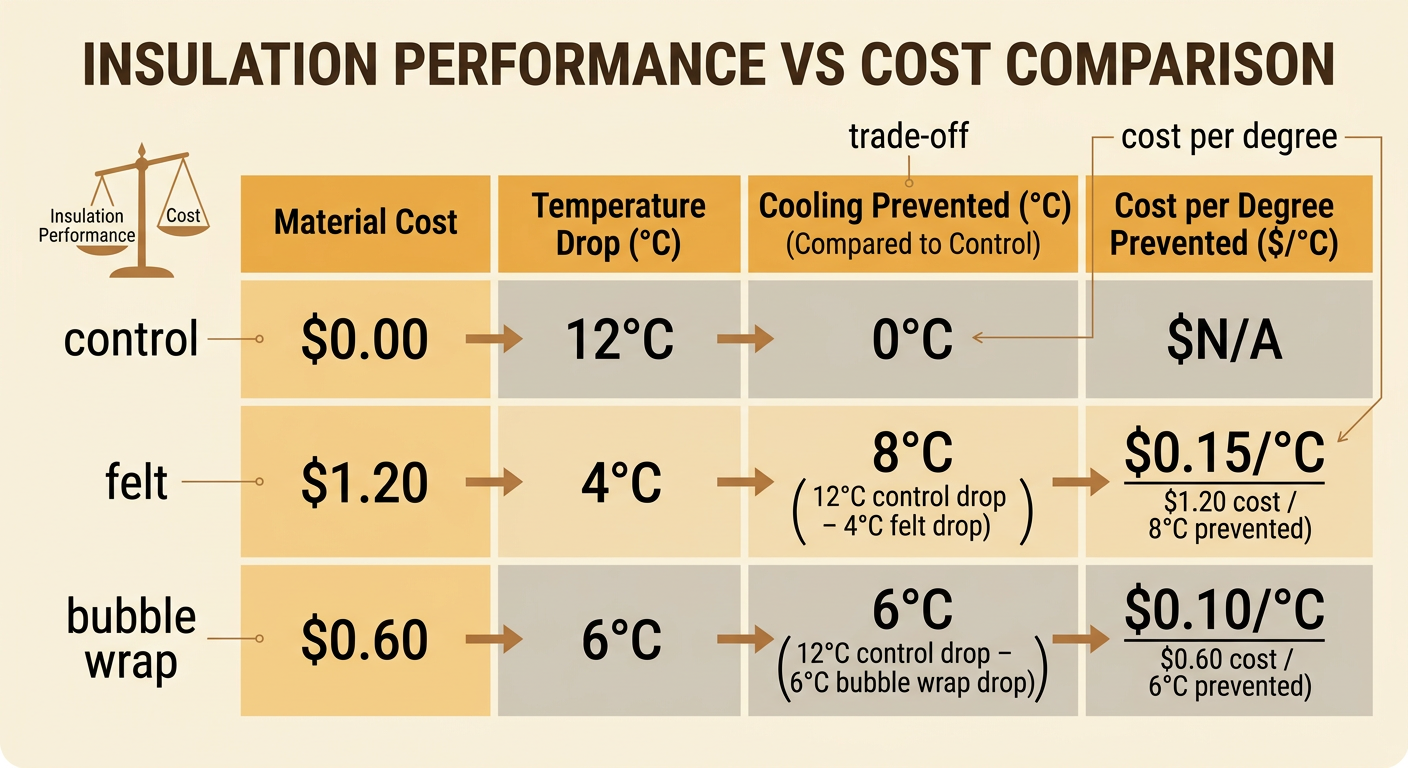
A good recommendation considers both performance and cost. First, compare each material’s cooling rate under the same test conditions. Then calculate the material cost for one container. Suppose an uninsulated cup drops 12 degrees Celsius, felt costing $1.20 drops 4 degrees, and bubble wrap costing $0.60 drops 6 degrees. Felt prevents 8 degrees of cooling compared with the control, while bubble wrap prevents 6 degrees. Felt costs $0.15 for each degree of cooling prevented, but bubble wrap costs $0.10 for each degree prevented. If a 6-degree improvement meets the design goal, bubble wrap may be the more cost-effective choice. If maximum insulation is required, felt may be worth the higher price. A strong recommendation states the evidence, explains the trade-off, and considers practical issues such as availability, reuse, safety, and waste.