
How Living Things Change Their Environment
Students use observations and examples to explain how plants, animals, and people change their surroundings to meet their needs.

Illustrations are auto-generated and may be placeholders. They can be refreshed to match the narration.
Notice Changes in an Environment
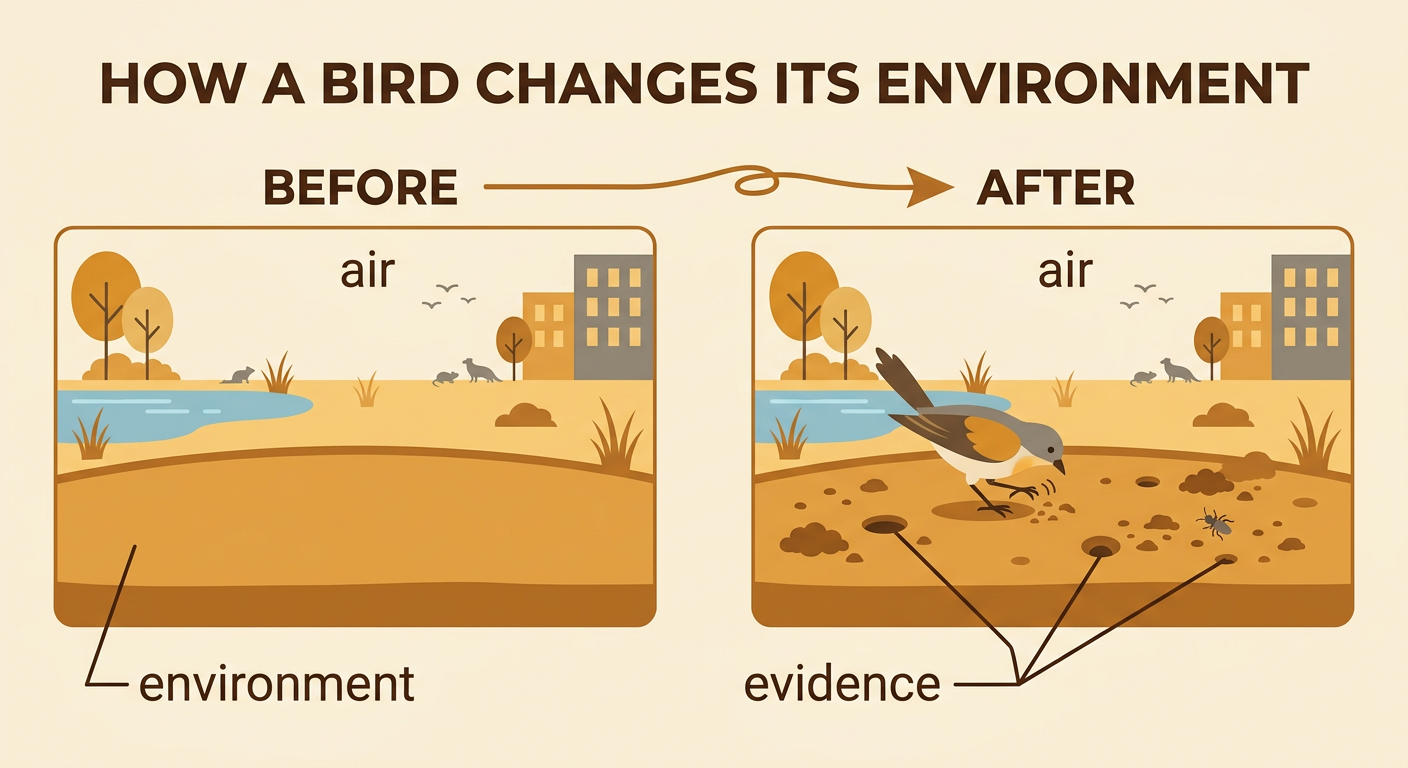
An environment is everything around a living thing, including air, water, soil, plants, animals, and buildings. Living things can change an environment as they meet their needs. We can notice a change by looking closely and comparing what a place was like before and after. For example, imagine an empty patch of soil. A bird scratches the soil to find insects. Afterward, the soil has small holes and loose dirt. The bird changed the patch while searching for food. Ask questions as you observe: What moved? What was added? What was removed? Use what you see as evidence. Evidence is information that helps show what happened. A drawing, photograph, or list of observations can record the change.
How Plants Change Their Surroundings
Plants change their surroundings as they grow and get what they need. Roots grow into soil to take in water and hold the plant in place. The roots may push soil aside or help keep it from washing away. Stems and leaves grow upward to reach sunlight. Leaves can make shade and give animals places to hide. For example, a young tree starts as a small seedling in a sunny field. Years later, its roots hold soil, its branches shade the ground, and fallen leaves cover the soil. The tree has changed the amount of light and the condition of the ground around it. These changes can help other living things, such as worms, insects, and birds, find shelter or food.

How Animals Change Their Surroundings
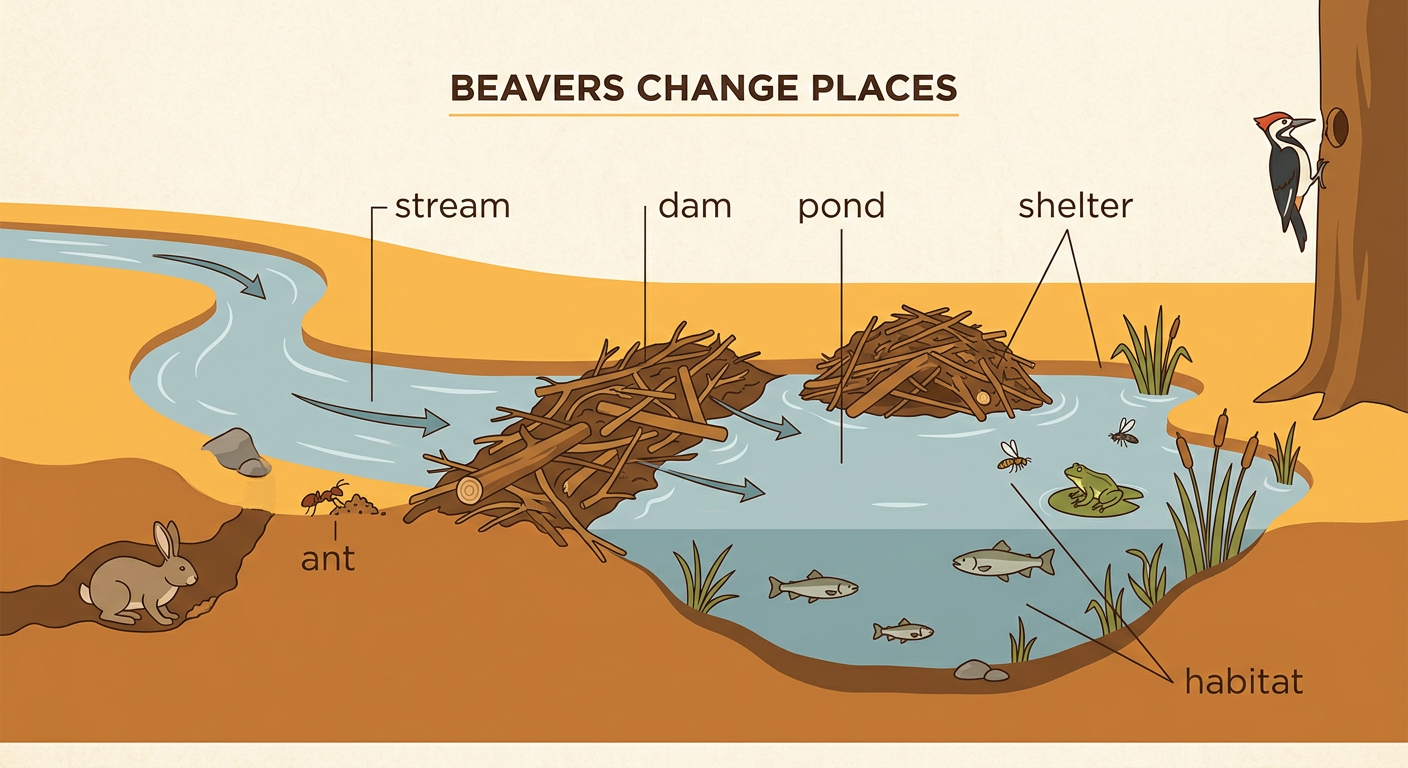
Animals often change places while finding food, water, or shelter. A rabbit digs a burrow in soil. An ant moves tiny pieces of dirt to build a nest. A woodpecker makes a hole in a tree to find food or create a nesting place. Beavers make an especially clear change. They cut small trees and branches with their teeth. Then they place the wood and mud across moving water to build a dam. Water slows down and collects behind the dam, forming a pond. The pond can become a home for frogs, fish, insects, and water plants. The beavers change the land and water to make a safer home for themselves. Their actions also change the environment for many other living things.
How People Change Places
People change places to meet needs and wants. They build homes for shelter, roads for travel, and farms for food. They may cut trees, move soil, or guide water into fields. These actions change what a place looks like and how plants and animals can live there. For example, people might turn an empty lot into a community garden. They loosen the soil, make garden beds, plant seeds, and add a path. The lot can then provide vegetables for people and flowers for pollinators. People can also harm places by leaving trash or removing too many plants. Helpful choices include planting trees, using less water, and putting litter in bins. Our choices affect the land, water, and living things around us.

Sort and Count Examples
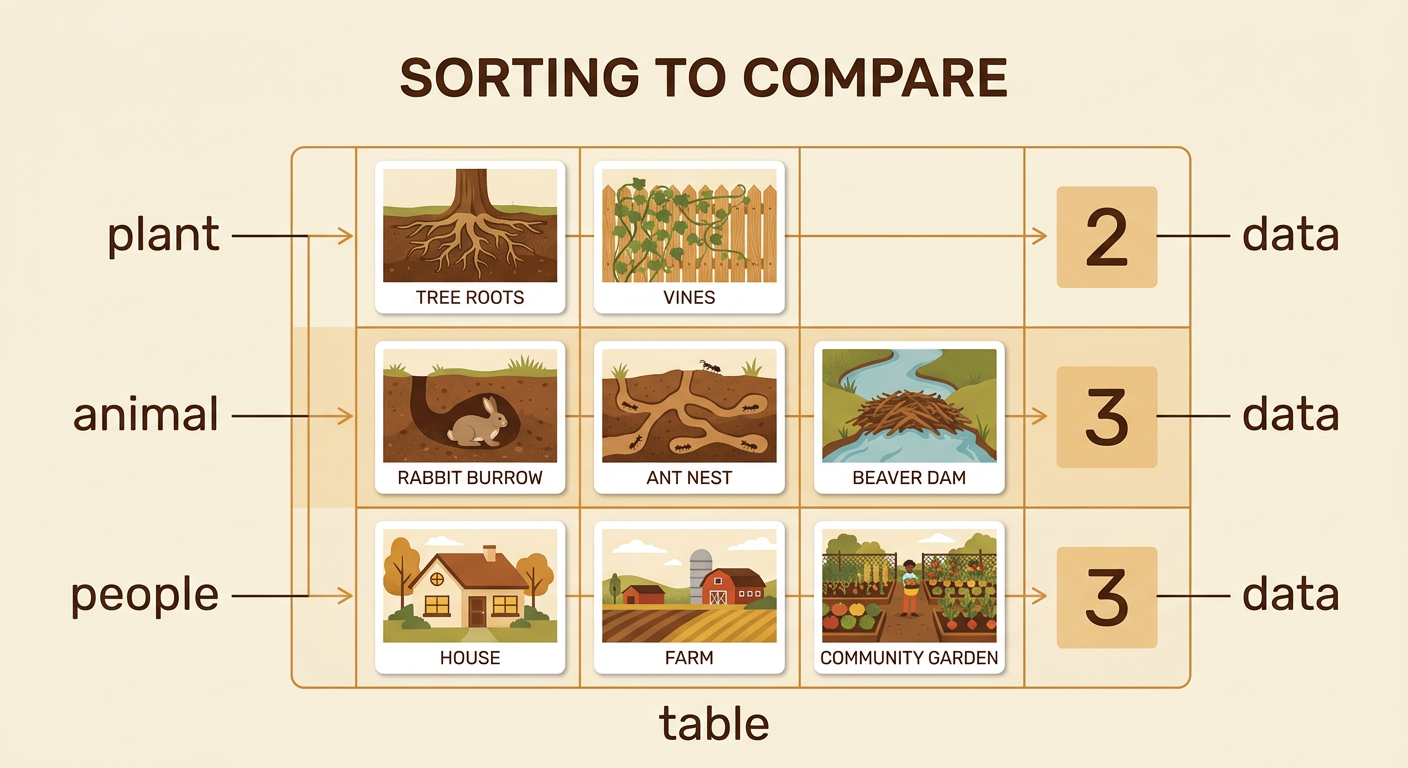
Sorting helps us compare how living things change environments. Look at eight picture cards. Two cards show plant changes: tree roots holding soil and vines covering a fence. Three cards show animal changes: a rabbit burrow, an ant nest, and a beaver dam. Three cards show people changes: a house, a farm, and a community garden. Put each card in the plant, animal, or people group. Then count the cards in each group and record the totals in a table. Plants have 2 examples. Animals have 3 examples. People have 3 examples. The animal and people groups are tied for the greatest number. The plant group has one fewer example than each of those groups. The data organize our observations so we can describe and compare them clearly.
Make a Claim Using Evidence
A claim tells what you think is true. Evidence gives observations or facts that support the claim. Reasons explain how the evidence fits the claim. You might make this claim: Beavers greatly change their environment. One piece of evidence is that beavers place branches and mud across a stream. Another piece of evidence is that water collects behind the dam and forms a pond. Your reason is that changing flowing water into a pond changes the habitat for many living things. You can write: “I think beavers greatly change their environment because their dams slow streams and create ponds.” Add a drawing or observation to strengthen your work. Check that your claim names the living thing, tells the change, and uses evidence. A strong claim is supported by what you observed or learned.
