How Local Governments Make Community Decisions
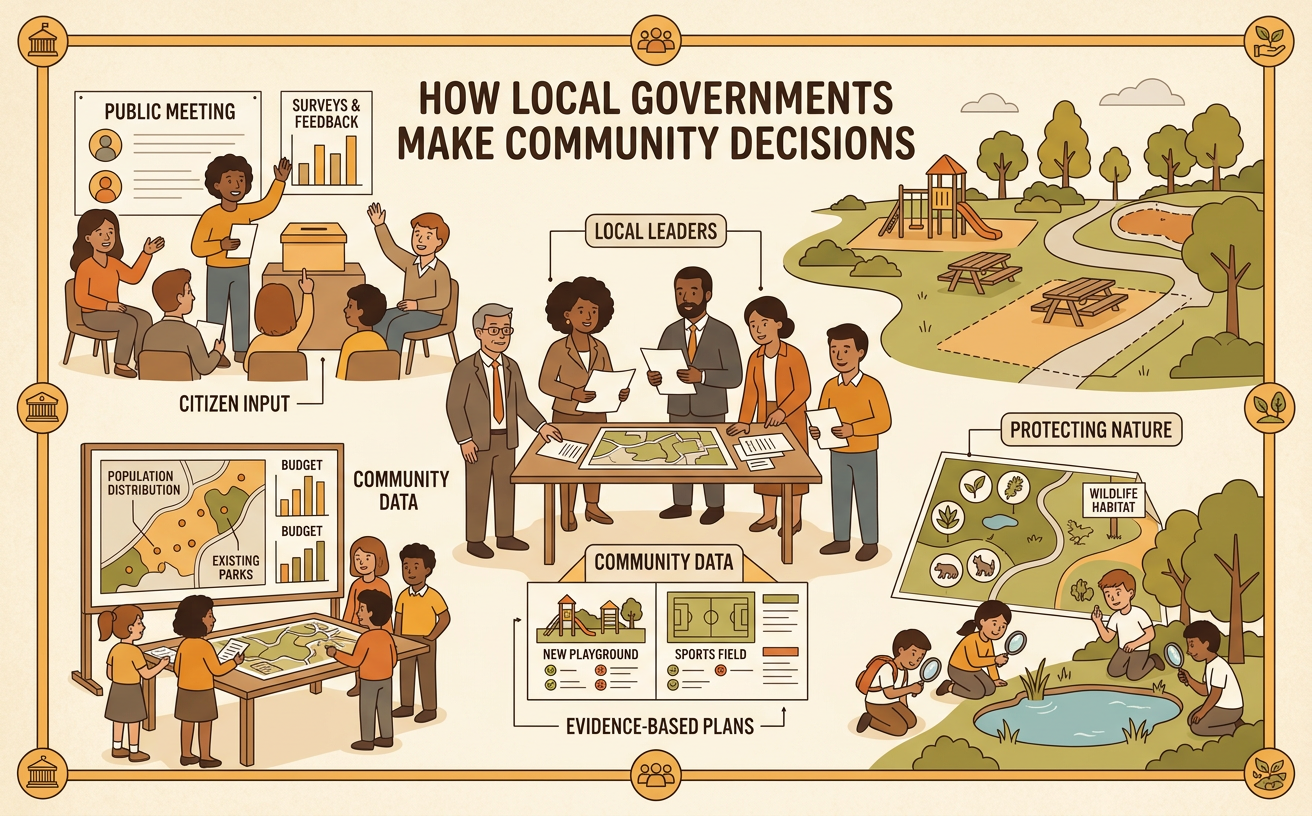
Students explore how local leaders use citizen input, community data, and evidence to decide how a public park should be improved while protecting local plants and animals.
Illustrations are auto-generated and may be placeholders. They can be refreshed to match the narration.
What Does Local Government Do?
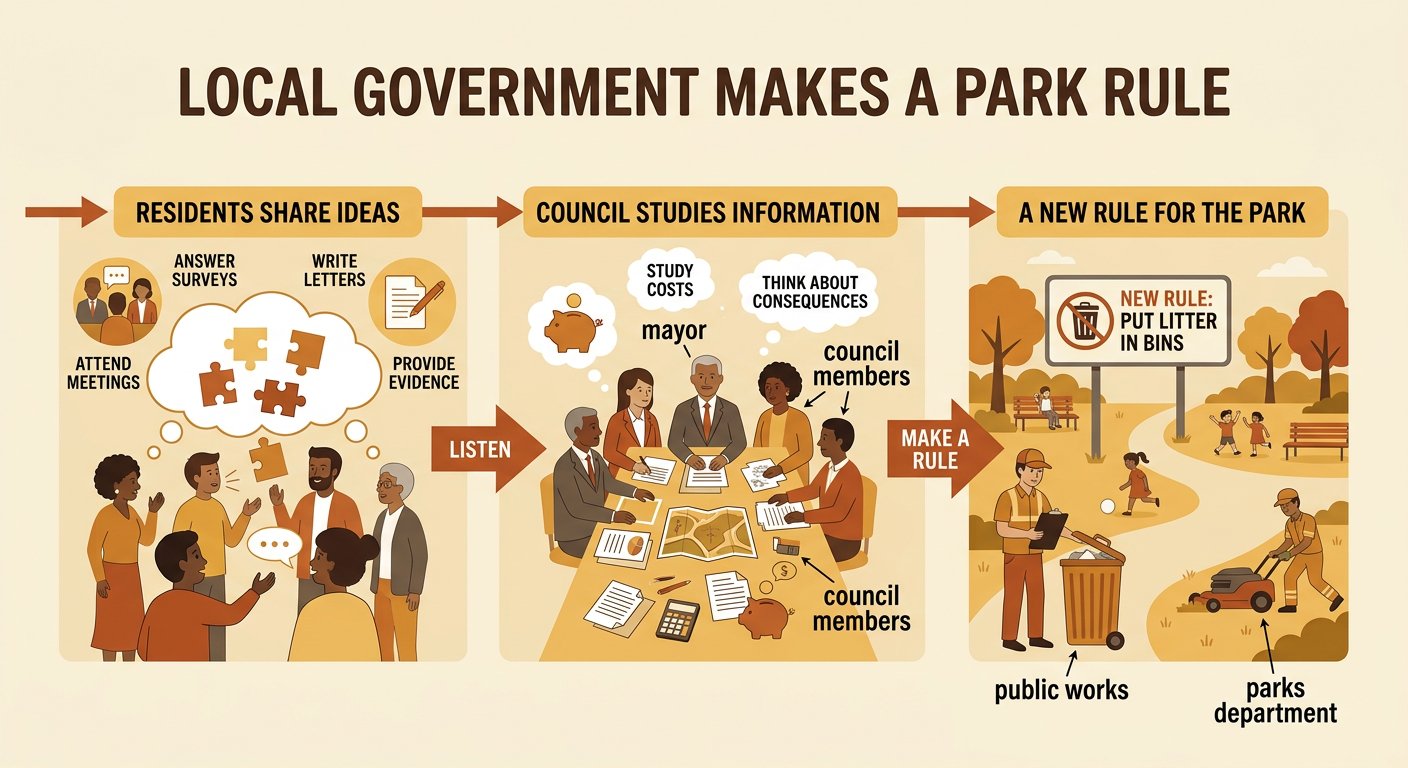
Local government helps people solve problems in their town, city, or county. Local leaders may include a mayor, council members, and workers in departments such as parks and public works. They make decisions about roads, libraries, playgrounds, trash collection, and other community services. Leaders also create rules and laws to protect people and shared places. Before acting, they gather information, listen to residents, study costs, and consider possible effects. For example, a town council might create a rule that park visitors must place litter in trash or recycling bins. This rule addresses the public problem of trash harming the park. Community members can help by attending meetings, answering surveys, writing letters, and sharing evidence with their local leaders.
A Community Park Problem
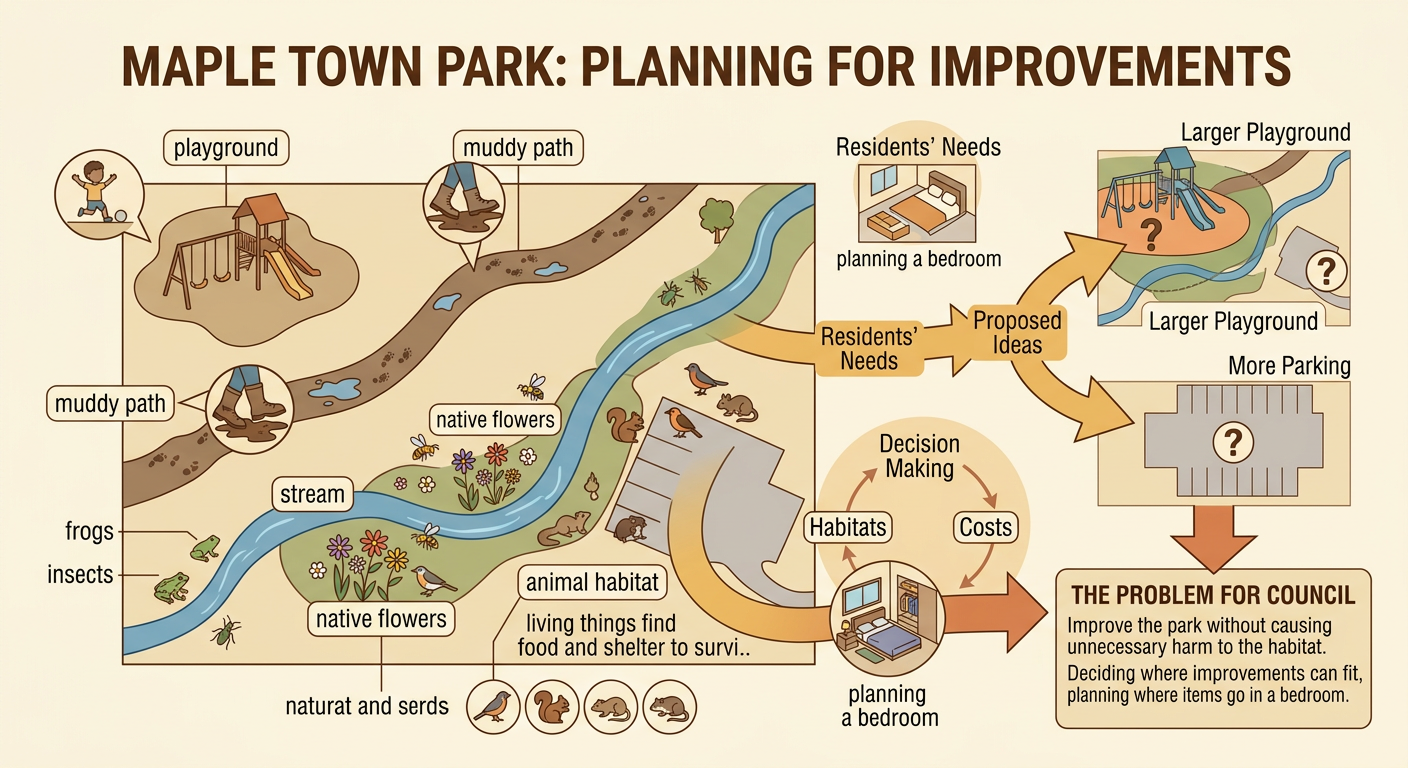
Maple Town has a public park used by families, walkers, and wildlife. The playground is old, and the walking path becomes muddy after rain. Some residents want a larger playground, while others want more parking spaces. However, part of the park contains native flowers where bees gather nectar and birds find seeds. A stream beside the flowers is home to frogs and insects. Building over this area could remove food and shelter from local animals. The town council must decide how to improve the park without causing unnecessary environmental harm. Council members ask questions: Which improvements do residents need most? Which areas contain important habitats? How much will each idea cost? These questions help leaders define the public problem before choosing a solution.
Listening to Citizen Viewpoints
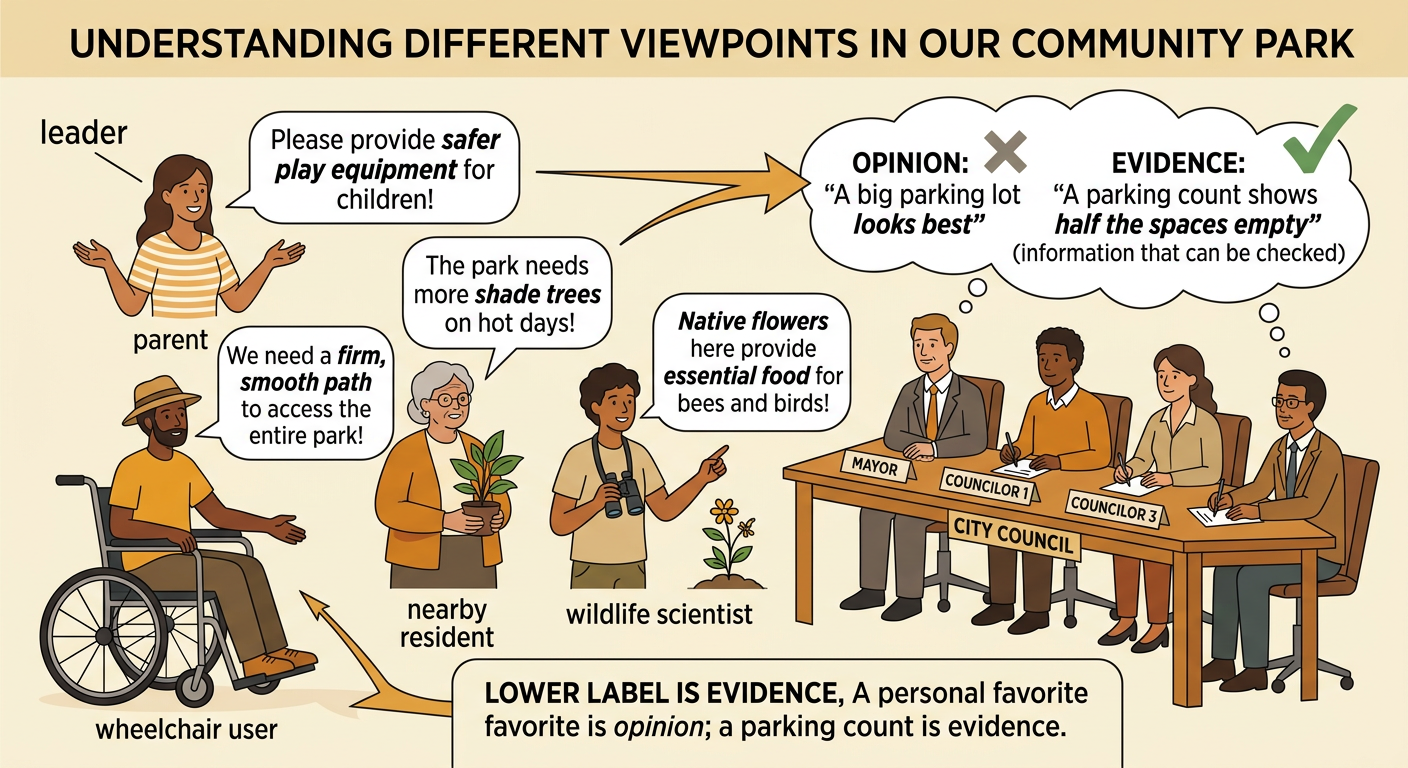
Citizens may have different viewpoints because they use the park in different ways. At a public meeting, a parent might say, “The playground needs safer equipment.” A wheelchair user might ask for a firm, smooth path. A nearby resident might support more trees for shade. A wildlife scientist might explain that native flowers provide food for bees and birds. Council members listen respectfully and ask questions about each statement. They also separate opinions from evidence. Saying “I like big parking lots” is an opinion. Reporting that only half of the current parking spaces are usually filled is evidence that can be checked. Leaders record the viewpoints, look for shared concerns, and compare statements with surveys, maps, cost estimates, and observations before making a decision.
Reading Survey Data
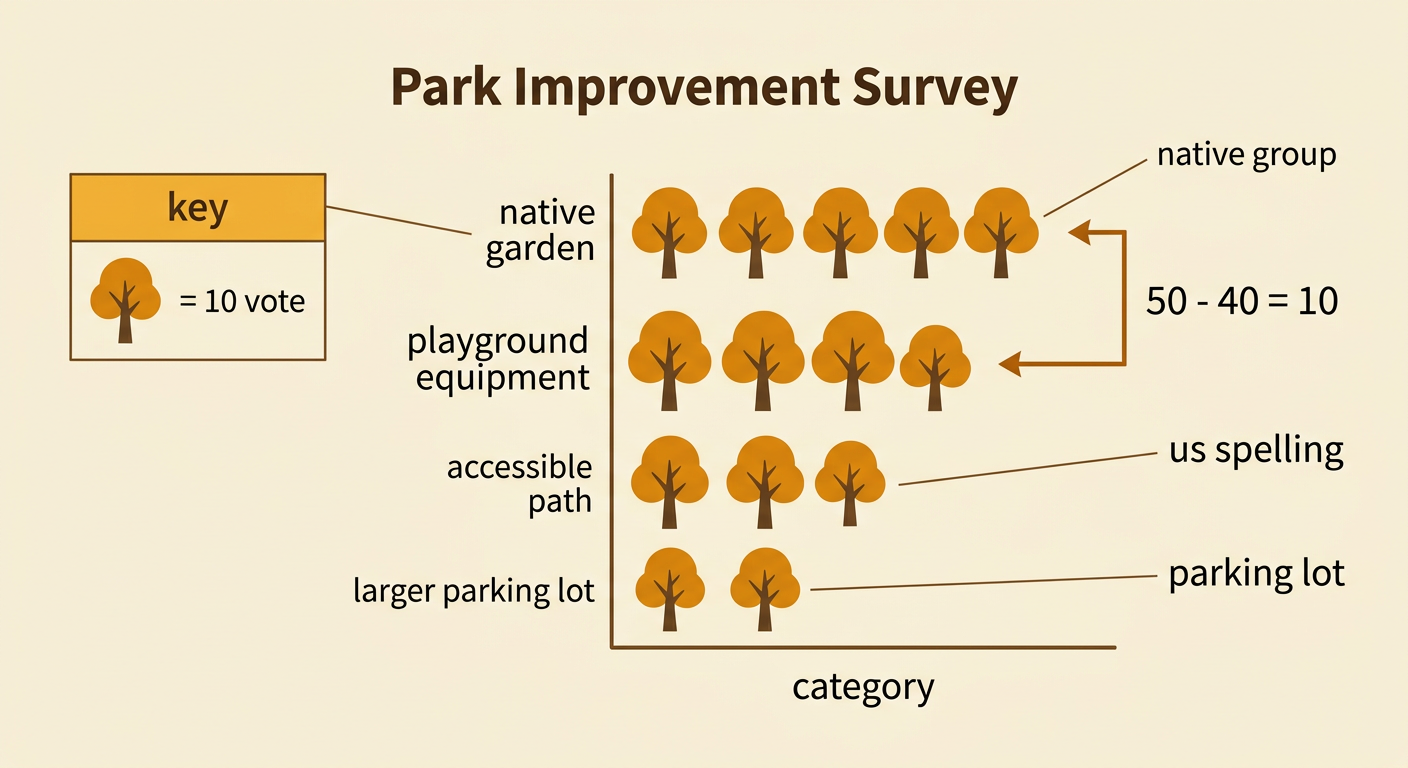
Maple Town surveys 140 residents and displays the results in a scaled picture graph. Each tree symbol represents 10 votes. The native garden receives 50 votes, so its row has five symbols. New playground equipment receives 40 votes, an accessible walking path receives 30 votes, and a larger parking lot receives 20 votes. To interpret the graph, students read the title and key, then multiply the number of symbols by 10. The native garden has 10 more votes than the playground because 50 minus 40 equals 10. The parking lot has the fewest votes. Survey results show what participating citizens prefer, but they are only one kind of evidence. The council must also consider habitat information, safety, cost, accessibility, and the needs of people who did not complete the survey.
Choosing an Evidence-Based Solution
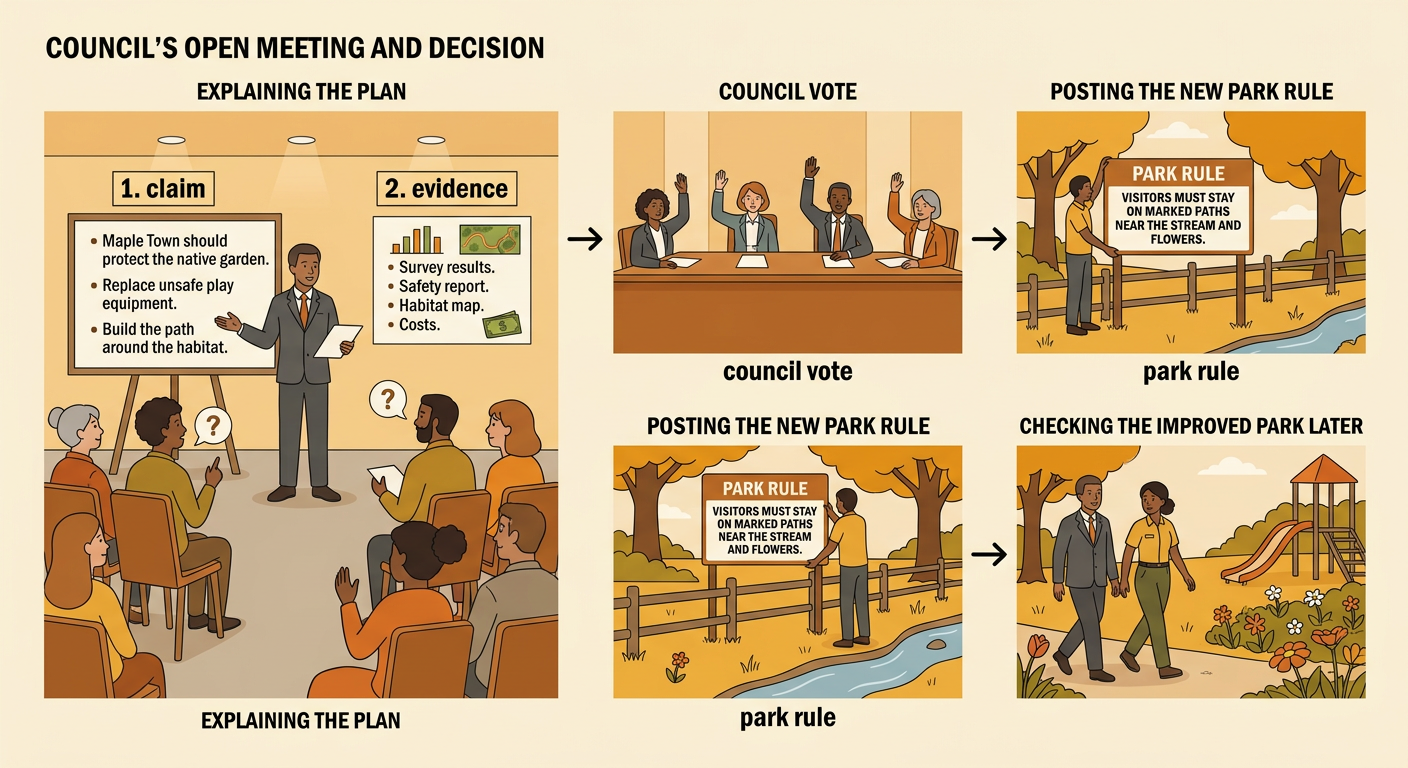
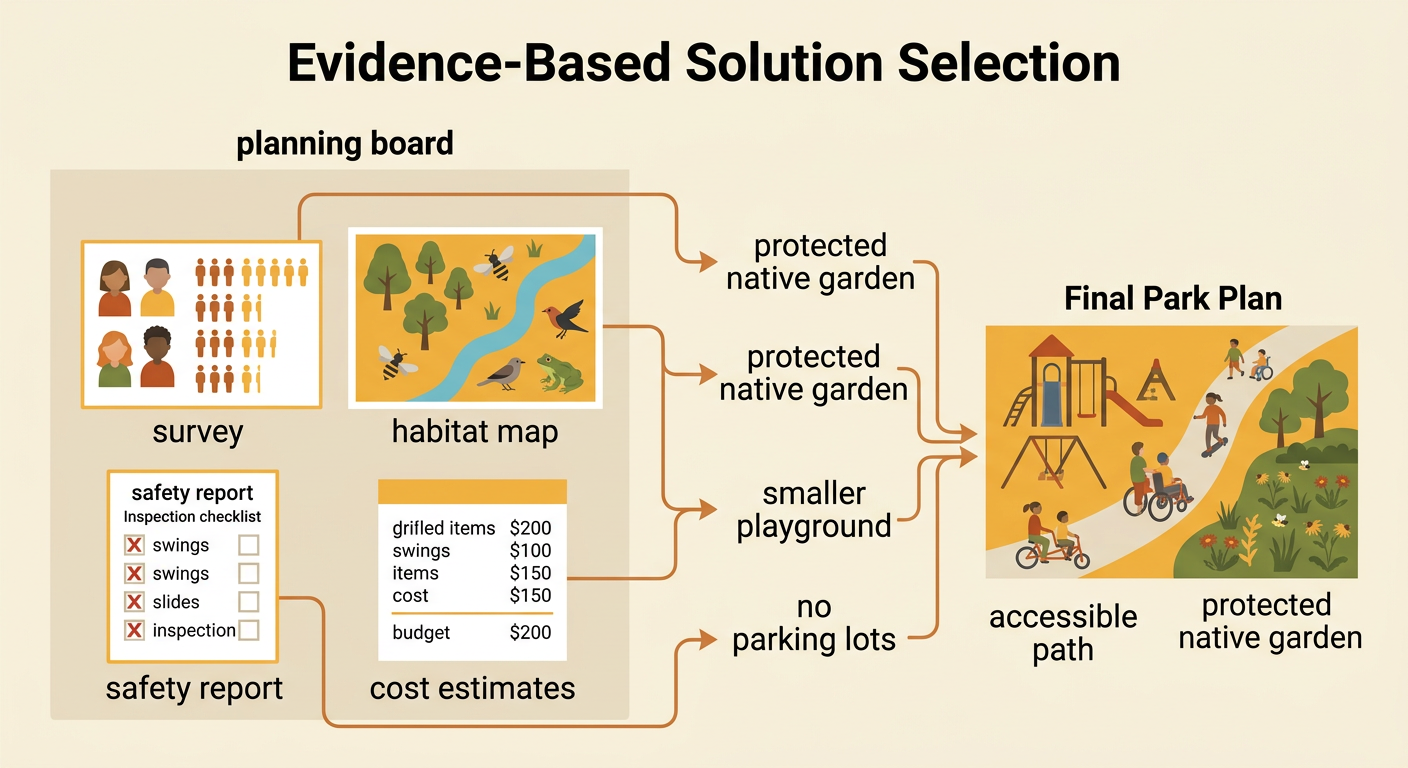
The council compares several kinds of evidence. The survey gives the native garden 50 votes and an accessible path 30 votes. A habitat map shows that bees, birds, and frogs depend on the flowers and stream. A safety report says the old playground equipment must be repaired or replaced. Cost estimates show that the town can afford a smaller playground, a firm walking path, and protection for the native garden, but not a large parking lot too. The council chooses this combined plan. A strong claim is: The town should protect the native garden, replace unsafe play equipment, and build the path around the habitat. The evidence supports the claim because the plan responds to citizen needs, improves access and safety, and avoids destroying food and shelter used by local animals.
Explaining the Council’s Decision
At an open meeting, the council explains its decision instead of simply announcing it. A council member states the claim, names the evidence, and describes how the plan addresses the public problem. The member explains that survey results supported a native garden, the safety report required playground repairs, and the habitat map showed where construction should be avoided. The council then votes on the plan during the public meeting. It also adopts a park rule that visitors must stay on marked paths near the stream and native flowers. Signs and low fencing will help people follow the rule. The rule protects a shared habitat while allowing everyone to enjoy the park. Residents may ask questions, read the meeting record, and later share observations about whether the improvements and rule are working.