How Modern Fiction Reimagines Myths and Traditional Stories
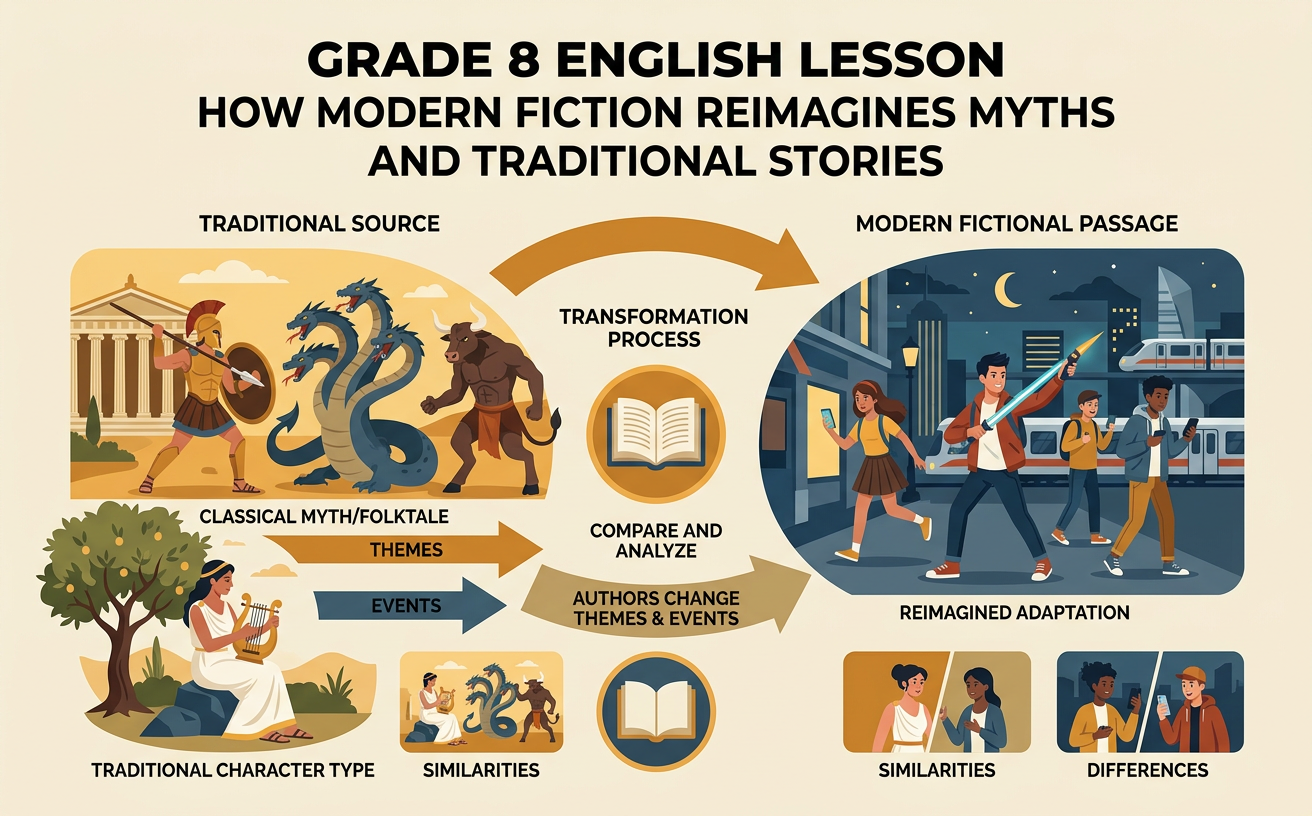
Students compare a modern fictional passage with its traditional source to analyze how the author transforms familiar themes, events, and character types.
Illustrations are auto-generated and may be placeholders. They can be refreshed to match the narration.
Recognize Source Material
To recognize source material, look for clues that connect a modern story to an older myth, folktale, legend, or religious work. Clues may include familiar character roles, objects, settings, conflicts, or repeated events. Imagine a modern story called The Silver Sneaker. Maya lives with an unfair aunt and two favored cousins, secretly builds a robot, and wants to attend a city technology competition. A retired engineer helps her enter, but Maya must leave before the final judging and accidentally leaves behind a silver sneaker. These details suggest Cinderella. The modern story does not need a castle, magical coach, or glass slipper to draw on the folktale. The unfair household, helpful guide, special event, sudden departure, and lost shoe form a recognizable pattern. Identifying the likely source is the first step toward analyzing how the author makes it new.

Identify Shared Story Elements
After recognizing the source, identify the specific elements both works share. Focus on themes, patterns of events, and character types rather than expecting every detail to match. In Cinderella and The Silver Sneaker, the main character is treated unfairly at home but hopes for a better future. Both stories include an oppressed hero, jealous family members, a helpful mentor, an important public event, and an object that reveals the hero’s identity. Their event patterns are also similar: the hero is excluded, receives help, attends the event, leaves suddenly, loses an item, and is later found. A shared theme is that a person’s worth can eventually be recognized despite unfair treatment. Listing these parallels provides evidence that the modern author intentionally draws on the older tale. It also prepares you to notice where the author changes the pattern.

Compare Key Differences
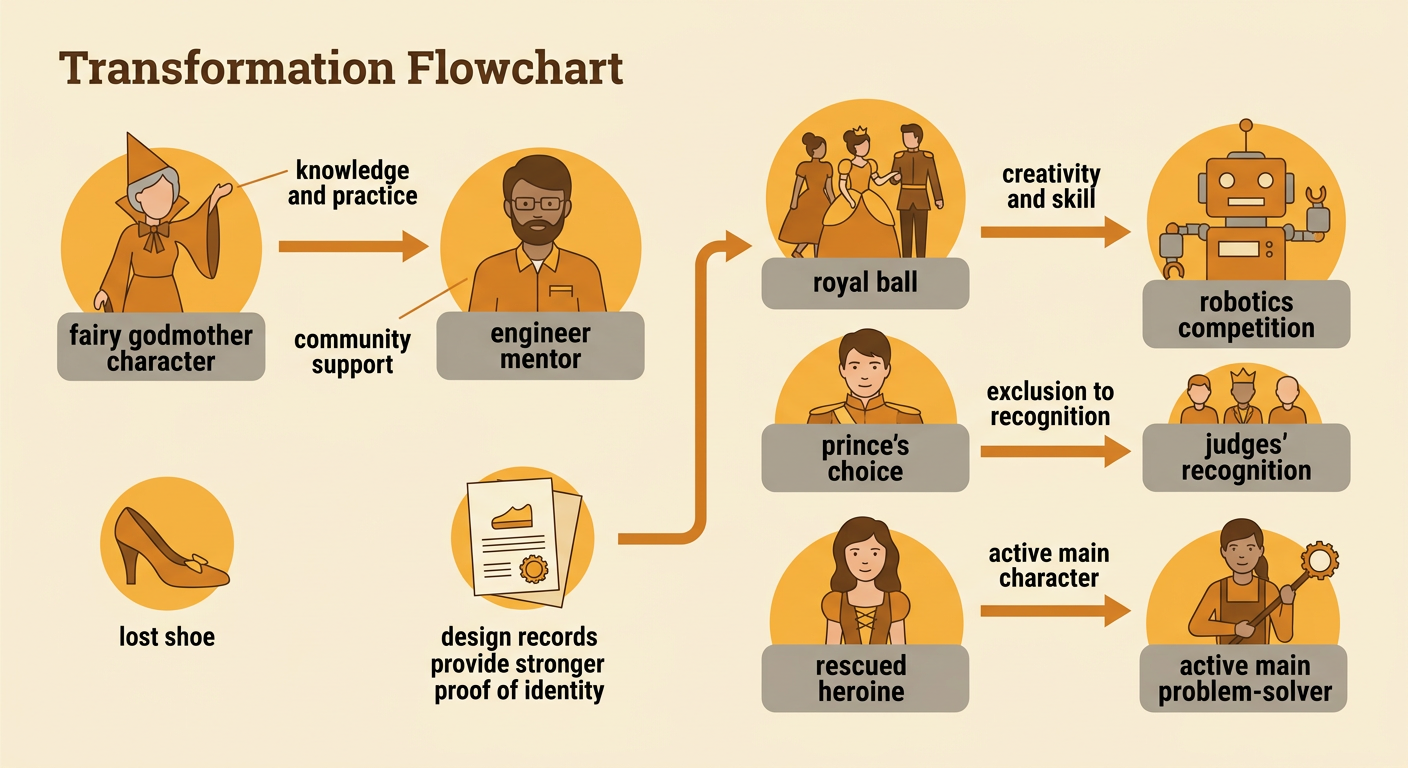
Next, compare the differences that make the modern version distinct. Consider changes in setting, conflict, character motivation, object, outcome, and type of help. Cinderella takes place in a royal world, while The Silver Sneaker occurs in a present-day city. Cinderella attends a ball and hopes to escape hardship through marriage. Maya enters a technology competition because she wants her engineering ability to be taken seriously. A fairy godmother uses magic to prepare Cinderella, but a retired engineer gives Maya practical advice and access to tools. The prince uses a glass slipper to locate Cinderella; a competition judge uses Maya’s silver sneaker and the identification number on her robot case to find her. These differences matter because they shift the story away from rescue by royalty. The modern conflict centers on opportunity, skill, and recognition rather than marriage and social rank.

Analyze the Author’s Transformations
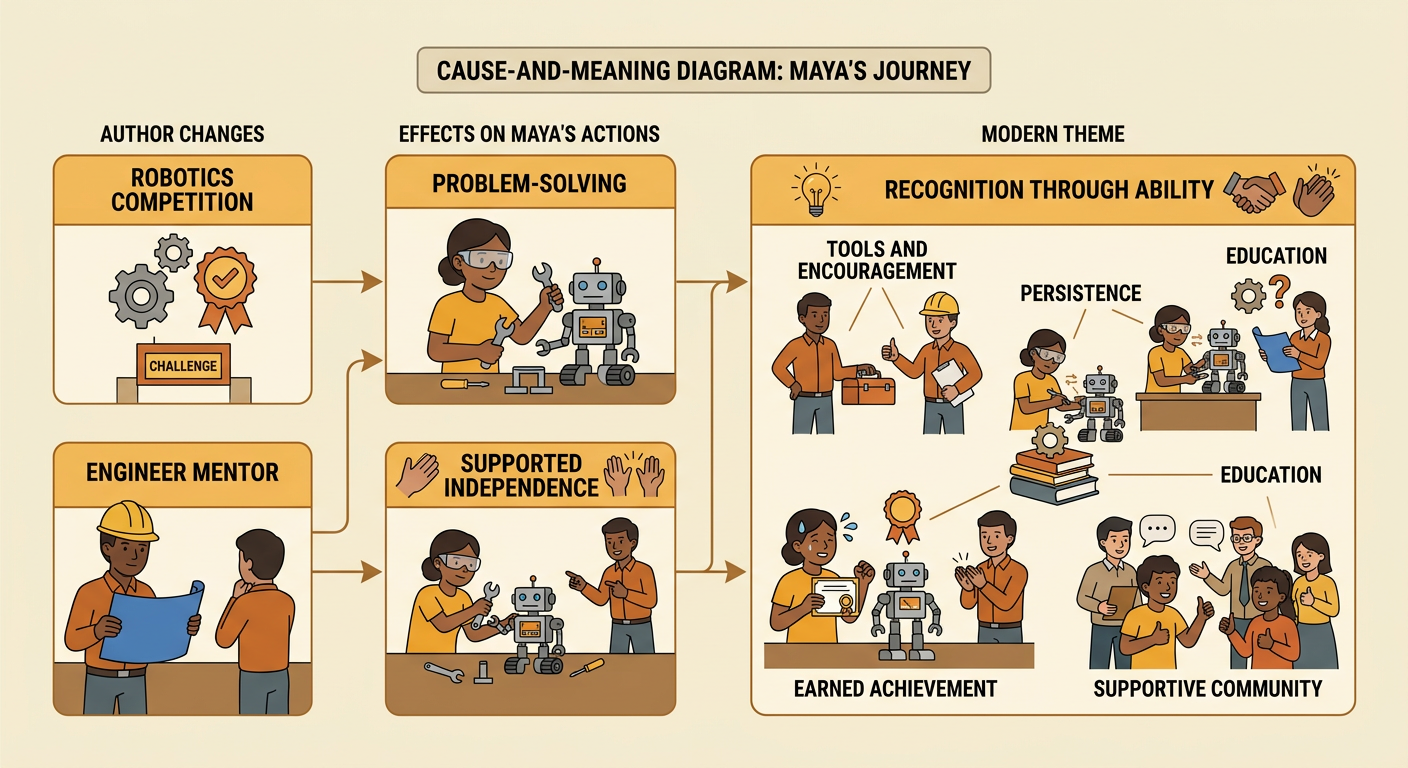
Analyzing transformation means explaining how and why the author changes source elements, not simply listing differences. Ask what each replacement emphasizes. In The Silver Sneaker, the fairy godmother becomes a retired engineer. This change keeps the helpful-mentor character type but replaces magic with knowledge, practice, and community support. The ball becomes a robotics competition, turning a display of beauty and status into a test of creativity and skill. Maya’s robot, rather than a prince, becomes central to her future. Even the lost shoe works differently: it helps confirm her identity, but her design records and successful invention provide stronger proof of who she is. Through these transformations, the author preserves Cinderella’s movement from exclusion to recognition while giving Maya more control over the outcome. The familiar pattern is rendered new through a modern setting, realistic assistance, and an active main character.
Explain How the New Version Creates Meaning
Finally, explain how the transformed elements create meaning in the modern work. Build a claim that connects a specific change to a theme, message, or view of a character. For example, replacing Cinderella’s magical transformation with Maya’s engineering work suggests that confidence and opportunity can reveal abilities that were already present. Maya does receive help, but the mentor does not solve the problem for her. She provides tools and encouragement, while Maya designs, tests, and repairs the robot herself. This change develops a theme of earned achievement and challenges the traditional idea that rescue must come from a powerful outsider. A strong explanation might state: By turning the ball into a robotics competition and the fairy godmother into an engineer, the author updates Cinderella’s rise from exclusion to recognition, showing that education, persistence, and supportive communities can open doors. This explains both the connection and its new significance.