How People Change Places
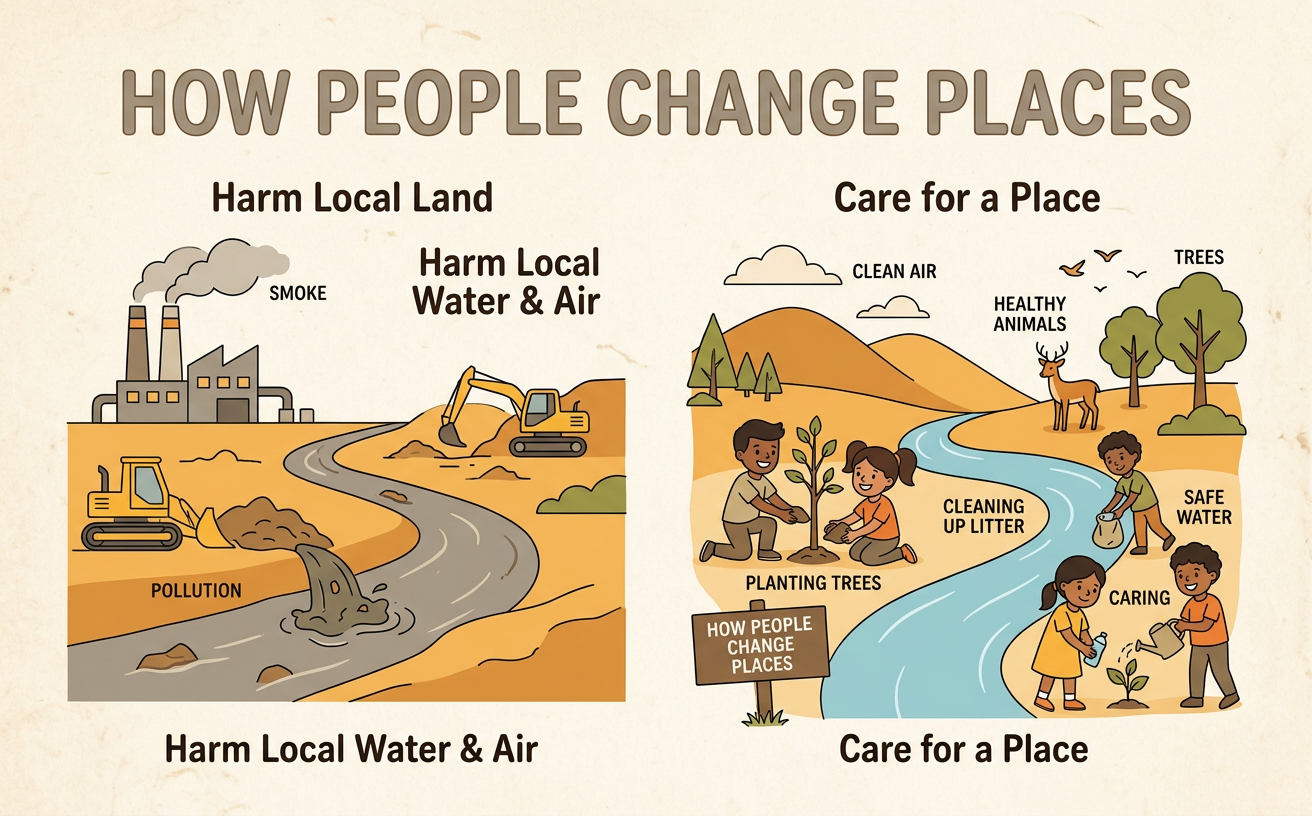
Students examine how human activities can help or harm local land, water, air, and living things, then suggest one way to care for a place.
Illustrations are auto-generated and may be placeholders. They can be refreshed to match the narration.
What Is a Place?
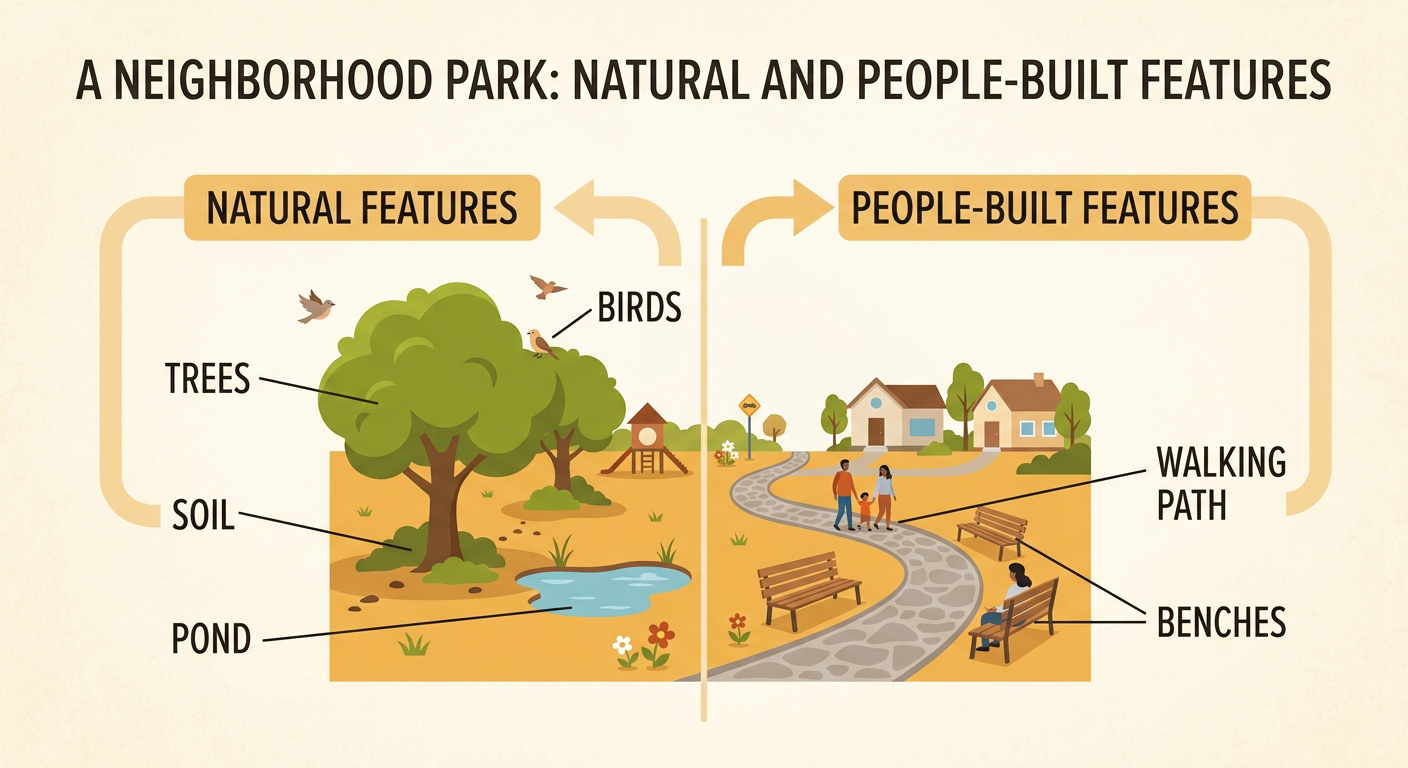
A place is an area where people, plants, and animals live or visit. A place can be a yard, park, neighborhood, farm, beach, or city. Every place has natural features, such as land, water, air, plants, and animals. It can also have things people built, such as homes, roads, bridges, and playgrounds. People use and change places to meet their needs. For example, families may visit a neighborhood park. The park has soil, trees, birds, a walking path, and benches. The trees and birds are part of the natural environment. The path and benches were added by people. Together, these features make the park a special place for living things and visitors.
Ways People Change Places
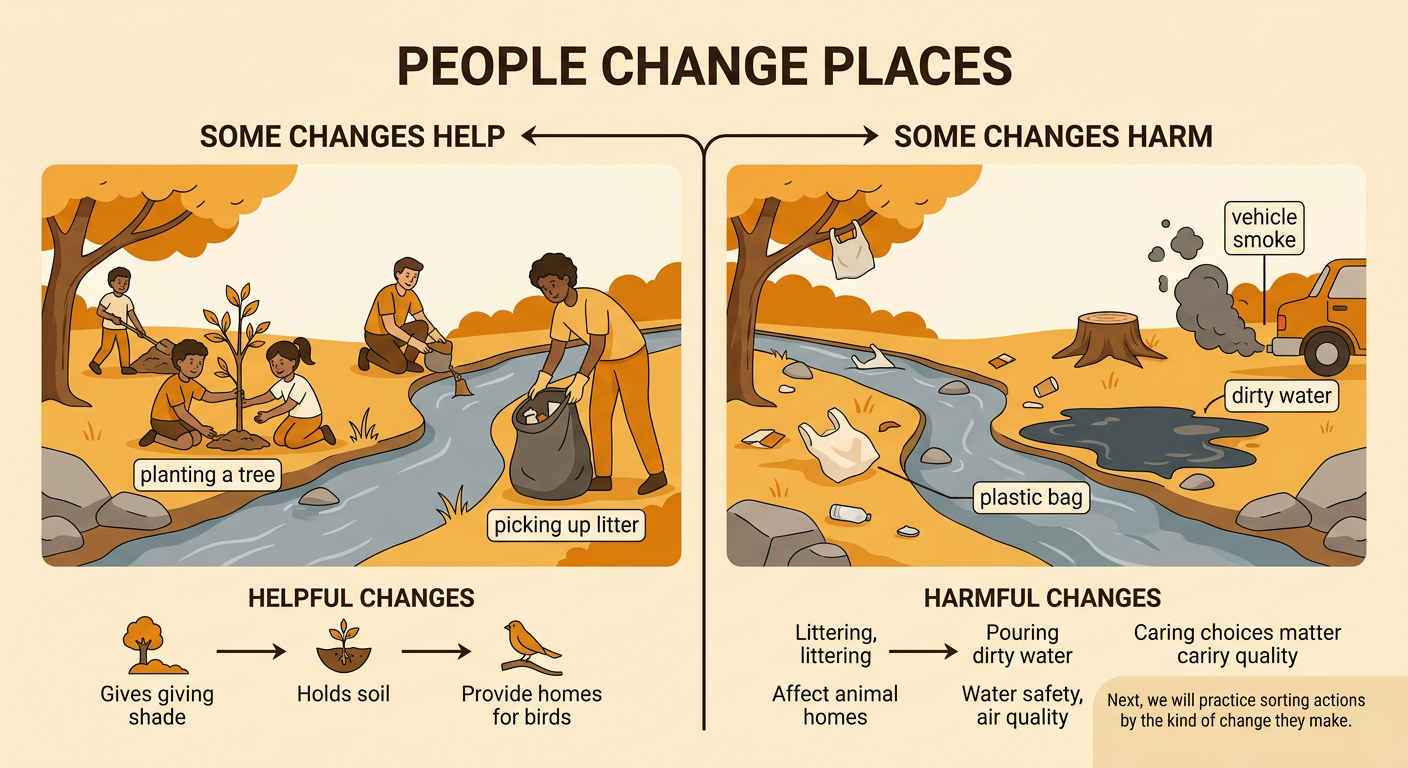
People change places when they build, clean, plant, cut, move, or throw away things. Some changes help the environment. Planting a tree can provide shade, hold soil in place, and give birds a home. Picking up litter keeps trash away from animals and water. Other changes can cause harm. Dropping a plastic bag may hurt an animal. Pouring dirty water into a stream can make the water unsafe for living things. Smoke from too many vehicles can make the air dirtier. One activity may change several parts of a place. For example, cutting down many trees removes animal homes, leaves soil less protected, and changes how the area looks. Thinking about each effect helps people make caring choices.
Sort Helpful and Harmful Actions
Sorting actions helps us compare how people affect a place. Use three groups: helpful, harmful, and not sure. An action is helpful when it protects land, water, air, plants, animals, or people. An action is harmful when it damages or pollutes them. Place planting native flowers in the helpful group because the flowers can provide food for local insects. Place leaving trash beside a pond in the harmful group because wind or rain may carry it into the water. Some actions belong in not sure until we learn more. Watering a lawn could help grass, but using too much water can waste an important resource. Talk with classmates, examine pictures or simple facts, and explain why each action belongs in its group.

Read Our Class Data
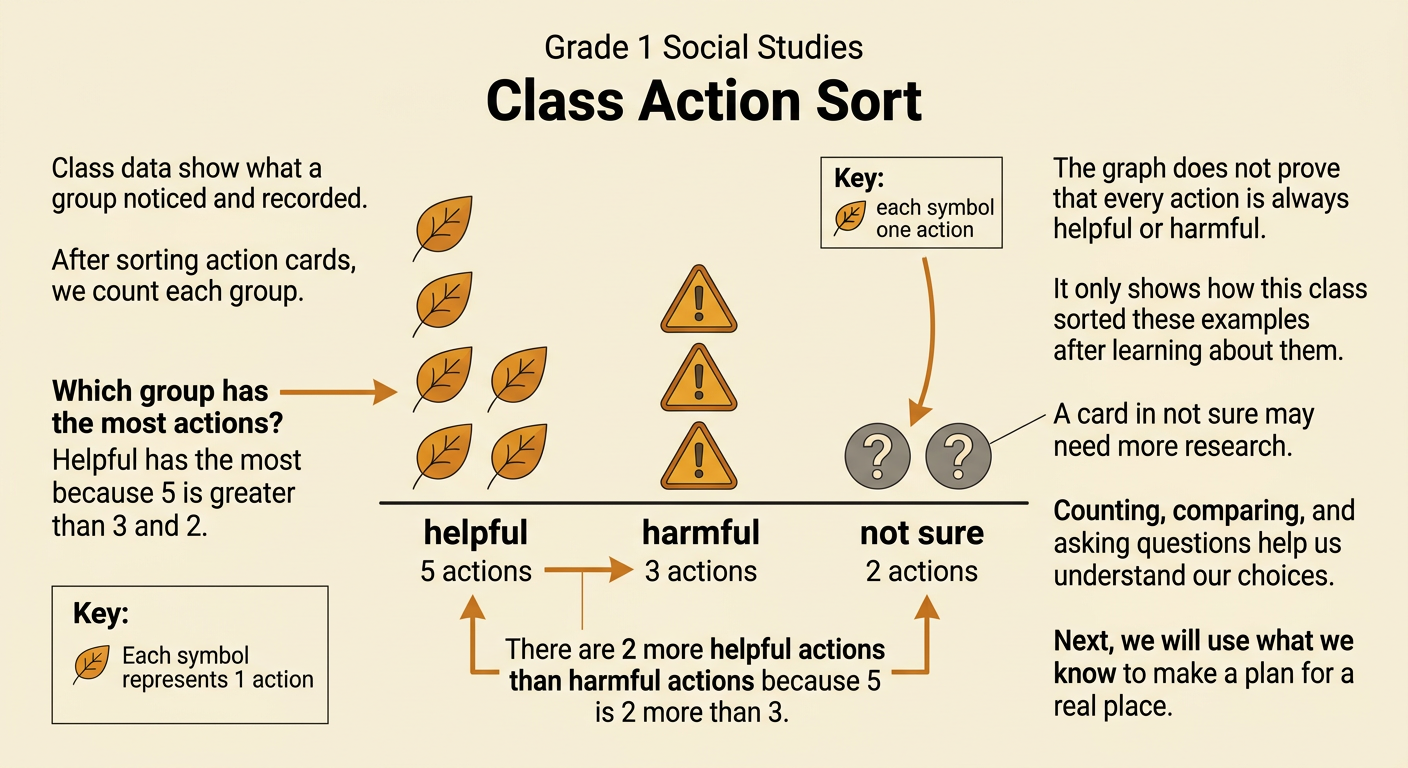
Class data can show what a group noticed. After sorting action cards, count the cards in each of the three groups. Record each total in a picture graph or chart. Suppose the class sorted 5 actions as helpful, 3 as harmful, and 2 as not sure. The helpful group has the most actions because 5 is greater than 3 and 2. The not sure group has the fewest actions because 2 is less than 3 and 5. There are 2 more helpful actions than harmful actions. The data do not prove that every action is always helpful or harmful. They show how the class sorted the examples after looking at information. Students can ask questions, compare totals, and discuss any card that needs more research.
Choose a Way to Care for a Place
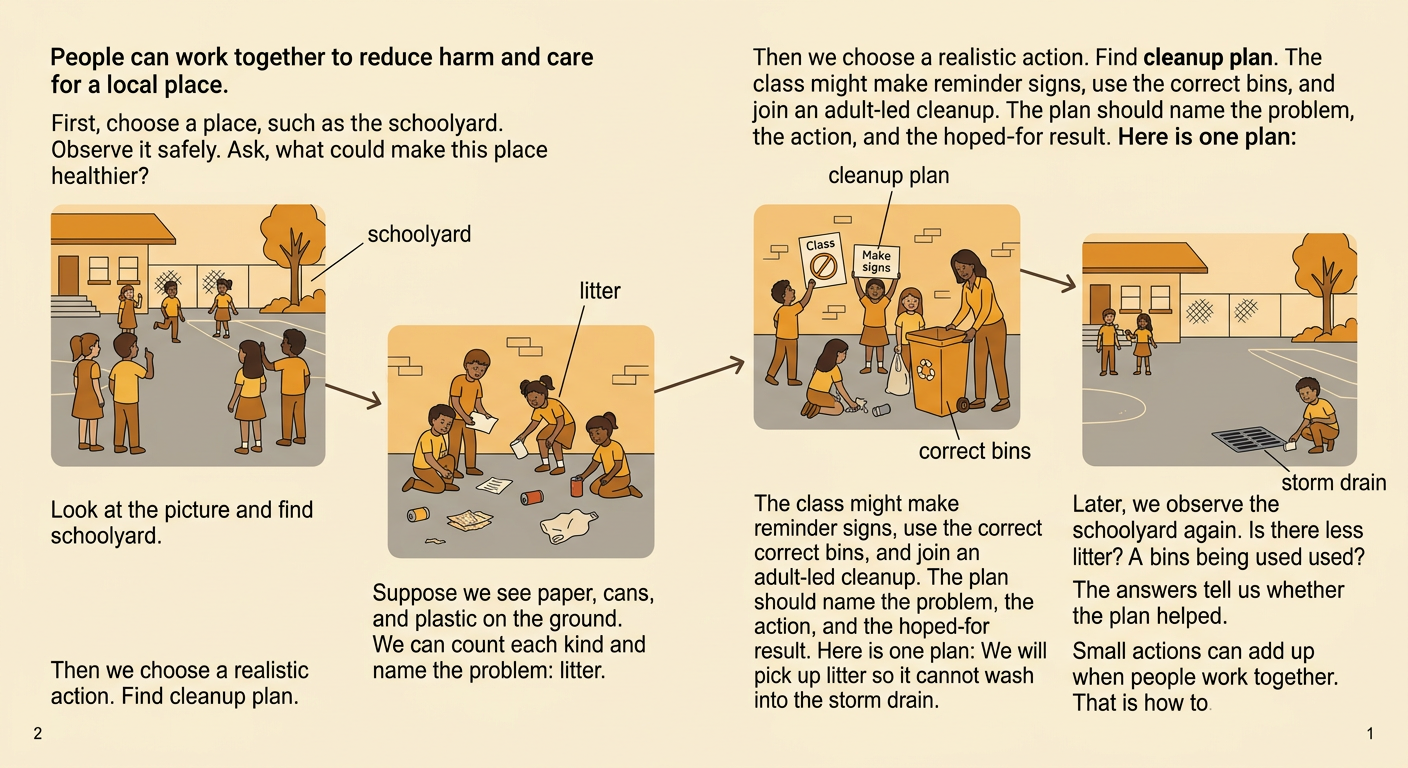
People can work together to reduce harm to a local place. First, choose a place, such as the schoolyard. Observe it safely and ask a question: What could make this place healthier? Gather information by looking, listening, reading with an adult, or counting what you find. A class might count paper, cans, and plastic litter in three categories. Then choose one realistic solution. If litter is the problem, students could make reminder signs, use the correct bins, and help with an adult-led cleanup. Write or draw a shared plan that names the problem, the action, and the hoped-for result. For example: We will pick up litter so it cannot wash into the storm drain. Later, observe the place again to see whether the plan helped.