How Plants and Animals Change Their Environment
Students observe examples such as tree roots, worm tunnels, and bird nests to explain how living things can change the places where they live.
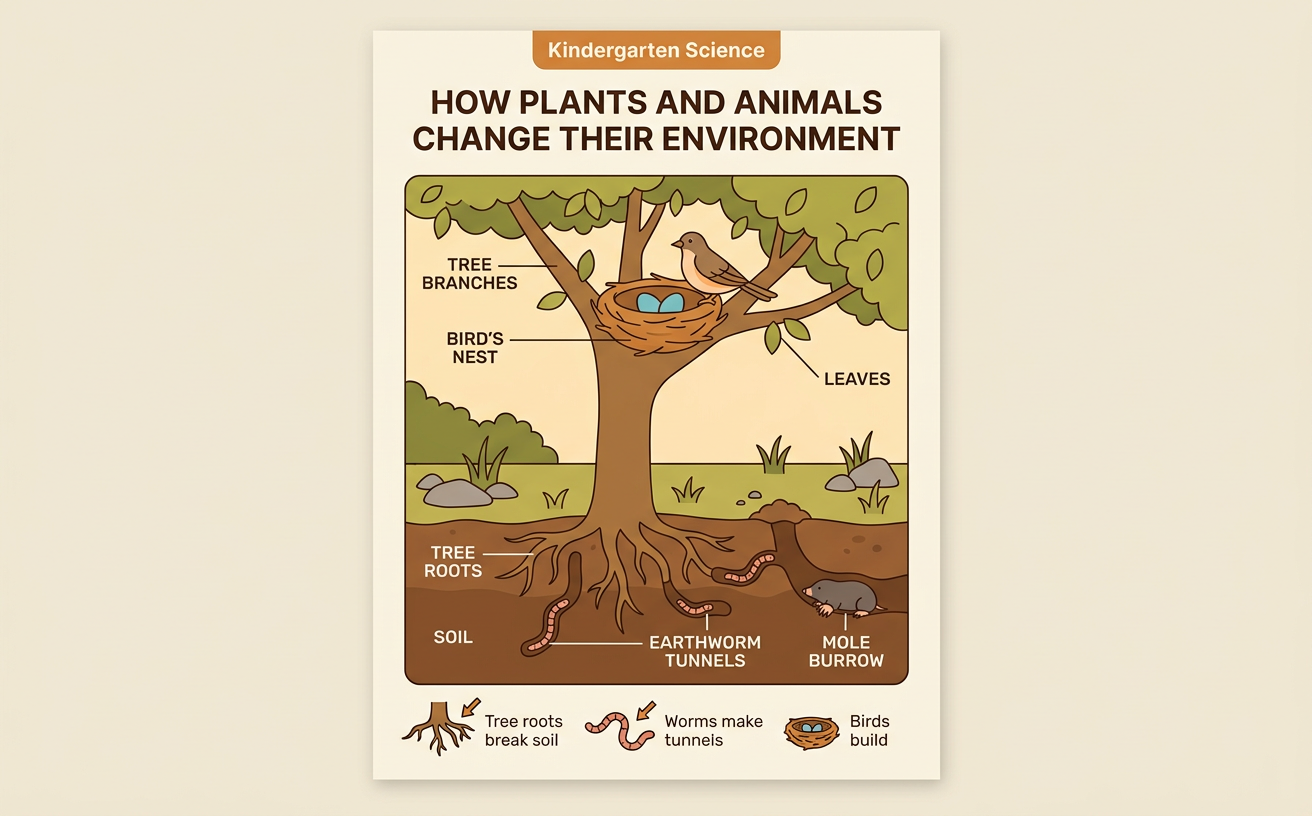
Illustrations are auto-generated and may be placeholders. They can be refreshed to match the narration.
Notice Changes in a Habitat
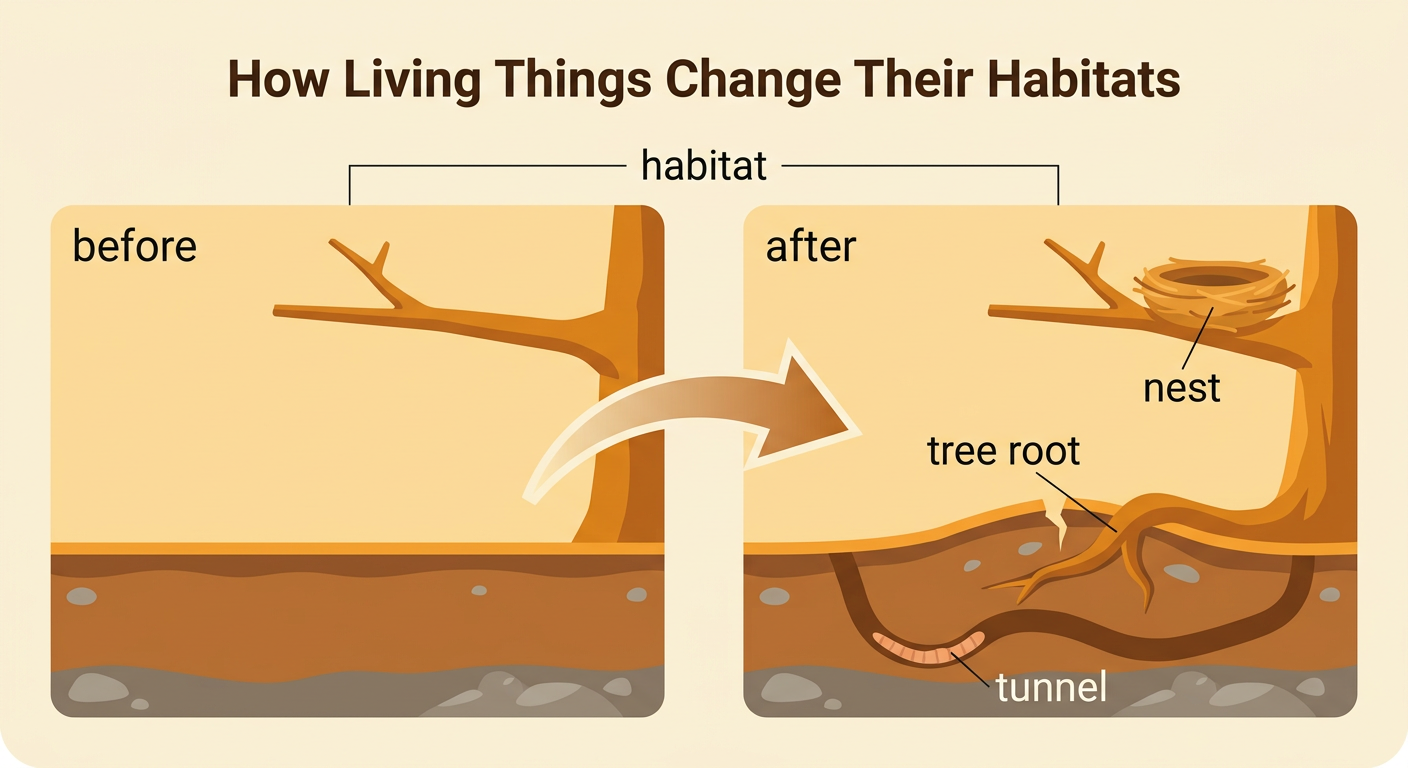
A habitat is a place where a living thing gets what it needs, such as food, water, air, or shelter. Plants and animals can change their habitats. Look closely for clues. A tree root may grow through soil and lift a small part of a sidewalk. A worm may move through the ground and leave a tunnel behind. A bird may carry twigs to a branch and build a nest. Each clue shows that a living thing changed its surroundings. We can compare what a place looked like before and after the change. We can also ask, “What changed?” and “How might this change help the living thing?” Share your observations with a partner and listen to what your partner notices.
Explore Roots, Tunnels, and Nests
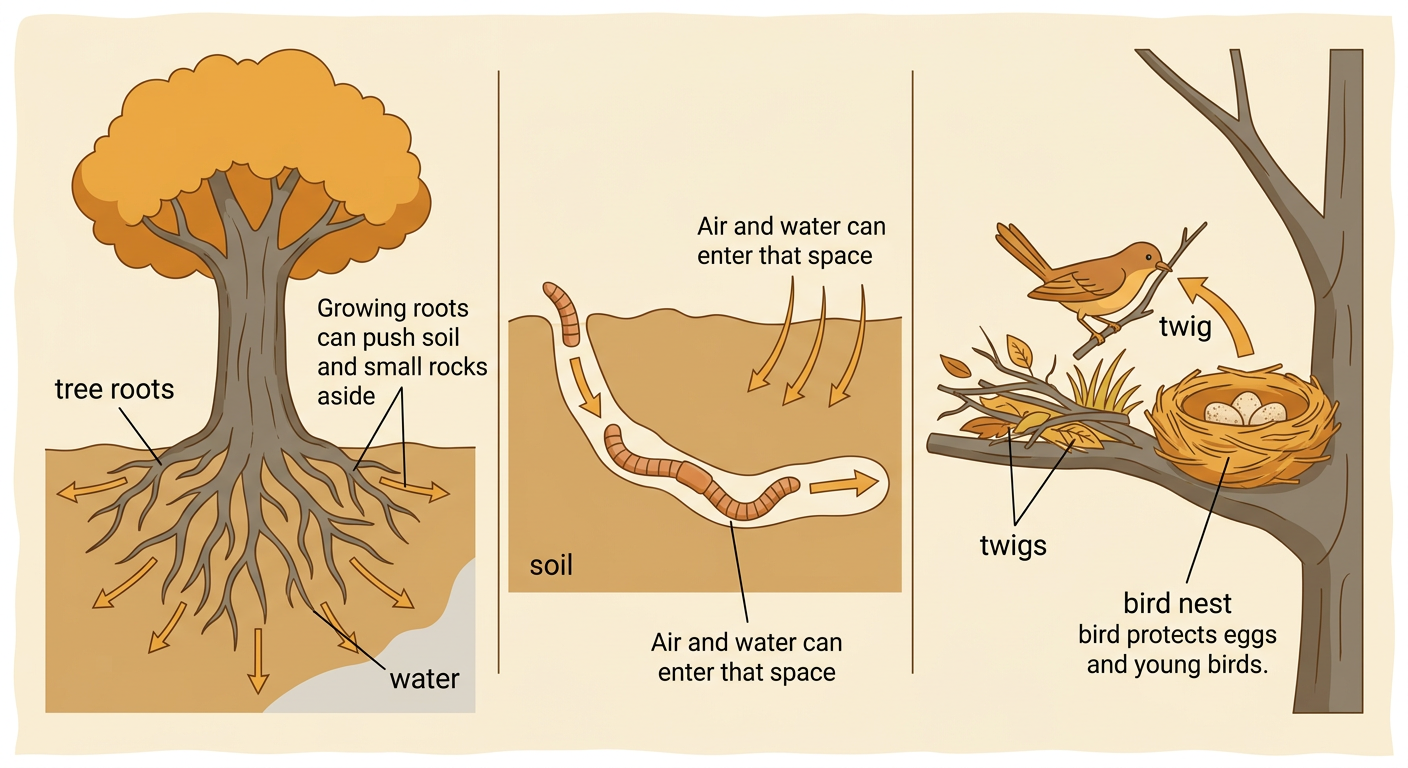
Different living things change places in different ways. As a tree grows, its roots spread through the soil. The roots take in water and help hold the tree in place. Growing roots can move soil or small rocks. An earthworm moves by pushing through moist soil. Its tunnel changes the soil and can make spaces where air and water enter. A bird gathers materials such as twigs, grass, and leaves. It places them together to build a nest. The nest gives eggs and young birds a protected place. Study each example and describe the steps in order. First, the living thing acts. Next, part of the habitat changes. Then, the change helps the living thing meet a need.
Match Living Things to Their Changes
We can use evidence to match each living thing with the change it makes. Start by naming what you see. If you see a trail of open spaces under the ground, that is evidence of an animal tunnel. An earthworm can make this change as it moves through soil. If you see thick roots spreading beside a tree, the tree made that change as it grew. If you see a cup made of twigs and grass on a branch, a bird likely built the nest. Do not match by guessing. Point to a clue and explain your thinking. You might say, “I match the bird to the nest because the picture shows a bird carrying a twig.” Listen to a partner’s match, and ask which clue supports it.

Sort Plant and Animal Examples
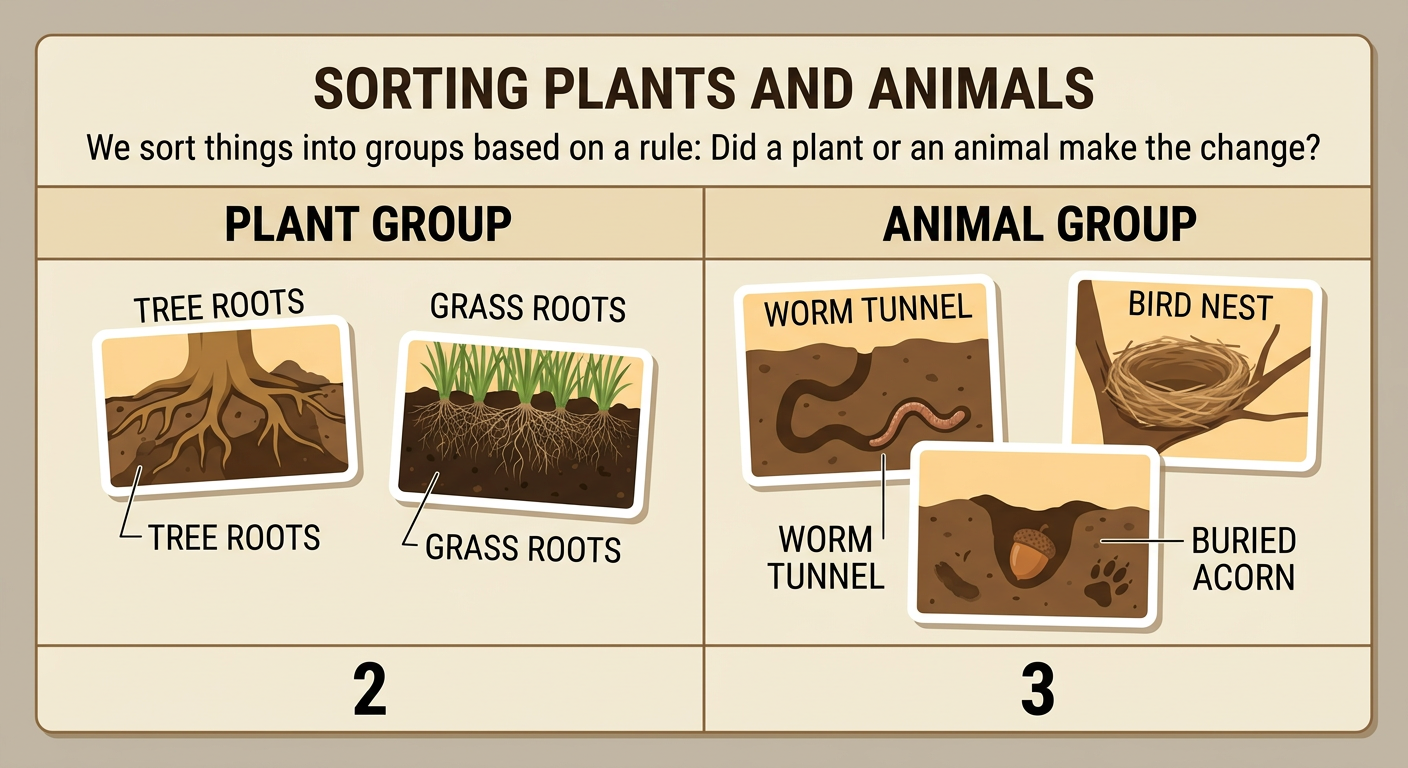
Sorting helps us see how plants and animals change habitats. Make two groups: changes made by plants and changes made by animals. A tree root moving soil belongs in the plant group. A worm tunnel and a bird nest belong in the animal group. Add more picture cards if they are provided. A squirrel’s buried acorn is an animal example. Grass roots holding soil are a plant example. After sorting, count the cards in each group. Tell how many plant examples and how many animal examples you have. Then compare the groups. Which group has more, fewer, or the same number? Explain the rule you used to sort. If a card is hard to place, talk with a partner and look for evidence showing which living thing caused the change.
Explain a Change with Evidence
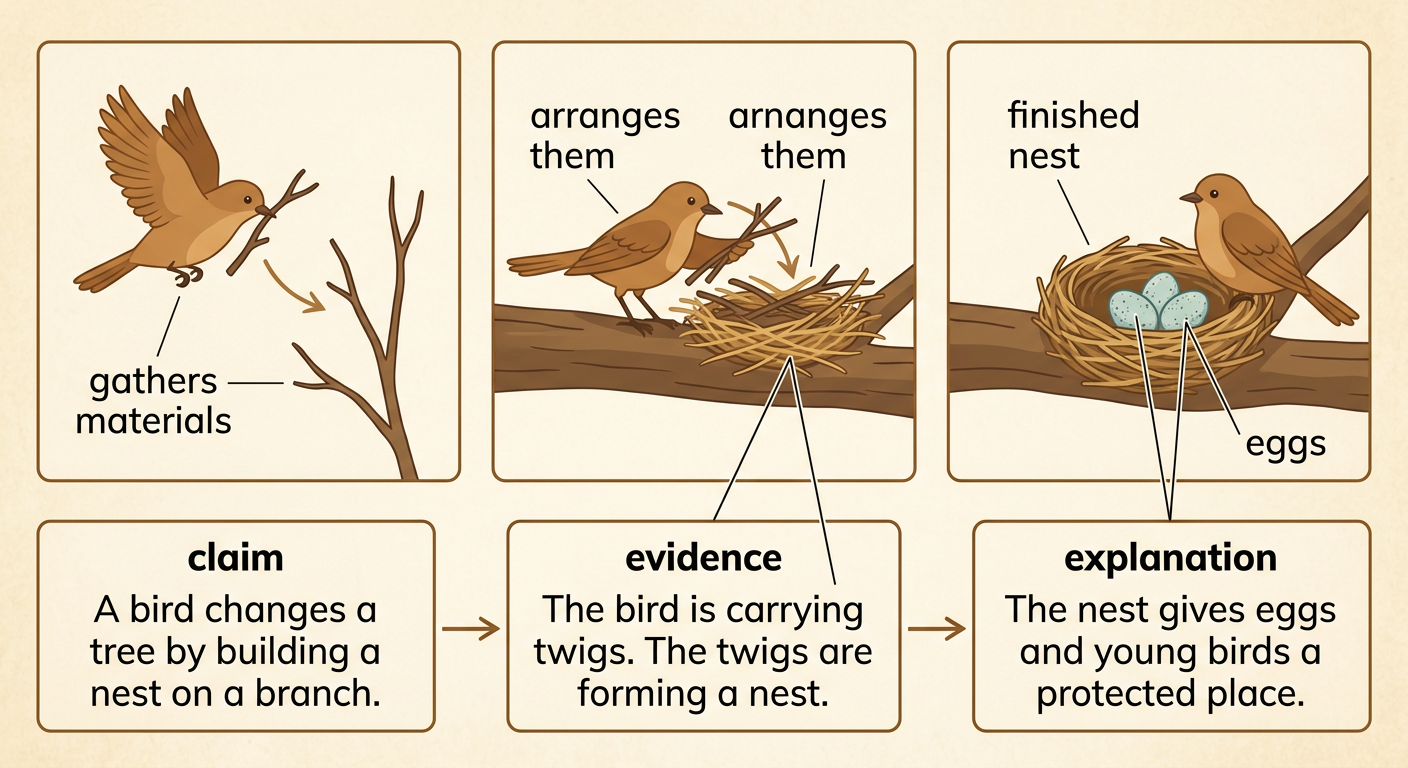
An argument in science is an idea supported by evidence. Choose one example and make a claim about how a living thing changed its habitat. You might say, “A bird changes a tree by building a nest on a branch.” Next, give evidence: “I see the bird carrying twigs and the twigs forming a nest.” Then explain how the change meets a need: “The nest provides a place for eggs and young birds.” Put the events in order. First, the bird gathers materials. Next, it arranges them on a branch. Last, the finished nest holds eggs or young birds. Tell your explanation to a partner. Speak clearly, take turns, and listen. Your partner may ask, “What evidence do you see?” Use details from the picture to answer.