How Point of View Creates Suspense and Humor
Students analyze how differences between a character’s perspective and the reader’s knowledge create suspense, surprise, or humor in a literary text.

Illustrations are auto-generated and may be placeholders. They can be refreshed to match the narration.
Review Point of View
Point of view is the position from which a story is told or experienced. In first-person narration, a character tells the story using words such as “I” and “me.” In third-person limited narration, the narrator reveals the thoughts and feelings of one character. In third-person omniscient narration, the narrator may reveal information about several characters. Point of view affects what each character and the reader can know. For example, imagine that Ana enters a storage shed looking for a soccer ball. Ana sees dusty shelves and sports equipment, but the narrator has already told readers that a snake is curled behind a box. Ana’s limited perspective differs from the reader’s broader knowledge. This difference is called dramatic irony, and authors can use it to create suspense, surprise, or humor.

Identify What the Character Knows
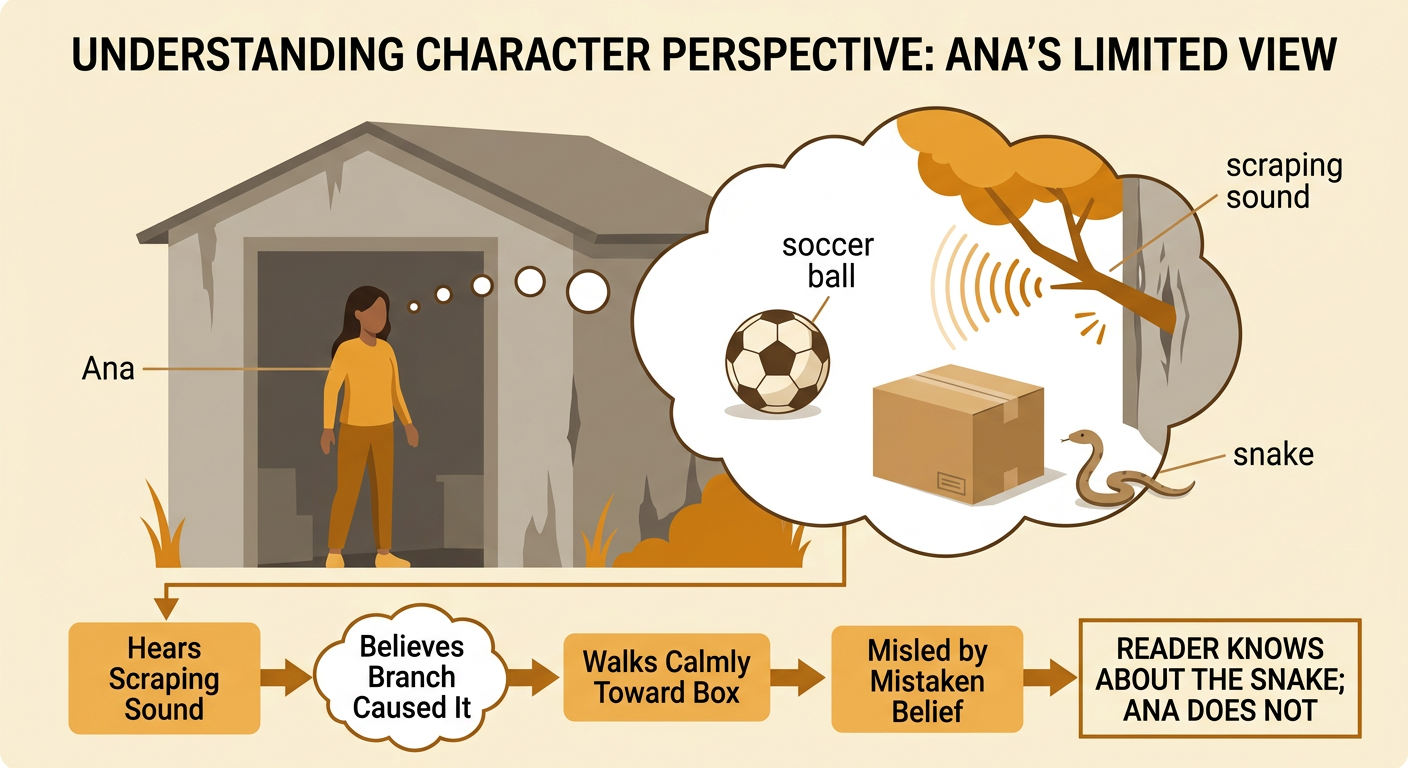
To analyze point of view, first identify exactly what a character knows, sees, hears, believes, and expects at a particular moment. Do not include information that only the narrator or reader possesses. Look for details describing the character’s observations, thoughts, dialogue, and past experiences. In the shed example, Ana knows that her soccer ball rolled inside. She sees a box near the back wall and hears a soft scraping sound. Because she thinks a branch is rubbing against the building, she walks toward the box. Ana does not know that a snake is behind it. Her mistaken explanation matters because it guides her actions. A useful question is, “Based only on the character’s information, what does the character think is happening?” The answer helps explain why the character acts calmly, fearfully, or foolishly.
Identify What the Reader Knows
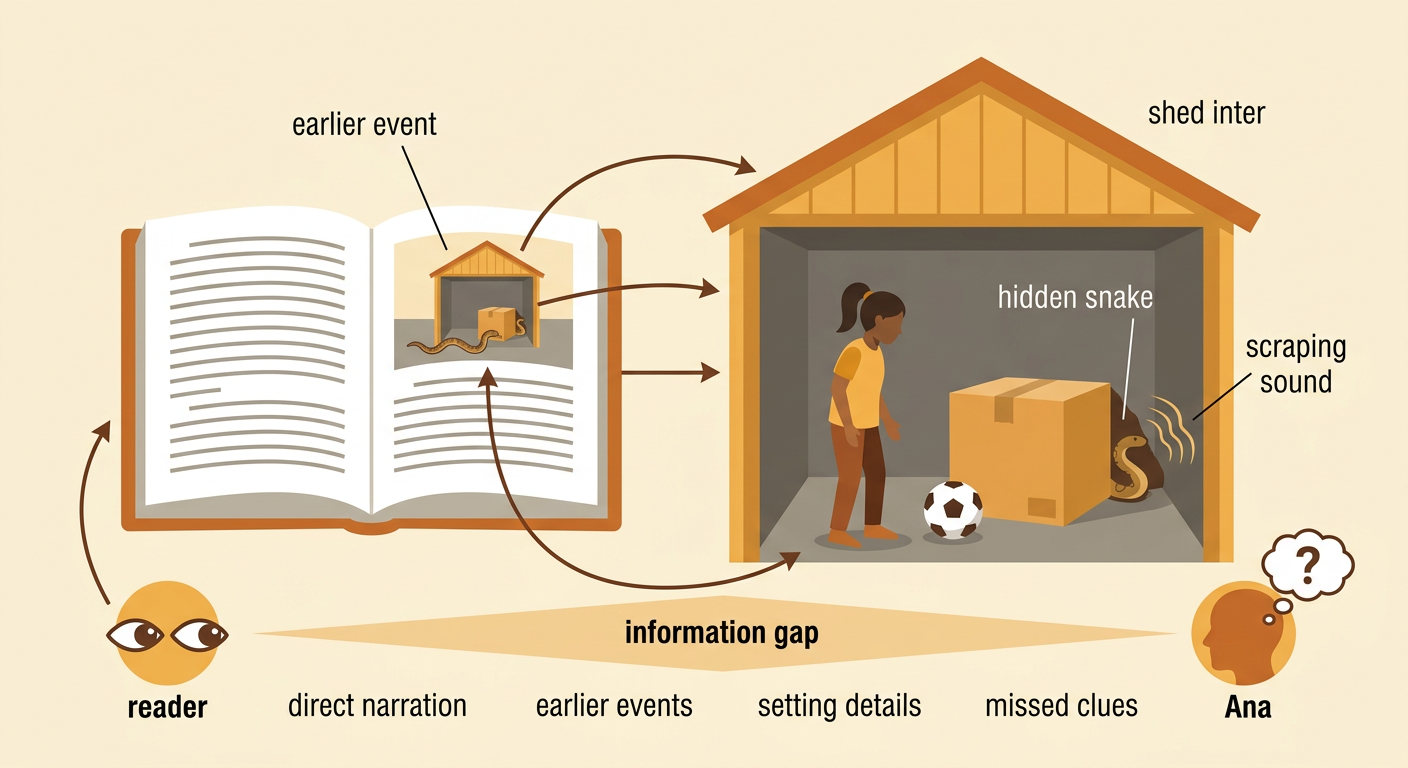
Next, list the information available to the reader at the same point in the story. Readers may know more than a character because the narrator reveals another scene, describes a hidden danger, or shares another character’s plan. Readers may also know less, especially when a narrator hides important information to create a surprise. In the shed example, readers know that a snake slid behind the box before Ana entered. They also know that Ana incorrectly blames the scraping sound on a branch. This creates an information gap: readers understand the danger while Ana remains unaware of it. Pay attention to direct narration, earlier events, setting details, and clues whose meaning the character misses. Ask, “What information can the reader connect that the character cannot?” That connection often reveals how the author is shaping the reader’s emotional response.
Compare Perspectives
After identifying both sets of knowledge, compare them directly. State what the character believes, what the reader understands, and how those ideas differ. A comparison chart can make the information gap easy to see. Ana believes the shed is safe and that a branch caused the scraping sound. The reader understands that a snake is nearby and may have caused the sound. Both Ana and the reader know that the soccer ball is in the shed, but only the reader recognizes the danger. This difference is more important than simply naming the narration as third person. The analysis should explain how access to information creates contrasting perspectives. Useful comparison language includes “while,” “unlike,” and “although.” For example: “Although Ana believes she is approaching an ordinary box, the reader knows that a snake is hidden behind it.”

Analyze the Effect
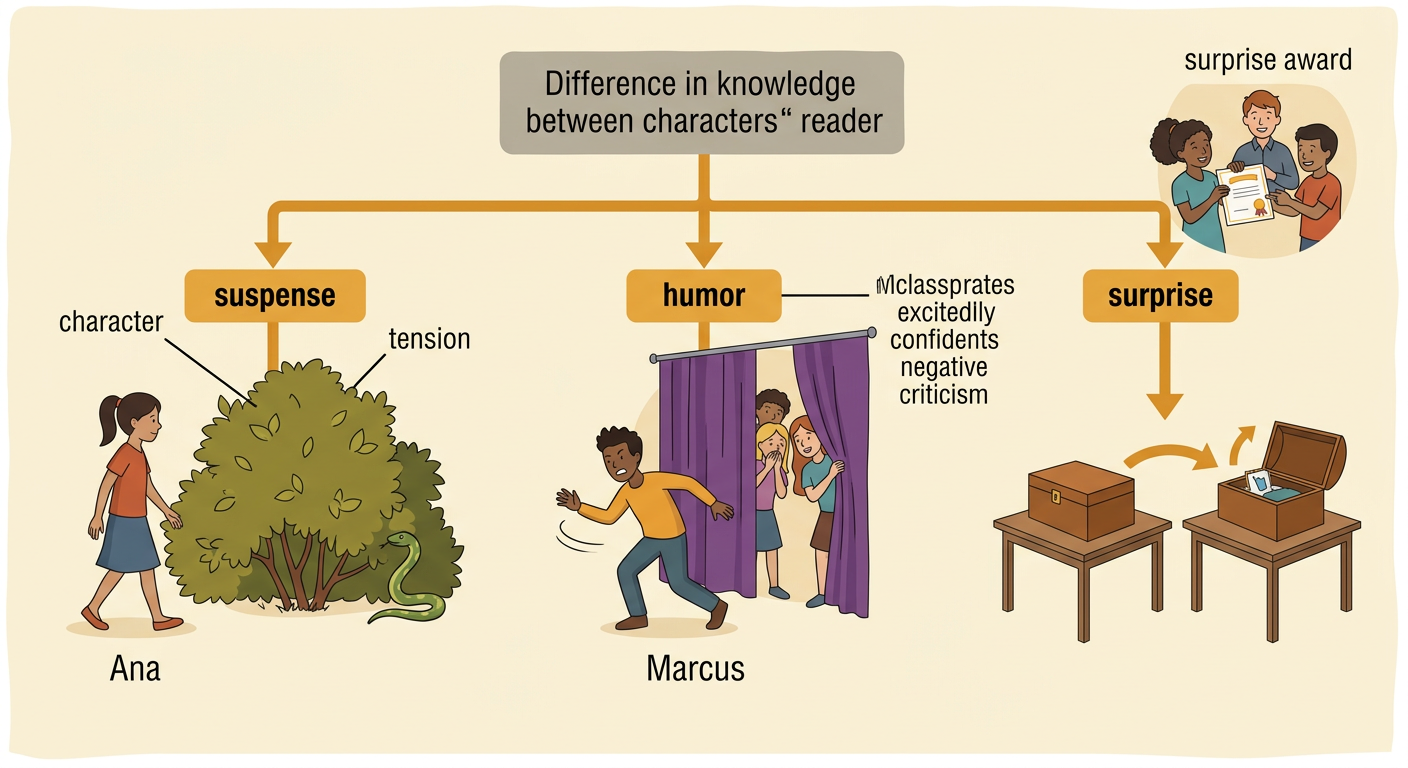
The information gap affects how readers respond to an event. Suspense occurs when readers anticipate danger or an uncertain outcome. In the shed example, readers may feel suspense because Ana moves closer to a snake she cannot see. Her calm behavior increases tension because readers understand the risk. Humor can result when a character confidently misunderstands a harmless situation. For example, Marcus hears classmates whispering behind a curtain and assumes they are criticizing his speech. Readers already know they are preparing a surprise award. His dramatic attempts to avoid the curtain may seem funny because readers recognize his mistake. Surprise works differently: the character and reader may learn unexpected information at the same moment. To analyze the effect, connect the information difference to a specific reader response and explain how the author delays, reveals, or withholds knowledge.
Write an Evidence-Based Explanation
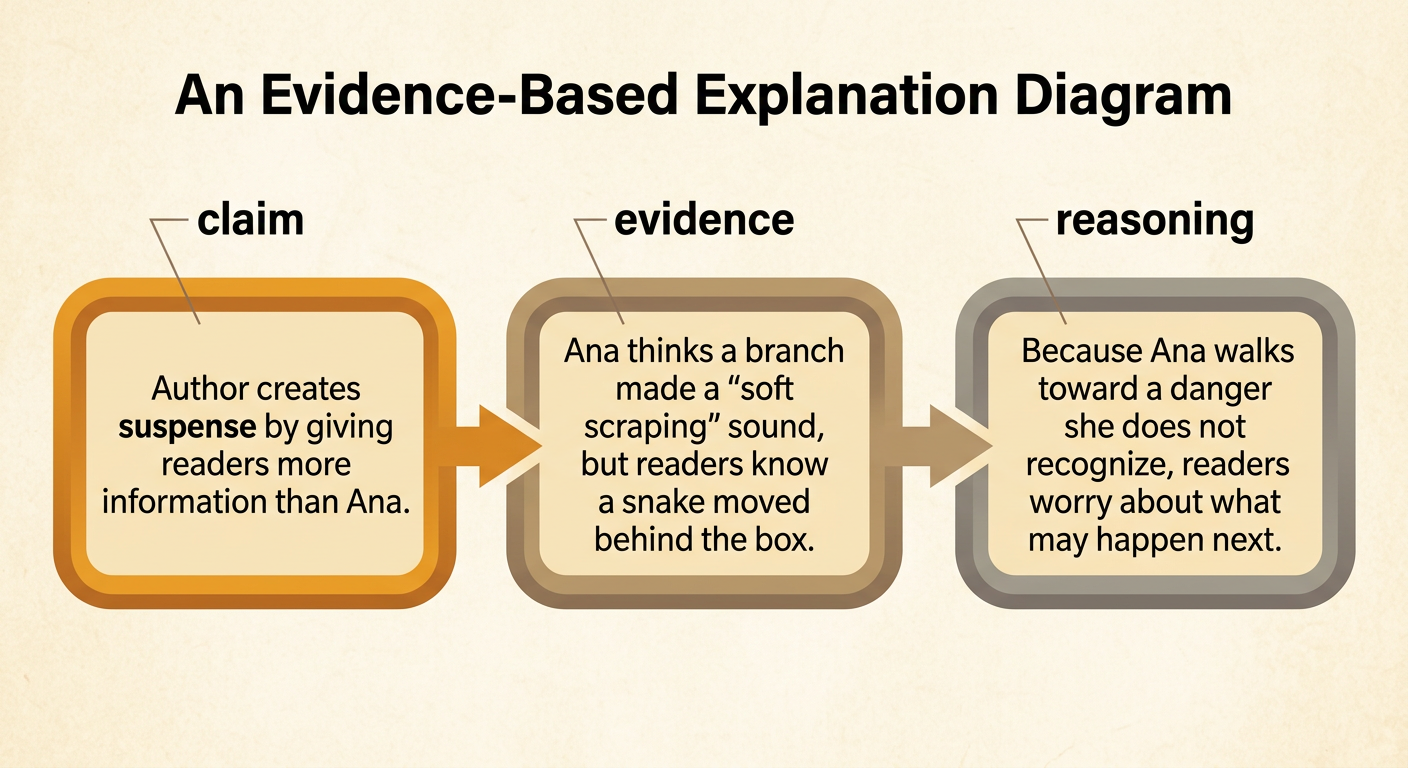
An evidence-based explanation should make a claim, cite relevant details, and explain how the difference in perspective creates an effect. Begin by naming what the character believes and what the reader knows. Then include brief evidence from the text and connect it to suspense, humor, or surprise. For example: “The author creates suspense by giving readers more information than Ana. Ana hears a ‘soft scraping’ but decides that a branch caused it, while readers know that a snake moved behind the box. Because Ana walks toward a danger she does not recognize, readers worry about what may happen next.” This explanation does more than summarize the scene. It identifies the contrasting perspectives and explains their effect. Avoid ending immediately after a quotation. Always add reasoning that shows why the evidence supports the claim about the reader’s response.