
How Point of View Shapes a Story
Students analyze how a narrator’s point of view influences the description of characters, events, and feelings in a literary text.
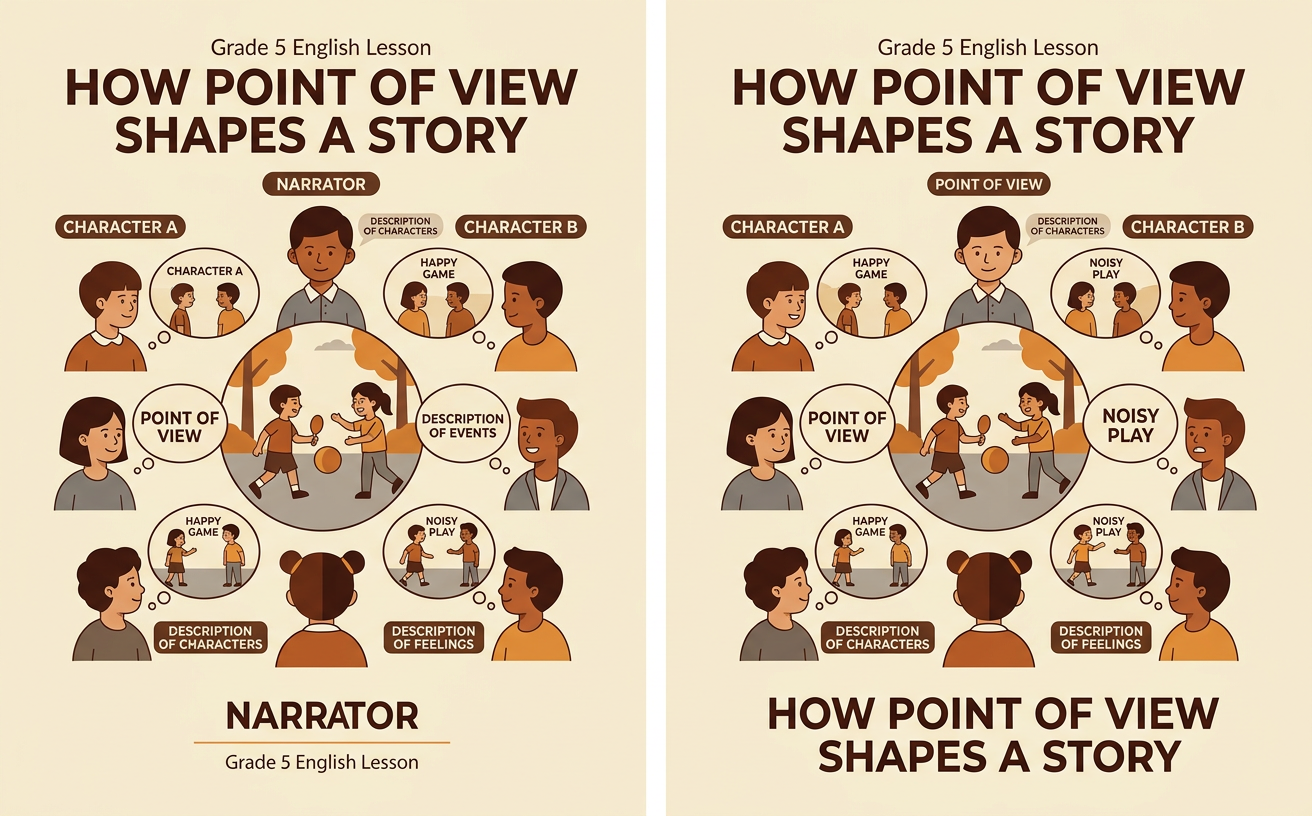
Illustrations are auto-generated and may be placeholders. They can be refreshed to match the narration.
Review First- and Third-Person Narration
A story’s narrator is the voice that tells the story. In first-person narration, the narrator is a character who uses words such as I, me, my, and we. This narrator can directly share personal thoughts and feelings but may not know what other characters think. For example, “I gripped the railing as the boat rocked. I was sure we would tip over.” In third-person narration, the narrator is outside the story and uses names or words such as he, she, and they. For example, “Maya gripped the railing as the boat rocked. She feared it might tip over.” A third-person narrator may reveal one character’s thoughts, several characters’ thoughts, or only actions that can be observed. Recognizing the type of narration helps you understand whose knowledge and feelings shape the story.

Identify the Narrator
To identify the narrator, ask, “Who is telling this story?” Look at the pronouns and consider whether the storyteller takes part in the events. Suppose a story begins, “I hurried into the gym, hoping my science project was still standing.” The word I shows that a character is narrating. You can also ask what the narrator knows. This narrator knows personal hopes but may not know why another student is whispering. Now consider, “Elena hurried into the gym, hoping her science project was still standing.” The narrator calls the character Elena and uses her, so the narration is in third person. Do not assume that the author is the narrator. The author creates the story, while the narrator is the voice chosen to tell it. Identifying that voice is the first step toward analyzing point of view.

Notice Words That Reveal Perspective
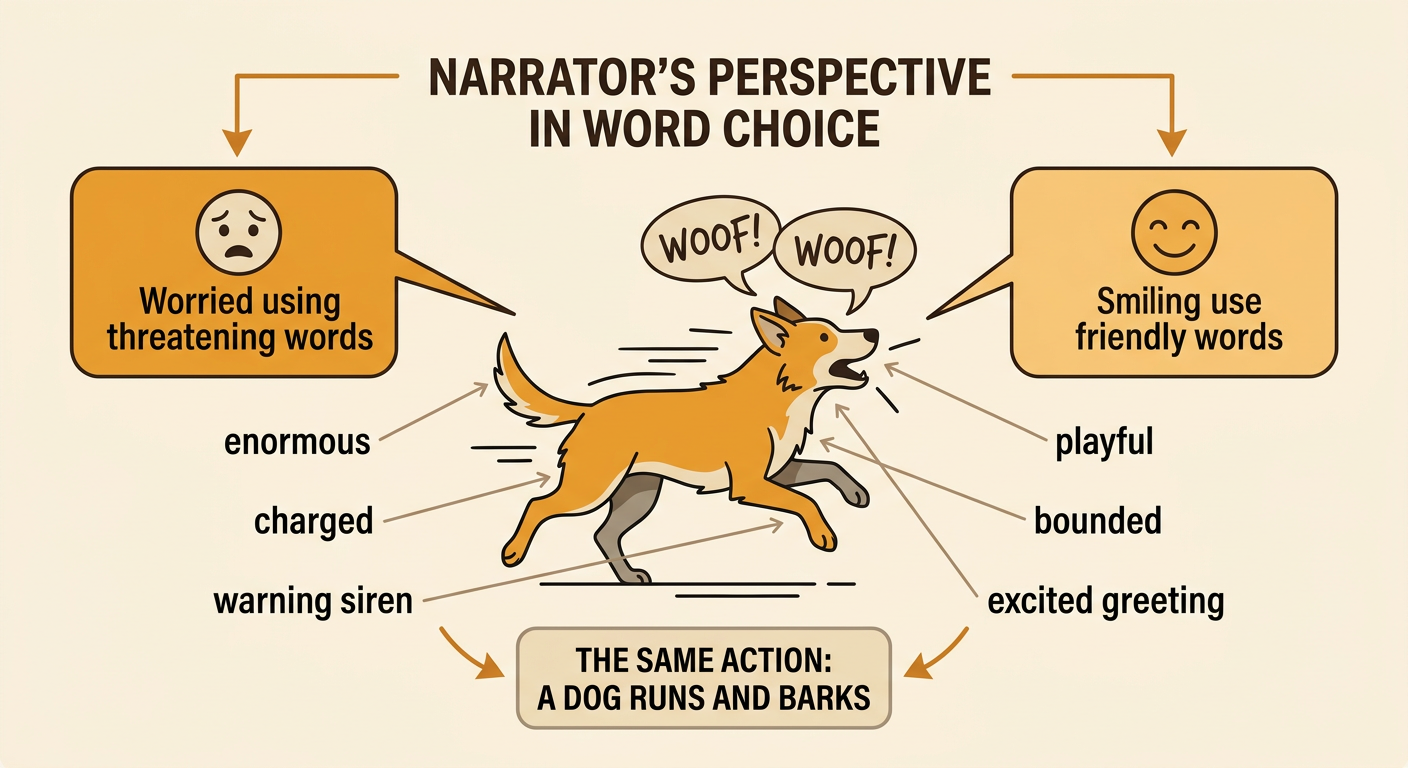
A narrator’s word choices reveal attitudes, feelings, and beliefs. Look for descriptive words, comparisons, and comments that show how the narrator views a person or event. Imagine a narrator says, “The enormous dog charged toward me, barking like a warning siren.” Words such as enormous, charged, and warning make the dog seem dangerous. Another narrator might describe the same action by saying, “The playful dog bounded toward me, barking an excited greeting.” Words such as playful, bounded, and greeting make the dog seem friendly. The dog may perform the same basic actions in both descriptions, but each narrator interprets those actions differently. When reading, underline words with strong positive or negative meanings. Then ask what those words suggest about the narrator’s feelings. This helps you separate what happened from how the narrator presents what happened.
Compare Different Views of an Event
Comparing two accounts of the same event helps you see how point of view changes a story. Imagine that Noah and Priya perform in a school talent show. Noah narrates, “The lights blinded me, and my hands shook as I missed the first note.” He focuses on fear and his mistake. Priya narrates, “The audience leaned forward, and Noah recovered quickly after a shaky start.” She notices the audience and Noah’s improvement. Both narrators describe the same performance, but they select different details. Noah knows exactly how nervous he feels, while Priya can only observe his actions. To compare their views, make a chart with three parts: details both narrators include, details only the first narrator includes, and details only the second includes. Then explain how each narrator’s position, knowledge, and feelings affect the account.

Explain the Narrator’s Influence
To explain a narrator’s influence, connect the point of view to the way characters, events, and feelings are described. Use evidence from the text and explain its effect on the reader. For example, in a first-person story, Luis says, “Tara snatched the last seat before I could reach it.” The verb snatched suggests that Luis thinks Tara acted unfairly. Another observer might say, “Tara sat in the last open seat,” which sounds neutral. A strong explanation could be: “Because Luis wanted the seat, his first-person point of view makes Tara’s action seem selfish. The word snatched encourages the reader to share his frustration, even though Tara’s reason is unknown.” This response names the point of view, cites a revealing detail, and explains its influence. Remember that a narrator’s account may be limited or biased rather than completely false.
