How Polymer Structure Determines Material Properties
Students connect polymer chain structure, branching, and cross-linking to material properties and evaluate how those relationships affect the design and disposal of plastics.

Illustrations are auto-generated and may be placeholders. They can be refreshed to match the narration.
From Monomers to Polymers
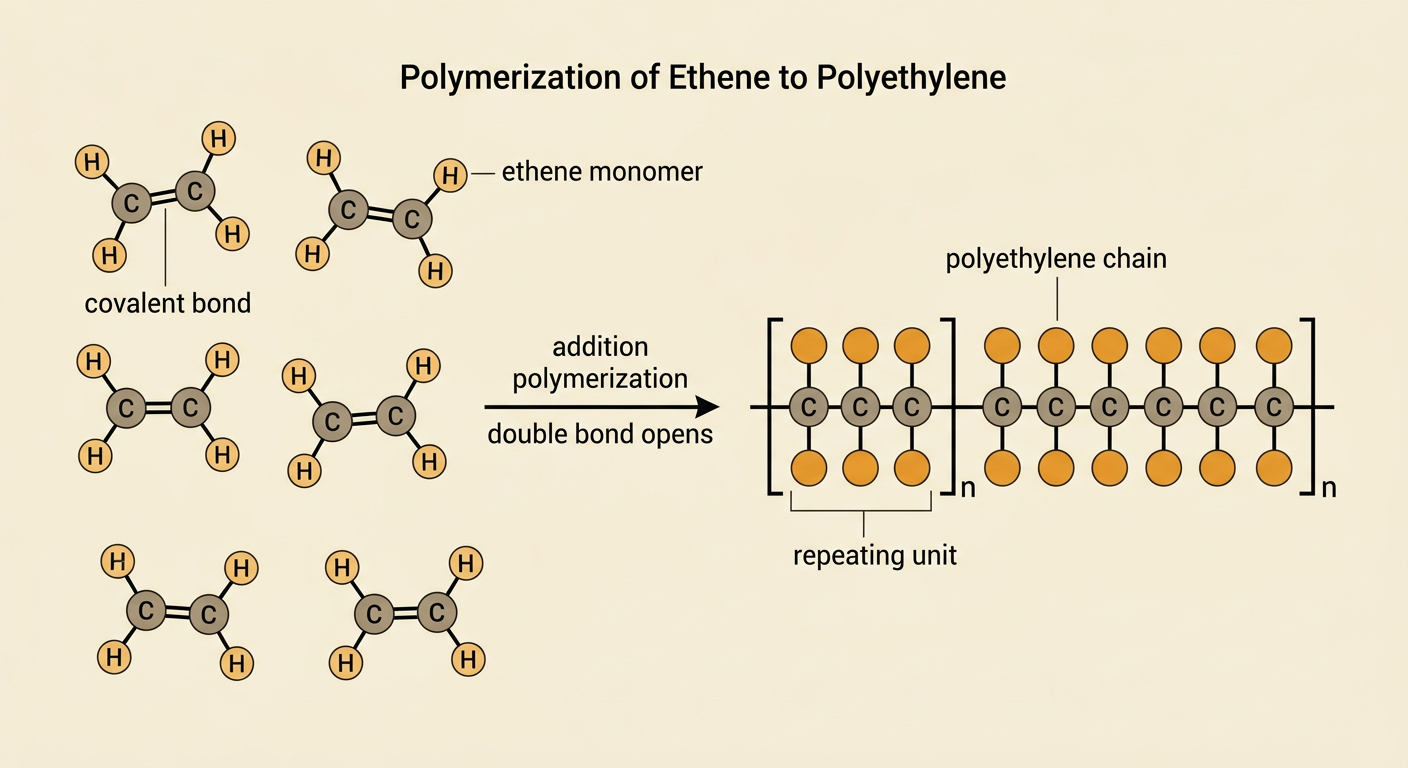
A polymer is a large molecule made from many smaller molecules called monomers. During polymerization, monomers become connected by covalent bonds to form long chains or networks. The atoms and functional groups in each repeating unit influence how the finished polymer behaves. For example, ethene monomers contain carbon-carbon double bonds. In addition polymerization, those double bonds open, allowing thousands of ethene molecules to join into polyethylene chains. Polyethylene is used in products ranging from flexible bags to rigid containers. Its properties vary because polymerization conditions can produce chains with different lengths and degrees of branching. Thus, knowing a polymer’s monomer is important, but scientists must also examine how its repeating units are arranged and connected.
Comparing Linear, Branched, and Cross-Linked Chains
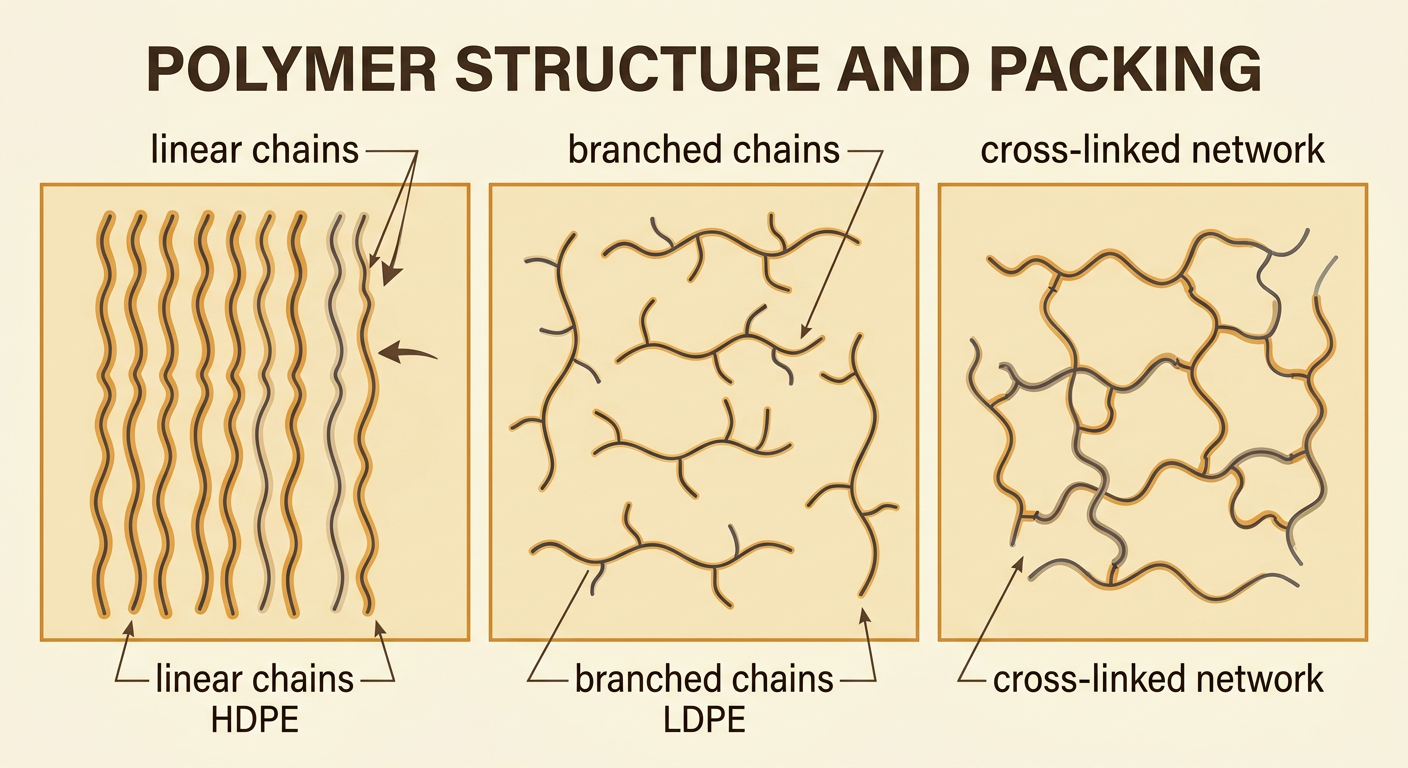
Polymer chains can be linear, branched, or cross-linked. Linear polymers consist mainly of long, unbranched chains that may align and pack closely. Branched polymers have side chains extending from their main chains, which can prevent close packing and create more space between molecules. Cross-linked polymers contain covalent bridges connecting separate chains into a network. These links restrict the chains from sliding past one another. High-density polyethylene is mostly linear, so its chains pack relatively closely and produce a strong, rigid material used in milk jugs. Low-density polyethylene has more branching, less efficient packing, and greater flexibility, making it useful for plastic bags. In heavily cross-linked materials, the connected network generally increases rigidity and prevents the material from melting and flowing normally.
Connecting Structure to Material Properties
Material properties emerge from both the polymer chains and the attractions between them. Long chains become entangled, helping a material resist being pulled apart. Stronger intermolecular attractions can increase stiffness, strength, and softening temperature. Regular, closely packed chain sections can form crystalline regions, while irregular arrangements form amorphous regions. Most familiar polymers contain a mixture of both. High-density polyethylene has relatively straight chains that develop more crystalline regions, giving it greater density and stiffness. More highly branched low-density polyethylene has fewer closely packed regions and is generally softer and more flexible. Temperature also matters: above a polymer’s glass-transition temperature, amorphous chain segments move more easily. Engineers therefore adjust chain length, branching, chemical groups, and crystallinity to achieve a desired balance of toughness, flexibility, transparency, and heat resistance.

Examining Thermoplastics and Thermosets
Thermoplastics and thermosets respond differently to heat because their molecular structures differ. Thermoplastics consist mainly of separate linear or branched chains. Heating increases chain movement, so the material softens or melts and can often be reshaped. Cooling reduces movement and hardens it again. Polyethylene and polyethylene terephthalate, or PET, are common thermoplastics. Thermosets form extensively cross-linked networks during curing. Because covalent links connect the network, heating cannot free whole chains to flow; excessive heat eventually causes chemical decomposition instead of ordinary melting. Cured epoxy is a thermoset used in adhesives and composite materials because it is rigid, durable, and heat resistant. However, its permanent network makes conventional melt reprocessing difficult, creating an important tradeoff between performance and recyclability.

Evaluating Design and Disposal Choices
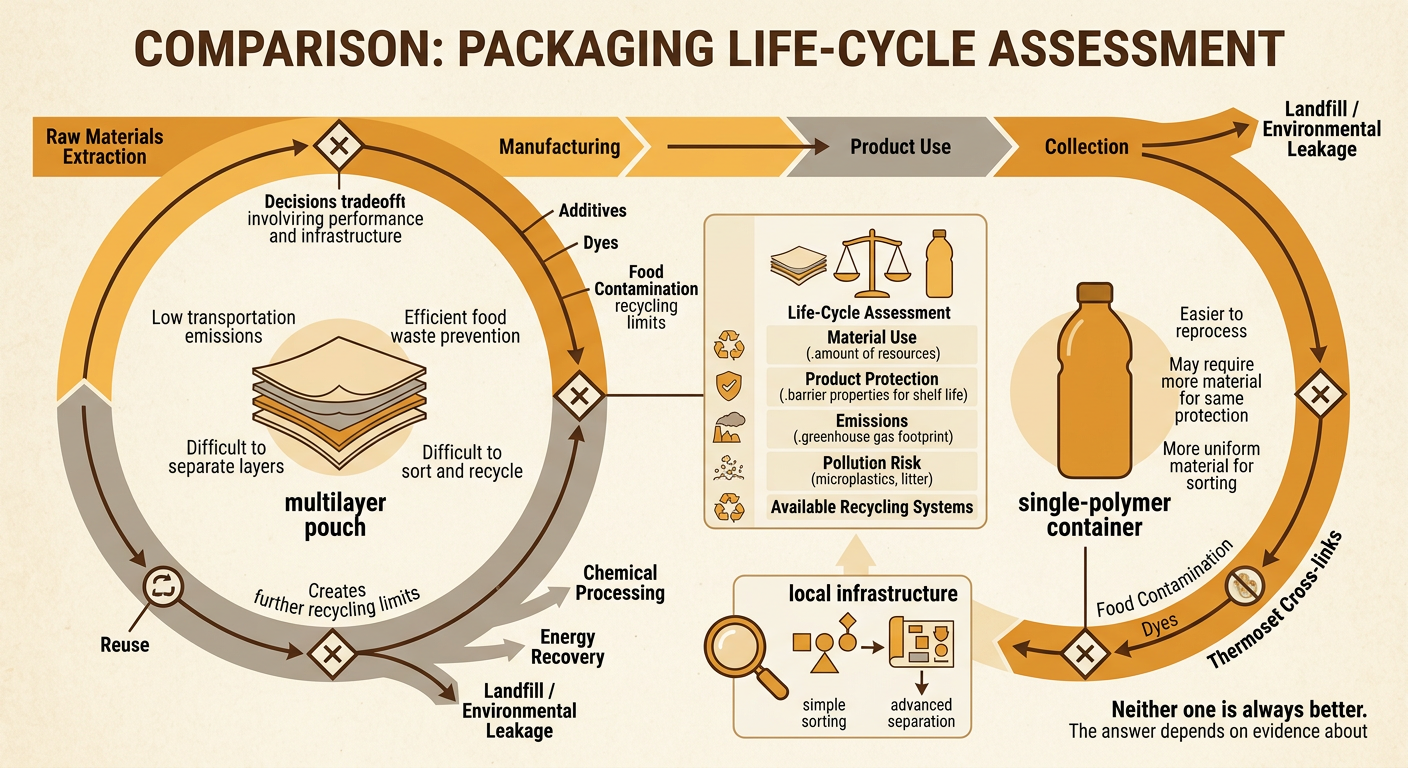
Choosing a plastic requires evaluating its entire life cycle, not only its performance during use. A lightweight multilayer food pouch may reduce transportation emissions and prevent food waste, but its bonded layers can be difficult to separate and recycle. A single-polymer container may be easier to sort and reprocess, although it could require more material to provide the same protection. Additives, dyes, contamination, and thermoset cross-links can further limit recycling options. Engineers and communities should compare evidence from material-property data, life-cycle assessments, waste audits, and recycling-facility guidance rather than relying on one claim. Possible actions include designing products with fewer polymer types, expanding reuse systems, labeling materials clearly, improving collection, and reducing unnecessary single-use items. The best option depends on local infrastructure and requires balancing safety, durability, cost, resource use, emissions, and the risk of plastic pollution.