
How Search Engines Rank Results
Students explore how search engines index and rank web pages, then use relevance, credibility, and sponsorship clues to evaluate search results.

Illustrations are auto-generated and may be placeholders. They can be refreshed to match the narration.
From Search Query to Results
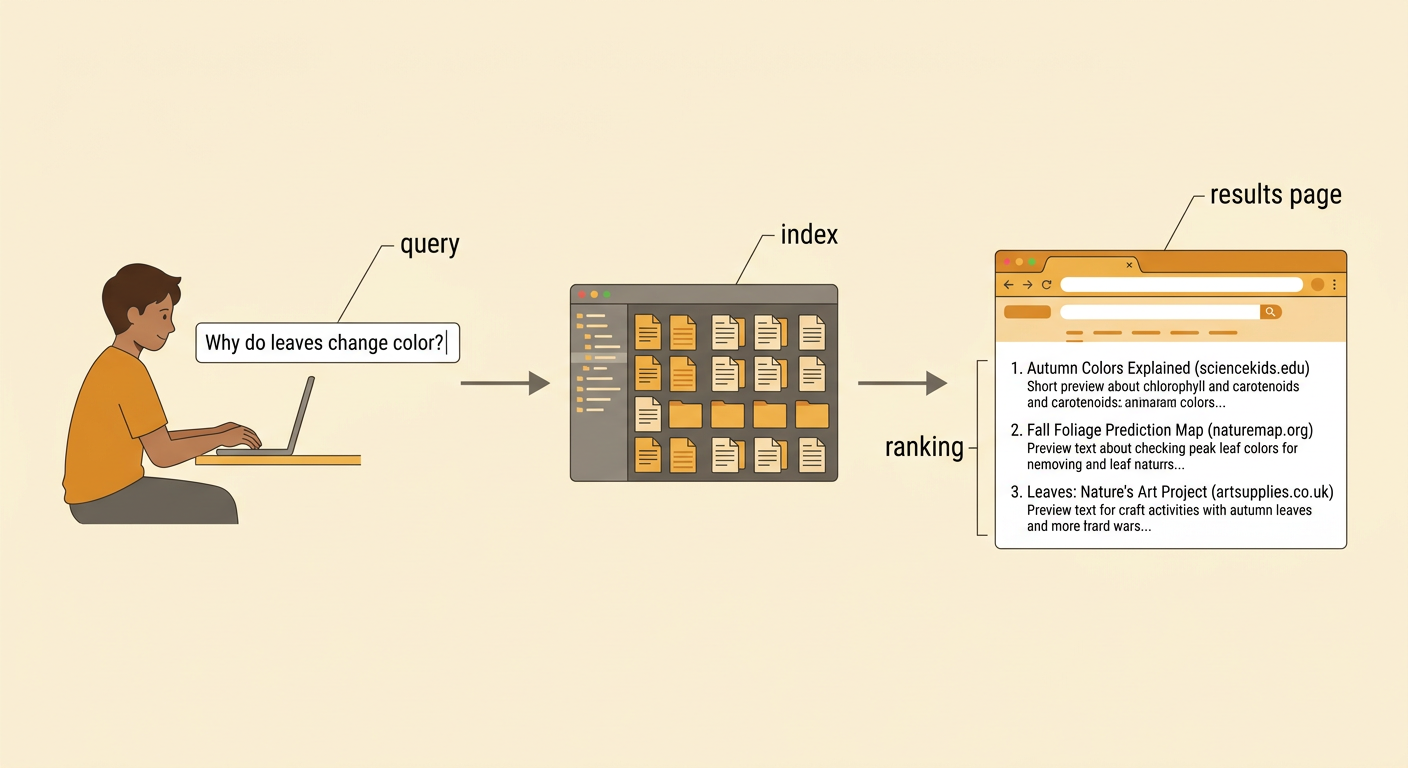
A search engine helps you find web pages that may answer a question. First, you enter a query, such as “Why do leaves change color?” The search engine interprets the words and searches its stored index, not the entire live web at that moment. It then compares possible pages and arranges them on a search engine results page. The order is called ranking. A result usually includes a title, web address, and short preview. Search engines try to place useful, relevant results near the top, but the first result is not automatically the best one. Results can also vary by location, settings, or how recently information was published. You still need to examine each result and decide whether it meets your purpose.
Crawling, Indexing, and Ranking
Search engines commonly use three main processes: crawling, indexing, and ranking. During crawling, automated programs called crawlers follow links and discover public web pages. During indexing, the search engine analyzes available information about those pages, such as words, headings, images, and update dates, and stores useful details in an organized database. During ranking, algorithms compare indexed pages with a user’s query and order the possible results. Imagine that a school posts a new page about its science fair. A crawler may discover the page through a link on the school homepage. The search engine can then add information about the page to its index. When someone searches “Lincoln Middle School science fair,” the ranking system decides where that page appears among other matching results.

Signals That Affect Rank
Ranking systems use many signals to estimate which pages will be most helpful. Relevance signals include whether a page discusses the query’s topic and uses related terms in meaningful ways. Quality signals may include original information, clear evidence, useful links, and a site’s reputation. Freshness can matter when a topic changes quickly, such as weather or election results, but an older source may be best for a historical document. Page usability, language, location, and device compatibility can also influence results. No single signal always decides the order, and companies do not publish every detail of their algorithms. For example, a search for “Mars rover latest discovery” may rank a recent NASA article above an older general article because it is current, directly relevant, and from the agency conducting the mission.

Sponsored Results and Organic Results
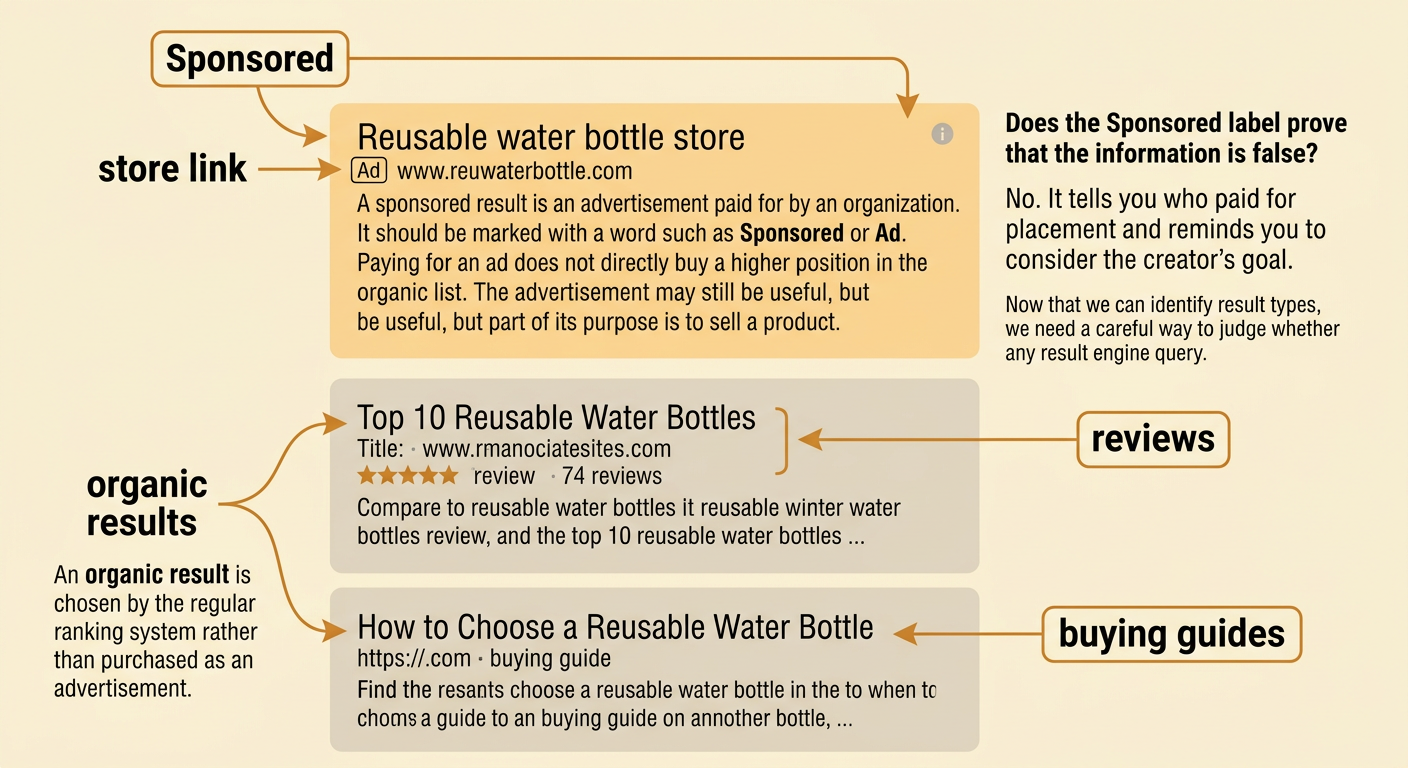
A results page may contain sponsored and organic results. Sponsored results are advertisements paid for by an organization and should be marked with a label such as “Sponsored” or “Ad.” Advertisers may compete for placement, but the search engine may also consider factors such as how closely an ad matches the query. Organic results are selected by the search engine’s regular ranking system rather than purchased as advertisements. Paying for an ad does not directly buy a higher position in the organic list. Suppose you search for “best reusable water bottle.” A bottle company’s sponsored store link might appear first, followed by organic links to reviews or buying guides. The advertisement could still be useful, but its purpose is partly to sell a product. Always identify the result type and consider the creator’s intended use.
Evaluate Relevance and Credibility
Evaluate a result before trusting or sharing it. First, check relevance: Does it answer your exact question, match the needed reading level, and provide the right kind of information? Next, check credibility: Who created it, what evidence supports its claims, when was it updated, and why was it published? Trace important claims back to reasons, data, or cited sources. A polished design or high rank is not proof of accuracy. For example, imagine you need evidence about whether school gardens help pollinators. A university study describing methods and data is likely more credible for that claim than an unsigned gardening store post that only says gardens are “amazing.” The store page may be relevant to buying seeds, but its sales purpose limits its usefulness as scientific evidence. Compare multiple sources before reaching a conclusion.

Search-Ranking Exit Ticket
Use what you learned to evaluate this example. You search “Do energy drinks help middle school athletes?” Result A is a sponsored product page claiming its drink “unlocks peak power,” but it gives no study. Result B is a recent children’s hospital article that names medical reviewers and links to research. Result C is an anonymous post from eight years ago describing one athlete’s experience. Answer these questions: Which result is most relevant and credible for a health report, and why? Which claim lacks strong supporting evidence? How does sponsorship affect your interpretation of Result A? Then describe crawling, indexing, and ranking in one sentence each. Finally, name two signals that might help a search engine rank Result B. Your answers should use evidence from the result descriptions, not simply their order on the page.
