How Seasons Shape Community Life
Students explore how seasonal changes affect the clothing, activities, transportation, and daily routines of people in a community.
Illustrations are auto-generated and may be placeholders. They can be refreshed to match the narration.
Name the Four Seasons
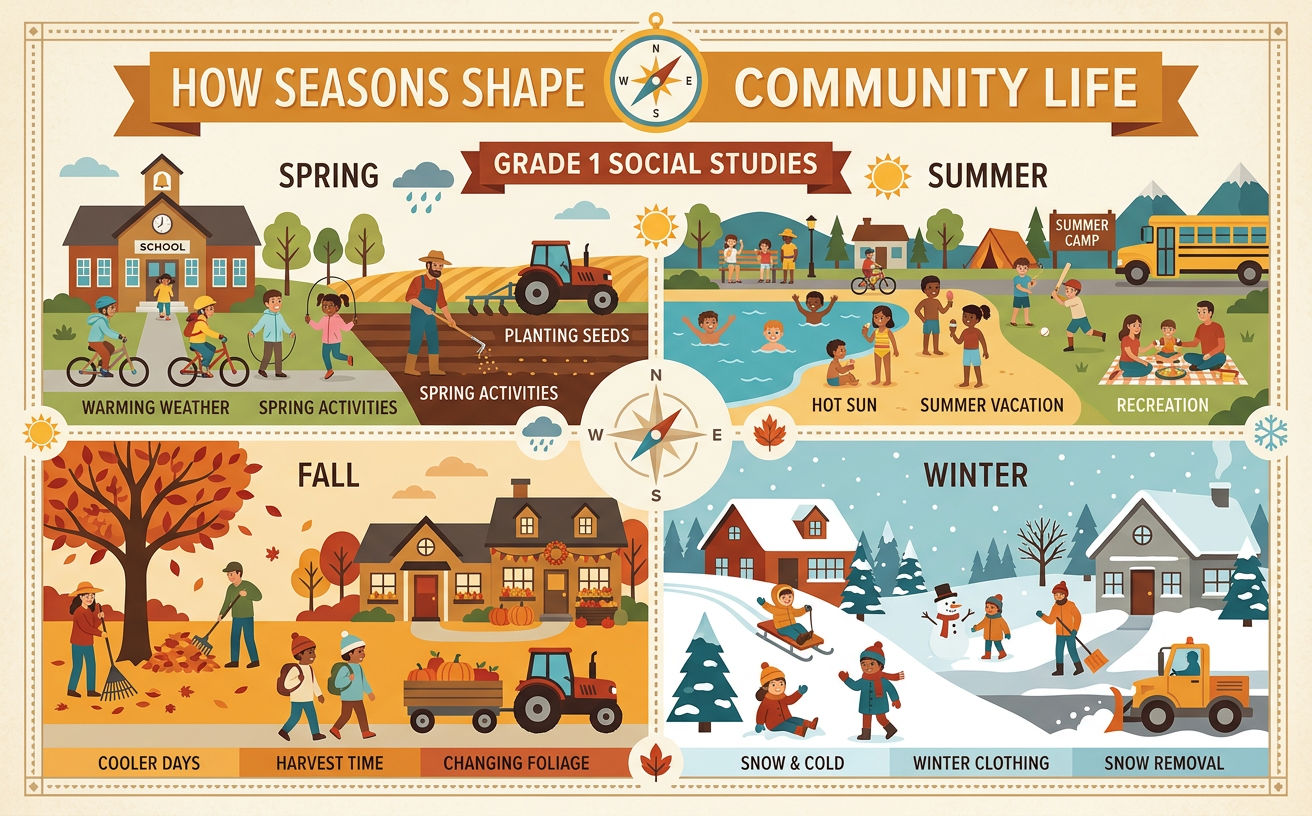
The four seasons are spring, summer, fall, and winter. They happen in the same order each year and then repeat. Each season brings patterns in daylight, temperature, plants, and weather. The exact weather can be different from one place to another. In many communities, spring brings warmer days and new plant growth. Summer often has long, warm days. Fall may bring cooler air and changing leaves. Winter often has shorter, colder days. For example, a town park might have flower buds in spring, families picnicking in summer, fallen leaves in fall, and bare trees in winter. People notice these changes and use them to plan what they will wear and do.

Observe Seasonal Changes
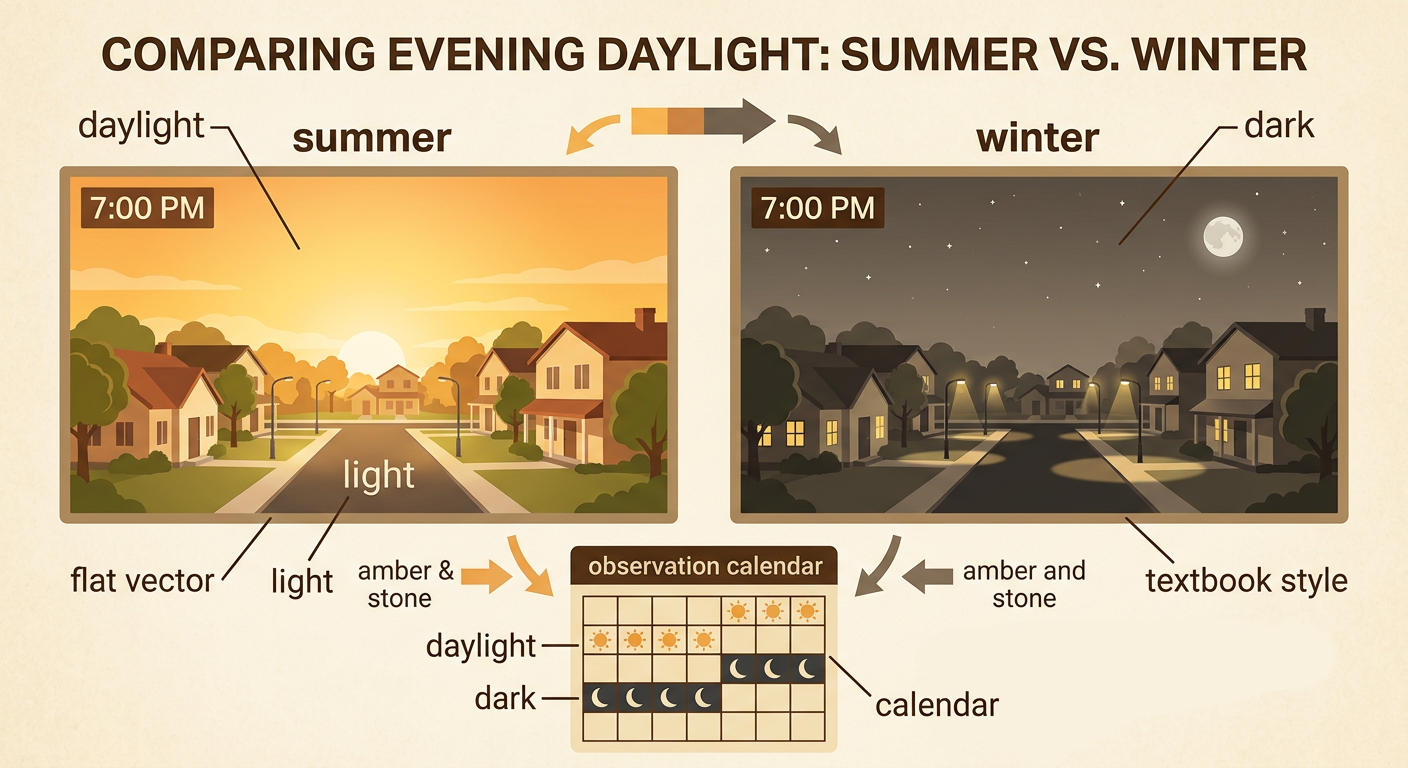
We can observe seasonal patterns by looking carefully and recording what we notice. Daylight is one pattern. In many U.S. communities, summer days have more hours of daylight, while winter days have fewer hours of daylight. Spring and fall are times when the amount of daylight is changing. We can also notice temperature, clouds, rain, snow, plants, and animals. Weather can change from day to day, so one cold day does not make it winter. Scientists look at observations made over many days. For example, a class can check whether it is light or dark at the same time each evening. Over several months, the class may notice that darkness comes earlier in winter than in summer.
Connect Seasons to Community Life
Seasonal changes affect how people live in a community. People choose clothing that helps them stay comfortable and safe. They may change their activities, transportation, and daily routines too. On a hot summer day, a child might wear light clothing, drink water, and play at a splash pad. On a snowy winter day, the child might wear a coat and boots, ride in a bus that travels slowly, and play indoors if roads are unsafe. Community workers also respond to seasons. Road crews may clear snow, park workers may collect fall leaves, and farmers may plant during suitable weather. Not every community has snow or the same temperatures, but people everywhere adjust their choices to local seasonal conditions.

Sort Clothing and Activities by Season
Sorting helps us explain why an item or activity fits a season. First, look for clues about temperature, daylight, and weather. Then place each picture in a group and tell your reason. A warm coat and insulated boots fit cold or snowy winter conditions. A sun hat and lightweight shirt fit hot, sunny summer conditions. Planting flower seeds often fits spring, while raking fallen leaves often fits fall. Some items and activities can belong in more than one season. Sneakers may be worn all year, and people can read indoors in any season. Local conditions matter too. For example, a child in Florida may not need snow boots, while a child in Minnesota may use them often during winter.

Share a Seasonal Community Example
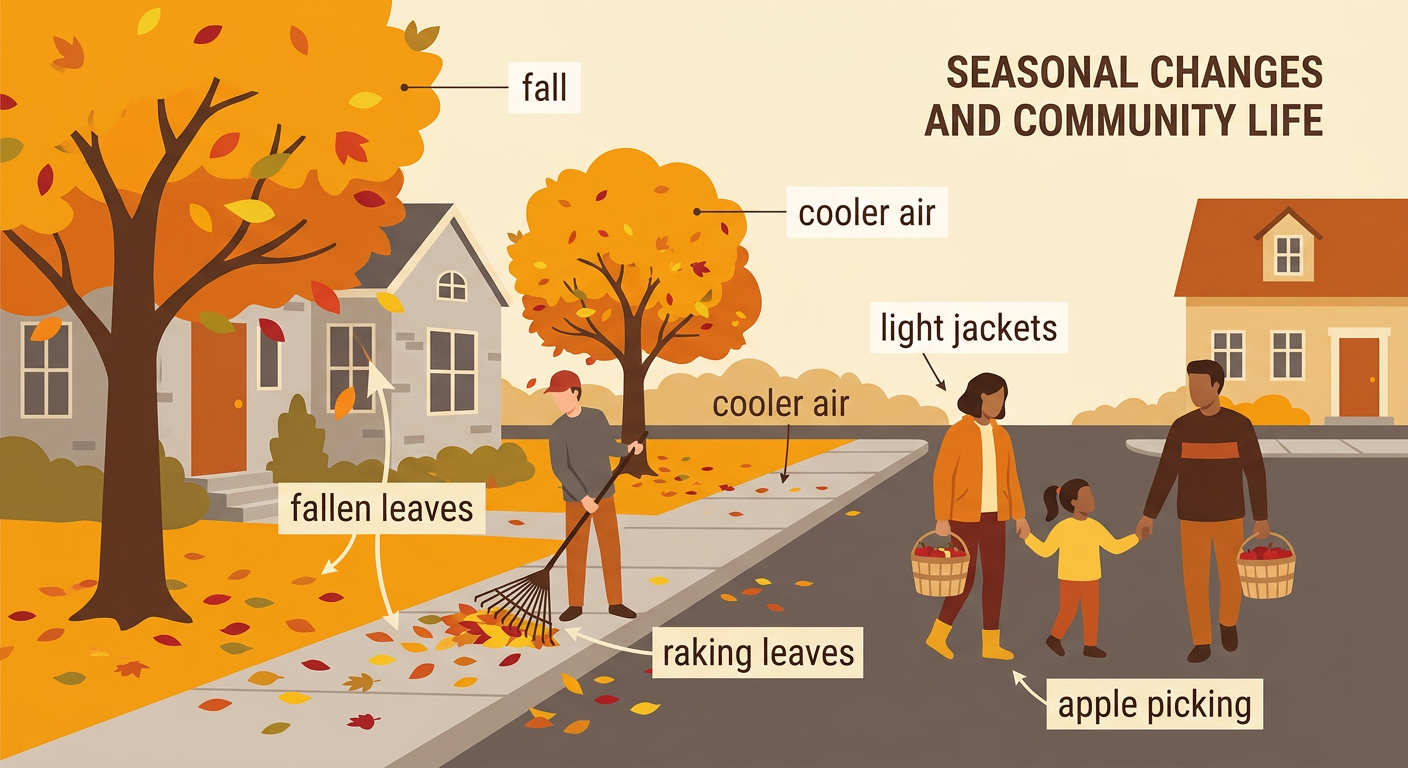
You can explain how one season shapes life in a community. Name the season, describe a seasonal condition, and tell how people respond. Use details from a picture or informational text as evidence. Here is an example: “In fall, the days become cooler and leaves may drop from some trees. People wear light jackets and rake leaves from sidewalks. Some families visit a farm to pick apples.” The cooler air and fallen leaves are seasonal clues. The jackets, leaf raking, and apple picking show changes in community life. Your example may be different because communities have different climates and traditions. You can draw a scene, add labels, and say or write two sentences explaining what people wear, do, or change during the season.