
How Shadows Form and Change
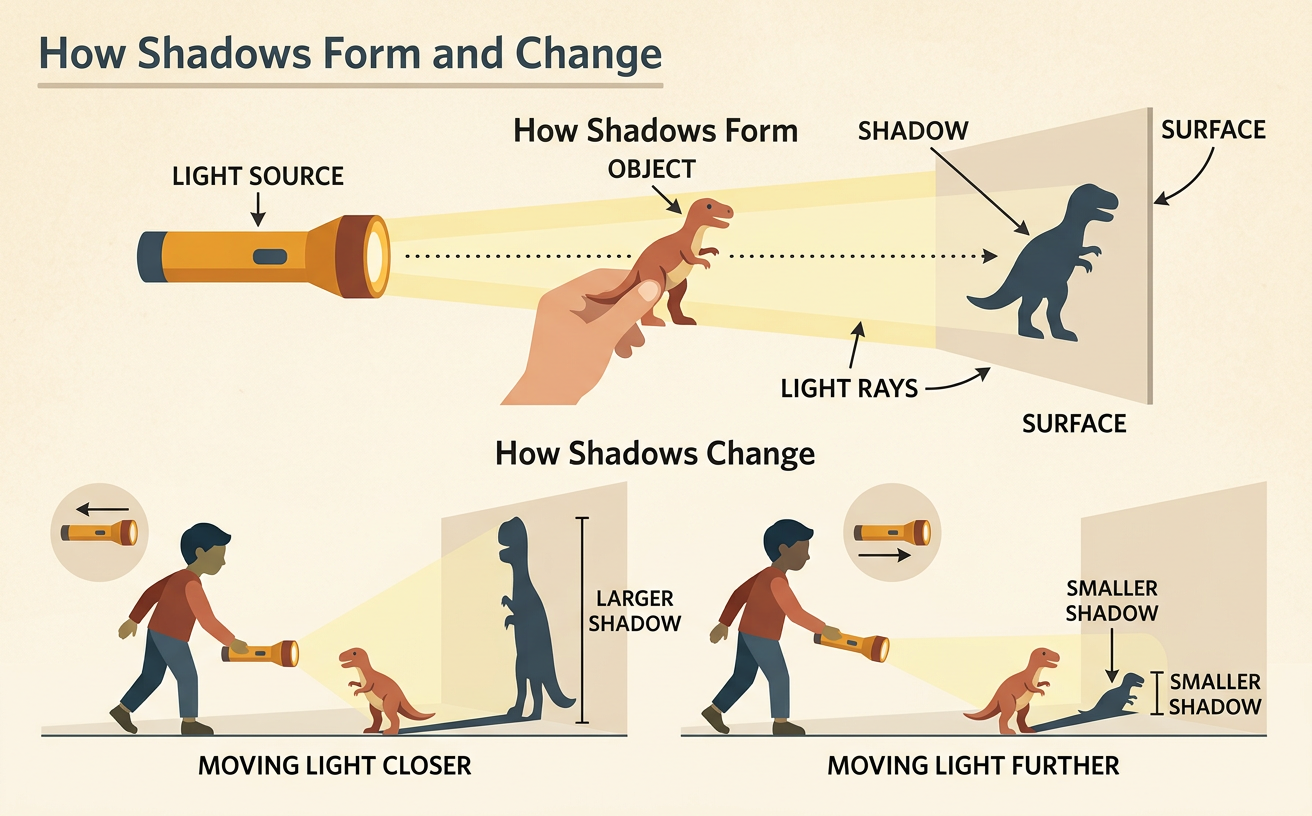
Students investigate how an object blocking a beam of light creates a shadow and how moving the light or object changes the shadow.
Illustrations are auto-generated and may be placeholders. They can be refreshed to match the narration.
Notice and Describe Shadows
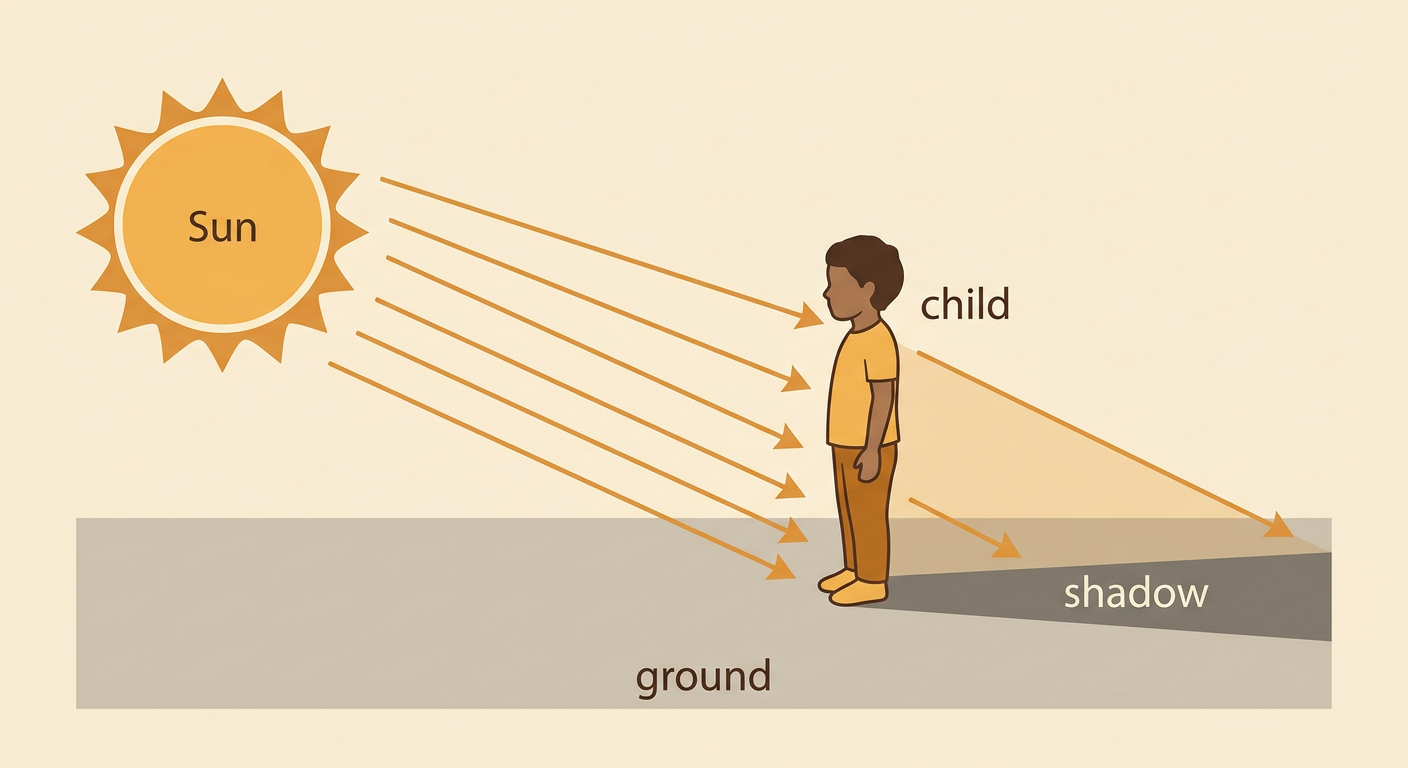
A shadow is a dark area made when an object blocks light. Look for shadows on the ground, a wall, or a table. Notice the shadow’s shape, size, and place. For example, a child standing outside on a sunny morning may see a long shadow stretching across the ground. The child is between the Sun and the shadow. The shadow has an outline like the child, but small details may not appear. Work with a partner to describe what you notice. Use position words such as beside, behind, in front of, near, and far. Ask questions, listen to your partner, and compare ideas. Remember that a shadow is not an object. It is a place where less light reaches a surface.
Block a Beam of Light
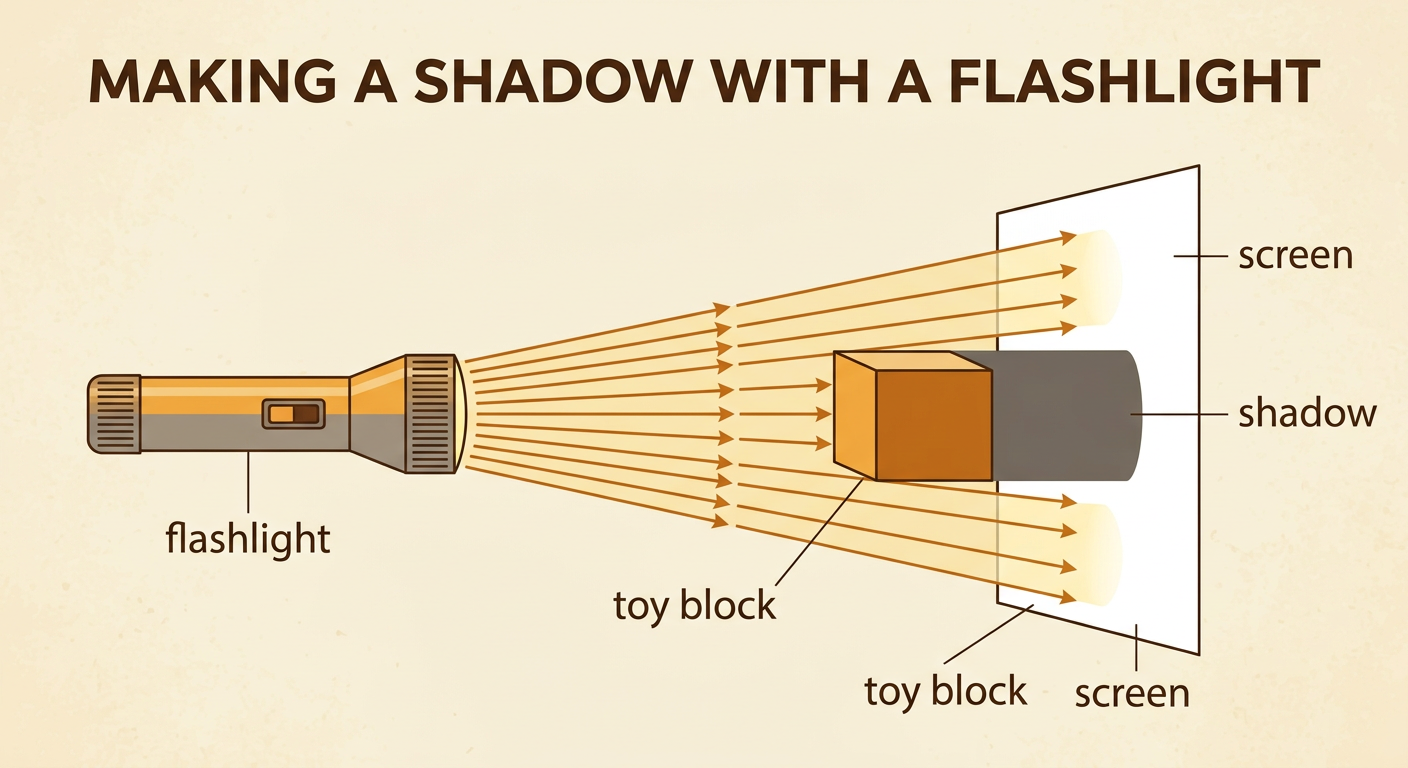
You can investigate shadows with a flashlight, an object, and a white wall or screen. Work in a dim room with an adult, and never shine the flashlight into anyone’s eyes. First, point the flashlight at the screen. The light reaches the screen, so you see a bright area. Next, place a solid toy block in the beam. The block stops some of the light, and a dark shadow appears on the screen behind it. Remove the block, and the shadow disappears. Try other safe objects, such as a paper shape or a clear plastic lid. Compare how much light each object blocks. Tell your group what you observe, and listen as classmates share their results.
Move the Light and Object
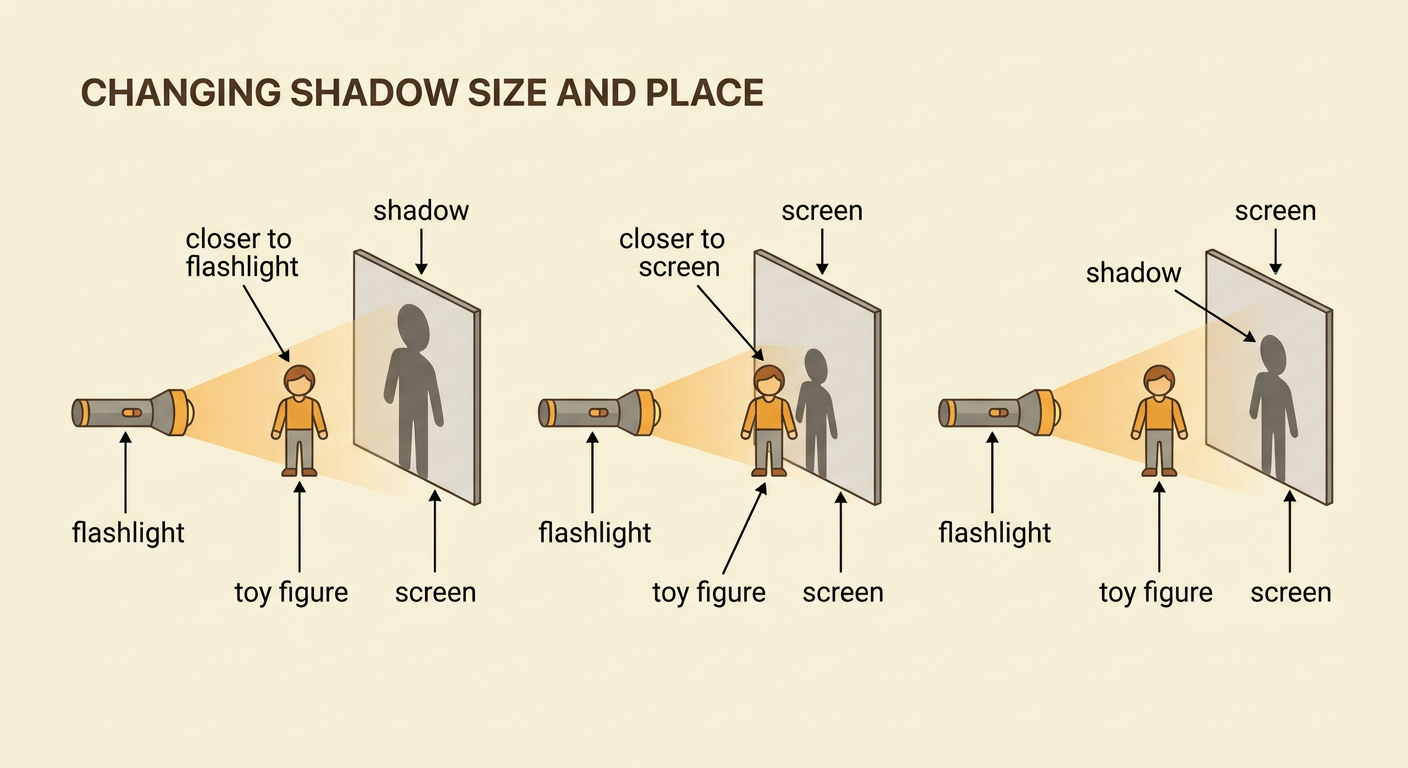
A shadow can change when the light or object moves. Keep a flashlight, toy figure, and screen in one straight line. Move the toy closer to the flashlight while the screen stays still. The toy blocks a wider part of the spreading beam, so its shadow becomes larger. Move the toy closer to the screen, and its shadow becomes smaller and usually clearer. You can also move the flashlight. If the flashlight moves to the left, the shadow shifts toward the right side of the screen. Test only one change at a time so you know what caused the result. Before each move, tell a partner what you predict. Afterward, use words such as closer, farther, left, and right to describe what happened.
Measure and Compare Shadows
Measuring helps you compare shadows fairly. Tape a sheet of paper to the screen and trace the top and bottom edges of a toy’s shadow. Use a centimeter ruler to measure from one edge to the other. Place the zero mark at the first edge, keep the ruler straight, and read the number at the second edge. Record the shadow’s length in centimeters. For example, a shadow may measure 12 centimeters when the toy is near the flashlight and 6 centimeters when it is near the screen. Repeat each setup to check your results. Make a simple drawing that shows where the flashlight, toy, and screen were placed. Then compare measurements with your group and explain which shadow was longer, shorter, or the same length.

Explain How Shadows Form
Light travels outward from a source, such as the Sun, a lamp, or a flashlight. When light reaches a solid object, some light is blocked. The space behind the object receives less light, so a shadow appears on a surface there. The light source, object, and surface must be placed so the object is in the light’s path. Imagine making a rabbit shadow with your hand. A lamp shines toward your hand, your hand blocks part of the light, and a rabbit-shaped shadow appears on the wall. A clear object may let most light pass through, so its shadow can be faint. Use a drawing with arrows to explain where the light travels, where it is blocked, and where the shadow forms.
