
How Story Elements Interact
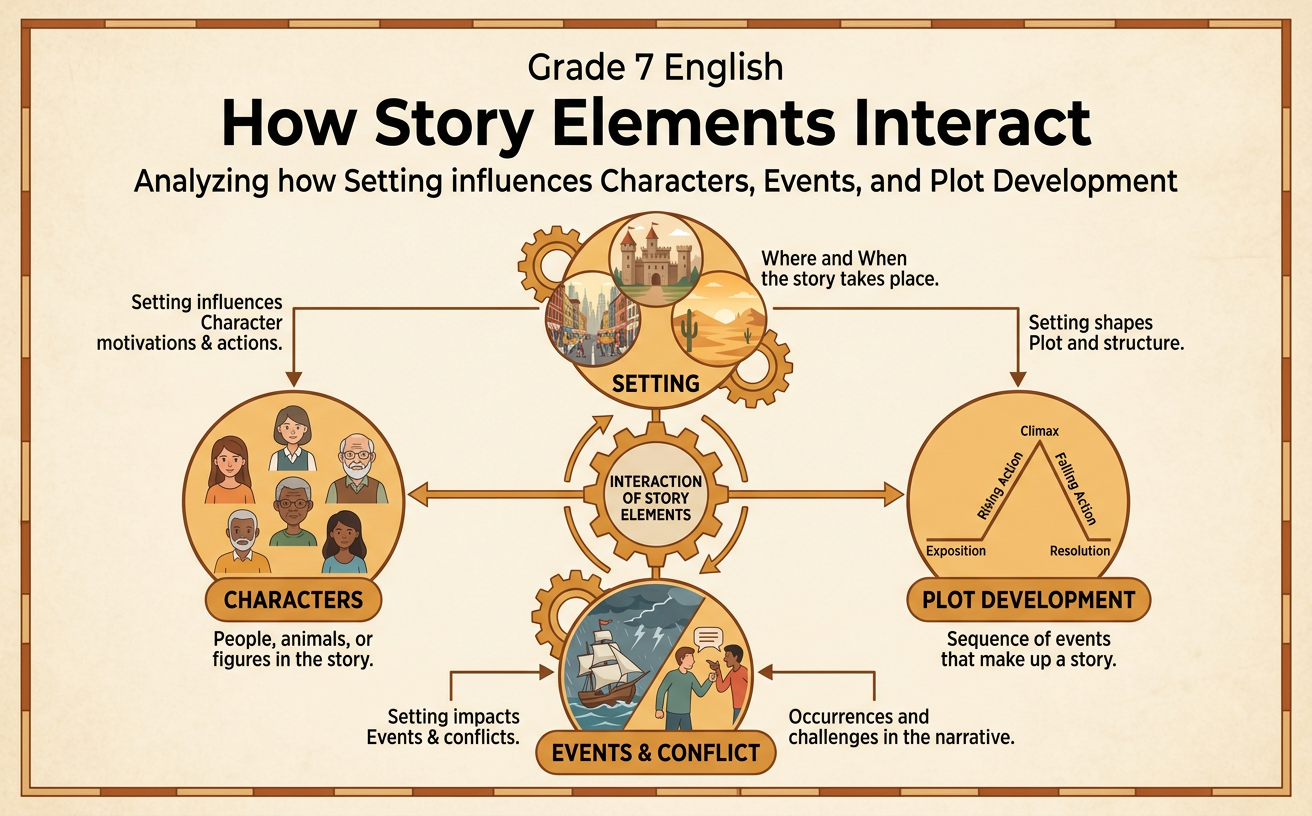
Students analyze how a story’s setting influences its characters, events, and plot development.
Illustrations are auto-generated and may be placeholders. They can be refreshed to match the narration.
Review Key Story Elements
Story elements work together rather than standing alone. The setting is the time, place, weather, and social environment of a story. Characters are the people, animals, or beings who make choices and face problems. The plot is the sequence of events, including the conflict, rising action, climax, and resolution. Conflict is the central struggle that moves the plot forward. For example, imagine a story about Maya, who is staying in a mountain cabin when a blizzard blocks the roads. The isolated setting creates a conflict because Maya cannot leave to get help. Her decision to repair an old radio begins an important series of events. When analyzing a story, ask how one element causes changes in another. This helps explain why events happen instead of merely listing what happens.
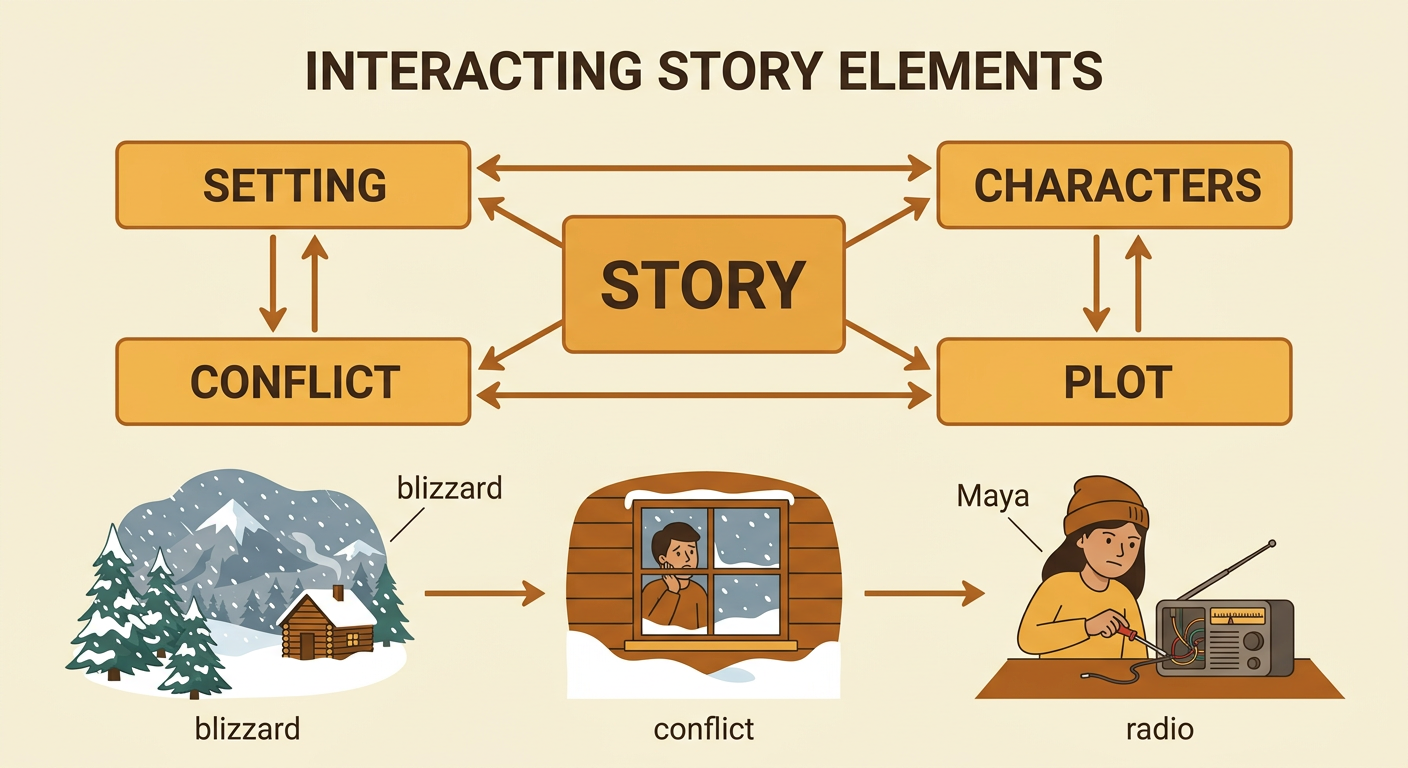
Examine the Setting
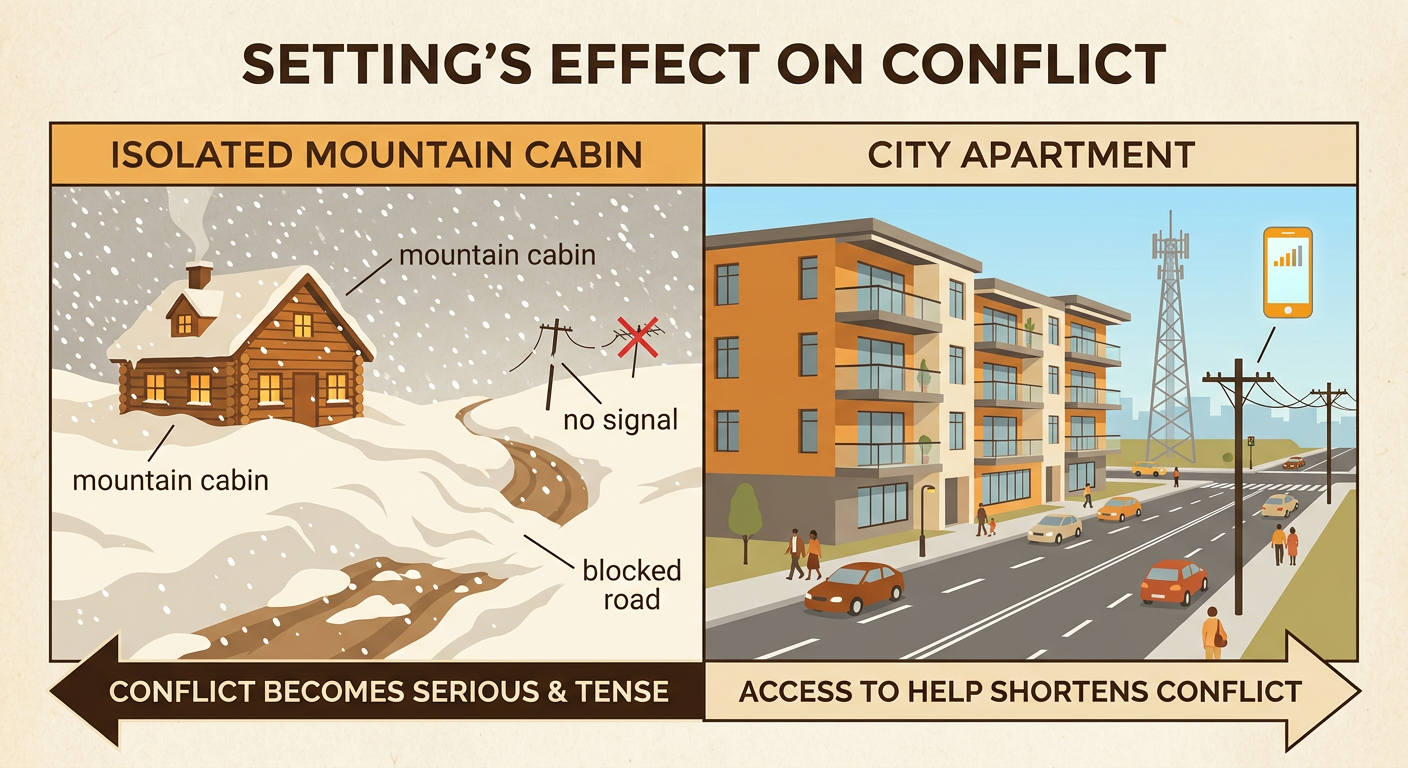
To examine setting, identify more than the name of a place. Look for details about location, time period, season, weather, available technology, and community expectations. Then ask what opportunities or limits those details create. In the story about Maya, the mountain cabin is far from town, the blizzard makes travel dangerous, and weak cell service prevents an easy call for help. These setting details make the problem more serious. If the same story occurred in a city during clear weather, Maya could probably contact emergency services quickly, and the plot would develop differently. Use specific words from the text to support your understanding of setting. Details such as snow covering the road or the phone displaying no signal are evidence that the setting restricts Maya’s choices and increases tension.
Trace Character Responses
A setting shapes characters by placing them under particular pressures. Trace what a character notices, feels, decides, and does in response to those pressures. These responses can reveal traits and cause the character to change. At first, Maya feels frightened by the blizzard and waits for an adult to solve the problem. When she realizes the roads are blocked and the cabin has no cell signal, she searches for another solution. She studies an old radio manual, repairs a loose wire, and sends a message for help. Her actions show growing resourcefulness and courage. The setting does not directly control Maya, but it creates conditions that require her to make difficult choices. To analyze the interaction, connect each response to a specific setting detail and explain what the response reveals about her personality or development.

Connect Setting to Plot Events
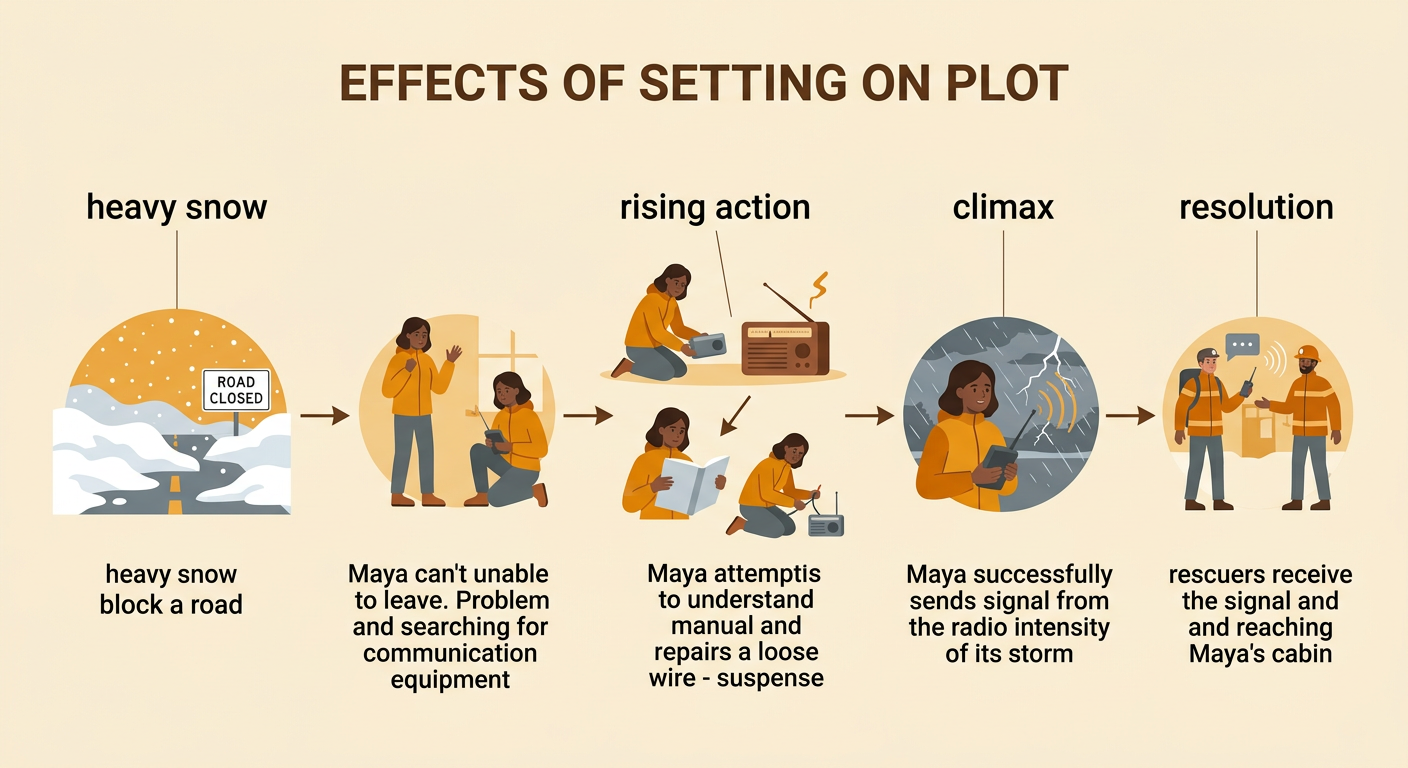
Setting can start events, limit choices, create obstacles, and build suspense. To trace its effect on plot, make a cause-and-effect chain. Begin with a setting detail, identify the problem it creates, and follow the character’s response to the resulting event. In Maya’s story, heavy snow blocks the only road. Because she cannot leave, she looks for communication equipment. She finds an old radio, but it fails at first. Her attempt to repair it becomes part of the rising action. When she finally sends a signal during the worst part of the storm, the plot reaches its climax. The rescue that follows is the resolution. Without the isolated cabin and blizzard, these events would not occur in the same way. A strong analysis explains these causal links instead of simply stating that the story takes place in the mountains.
Write an Interaction Analysis
An interaction analysis explains how one story element affects another. Begin with a clear claim that names the setting detail and its effect on the character or plot. Next, provide relevant evidence from the story. Then explain the connection by showing why the setting creates a particular response or event. For example: The blizzard setting develops Maya into a more resourceful character. Because the roads are blocked and her phone has no signal, she cannot depend on ordinary ways of getting help. She studies the radio manual and repairs the damaged wire herself. These actions show that the dangerous, isolated setting pushes her to solve problems independently. Notice that the explanation does more than summarize events. It links evidence to the claim. End by stating why the interaction matters, such as how it increases tension, reveals character growth, or moves the plot toward its climax.
