
How Story Elements Interact
Analyze how characters, setting, and plot influence one another to shape a story’s development.

Illustrations are auto-generated and may be placeholders. They can be refreshed to match the narration.
Review the Elements of Fiction
Fiction is built from characters, setting, and plot. Characters are the people, animals, or imagined beings who act in the story. The setting is the time and place in which events occur. The plot is the sequence of events, including a conflict, rising action, climax, and resolution. These elements do not work separately. A setting can create a challenge, a character’s traits can determine a response, and that response can move the plot forward. For example, imagine a story about Maya, a cautious seventh grader hiking in a mountain park when a sudden snowstorm begins. The dangerous setting creates a conflict. Because Maya is observant, she notices trail markers partly covered by snow. Her careful decision to follow them toward a ranger station shapes what happens next. Each element affects the others and helps the story develop.
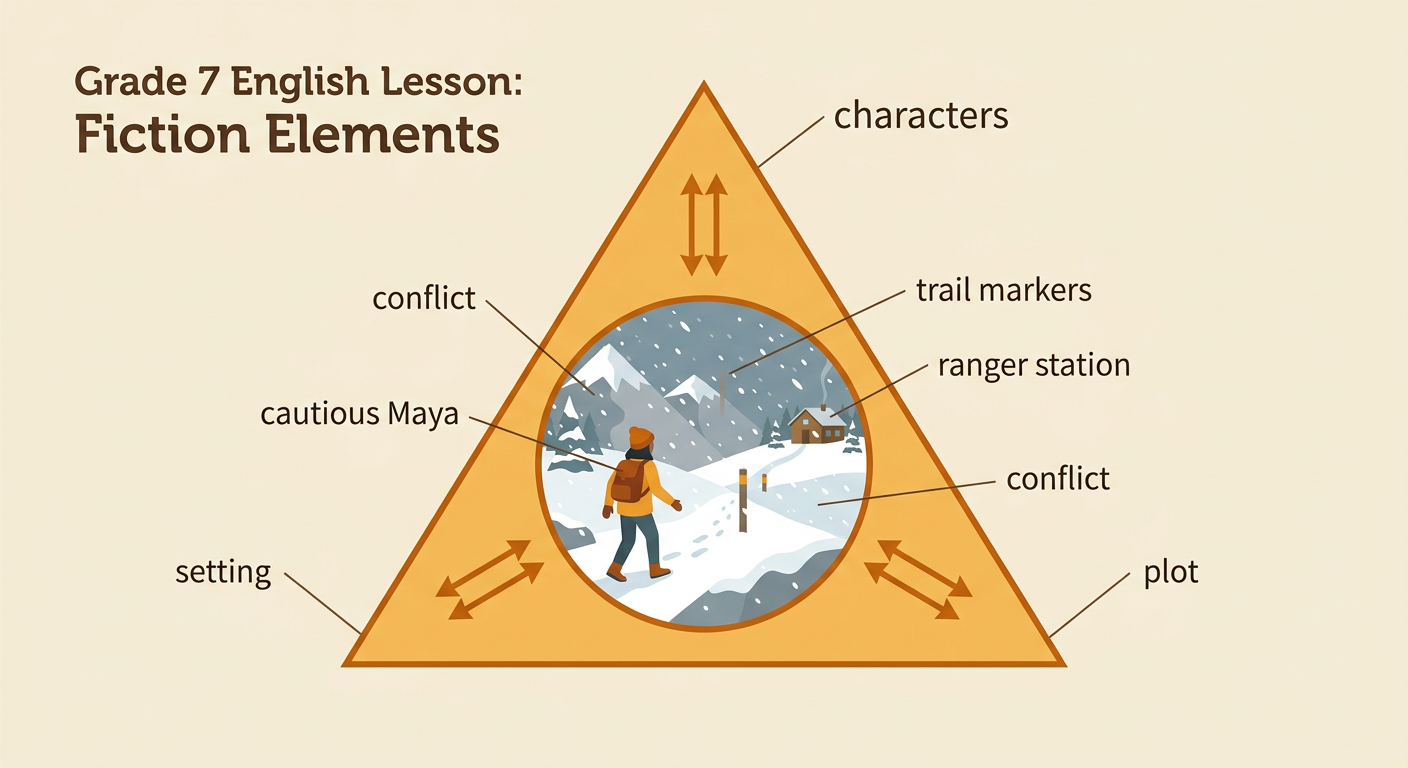
Identify Key Characters and Settings
To analyze a story, first identify the characters and settings that matter most. A key character makes important choices, faces the main conflict, or causes events to change. Record that character’s traits, goals, and challenges. A key setting is more than a background; its location, weather, time period, or social conditions affect what characters can do. In the mountain story, Maya is the central character because her choices guide the action. Her caution and observation skills are important traits, and her goal is to reach safety. The mountain park during a winter storm is the key setting. Snow hides the path, cold limits Maya’s time, and poor visibility makes travel difficult. If the story took place on a clear summer day, Maya would not face the same conflict or need to make the same decisions.
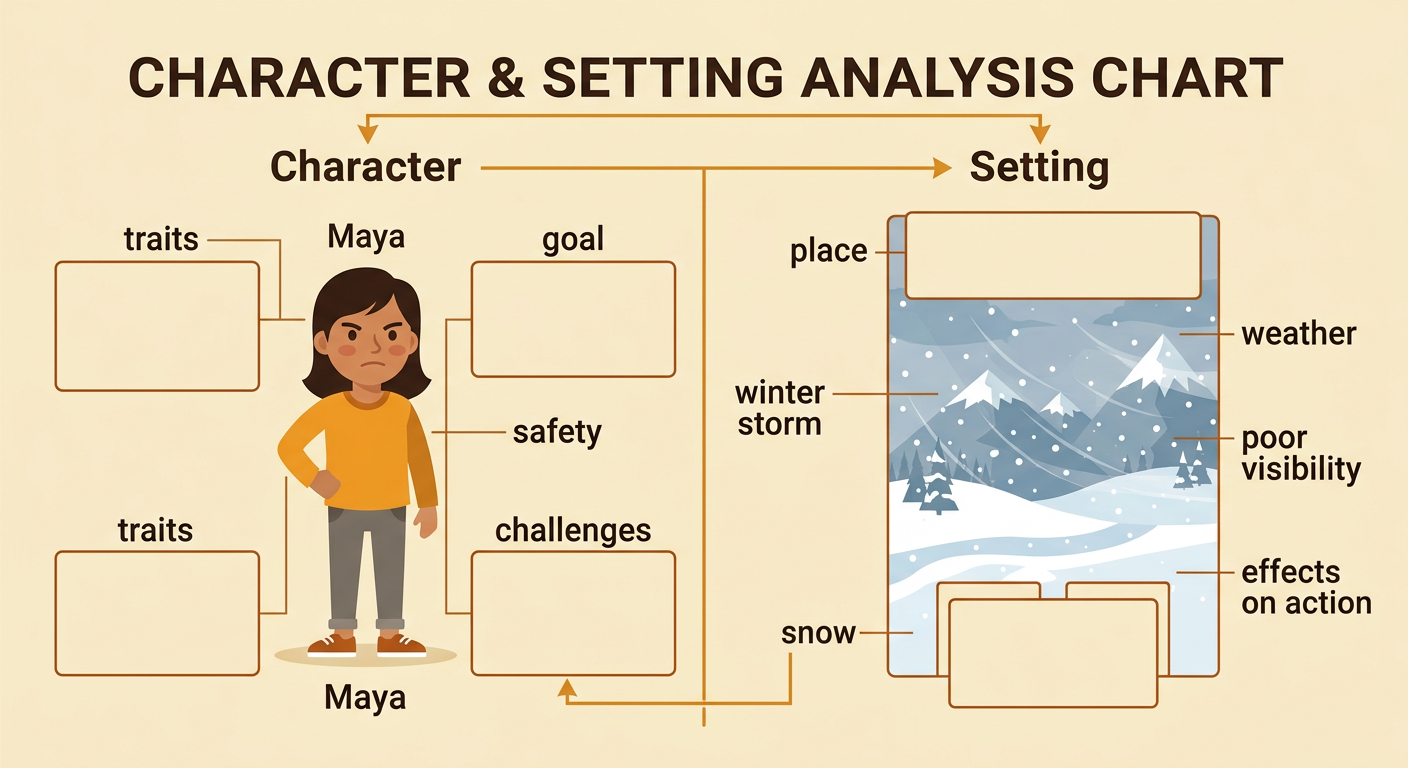
Trace an Important Plot Event
An important plot event changes the character’s situation, raises the stakes, reveals a trait, or leads to another event. Trace what happens before, during, and after the event to understand its role in the plot. In the mountain story, an important event occurs when Maya loses sight of the marked trail. Before this moment, the snow becomes heavier and covers the ground. During the event, Maya stops instead of wandering ahead. She remembers that trail markers are attached high on tree trunks, looks carefully, and finds a faded blue marker. Afterward, she follows the markers toward a ranger station. This event advances the plot because Maya changes from being lost to having a possible route to safety. It also reveals that she stays calm and uses what she knows when she faces danger.

Analyze Cause-and-Effect Connections
Cause-and-effect analysis explains why events happen and what results from them. A cause may come from the setting, a character’s trait, or a character’s decision. An effect may become the cause of the next event, creating a chain that develops the plot. Use evidence from the story rather than guessing. In the example, the snowstorm causes the trail to disappear. Because Maya is cautious, she stops before moving farther in the wrong direction. Because she is observant, she notices a marker above the snow. Finding the marker causes her to follow the marked route. That route leads her to the ranger station, where she reaches safety. The setting creates the original danger, but Maya’s traits influence the outcome. A different character who panicked or ignored the markers might create a very different chain of events.
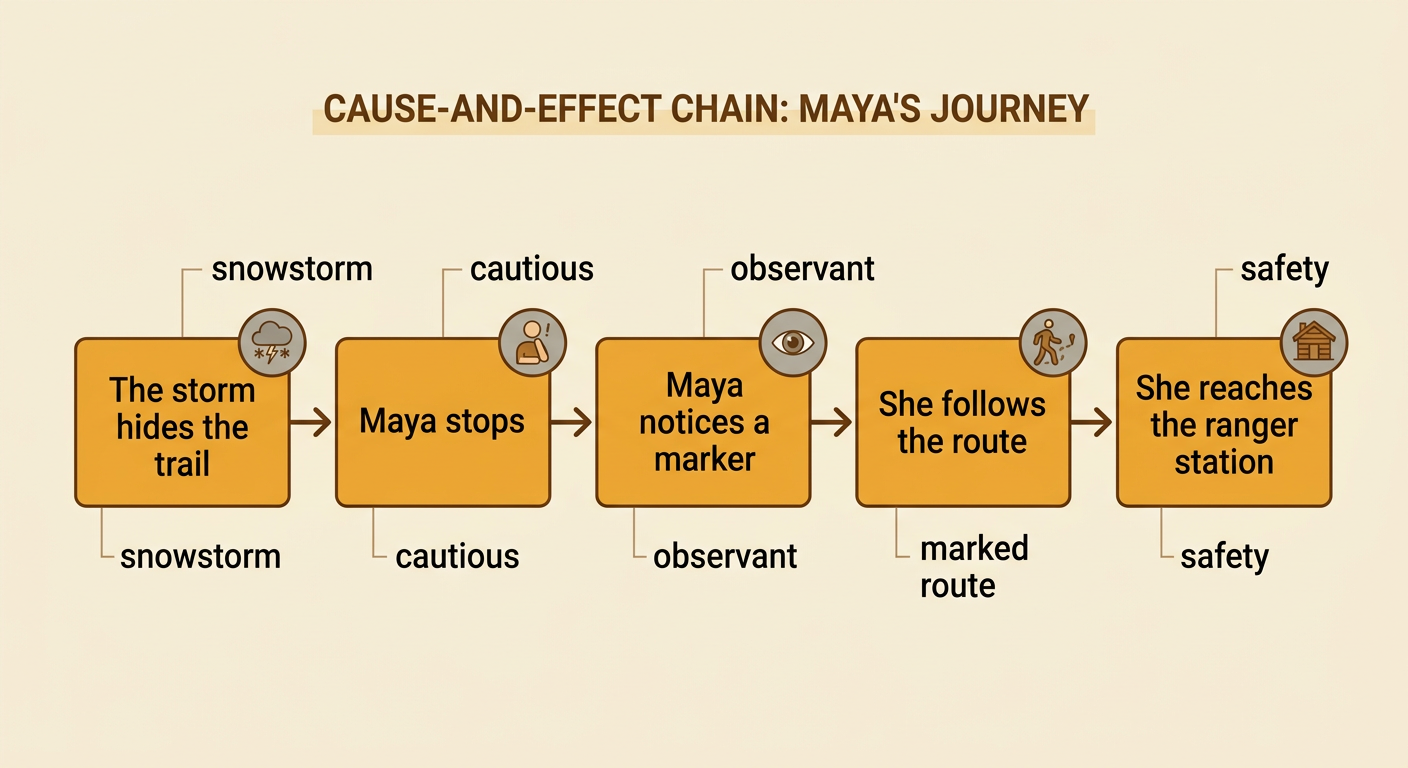
Explain How the Elements Interact
A strong analysis explains the interaction among story elements, not just each element by itself. Begin with a clear claim about how one element shapes another. Then cite specific story details and explain the connection. For example: The winter mountain setting shapes both Maya’s actions and the plot by creating dangerous conditions that require her observation skills. The snow hides the trail and makes Maya stop. Her cautious nature leads her to search for markers rather than continue blindly, and finding one moves the plot toward her rescue. This explanation connects the setting, character traits, decisions, and events. It also shows how changing one element could change the whole story. If the weather were clear, Maya’s caution might not be tested, she might never become lost, and the search for safety would not form the central plot.
