How the Beginning and Ending Shape a Story
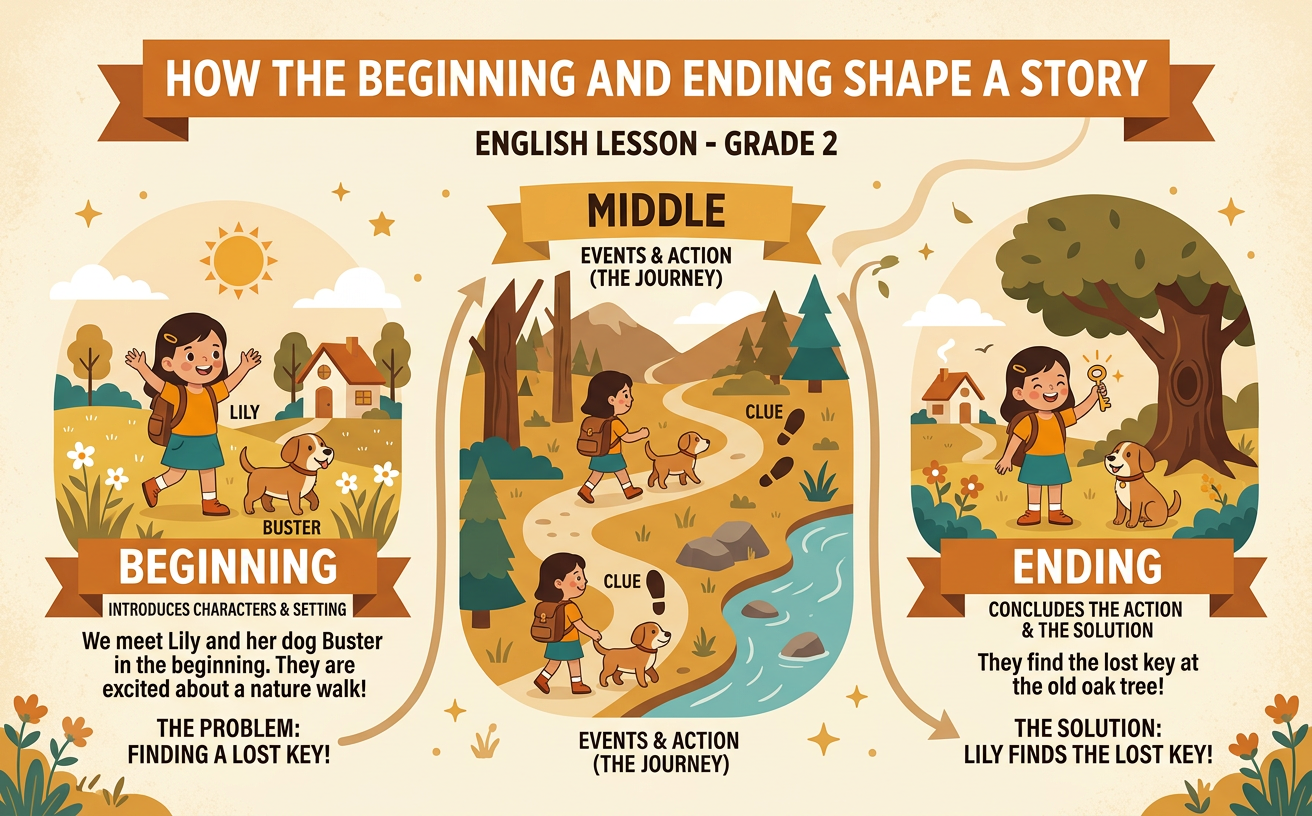
Students identify how a story’s beginning introduces characters and events and how its ending concludes the action.
Illustrations are auto-generated and may be placeholders. They can be refreshed to match the narration.
Review Story Structure
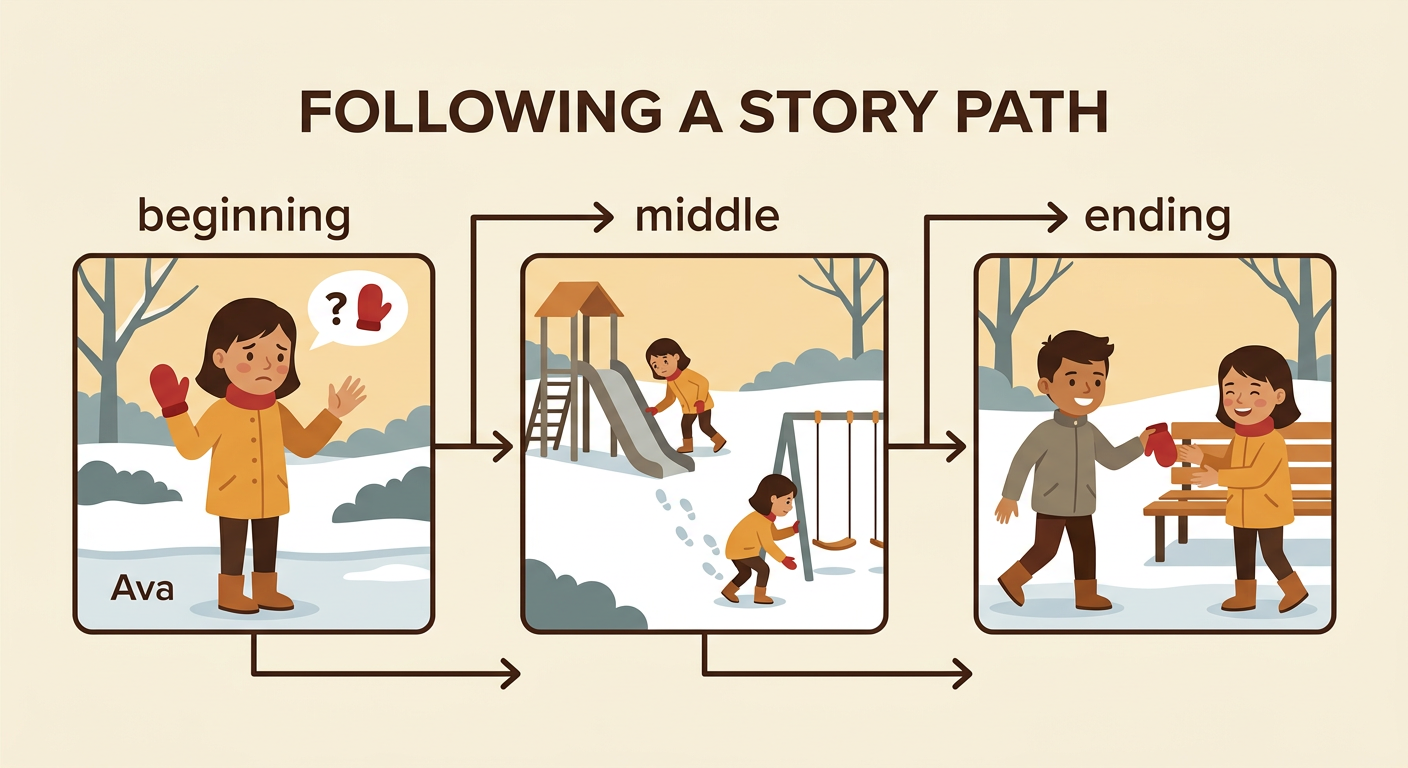
Most stories have a beginning, a middle, and an ending. The beginning introduces the characters, setting, and first important event or problem. The middle tells what the characters do as the action develops. The ending shows how the action finishes or how the problem is solved. Imagine a story about a girl named Ava who loses her red mitten at the park. At the beginning, we meet Ava and learn that her mitten is missing. In the middle, Ava looks under the slide and beside the swings. At the ending, a boy finds the mitten near a bench and returns it to Ava. Each part has a different job, but the parts work together to make one complete story.
Read a Short Story
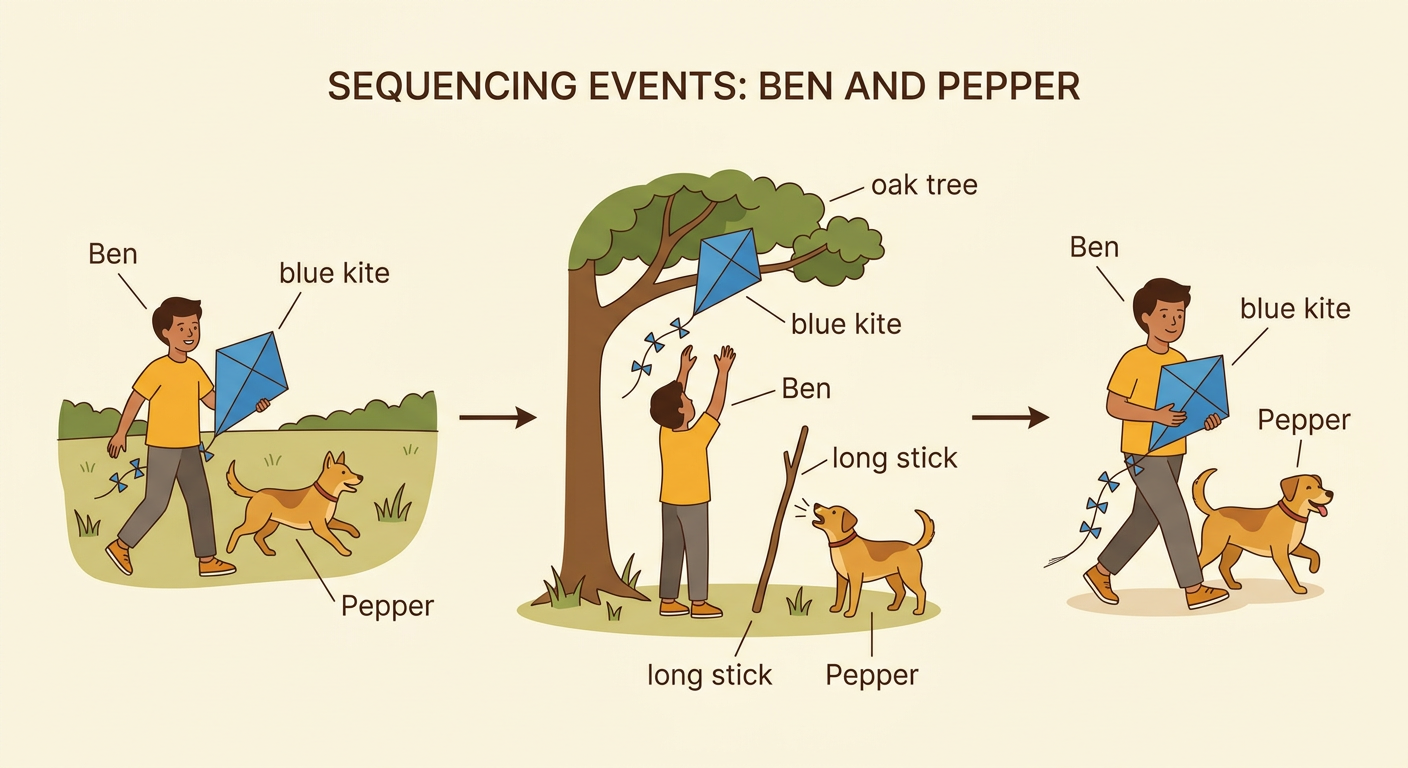
Read this short story and notice what happens first and last. On Saturday morning, Ben took his new blue kite to the field with his dog, Pepper. A strong wind lifted the kite high into the air. Suddenly, the kite string slipped from Ben’s hand. The kite sailed toward a tall oak tree and caught on a low branch. Ben tried to reach it, but he was too short. Then Pepper began barking beside a long fallen stick. Ben used the stick to gently lift the string off the branch. The kite floated down, and Ben caught it. He thanked Pepper and held the string tightly. Together, they walked home with the blue kite safe in Ben’s hands.
Explore How the Beginning Introduces the Story
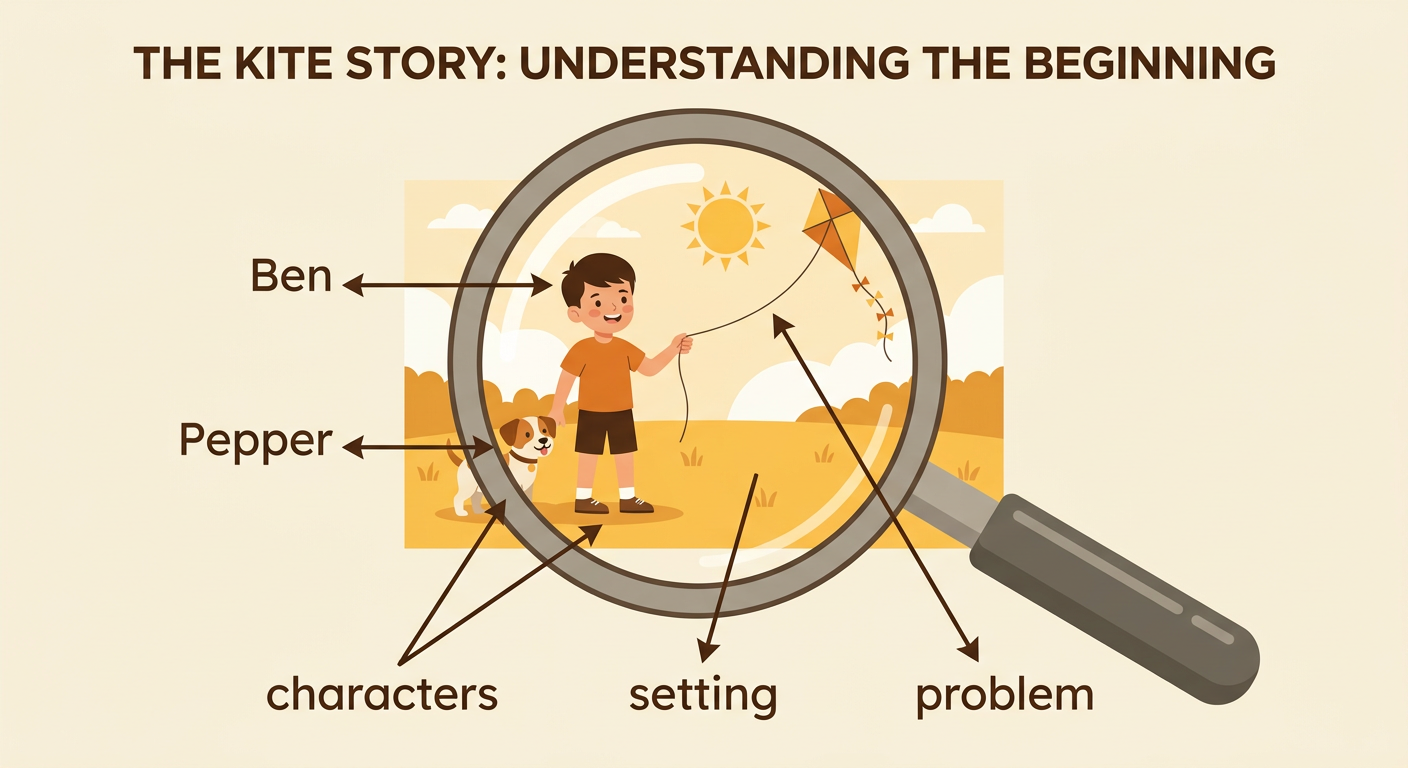
A story’s beginning helps readers understand who is in the story, where and when it starts, and what first happens. In the kite story, the opening says, “On Saturday morning, Ben took his new blue kite to the field with his dog, Pepper.” This sentence introduces the characters Ben and Pepper. It also gives the setting: a field on Saturday morning. The next events begin the action. The wind lifts the kite, and the string slips from Ben’s hand. Now readers know the problem Ben will face. Without this beginning, readers might wonder whose kite it is, where the characters are, or why the kite is in a tree. A strong beginning gives readers the information they need to follow the rest of the story.
Explain How the Ending Concludes the Action
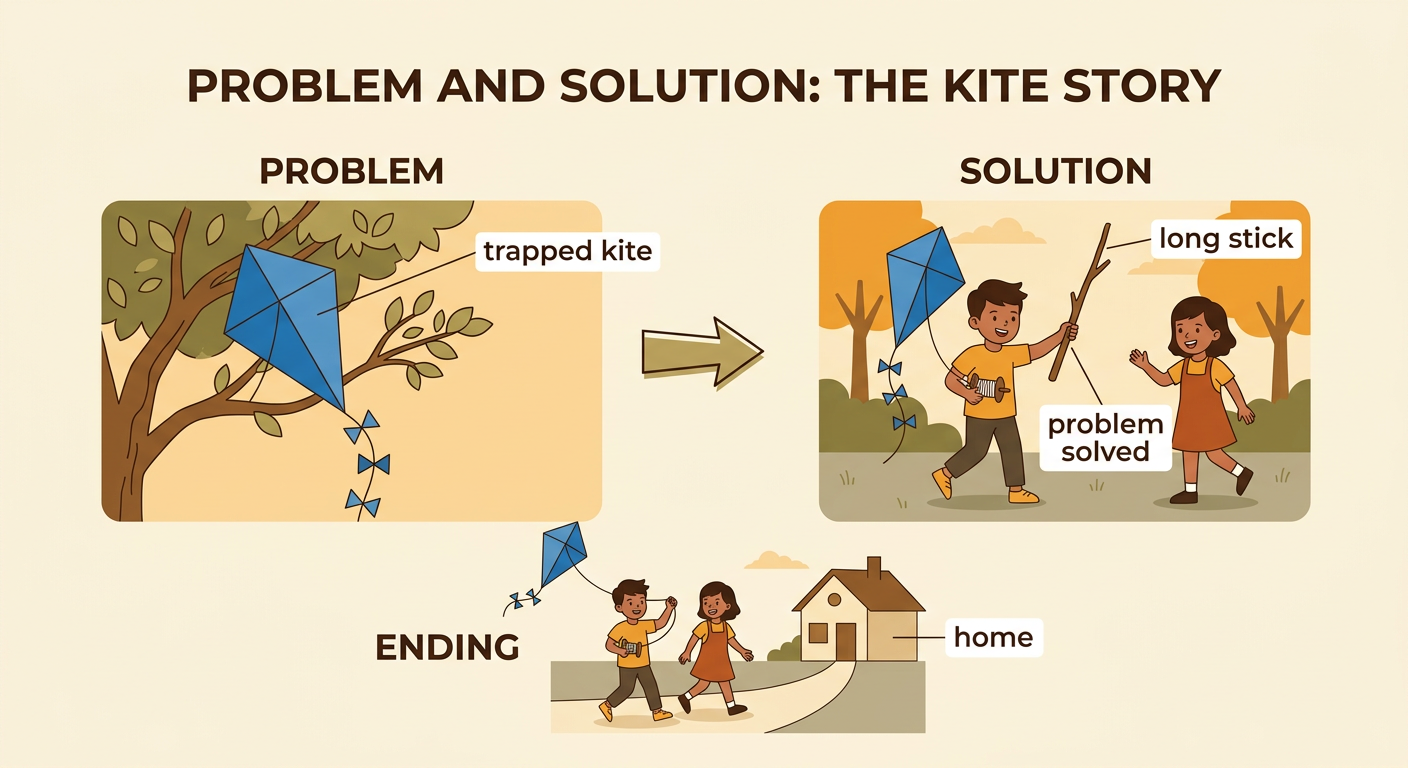
The ending concludes the action by showing what finally happens. It often tells how a problem is solved and what the characters do afterward. In the kite story, Ben uses a long stick to free the string from the branch. The kite floats down, and Ben catches it. This solves the problem of the trapped kite. Ben then thanks Pepper, holds the string tightly, and walks home with the kite. These final details let readers know that the action is complete. An ending should connect to what happened earlier. If the story ended by saying that Ben baked a cake, it would not conclude the kite action. The real ending answers the important question: Will Ben get his kite back? Yes, he will.
Match Beginnings and Endings
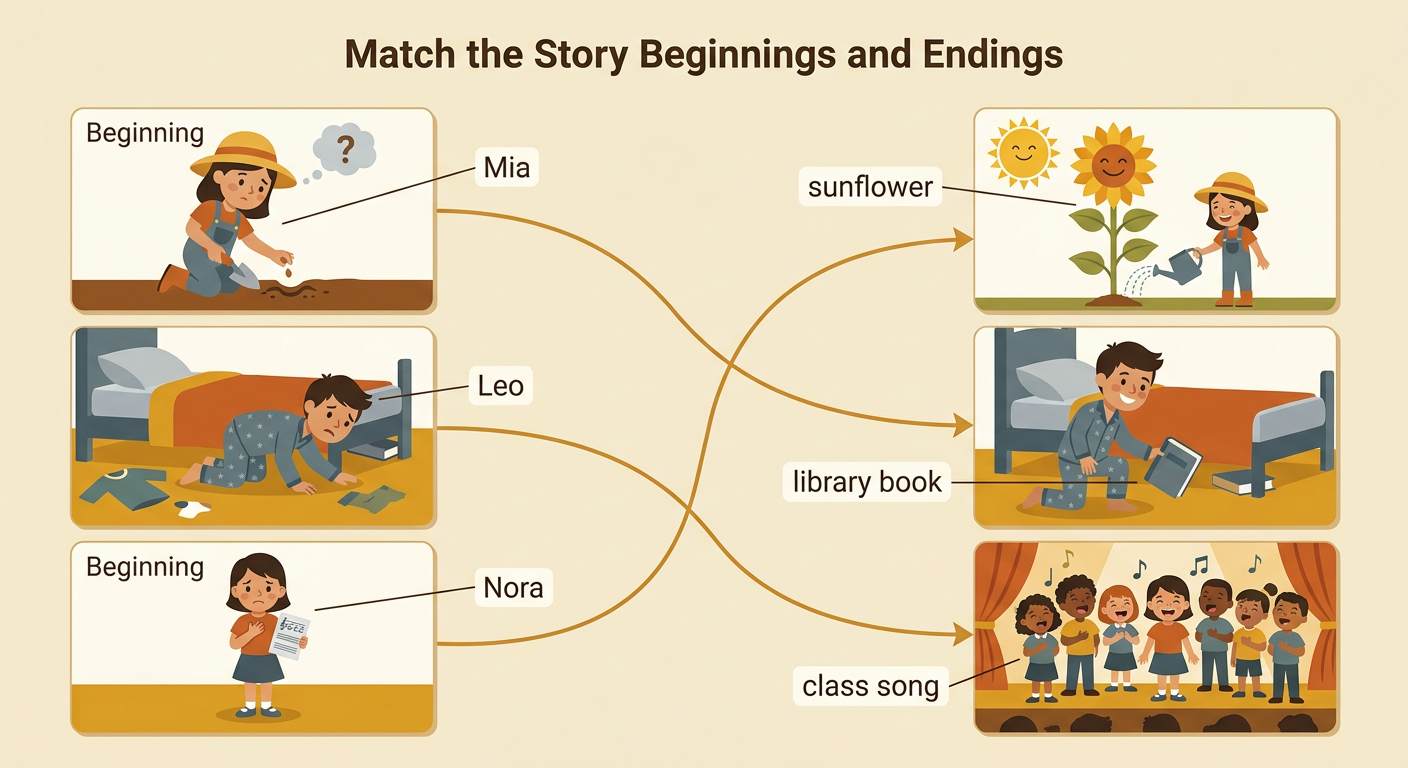
A fitting ending concludes the action introduced at the beginning. Match each beginning with the ending that completes it. Beginning A: Mia plants a sunflower seed and wonders if it will grow. Beginning B: Leo cannot find his library book. Beginning C: Nora practices for a class song but feels nervous. The matching endings are these: Mia smiles when a tall sunflower blooms. Leo finds the library book under his bed and returns it. Nora sings with her class and feels proud. Look for repeated characters, objects, and problems. The ending about the sunflower belongs with Mia because it finishes the action of planting the seed. The ending about the book belongs with Leo, and the ending about singing belongs with Nora. A cake-baking ending would not match any of these beginnings.
Complete an Exit Check
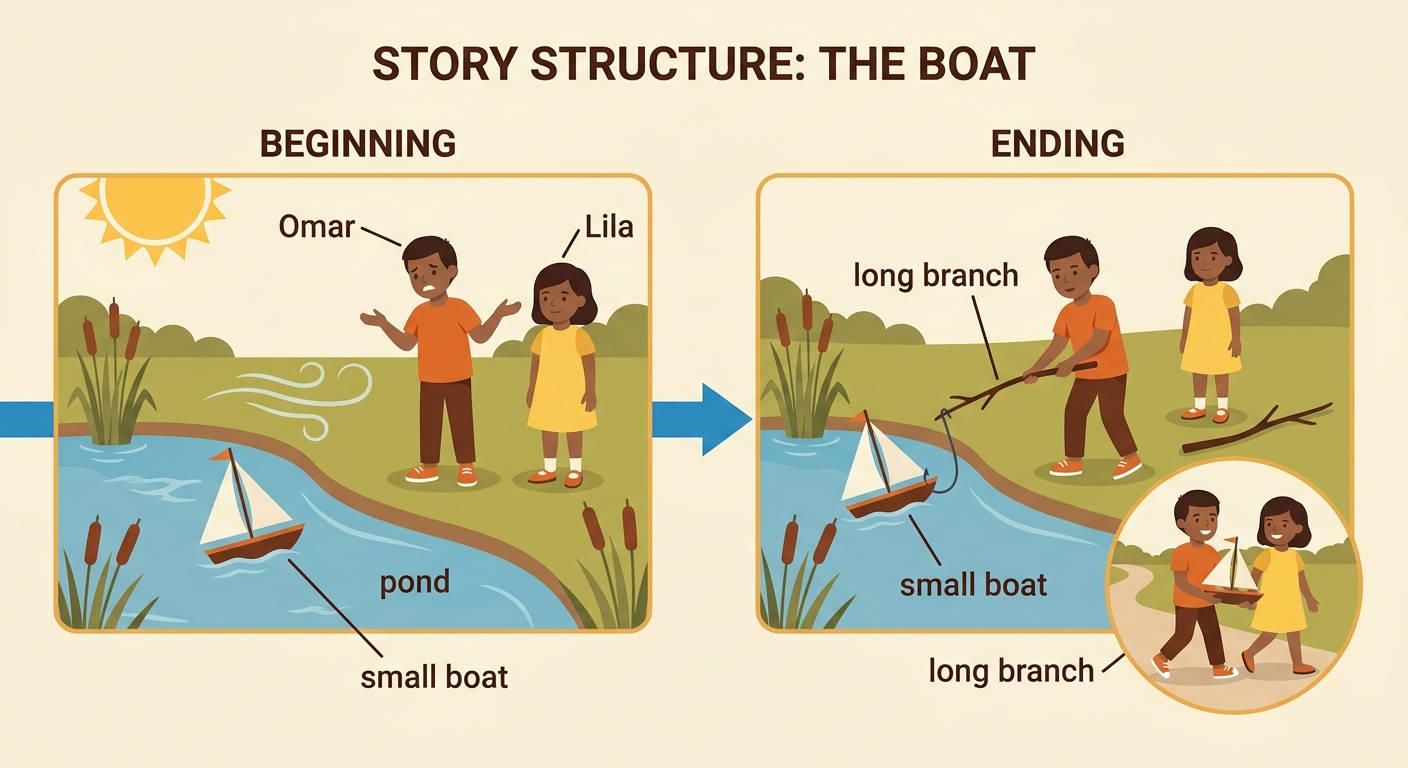
Read this example: Omar brought a small boat to the pond, but a breeze pushed it beyond his reach. His sister, Lila, found a long branch. Omar used the branch to pull the boat back, and they carried it home. Now answer three questions. Who and what are introduced at the beginning? Omar, Lila, the pond, and the small boat are introduced. What action begins? The boat moves beyond Omar’s reach, creating a problem. How does the ending conclude the action? Omar uses the branch to get the boat back, and the children take it home. Try saying your answer in one complete sentence: “The beginning introduces Omar’s lost boat problem, and the ending concludes the action when he gets the boat back.”