
How Transportation Innovations Changed Communities
Students compare past and present transportation to explain how new ways of moving people and goods changed community life.

Illustrations are auto-generated and may be placeholders. They can be refreshed to match the narration.
Transportation Long Ago
Long ago, most people traveled at the speed of their own feet or an animal. They walked, rode horses, or used wagons pulled by horses or oxen. Rivers and lakes served as travel routes for canoes, flatboats, and sailing ships. Travel was often slow and depended on weather and land conditions. Dirt roads could become muddy after rain or icy in winter. For example, a farmer might load vegetables into a wagon before sunrise and spend several hours reaching a market only a few miles away. Because travel took so much time, many people lived, worked, shopped, and visited family close to home. Communities often formed near rivers, harbors, crossroads, or trails where moving people and goods was easier.

Community Travel Needs
Communities need transportation to move people and goods safely from one place to another. People travel to school, work, stores, farms, hospitals, and the homes of family members. Businesses need ways to receive supplies and send products to customers. A transportation problem can be described by its criteria and constraints. Criteria are things a solution should do, such as carry people safely or shorten travel time. Constraints are limits, such as cost, available materials, land, or bad weather. For example, a town separated by a river may need a bridge. The bridge must be strong enough for buses and trucks, but it must also fit the town’s budget and leave room for boats below. Engineers study these needs before designing a transportation solution.

Innovations That Improved Travel
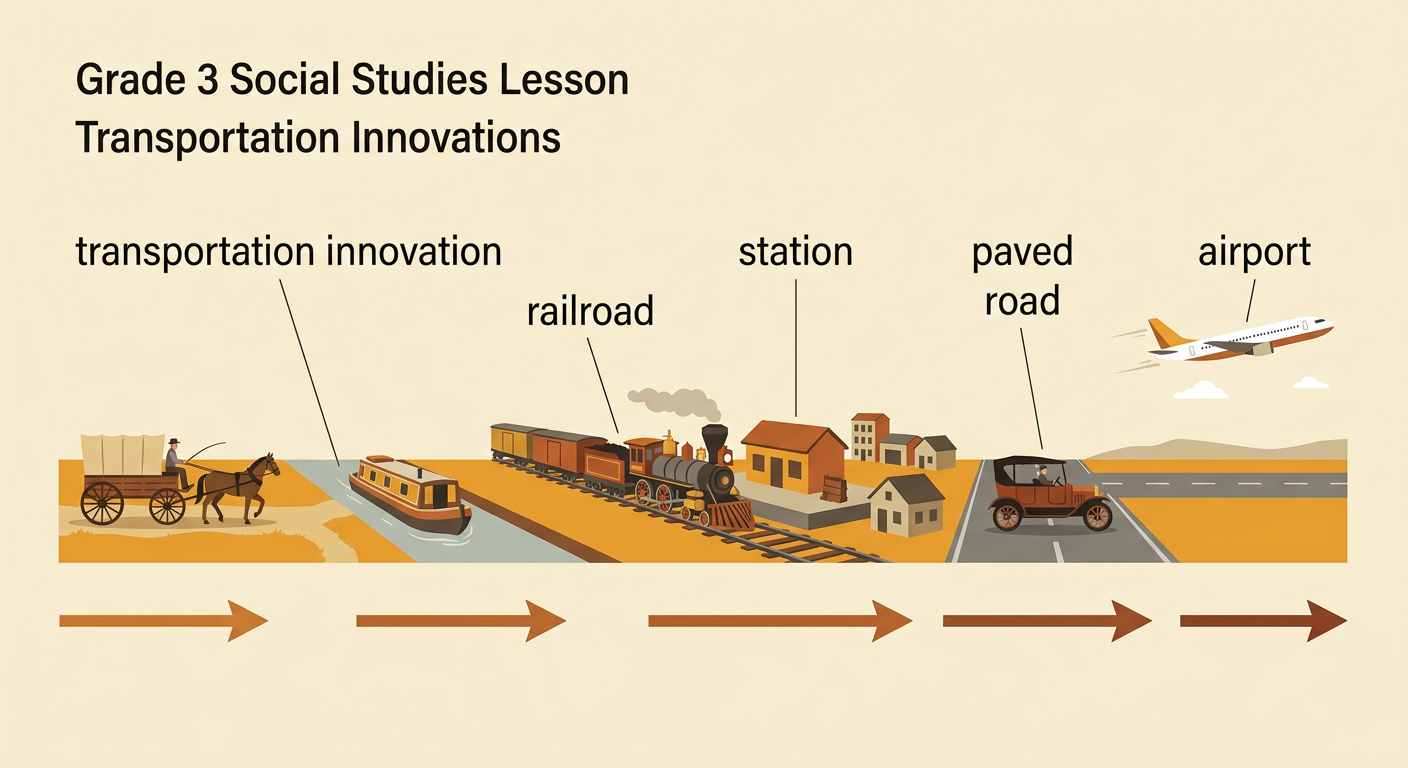
A transportation innovation is a new or improved way to move people and goods. Canals gave boats dependable water routes between inland places. Steam-powered trains carried large loads faster than horse-drawn wagons. Later, paved roads made travel smoother for bicycles, cars, buses, and trucks. Airplanes eventually connected communities across very long distances. Each innovation answered a need, but it also required stations, tracks, roads, bridges, fuel, or airports. For example, when a railroad reached a farming community, farmers could ship crops to a distant city before the food spoiled. Stores could receive tools and clothing from far away. A station might attract hotels, warehouses, and new homes. In this way, one transportation innovation could lead to many connected changes in community life.
Comparing Past and Present Travel Times
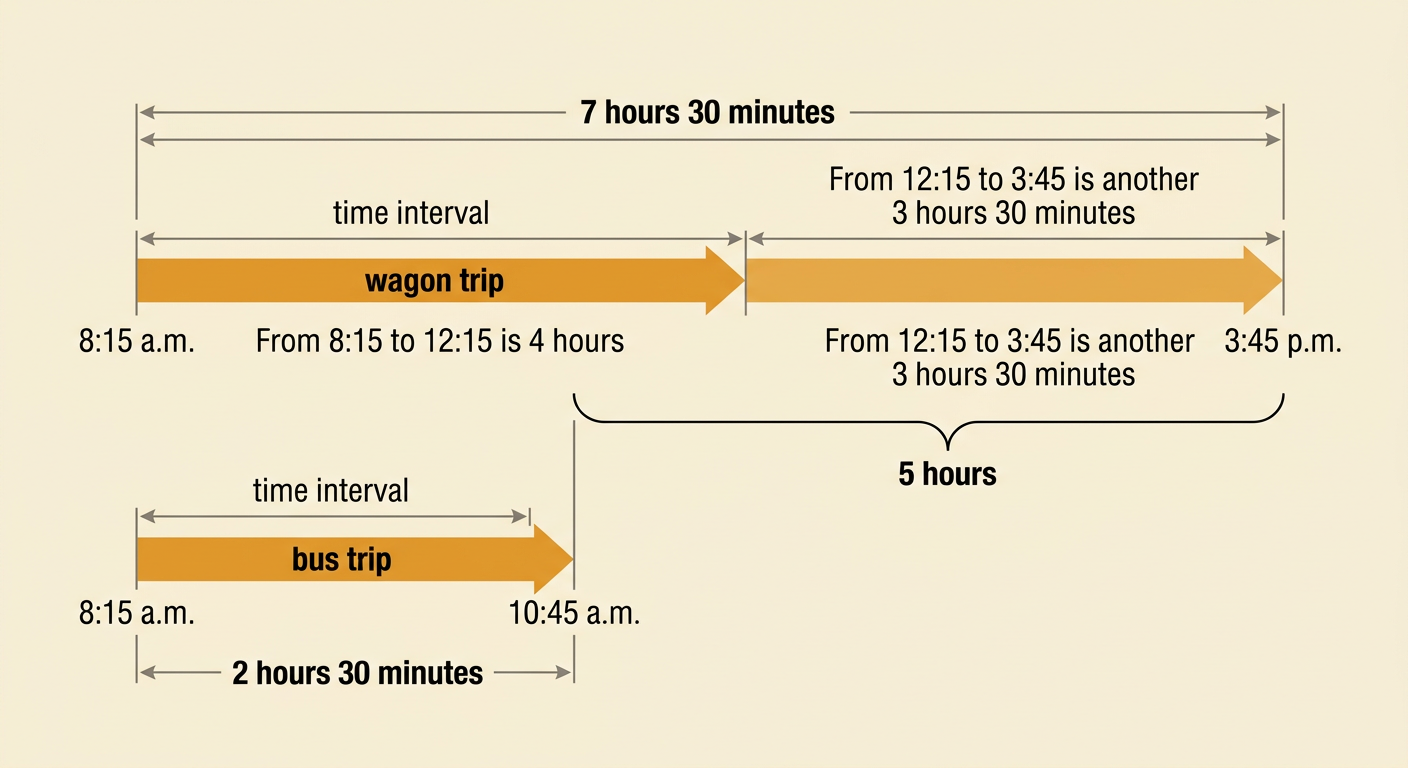
Travel schedules help us compare how long trips took in the past with how long they take today. To find a time interval, count from the starting time to the ending time. In a class example, imagine that a wagon leaves at 8:15 a.m. and arrives at 3:45 p.m. From 8:15 a.m. to 12:15 p.m. is 4 hours, and from 12:15 p.m. to 3:45 p.m. is 3 hours 30 minutes. The trip lasts 7 hours 30 minutes. A modern bus traveling the same route might leave at 8:15 a.m. and arrive at 10:45 a.m., a trip of 2 hours 30 minutes. The bus saves 5 hours. Faster travel can give people more time for work, school, shopping, or family activities.
How Transportation Changed Communities
Transportation innovations changed where people lived, worked, and shopped. Towns often grew near canals, railroad stations, highways, and airports because these places attracted travelers and businesses. Farmers and factory owners could sell goods in more distant markets. People gained easier access to schools, hospitals, jobs, and recreation. Transportation changes could also create challenges. Building a highway might remove homes, divide a neighborhood, increase noise, or move customers away from older stores. For example, a town beside a railroad might grow when warehouses and shops open near the station. Years later, a highway built outside town might attract new businesses near an exit while the station area becomes less busy. Comparing these periods shows that transportation does more than shorten trips; it can reshape an entire community over time.
