How Weather Shapes Daily Life
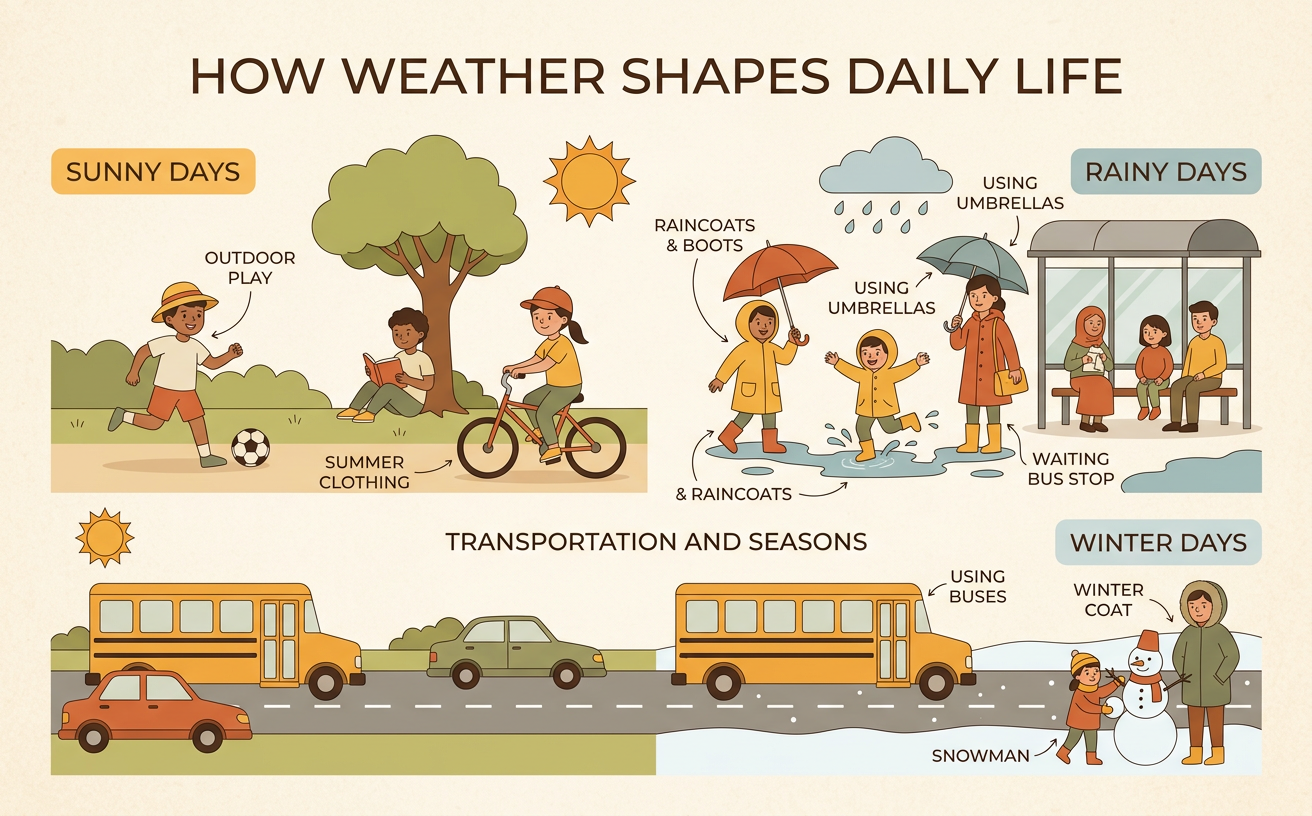
Students explore how local weather affects the clothing people wear, the activities they choose, and the ways they travel.
Illustrations are auto-generated and may be placeholders. They can be refreshed to match the narration.
Observe Today’s Weather
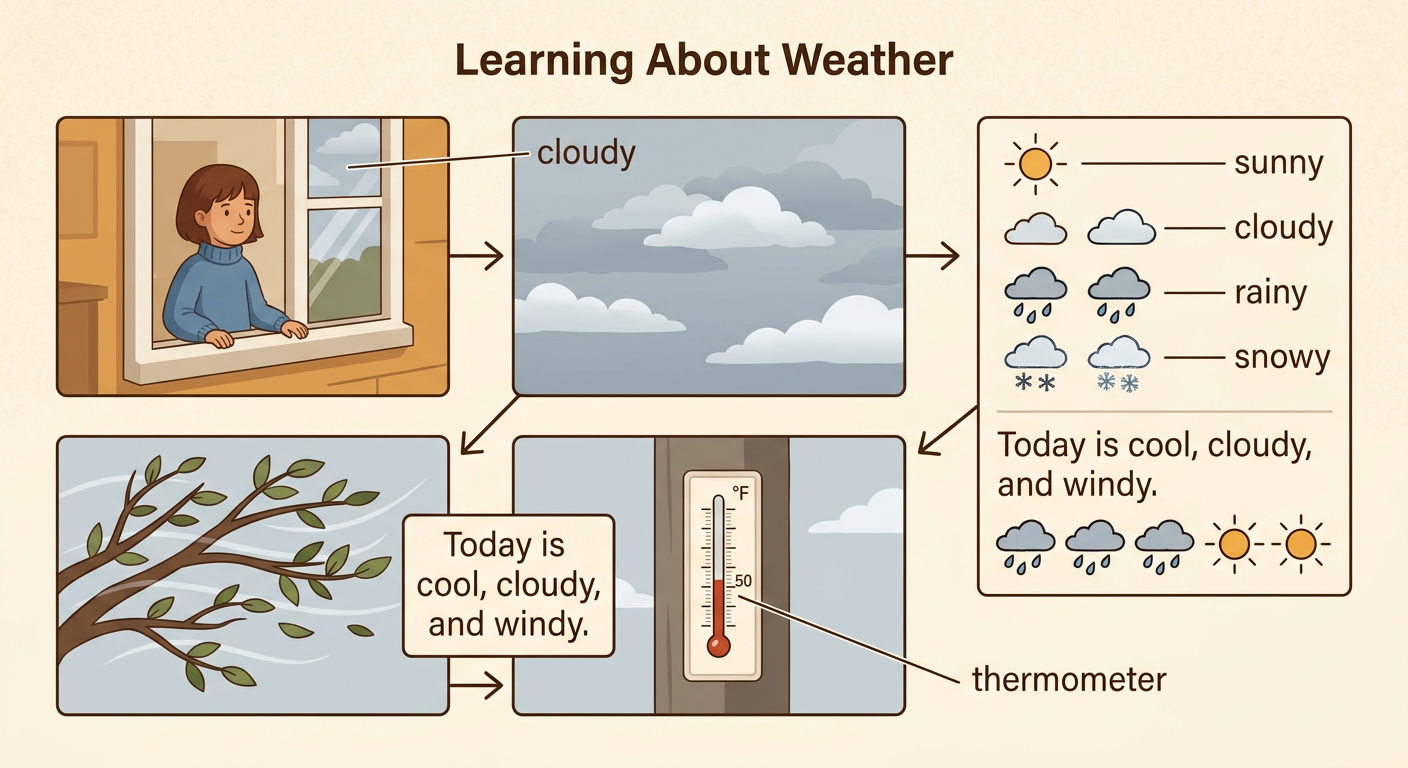
Weather tells what the air and sky are like at a certain time and place. Look outside to gather clues. Is the sky sunny, cloudy, rainy, or snowy? Watch whether tree branches move in the wind. Notice whether the air feels warm, cool, or cold with an adult. You can also use a thermometer to measure temperature. Record your observations with words or pictures. For example, you might write, “Today is cool, cloudy, and windy.” Observe the weather at the same time for several days. Then compare your records. You may notice a pattern, such as three rainy days followed by two sunny days. Weather can change from day to day, so today’s observations help people make choices for today.
Read About Weather and People
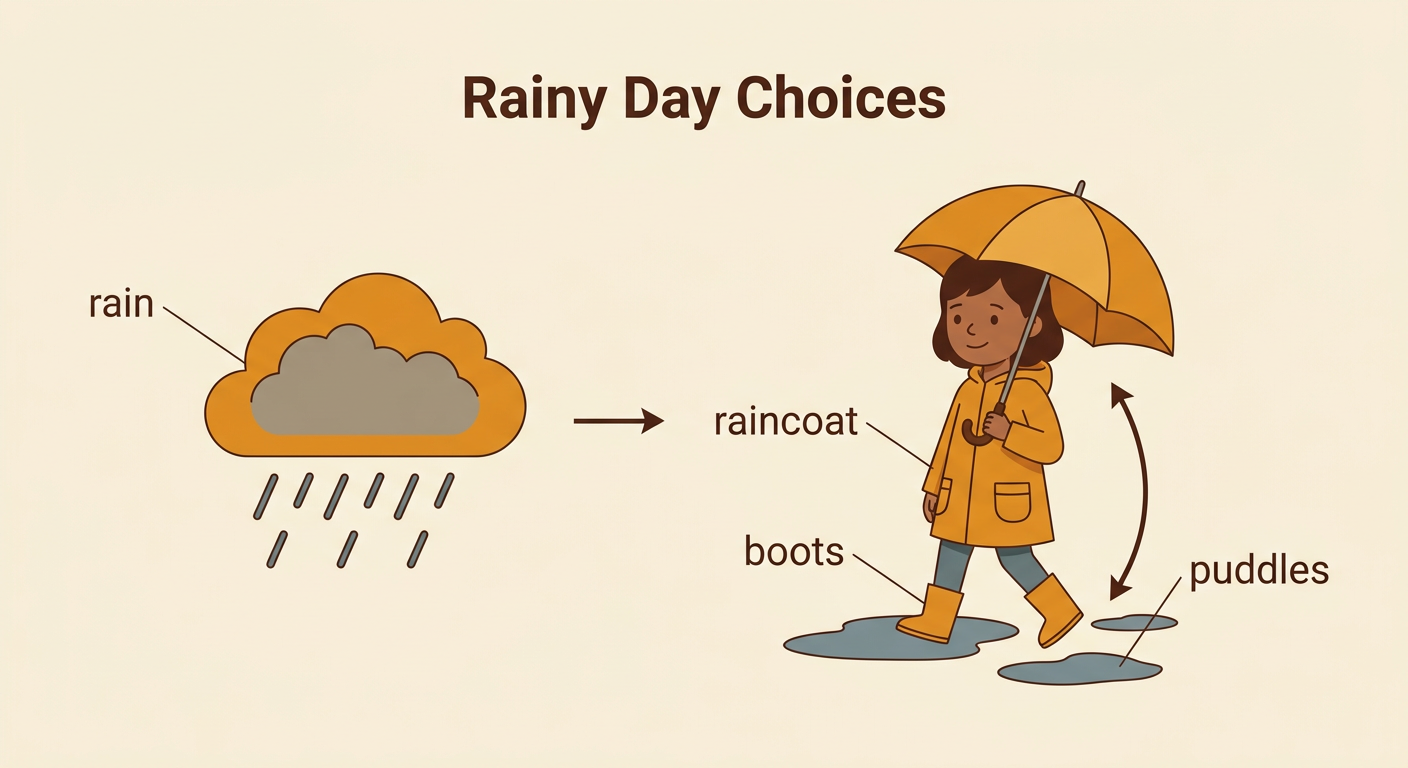
Read this short example: “Rain fell in Maya’s town before school. Maya put on a raincoat and boots. She carried an umbrella and walked around puddles.” The rain is one idea in the text. Maya’s choices are connected ideas. Rain can make clothing and sidewalks wet, so Maya chooses items that help keep her dry and walks carefully. Ask, “What was the weather?” and “What did Maya do because of it?” Look for clue words and details that show the connection. In this example, the weather condition is rain. The effects are Maya’s clothing and the way she walks. Connecting these details helps you understand how weather affects people’s daily lives.
Match Clothing to Conditions
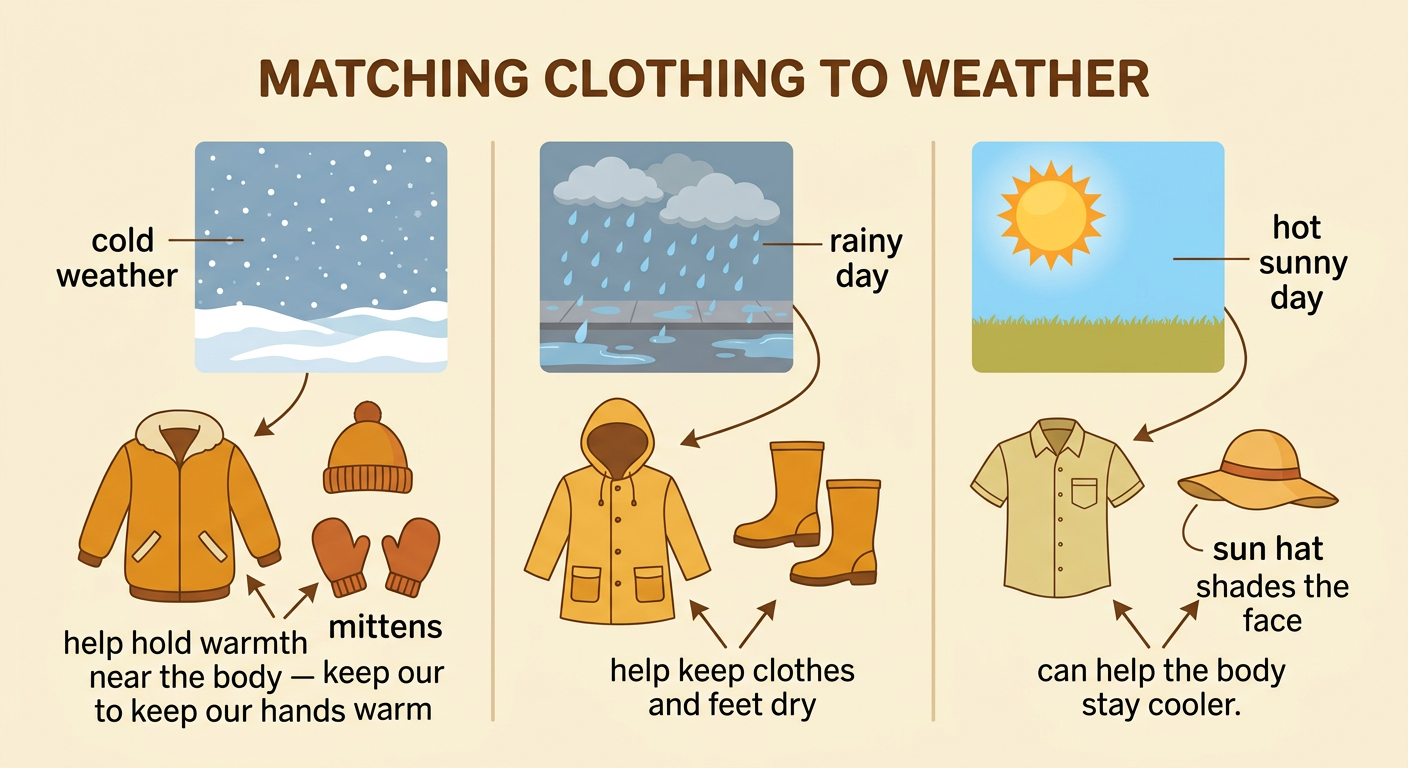
Clothing can help people feel comfortable and stay safer in different weather. On a cold day, a warm coat, hat, and mittens help hold body heat near the body. On a rainy day, a raincoat and waterproof boots help keep clothes and feet dry. On a hot, sunny day, lightweight clothing and a sun hat can help a person stay cooler and shade the face. People should also use sunscreen with help from an adult. Match each item to the weather it fits best. For example, mittens match cold weather better than hot weather because mittens keep hands warm. Some days have more than one condition. A cool, rainy day may call for both a sweater and a raincoat.
Connect Weather and Activities
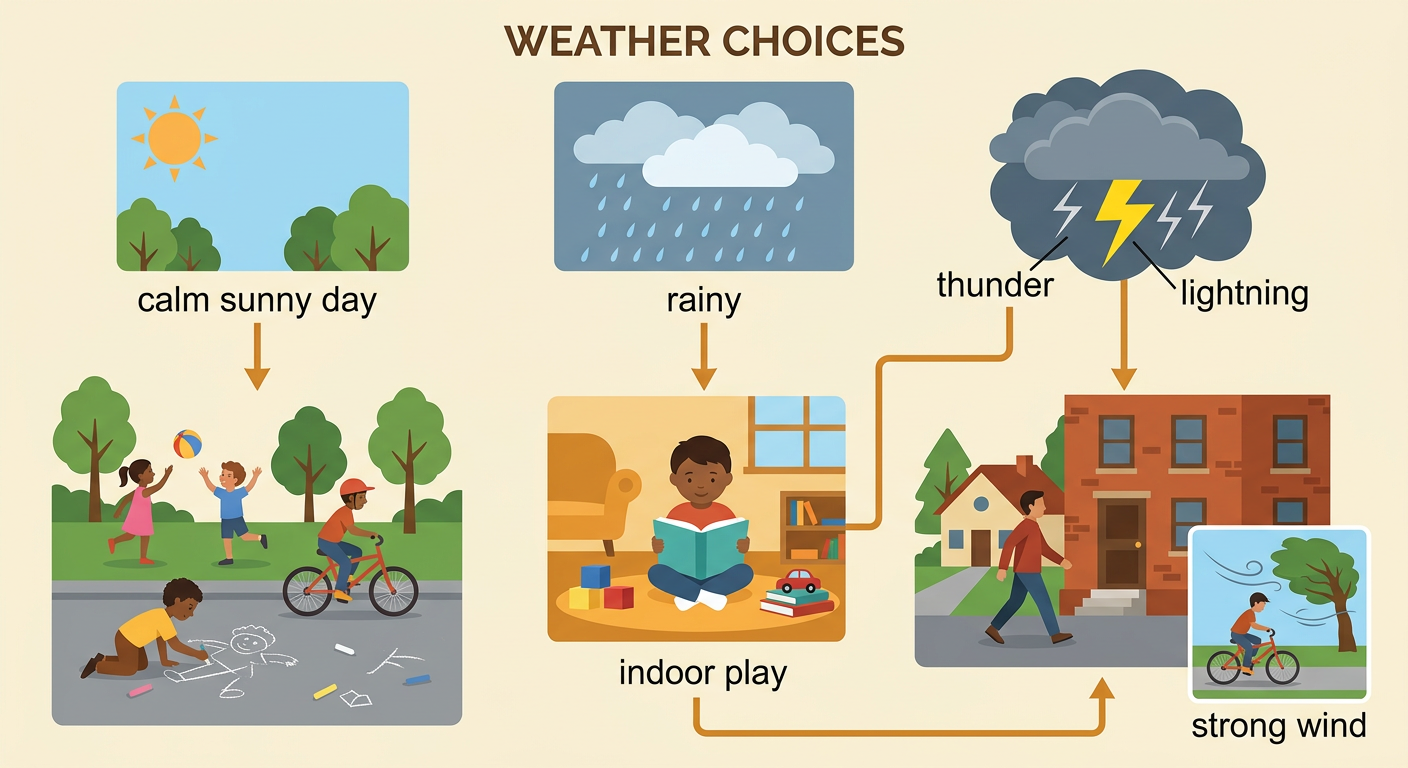
Weather can affect which activities people choose and where they do them. On a calm, sunny day, children might play at a park, ride bikes, or draw with sidewalk chalk. On a rainy day, they might read, build with blocks, or play a game indoors. Snow may make sledding possible when a safe hill and an adult are available. Some weather calls for extra care. Thunder and lightning mean people should go inside a sturdy building. Strong wind may make bike riding unsafe. For example, Eli planned to fly a kite, but he heard thunder. He changed his plan and played indoors. Weather does not always stop an activity, but it may change its time, place, or safety steps.
Draw and Explain a Daily Choice
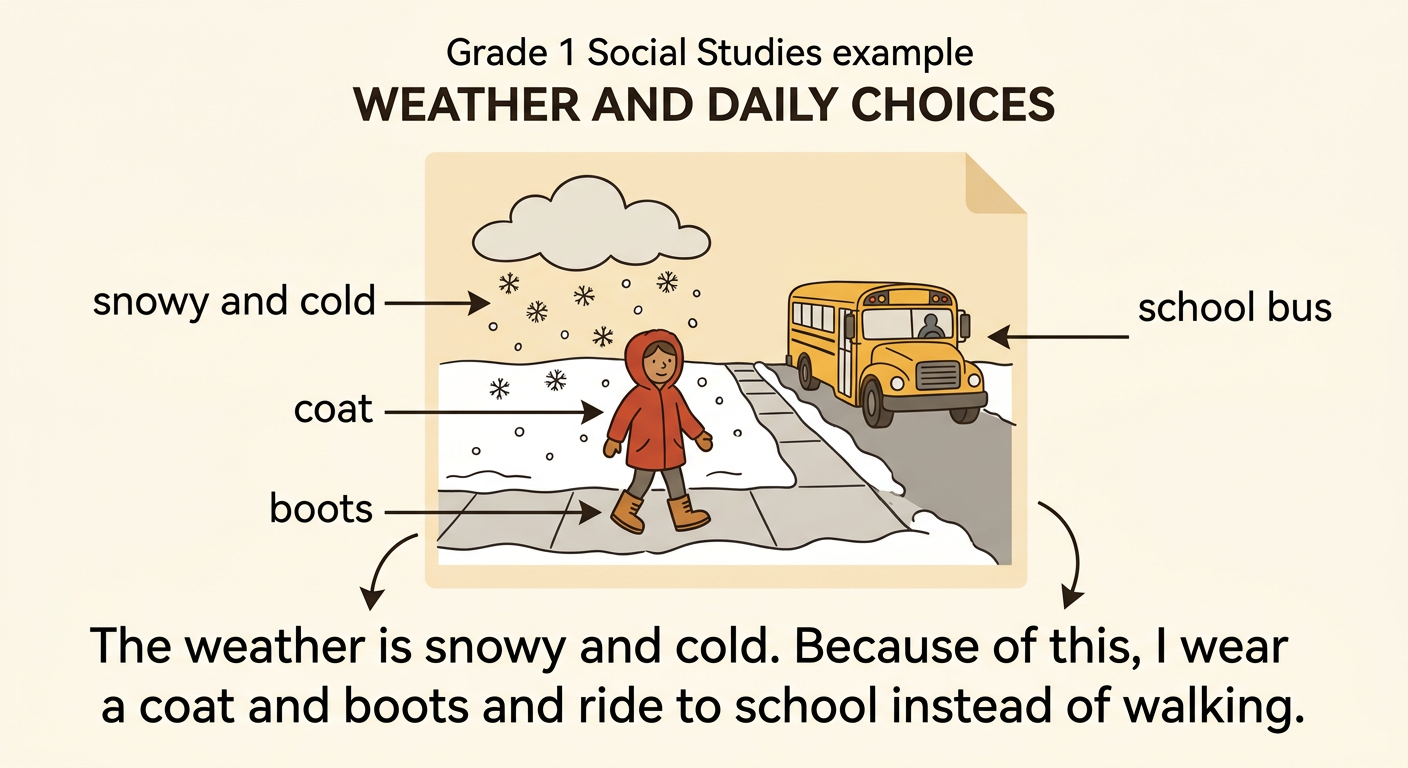
Choose one kind of local weather and draw a daily choice that fits it. Your picture should show the weather, a person, and what the person chooses to wear, do, or use for travel. Then explain the connection in one or two sentences. You can use this sentence frame: “The weather is ____. Because of this, I ____.” For example: “The weather is snowy and cold. Because of this, I wear a coat and boots and ride to school instead of walking.” Add clear details, such as snow on the ground, warm clothing, and a school bus. Make sure your choice matches the weather. Share your drawing with a partner and point to the details that support your explanation.