
How Weather Shapes Our Community
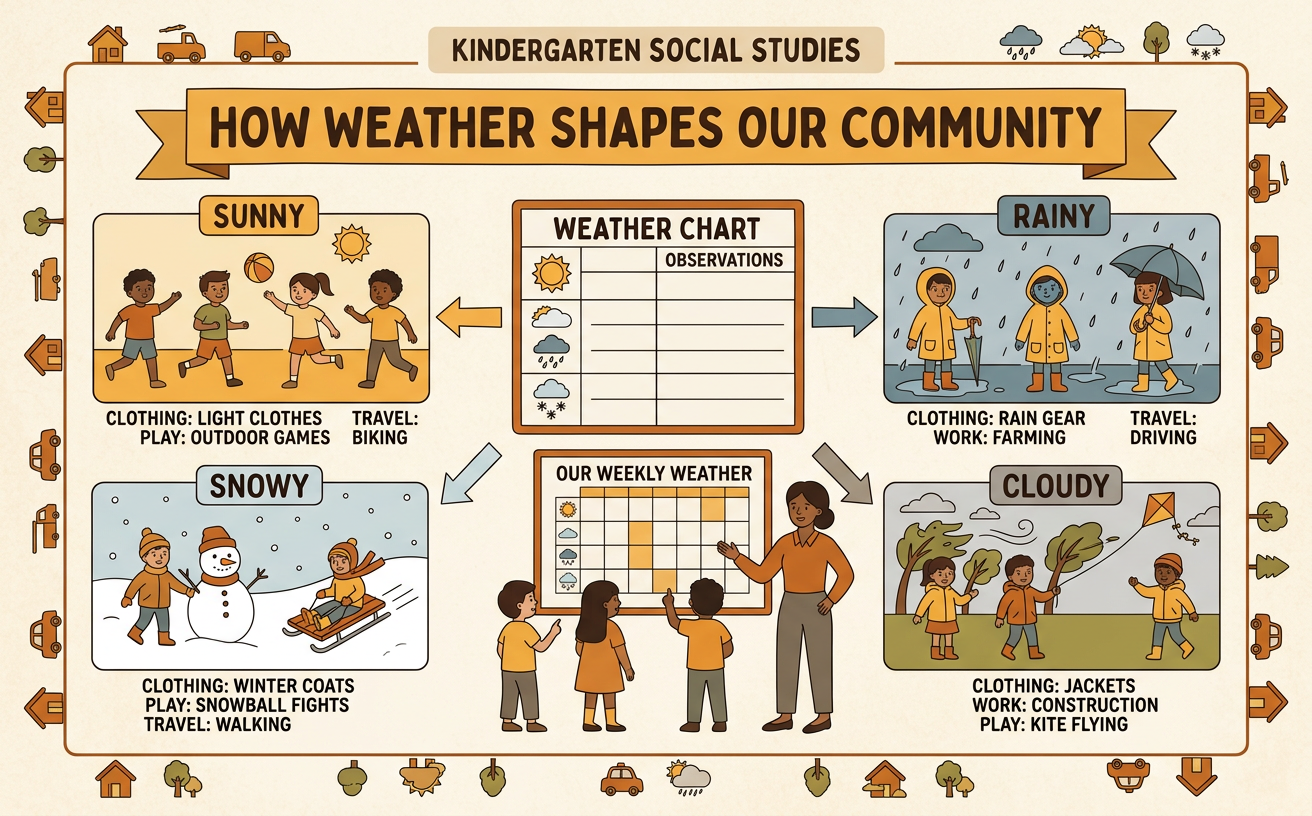
Students examine a simple weather chart and discuss how different weather conditions affect clothing, travel, work, and play in their community.
Illustrations are auto-generated and may be placeholders. They can be refreshed to match the narration.
Observe Today’s Weather
Weather tells what the air and sky are like outside right now. Look through a window or step outside with an adult. Notice the sky, wind, temperature, and precipitation. Precipitation is water that falls from clouds, such as rain or snow. You might see bright sunlight, gray clouds, moving tree branches, or drops on the ground. Use careful observation instead of guessing. For example, if tree leaves are moving and you feel air push against your face, you can say it is windy. Take turns sharing what you notice. One student might say, “I see dark clouds.” Another might add, “I see puddles.” Together, these observations help the class describe today’s weather and think about what people may need outside.

Read a Simple Weather Chart
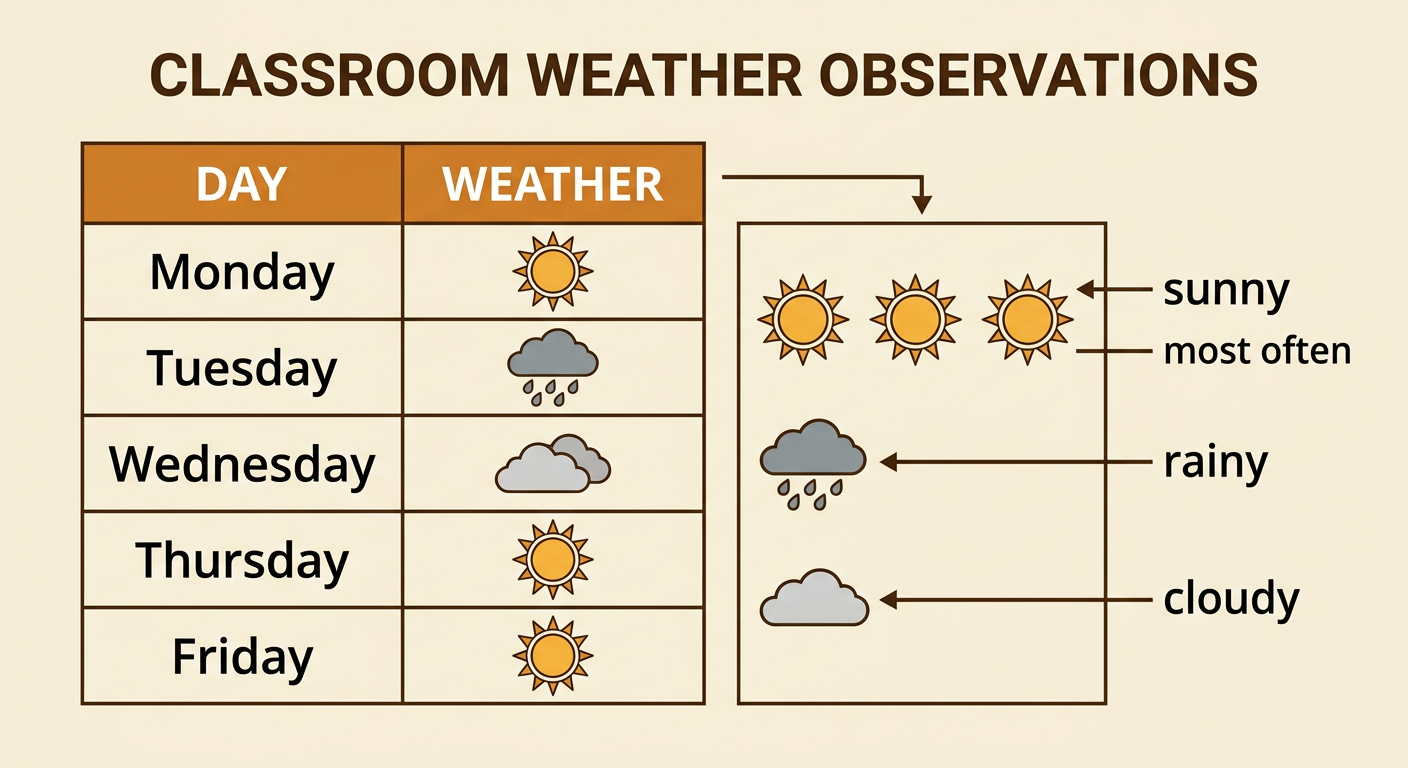
A weather chart helps us organize observations and find patterns over time. Each row can show one day, and a weather picture can show what was observed. Imagine a five-day chart: Monday was sunny, Tuesday was rainy, Wednesday was cloudy, Thursday was sunny, and Friday was sunny. Sort the days by weather type. There are three sunny days, one rainy day, and one cloudy day. Sunny weather happened most often on this chart. Rainy and cloudy weather each happened once. We can describe this as a pattern, but the chart does not tell us what every future day will be like. Point to each symbol as the class counts. Then compare the categories by asking, “Which weather type happened more often?”
Sort Clothes and Activities
Different weather can help us decide what to wear and what to do. Sort picture cards into useful groups, such as clothes for rainy weather, clothes for cold weather, and clothes for sunny weather. A raincoat and waterproof boots fit the rainy group. A warm coat and mittens fit the cold group. A sun hat can help shade your face on a sunny day. Activities can also be sorted. Puddle watching with an adult may fit a rainy day, while building a snow person fits a snowy day. Playing at a splash pad may fit a warm, sunny day. Count the cards in each group and compare the totals. Some items may fit more than one group, so explain your thinking and listen to classmates’ ideas.

Connect Weather to Community Life
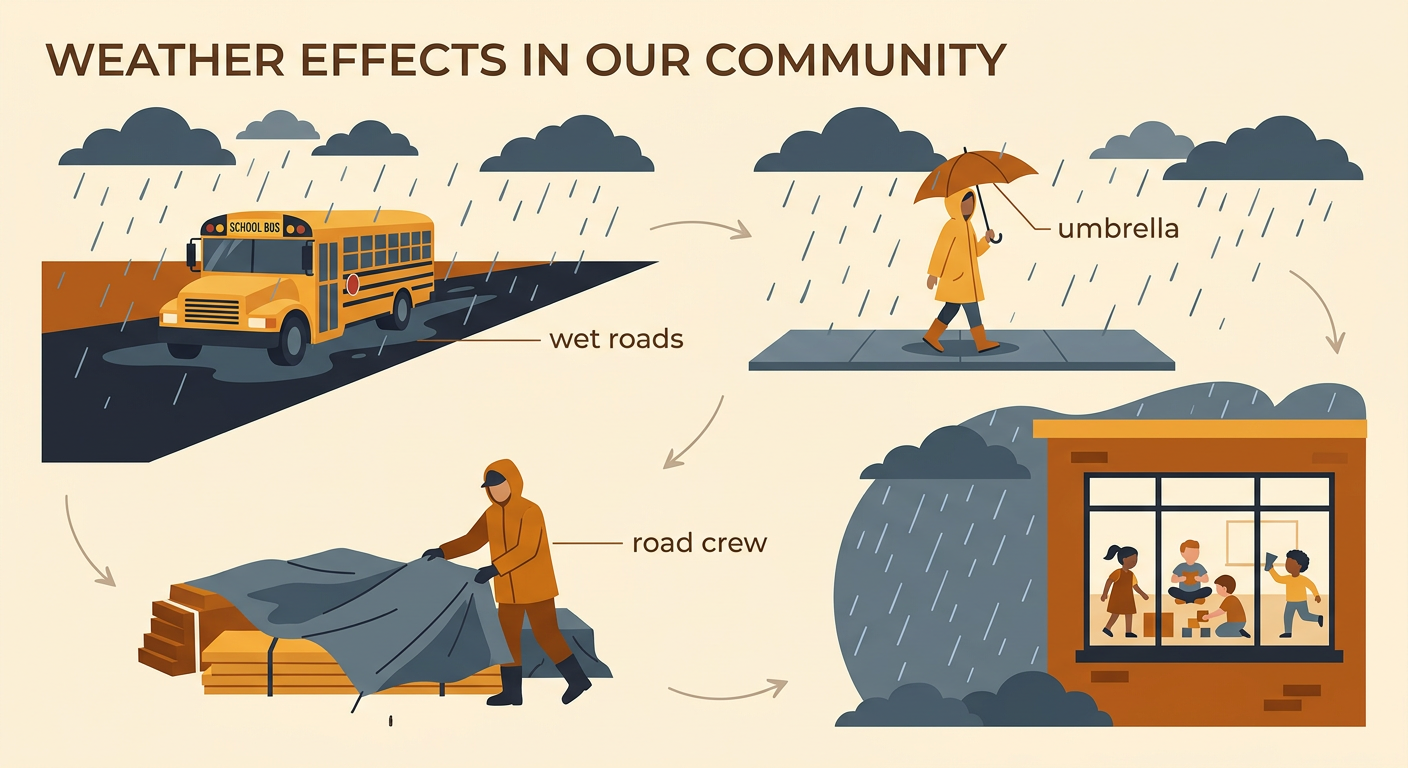
Weather affects how people travel, work, and play in a community. On a rainy day, drivers may slow down because roads are wet. People walking may use raincoats or umbrellas. Outdoor workers may wear waterproof clothing or move some jobs to another time. A soccer game might be moved indoors if there is thunder or heavy rain. On a snowy day, road crews may clear snow so buses and cars can travel more safely. On a very hot day, families may play in the shade and drink water. Weather can also change plans at farms, parks, construction sites, and schools. Think about your community. Share one place affected by weather and explain how. Different communities may experience different weather, so their clothing, travel, work, and play may differ.
Share a Weather-Safe Choice
A weather-safe choice is an action that helps protect you during certain weather conditions. First, observe the weather. Next, think about what could help you stay safe and comfortable. Then share your choice with a partner. For example, if you hear thunder, a safe choice is to go inside with an adult instead of staying on a playground. If the day is hot and sunny, you might drink water, rest in the shade, and follow an adult’s directions. If sidewalks are icy, you can walk slowly and hold an adult’s hand. Take turns speaking and listening. You can use the sentence, “When the weather is ___, I will ___ because ___.” Ask a question about your partner’s idea or name another safe choice that fits the same weather.
