Identifying Materials by Their Physical Properties
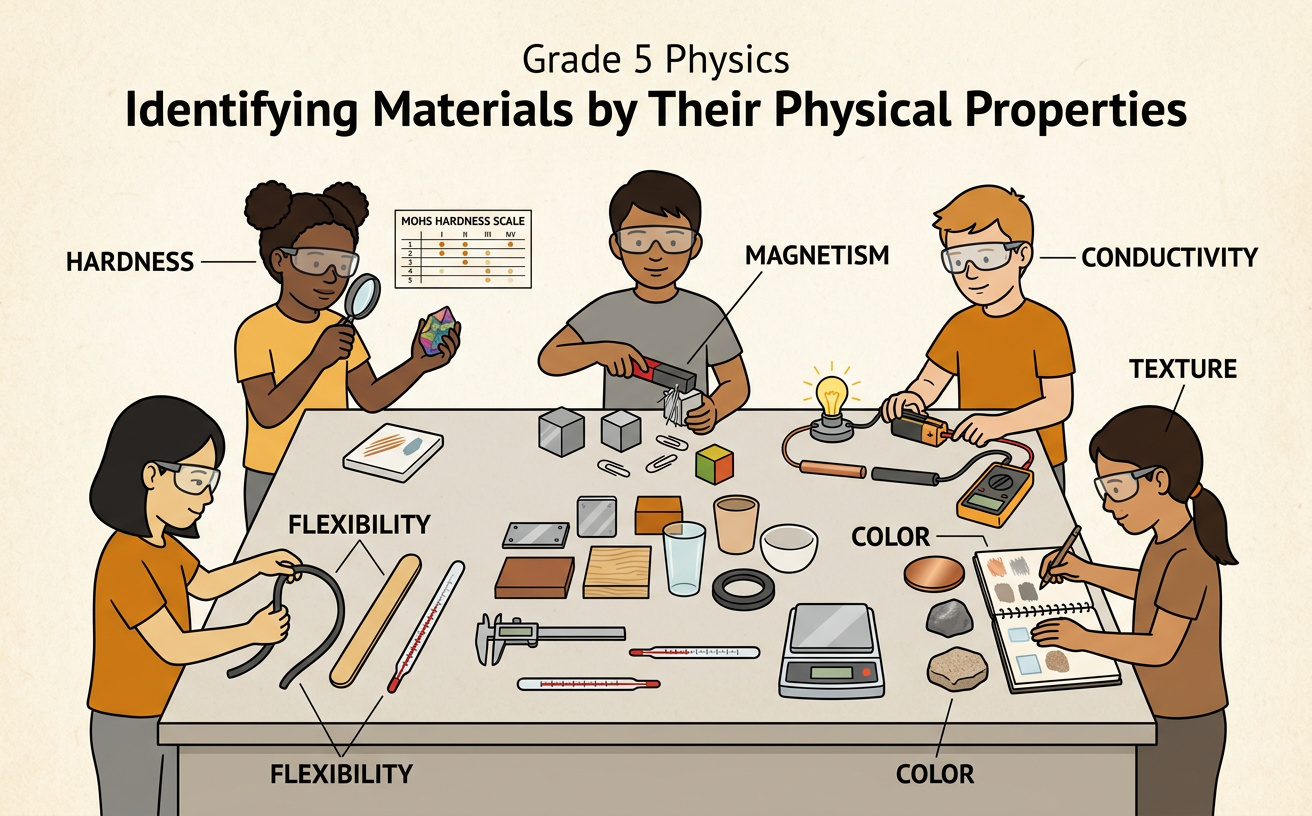
Students observe and measure properties such as color, hardness, magnetism, conductivity, and flexibility to identify and compare unknown materials.
Illustrations are auto-generated and may be placeholders. They can be refreshed to match the narration.
What Is a Physical Property?
A physical property is a feature of matter that can be observed or measured without changing the material into a different kind of matter. Color, texture, hardness, magnetism, electrical conductivity, and flexibility are physical properties. Some properties are observed with the senses, while others require tools. For example, aluminum foil is silver-colored, flexible, and able to conduct electricity. A rubber band is usually flexible but does not conduct electricity well. One property alone may not identify a material because several materials can share the same color or texture. Scientists therefore examine several properties and compare their results. Materials should never be tasted, and students should follow safety directions when touching or testing samples.

Observe the Material Samples
Begin by carefully observing each unknown sample before testing it. Give every sample a letter, such as Sample A or Sample B, so its identity does not influence the observations. Record color, surface appearance, texture, shape, and whether the material looks shiny or dull. Use precise descriptions instead of opinions. For example, write “smooth, shiny, and gray” rather than “nice-looking metal.” A hand lens can reveal small details that are difficult to see with the unaided eye. Do not assume that two samples are the same material just because they have the same color. Plastic and glass can both be clear, but they have different hardness, flexibility, and conductivity. Place every observation in a data table so samples can be compared fairly.

Test and Measure Properties
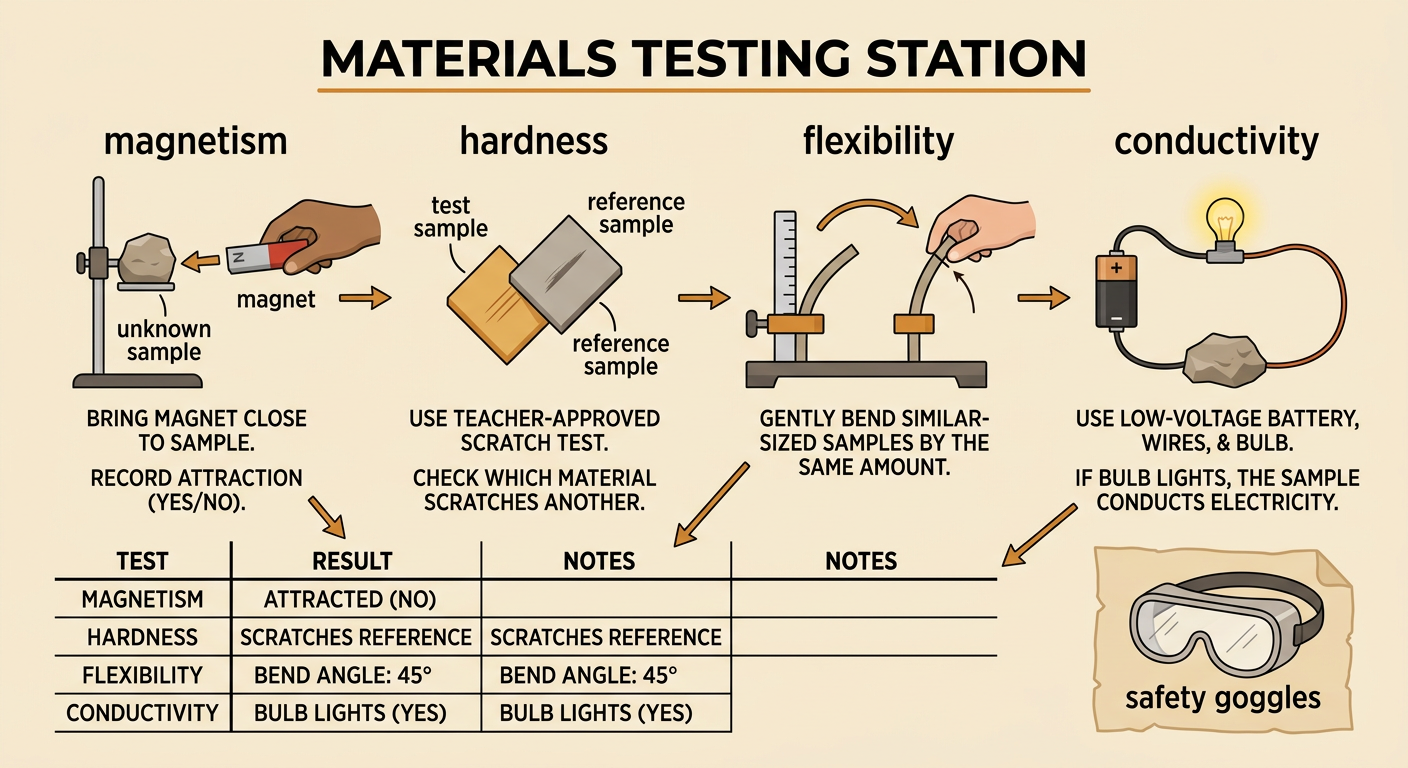
After observing the samples, perform the same tests on each one. To test magnetism, bring a magnet close and record whether the sample is attracted. To compare hardness, use a teacher-approved scratch test and observe whether one material scratches another. Test flexibility by gently bending samples of similar size by the same amount. Test electrical conductivity with a low-voltage battery, wires, and a bulb in a teacher-approved circuit. If the bulb lights when the sample completes the circuit, the material conducts electricity. Record measurements and results immediately, using numbers and units when possible. Keep each test fair by changing only the sample while keeping the tools and procedures the same. Wear safety goggles and follow all classroom safety directions.
Identify the Unknown Materials
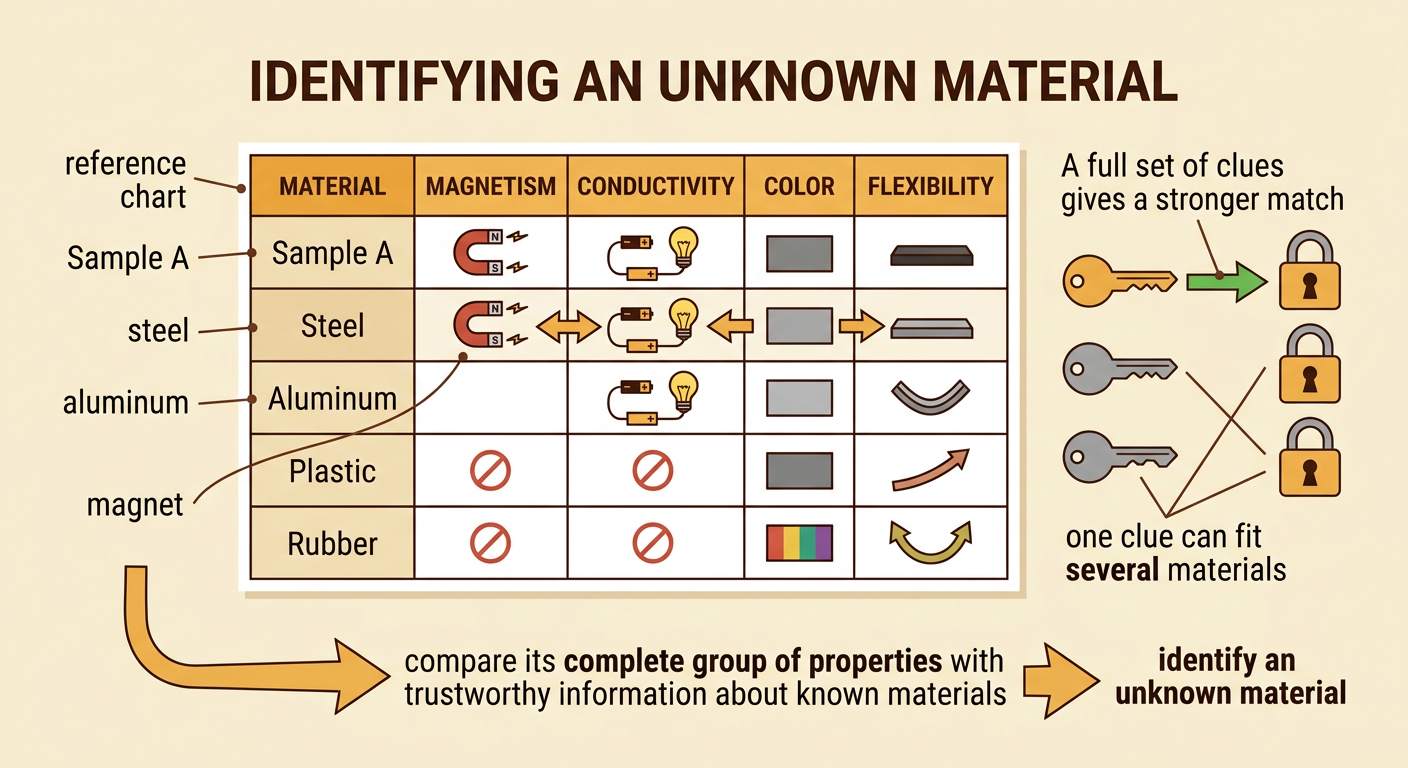
To identify an unknown material, compare its complete set of properties with reliable information about known materials. Look for the known material that matches all or most of the evidence, not just one result. Suppose Sample A is gray, shiny, attracted to a magnet, electrically conductive, and difficult to bend. A reference chart shows that steel has this combination of properties. Aluminum is also gray, shiny, and conductive, but it is not normally attracted to a magnet. This difference helps identify Sample A as steel rather than aluminum. If no known material matches every result, repeat the tests and check for measurement errors. A sample may also be coated, mixed, or made from more than one material. Scientists revise an identification when stronger evidence becomes available.
Support a Claim with Evidence
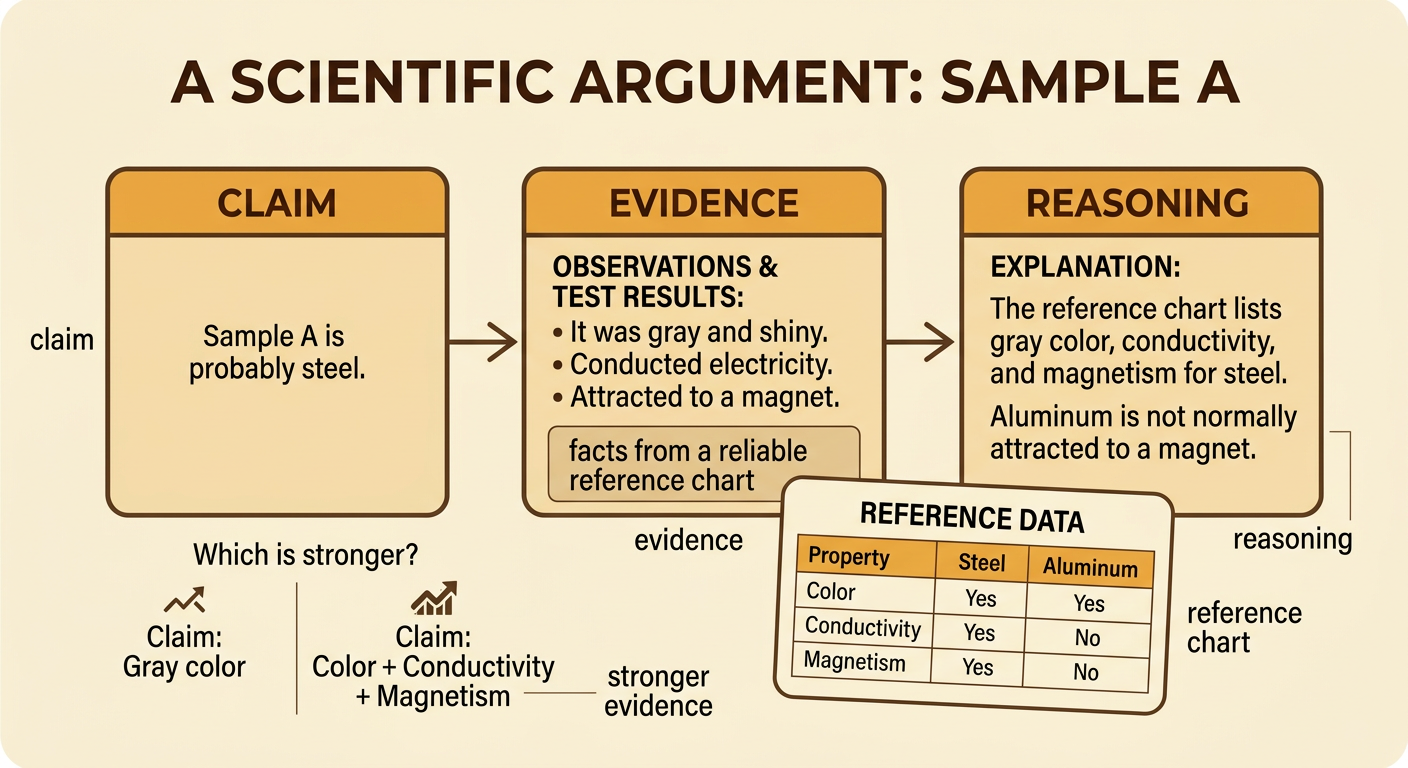
A scientific argument includes a claim, evidence, and reasoning. The claim states the material's likely identity. Evidence includes recorded observations, measurements, test results, and information from a reliable reference chart. Reasoning explains why the evidence supports the claim. For example: “Sample A is probably steel. It was gray and shiny, conducted electricity, and was attracted to a magnet. The reference chart shows that steel has these properties, while aluminum is not attracted to a magnet.” This explanation uses more than one source of evidence and compares possible answers. When writing, organize the information clearly, use accurate scientific vocabulary, and include important measurements. Also mention evidence that does not fit the claim. If another student offers a different identification, compare both arguments and decide which one is supported by the stronger evidence.