Immune Defense: Coordinating the Body’s Response to Infection
Students model how innate and adaptive immune cells coordinate a response to a pathogen and use biological evidence to evaluate a vaccination policy scenario.
Illustrations are auto-generated and may be placeholders. They can be refreshed to match the narration.
Pathogens and Lines of Defense
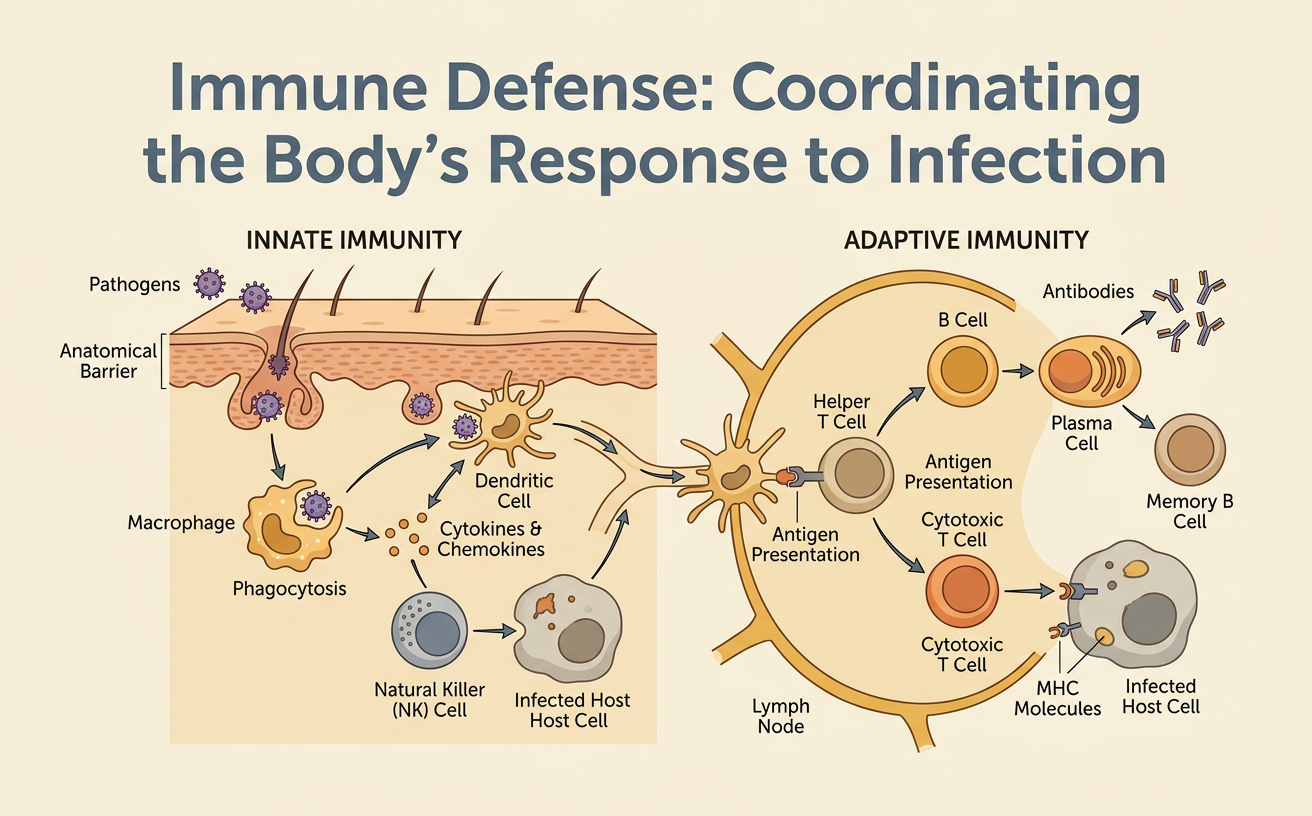
Pathogens are disease-causing agents, including viruses, bacteria, fungi, and parasites. The body uses layered defenses to prevent them from causing harm. The first line includes physical and chemical barriers such as skin, mucus, cilia, stomach acid, and antimicrobial substances in tears. If a pathogen crosses these barriers, internal innate defenses respond quickly but do not target one unique pathogen. Adaptive defenses develop more slowly and recognize specific antigens, which are molecules associated with a pathogen. For example, an influenza virus may enter through the nose. Mucus traps many virus particles, while cilia move them toward the throat for removal. If some viruses infect respiratory cells, innate immune cells respond first, followed by antigen-specific B cells and T cells. These coordinated layers help protect tissues and restore stable body conditions.

The Innate Immune Response
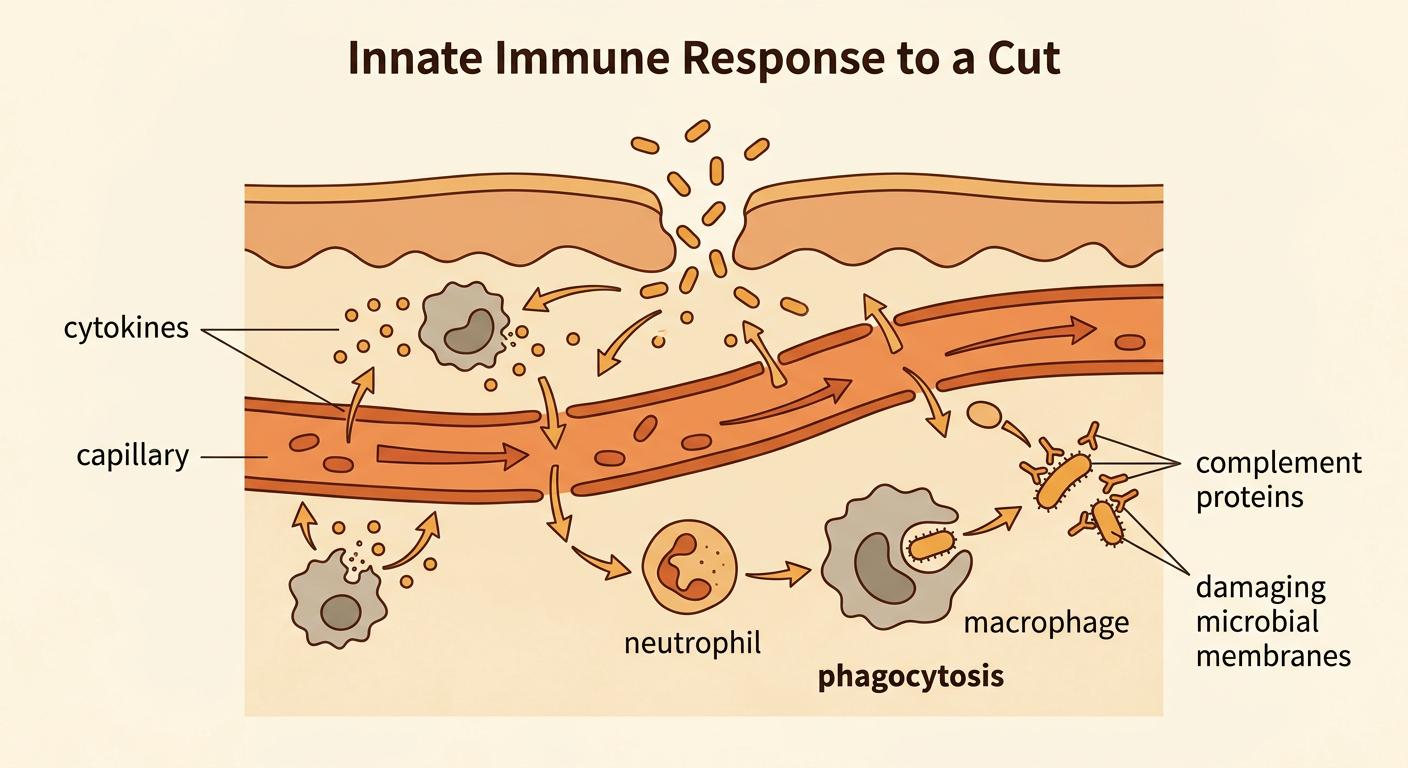
The innate immune response begins within minutes or hours after tissue damage or infection. Damaged cells and immune cells release signaling molecules called cytokines. These signals increase blood flow and make nearby capillaries more permeable, producing redness, warmth, swelling, and sometimes pain. Neutrophils and macrophages move into the tissue and engulf pathogens through phagocytosis. Complement proteins in the blood can mark microbes for destruction, attract immune cells, or damage certain microbial membranes. Fever may also slow the growth of some pathogens and support immune activity, although a dangerously high fever requires medical attention. For example, bacteria entering through a cut trigger inflammation. Neutrophils arrive quickly, while macrophages consume bacteria and cellular debris. The response is nonspecific because it recognizes broad features shared by many pathogens rather than one particular antigen.
The Adaptive Immune Response
The adaptive immune response targets specific antigens and is carried out mainly by B lymphocytes and T lymphocytes. A dendritic cell can engulf a pathogen, break it down, and display antigen fragments to helper T cells in a lymph node. Activated helper T cells release signals that support other immune cells. B cells whose receptors match the antigen multiply and become plasma cells, which secrete antibodies. Antibodies bind to specific antigens, block pathogen entry into cells, and mark pathogens for removal. Cytotoxic T cells recognize and kill infected body cells displaying matching antigen fragments. For example, during a viral infection, antibodies can bind free virus particles while cytotoxic T cells destroy cells already producing the virus. This division of labor allows the immune system to attack the same infection in several coordinated ways while limiting damage to healthy cells.

Modeling Immune-System Coordination
A useful immune-system model should show both biological hierarchy and interactions. At the organism level, the whole body maintains internal stability. Within the organism, the circulatory and lymphatic systems transport immune cells, antigens, and chemical signals. Organs such as bone marrow, the thymus, lymph nodes, and spleen produce, mature, or activate immune cells. Within tissues, cells communicate using cytokines and direct receptor contact. At the molecular level, antibodies and receptors bind particular antigens. Consider bacteria entering through a splinter. Skin damage triggers inflammation, blood vessels deliver neutrophils, dendritic cells carry antigens to a lymph node, and activated lymphocytes travel back through blood and lymph. In a model, arrows should represent movement, signaling, activation, or inhibition rather than simply showing that structures are near one another. This makes the model testable and explains how coordinated parts produce protection.

Immune Memory and Vaccination
After an adaptive immune response, most activated lymphocytes die, but some remain as long-lived memory B cells and memory T cells. If the same antigen appears again, these cells usually generate a faster and stronger response. Vaccines safely expose the immune system to selected antigens or genetic instructions for making an antigen without causing the full disease they are designed to prevent. The first dose may establish immune memory, while later doses can strengthen or restore protection. For example, after vaccination against measles, memory cells can respond rapidly when they encounter the measles virus, often preventing illness. Vaccination can also reduce transmission when enough people are protected, indirectly helping individuals who cannot receive certain vaccines. Protection is not always complete or permanent, and effectiveness can vary with the vaccine, pathogen, dosage schedule, age, and health of the recipient.

Evaluating a Public Health Scenario
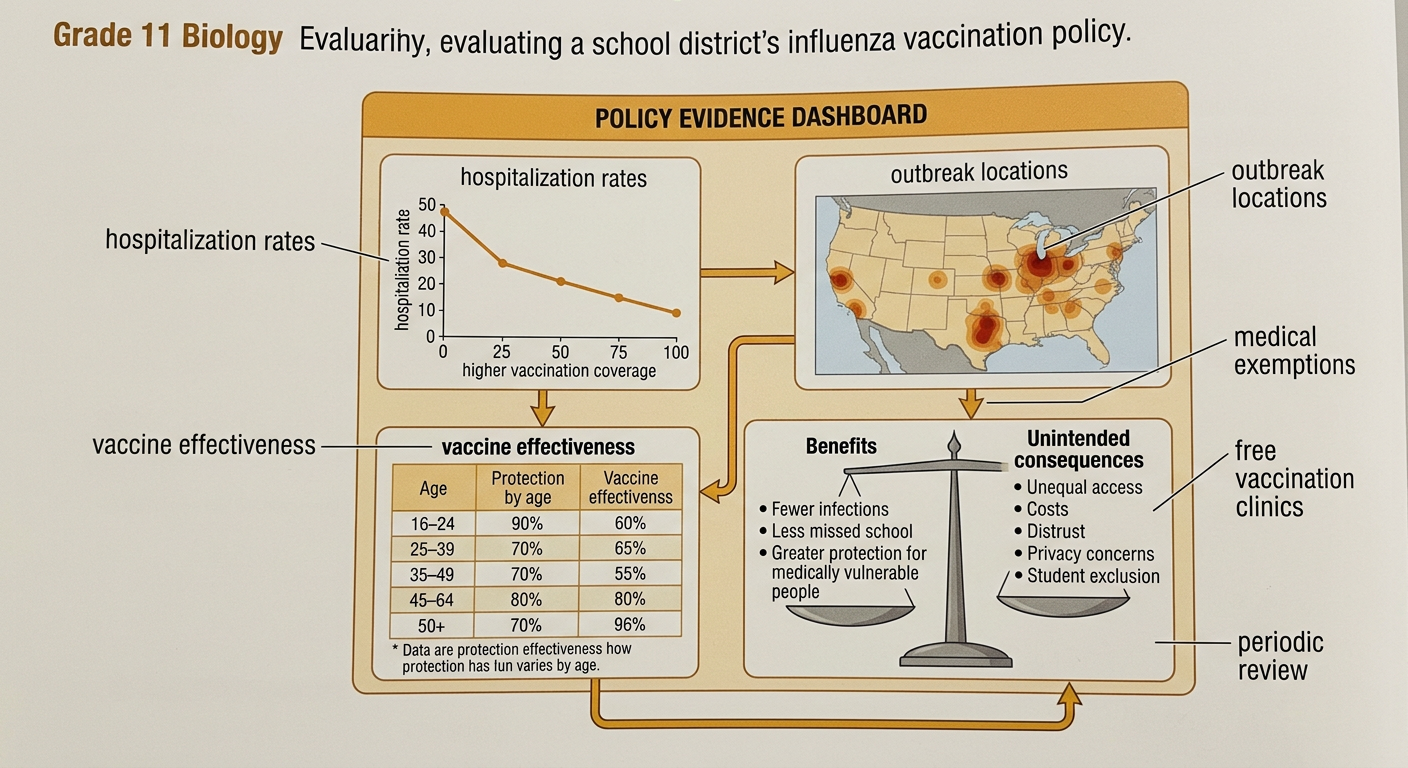
Suppose a school district considers requiring an influenza vaccine for students during a severe flu season while allowing medical exemptions. To evaluate the policy, students should define the goal, compare evidence, and examine consequences. Useful sources could include a graph of local hospitalization rates, a table of vaccine effectiveness by age, a map of outbreak locations, and reports describing side effects and missed school days. Source dates, sample sizes, methods, and possible bias should be checked before combining conclusions. Intended outcomes might include fewer infections, reduced absenteeism, and protection for medically vulnerable people. Possible unintended outcomes include unequal access, financial burdens, distrust, or exclusion of students who do not meet the requirement. A strong recommendation should explain whether the evidence supports the policy, identify uncertainties, and propose adjustments such as free vaccination clinics, clear exemption procedures, privacy protections, and periodic review of local disease data.