Immune Defense: From Pathogen Recognition to Lasting Immunity
Students trace innate and adaptive immune responses, model how vaccines produce immune memory, and evaluate an evidence-based public health policy claim.
Illustrations are auto-generated and may be placeholders. They can be refreshed to match the narration.
Pathogens and the Body's Barriers
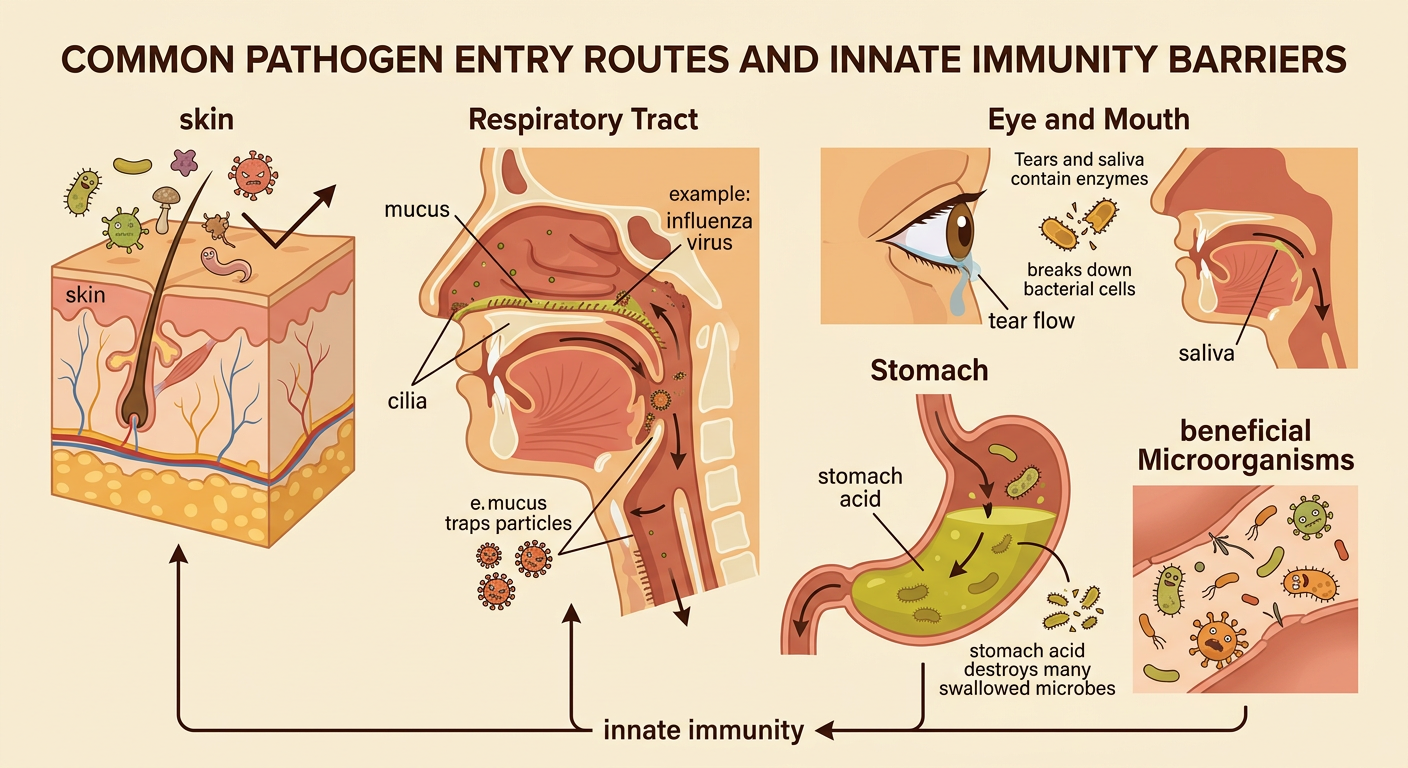
Pathogens are disease-causing agents such as viruses, bacteria, fungi, and parasites. To cause an infection, a pathogen must enter the body, reproduce, and damage cells or disrupt normal functions. The body's first defenses are physical and chemical barriers. Intact skin blocks entry, while mucus traps particles in the respiratory tract. Cilia move mucus toward the throat so it can be swallowed or expelled. Tears and saliva contain enzymes that damage some bacteria, and stomach acid destroys many swallowed microbes. Helpful microorganisms also compete with pathogens for space and nutrients. For example, an influenza virus may enter through the nose, but mucus and cilia remove many viral particles before they reach lung cells. These barriers are part of innate immunity because they act quickly and do not target one specific pathogen.
The Innate Immune Response
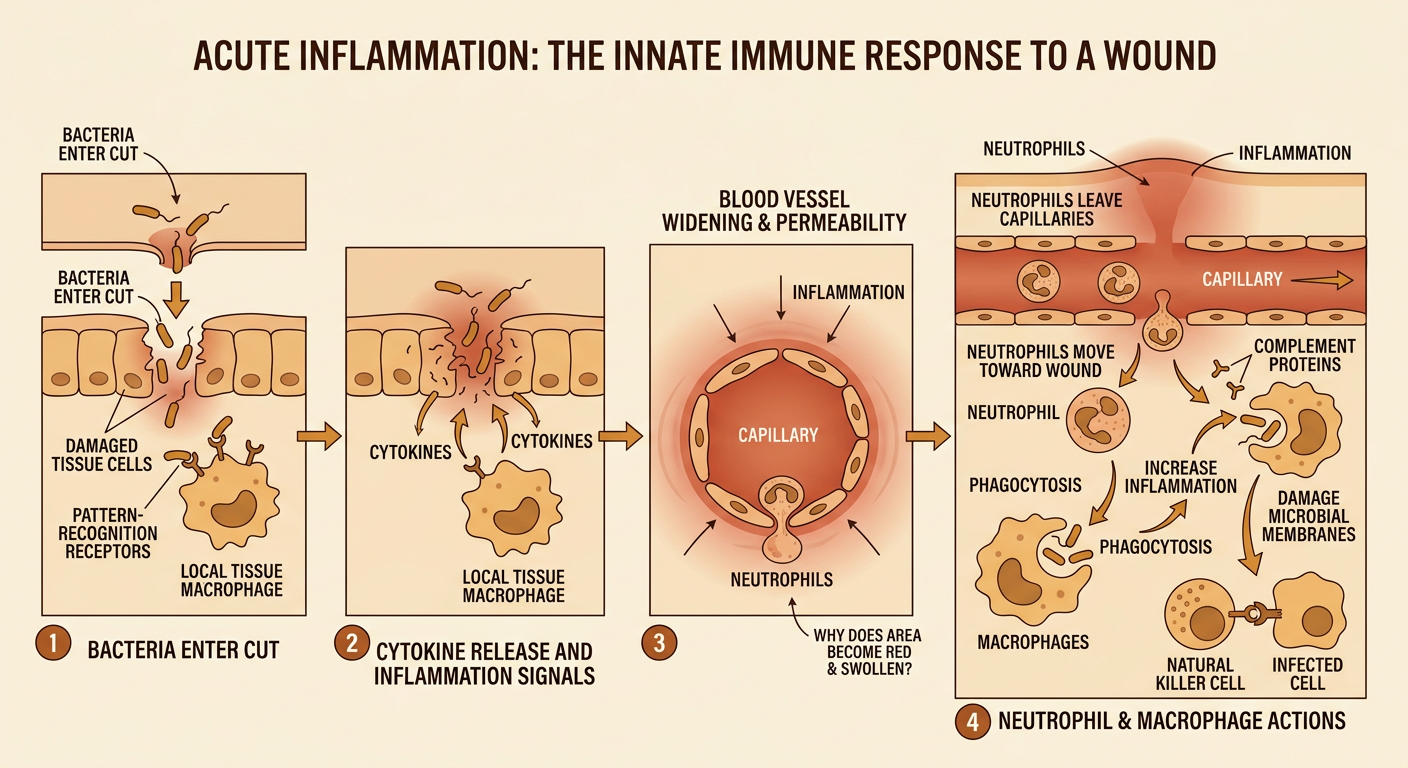
If a pathogen crosses a barrier, the innate immune response begins within minutes or hours. Immune cells use pattern-recognition receptors to detect molecular features shared by groups of pathogens. Damaged cells and immune cells release signaling molecules called cytokines, which promote inflammation and recruit additional defenses. Nearby blood vessels widen and become more permeable, causing redness, warmth, swelling, and sometimes pain. Neutrophils and macrophages engulf microbes through phagocytosis and digest them. Complement proteins in blood can mark pathogens, increase inflammation, or damage certain microbial membranes. Natural killer cells can destroy some infected or abnormal body cells. For example, bacteria entering a cut may trigger inflammation as neutrophils leave nearby capillaries and move toward the wound. Innate defenses respond rapidly, but they do not create highly specific, long-lasting memory.
B Cells, T Cells, and Antibodies
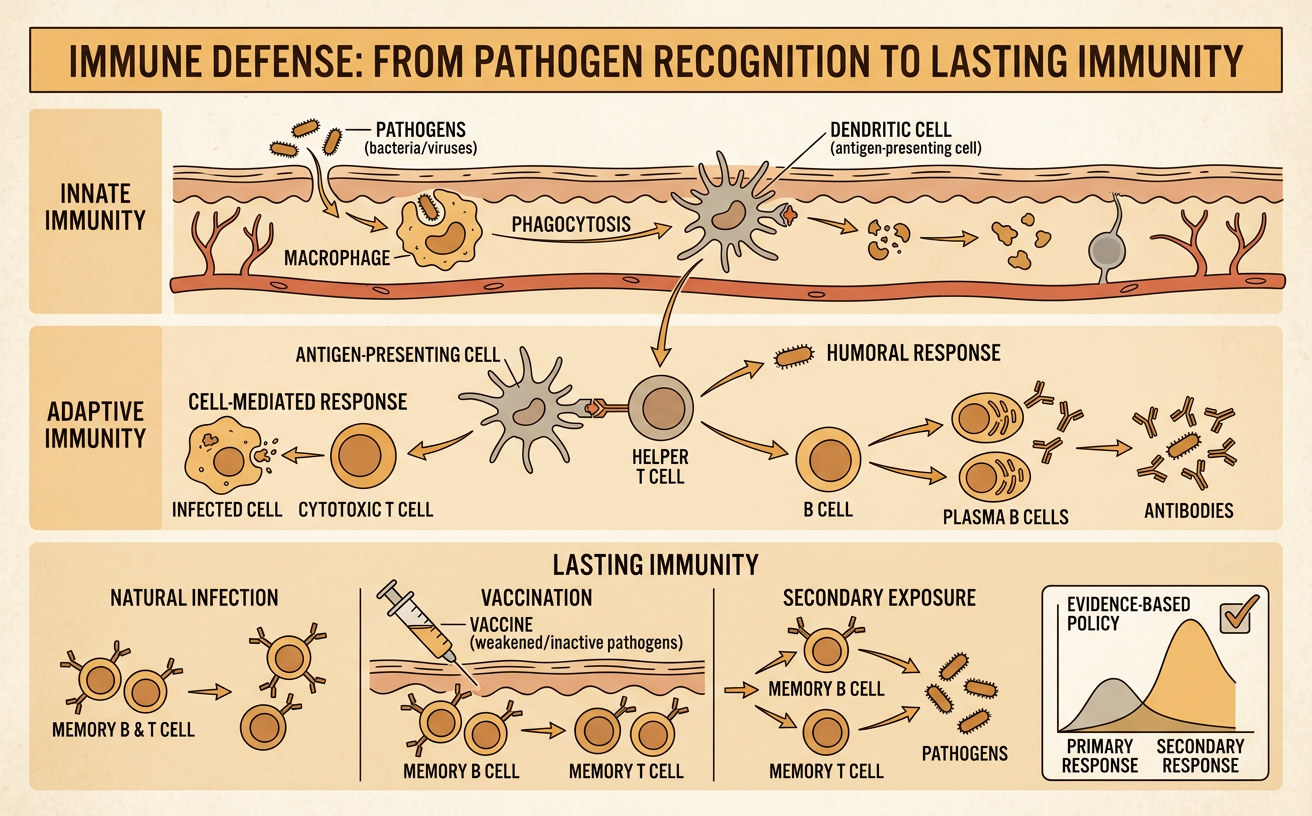
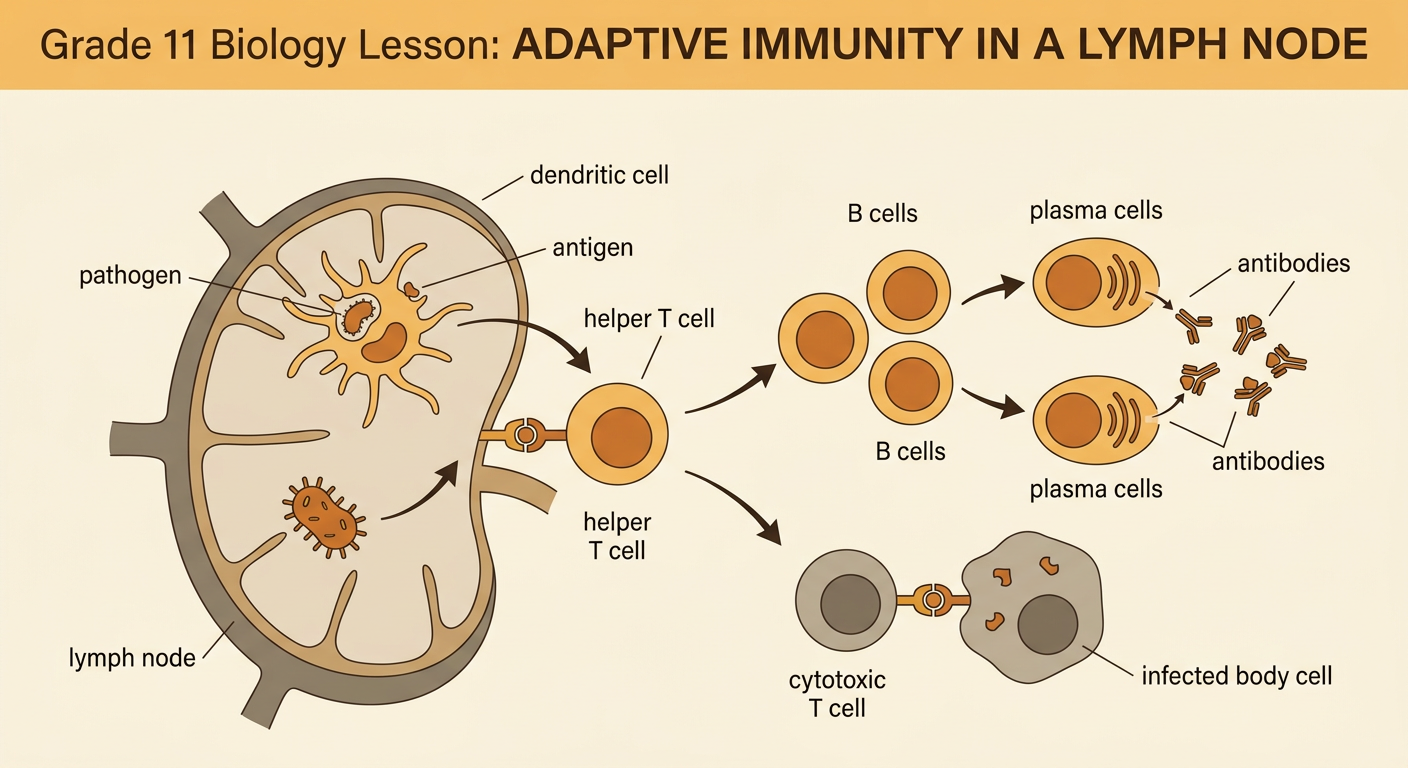
Adaptive immunity targets particular antigens, which are molecules recognized as foreign. A dendritic cell can engulf a pathogen, display an antigen fragment, and travel to a lymph node. There it may activate a helper T cell with a matching receptor. Activated helper T cells release signals that help matching B cells multiply and differentiate into plasma cells. Plasma cells secrete antibodies that bind specific antigens. Antibodies can block a virus from entering cells, clump pathogens together, or mark them for phagocytosis. Cytotoxic T cells recognize antigen fragments displayed by infected body cells and trigger those cells to die, limiting pathogen reproduction. For example, during influenza infection, antibodies bind viral surface proteins while cytotoxic T cells eliminate infected respiratory cells. These interactions show how immune organs, cells, signaling molecules, and circulation cooperate as a system.
How Immune Memory Works
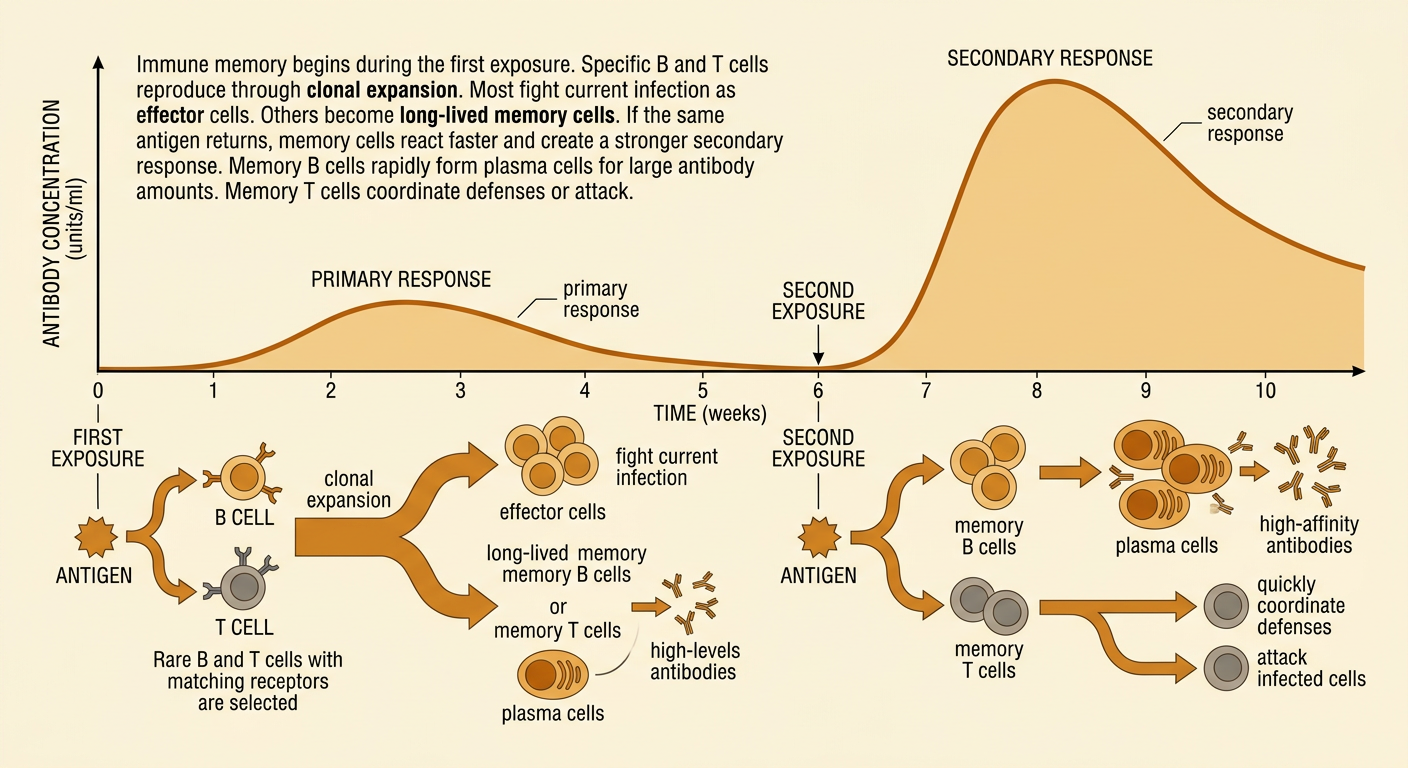
During a first exposure to an antigen, rare B and T cells with matching receptors are selected and reproduce through clonal expansion. Most activated cells become short-lived effector cells that fight the current infection. Some become long-lived memory B cells, memory T cells, or plasma cells that continue producing antibodies. If the same antigen appears again, memory cells respond faster and usually produce a stronger, more effective response. Memory B cells can rapidly form plasma cells that release large amounts of high-affinity antibodies, while memory T cells quickly coordinate defenses or attack infected cells. For example, after recovery from chickenpox, immune memory usually controls later exposure to the virus before another case of chickenpox develops, although the virus can remain dormant and later cause shingles. Immune memory is antigen-specific, so memory for one pathogen may not protect against an unrelated one.
Vaccination and Public Health Evidence
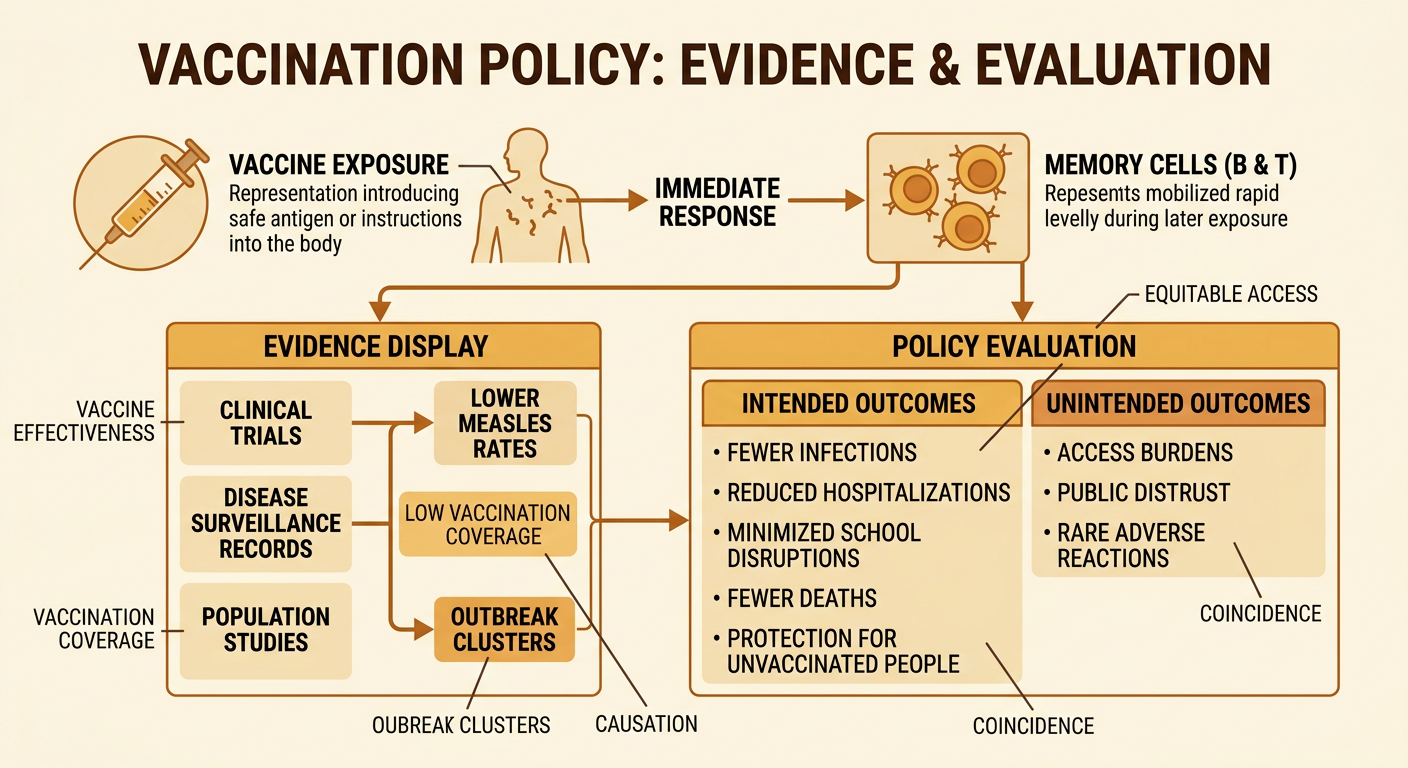
Vaccines expose the immune system to a safe form of an antigen or instructions for making one, without causing the full disease. This produces memory B and T cells that can respond during later exposure. To evaluate a policy claim such as “requiring measles vaccination for school attendance reduces outbreaks,” students should synthesize evidence from clinical trials, disease-surveillance records, and peer-reviewed population studies. Strong evidence would show high vaccine effectiveness, lower measles rates in highly vaccinated populations, and outbreak clusters where coverage falls. Intended outcomes include fewer infections, hospitalizations, school disruptions, and deaths, as well as protection for people who cannot be vaccinated. Possible unintended outcomes include access burdens, public distrust, or rare adverse reactions. A sound policy evaluation compares the frequency and severity of these consequences, checks source quality, considers exemptions and equitable access, and distinguishes evidence of causation from coincidence.