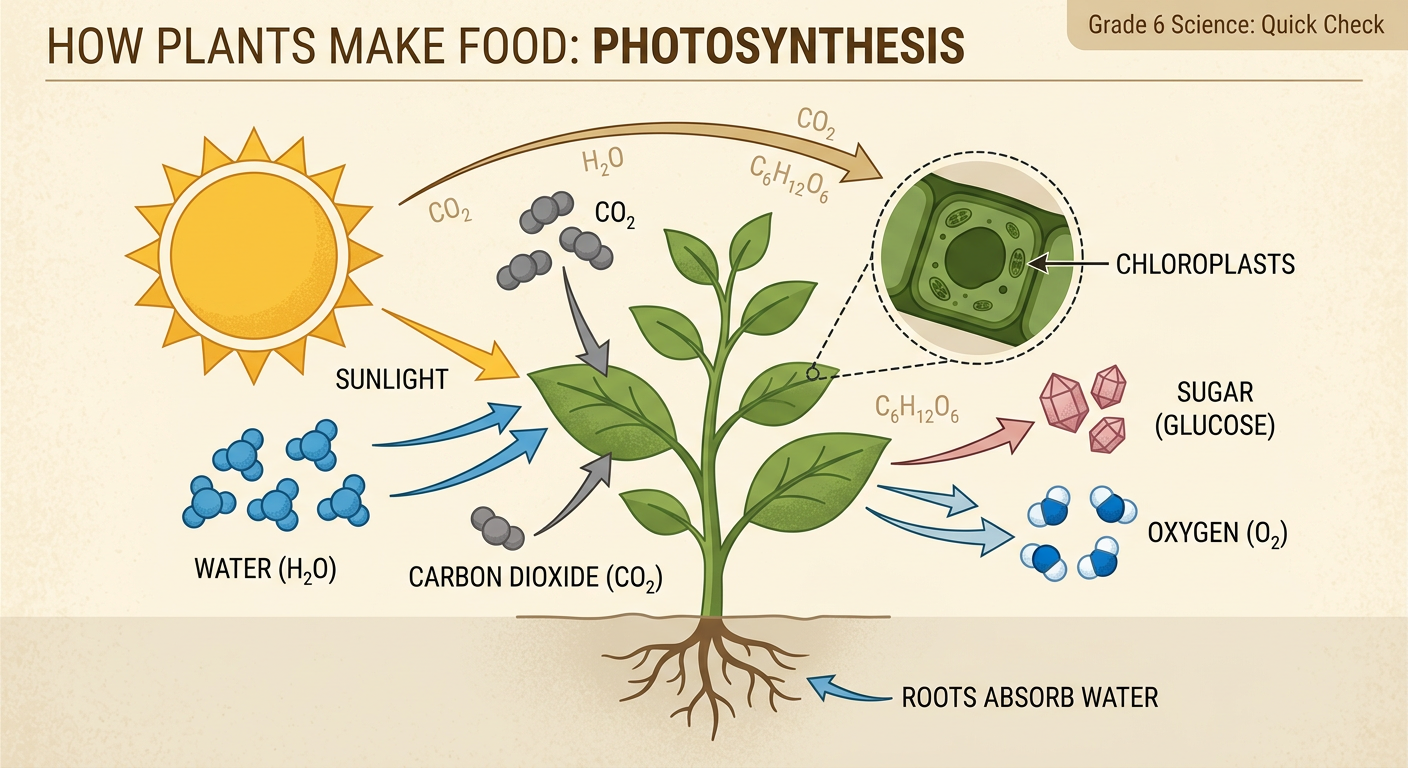
Photosynthesis: How Plants Make Food
Sunlight + water + CO₂ → sugar and oxygen. A walkthrough of the process.
Illustrations are auto-generated and may be placeholders. They can be refreshed to match the narration.
Overview
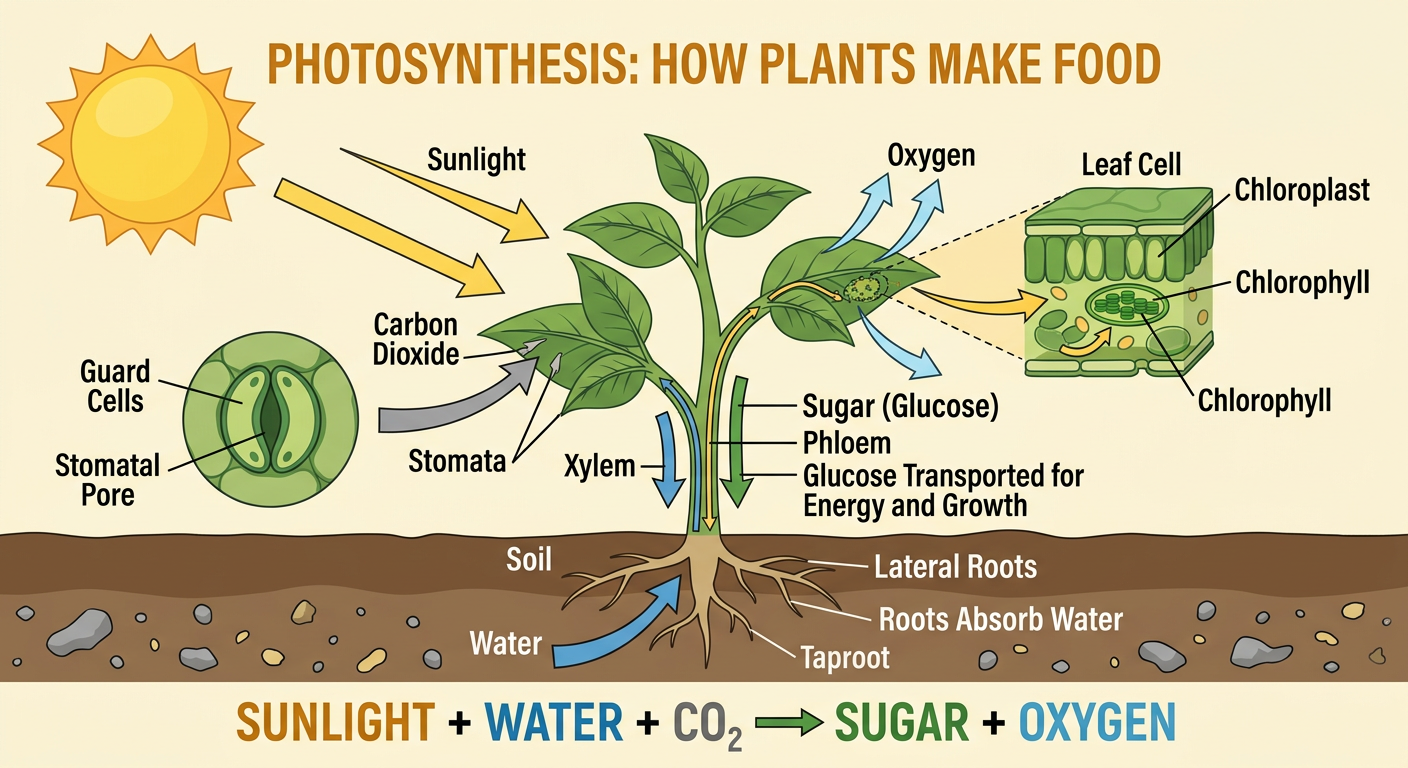
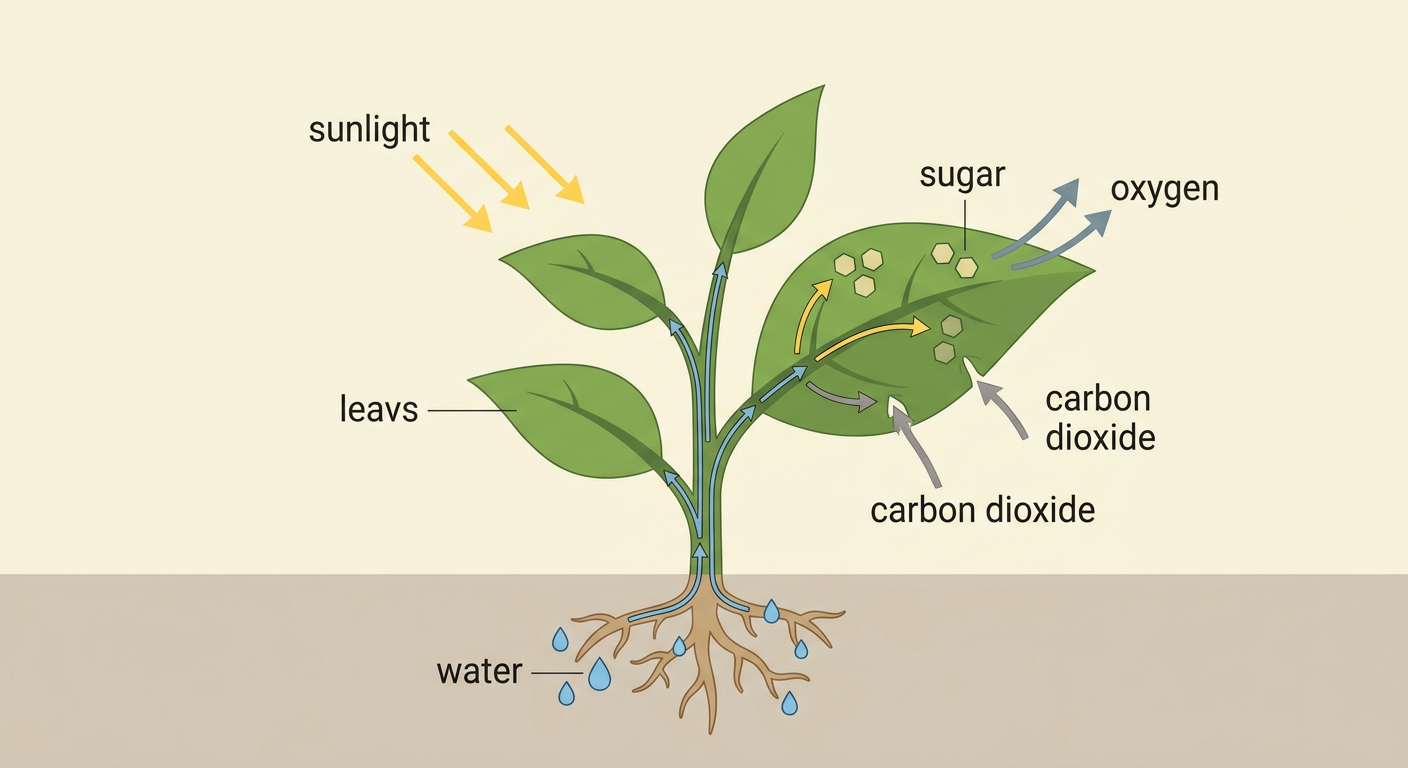
Plants are the world's food factories. They combine sunlight, water, and carbon dioxide to make sugar — and release oxygen.
Key Ideas
The equation: 6CO₂ + 6H₂O + sunlight → C₆H₁₂O₆ + 6O₂. It happens in the chloroplasts, which contain the green pigment chlorophyll.

The Light Phase
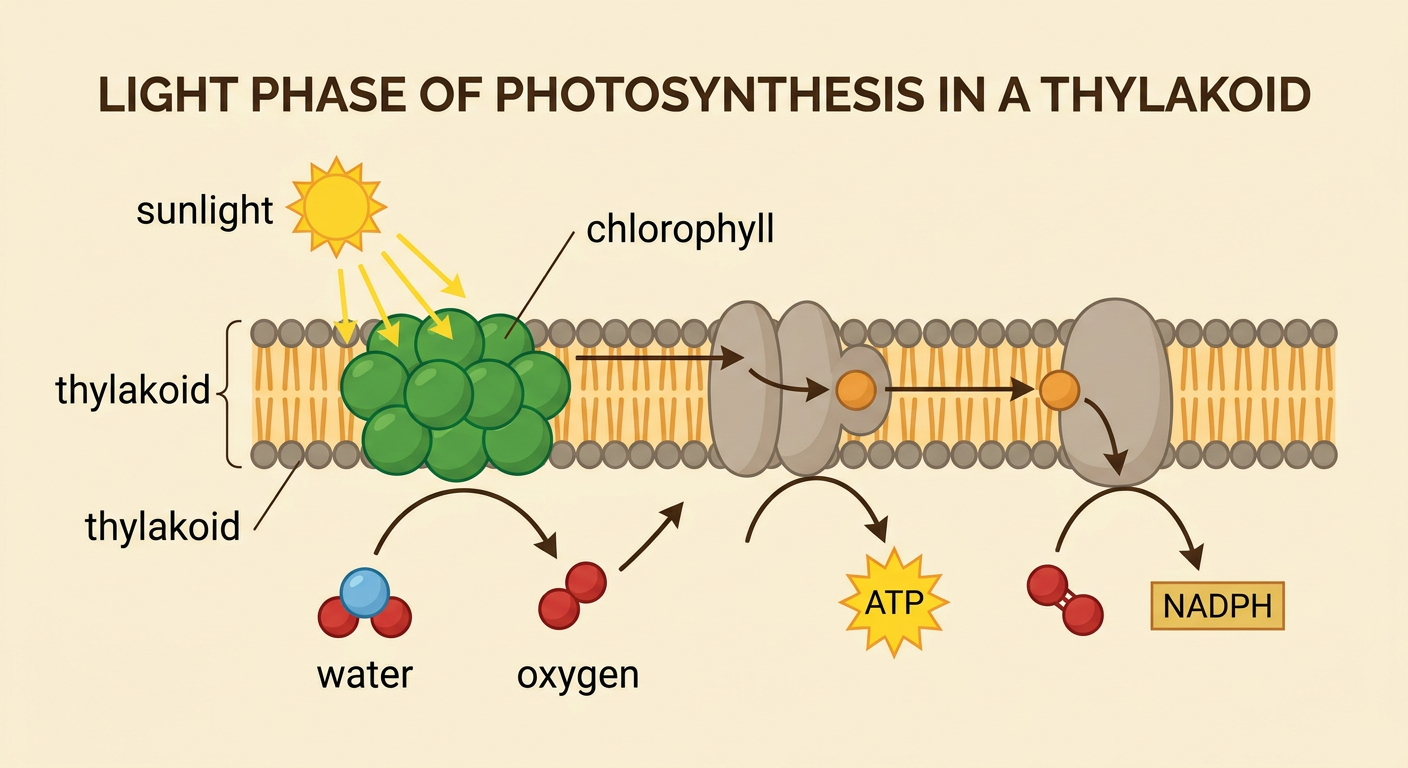
In the first stage, chlorophyll in the thylakoids of the chloroplast captures sunlight. That energy splits water molecules into hydrogen and oxygen. The oxygen escapes from the leaf into the air, and the captured energy is stored in two energy-carrying molecules, ATP and NADPH, which the next stage will use.
The Calvin Cycle
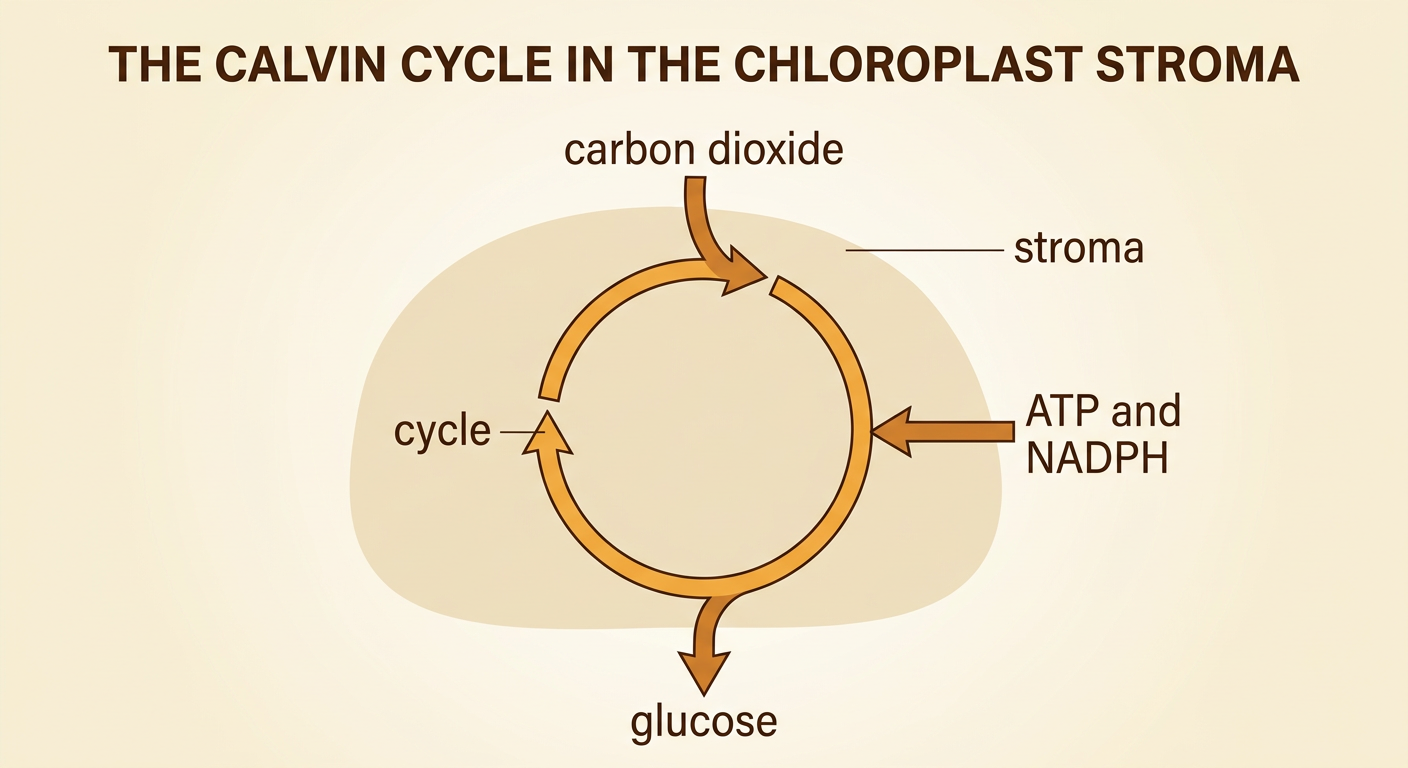
In the second stage, which happens in the stroma of the chloroplast, the plant takes in carbon dioxide from the air. Using the energy stored in ATP and NADPH from the light phase, it joins carbon atoms together, step by step, in a repeating cycle until it has built glucose, a sugar the plant uses for energy and growth. This stage does not need light directly.
Quick Check
Try explaining the main idea to someone else in your own words — the best test of understanding.