
Industrial Revolution: Cities, Workers, and Reform
Students examine evidence to explain how industrialization transformed urban life, working conditions, the environment, and demands for social reform.

Illustrations are auto-generated and may be placeholders. They can be refreshed to match the narration.
From Workshops to Factories
Before industrialization, many goods were made by skilled artisans in homes or small workshops. During the late 1700s and 1800s, inventors developed machines that could produce goods faster. Waterwheels and steam engines supplied power, while factories gathered machines and workers in one place. Factory owners divided production into repeated tasks, increasing output but reducing workers’ control over their pace and methods. Textile production provides a clear example. At the Lowell mills in Massachusetts, machines turned cotton into cloth much faster than hand spinning and weaving. Mill records, worker letters, and cloth-production totals provide evidence of this change. Industrialization had several causes, including new technology, investment, natural resources, and growing markets. Its effects included cheaper goods, expanded wage labor, and the decline of some traditional crafts.

Rapid Urbanization
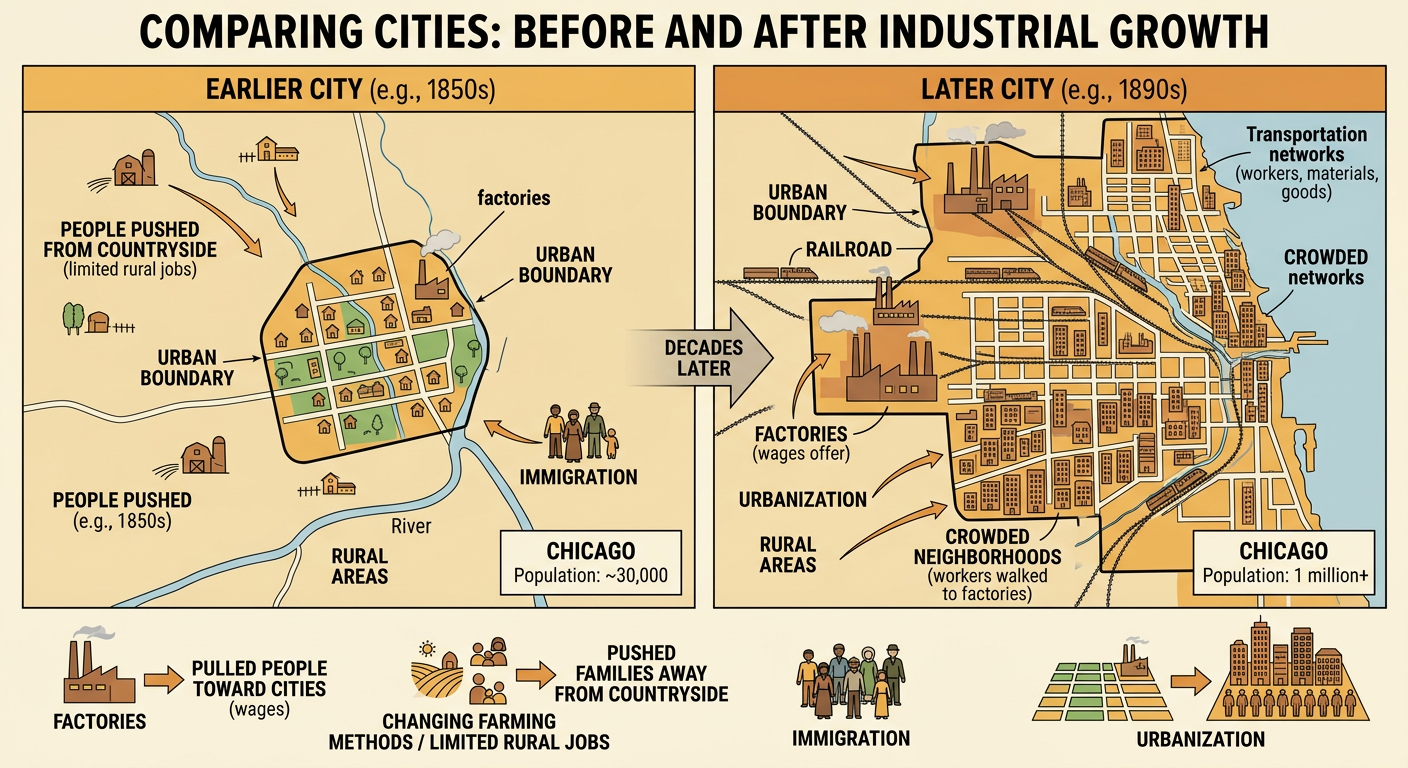
Industrialization accelerated urbanization, the growth of cities and the percentage of people living in them. Factories attracted workers by offering wages, while changes in agriculture and limited rural opportunities pushed some families away from the countryside. Immigration also increased the populations of many industrial cities. Chicago, for example, grew from about 30,000 residents in 1850 to more than one million by 1890 as railroads, factories, and meatpacking businesses expanded. Rapid growth created jobs and markets, but housing, roads, sewers, and clean-water systems often failed to keep pace. Crowded neighborhoods developed near factories because workers usually walked to work. Historians can compare census tables, city maps, and photographs to identify these changes. Together, employment, transportation networks, migration, and immigration explain why industrial cities expanded so quickly.
Life and Labor in Industrial Cities
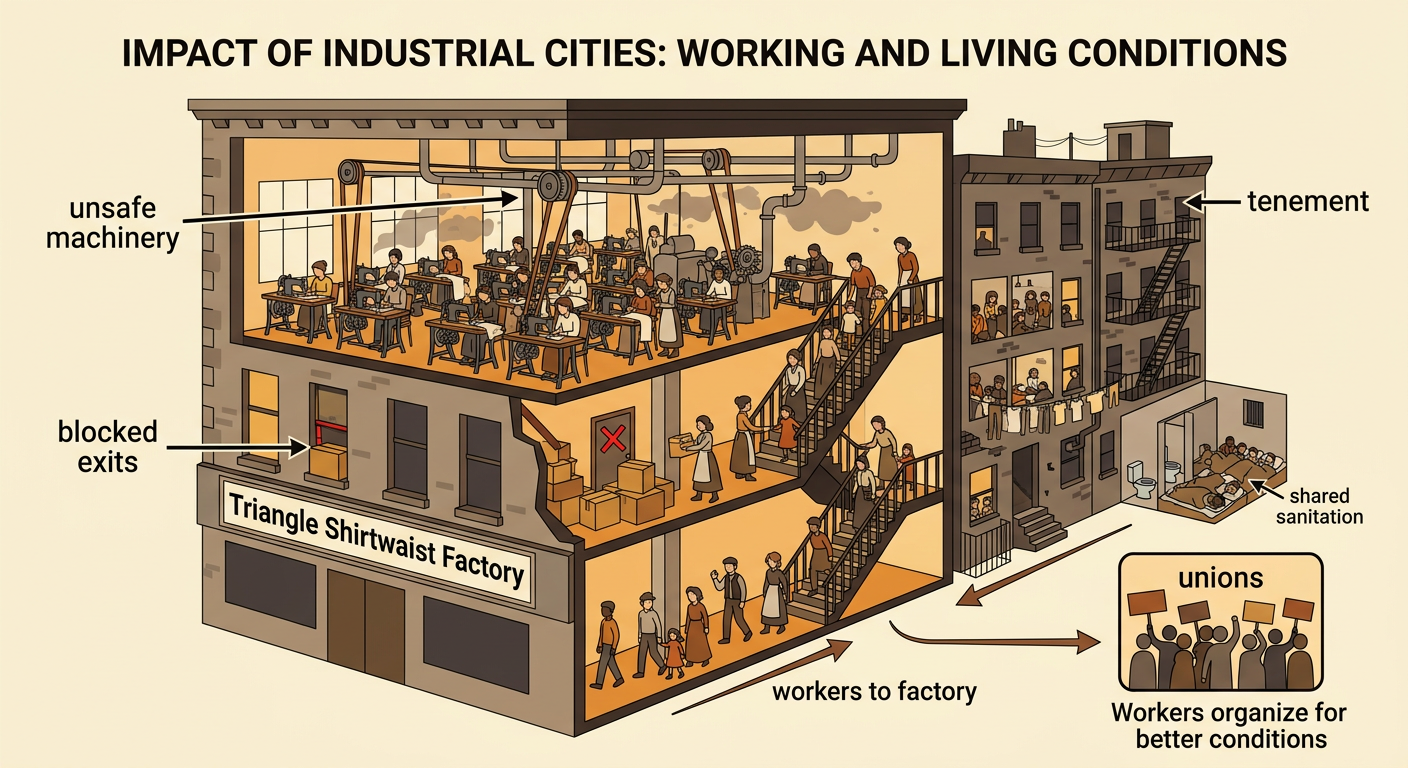
Industrial cities offered wages and new opportunities, but many workers faced difficult conditions. Factory shifts could last ten to fourteen hours, six days a week. Machinery lacked modern guards, and fires, dust, noise, and poor ventilation threatened workers’ health. Women and children often earned less than adult men for demanding work. At home, low-paid families commonly rented small rooms in crowded tenements with limited sunlight, ventilation, or sanitation. In 1911, a fire at the Triangle Shirtwaist Factory in New York City killed 146 workers. Locked or blocked exits and inadequate fire protections contributed to the disaster. Newspaper reports, survivor testimony, photographs, and investigation records provide specific evidence about what happened. Workers responded to such conditions by forming unions, organizing strikes, and demanding shorter hours, safer workplaces, and better pay.
Environmental Consequences
Industrial growth changed the environment as well as the economy. Factories and steam engines burned coal, releasing smoke, soot, sulfur compounds, and other pollutants into the air. Industrial waste and untreated sewage entered rivers, reducing water quality and harming fish and other organisms. In nineteenth-century Pittsburgh, steel mills and coal use often covered buildings and streets with dark soot. These effects resulted from several connected causes: rapid production, fossil-fuel use, weak waste systems, and few pollution rules. Scientists can monitor industrial impacts by measuring airborne particles, water acidity, temperature, and dissolved oxygen. Communities can then use evidence to reduce harm. Practical solutions include installing particle filters, treating wastewater, improving sewers, conserving energy, and replacing coal with cleaner energy sources. Monitoring before and after a change helps determine whether a solution actually improves environmental conditions.

Reform Movements and New Laws
Industrial problems led workers, journalists, scientists, religious groups, and other reformers to demand change. Labor unions used strikes and collective bargaining to seek higher pay, shorter hours, and safer workplaces. Investigative journalists published evidence about dangerous factories, child labor, and crowded tenements. Settlement houses, including Jane Addams’s Hull House in Chicago, offered education, child care, and other services in immigrant neighborhoods. Reform usually resulted from several causes working together: public testimony, newspaper coverage, organized protest, scientific findings, and major disasters. After the 1911 Triangle Shirtwaist Factory fire, a New York investigating commission examined workplaces and heard testimony. The state then adopted stronger rules concerning fire exits, building safety, and factory conditions. These reforms did not solve every problem, and enforcement could be uneven. However, they showed that evidence and organized public pressure could influence laws and make governments more responsible for public welfare.
