Integrating and Citing Sources in Academic Writing
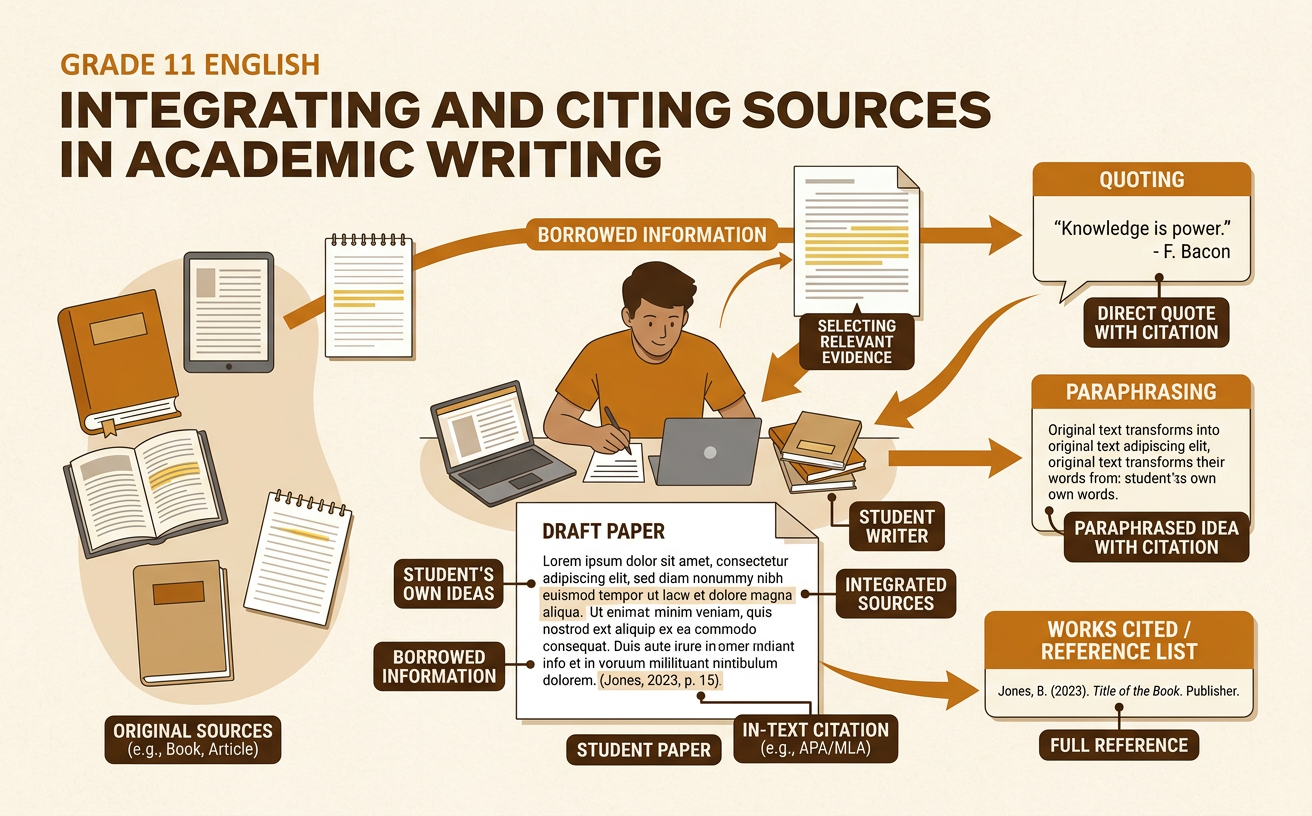
Students practice selecting, paraphrasing, quoting, and citing source material while maintaining a clear distinction between their own ideas and borrowed information.
Illustrations are auto-generated and may be placeholders. They can be refreshed to match the narration.
Why Source Integration Matters
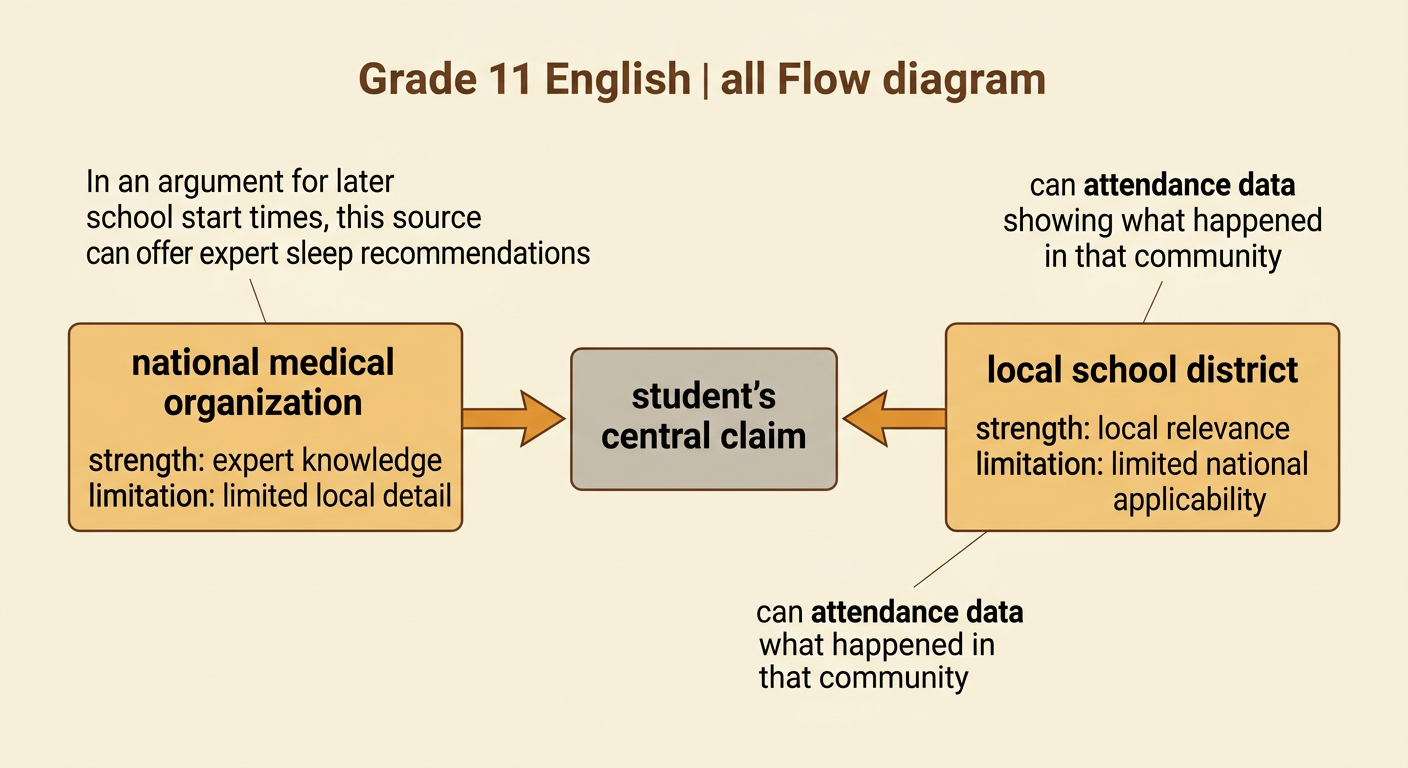
Academic writing becomes more convincing when reliable sources support a writer’s own reasoning. Sources can provide facts, expert perspectives, examples, or competing viewpoints that a writer could not establish alone. However, evidence should be selected for relevance and authority rather than added simply to make a paper look researched. For example, in an essay arguing for later school start times, a student might use sleep recommendations from a national medical organization and attendance data from a local school district. The medical source offers broad expertise, while the district data show local effects. Each source also has limits: general recommendations may not address every community, and local data may not apply nationwide. Integrating both sources selectively creates stronger support while preventing the essay from depending too heavily on a single source.
Choosing Between Quotation and Paraphrase
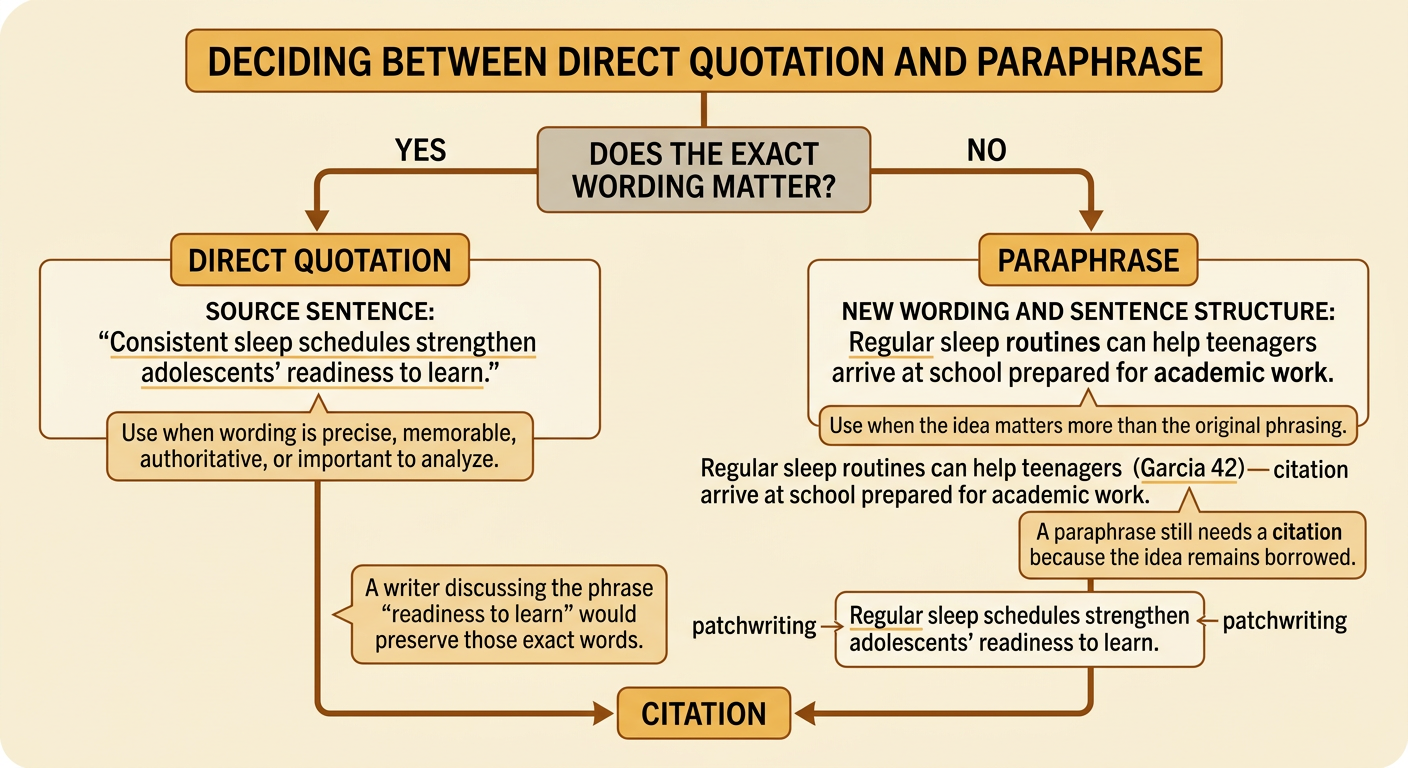
Use a direct quotation when an author’s exact wording is especially precise, memorable, authoritative, or important to analyze. Use a paraphrase when the main idea matters more than the original wording. A paraphrase must restate the idea completely in new language and sentence structure while preserving the original meaning. It still requires a citation. Suppose a source states, “Consistent sleep schedules strengthen adolescents’ readiness to learn.” A writer analyzing the phrase “readiness to learn” might quote it directly. A writer summarizing the point could write, Regular sleep routines can help teenagers arrive at school prepared for academic work (Garcia 42). Changing only a few words is not a true paraphrase. Whether quoting or paraphrasing, include only evidence that advances the paper’s purpose and avoid filling paragraphs with borrowed material.
Framing Evidence with Signal Phrases
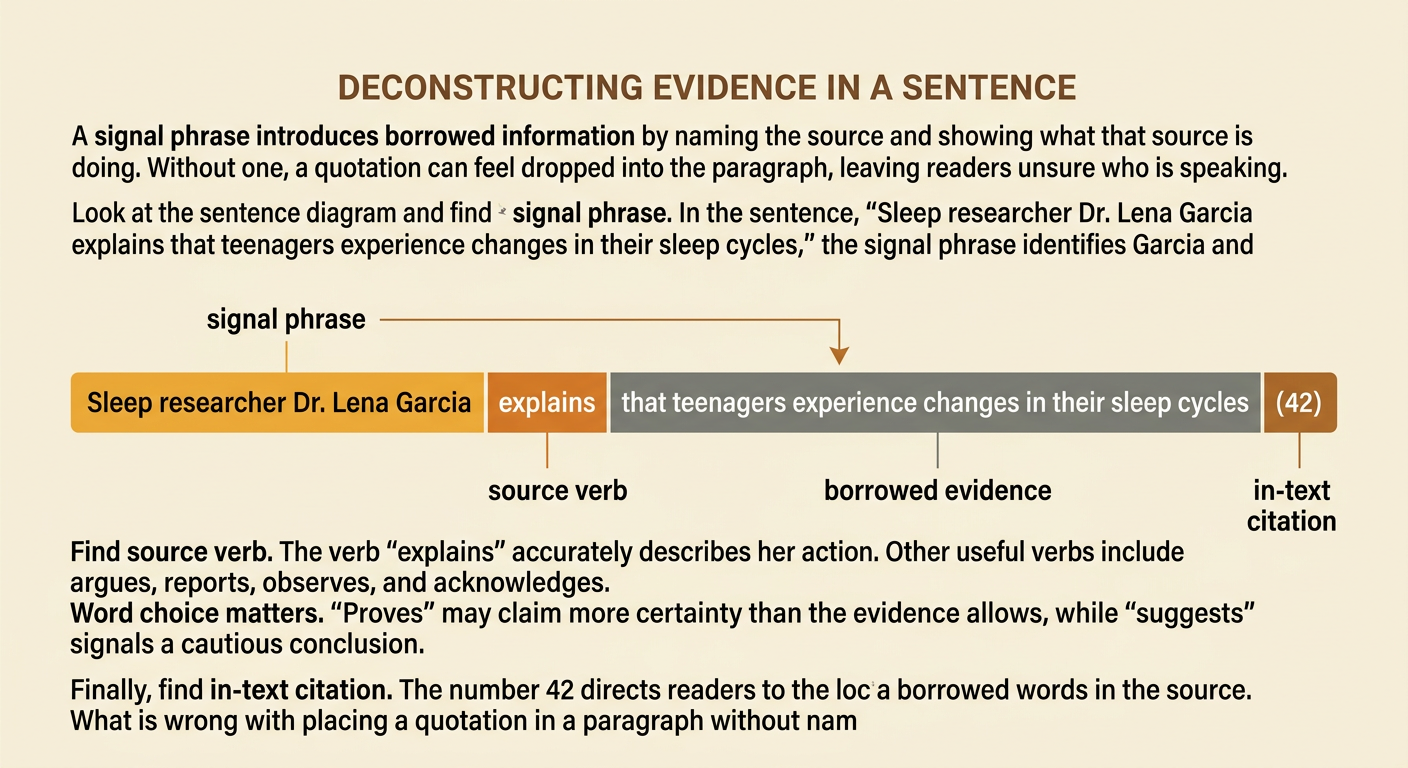
A signal phrase introduces borrowed information and helps readers understand who is speaking and why that source is credible. Instead of dropping a quotation into a paragraph without context, identify the author or organization and use a verb that accurately describes the source’s action. Useful verbs include argues, explains, reports, observes, and acknowledges. For example, a weak sentence says, “Teenagers experience changes in their sleep cycles.” A stronger version says, Sleep researcher Dr. Lena Garcia explains that “teenagers experience changes in their sleep cycles” (42). The signal phrase establishes Garcia’s expertise, the quotation provides evidence, and the citation identifies its location. Choose verbs carefully: “proves” may overstate a source’s conclusion, while “suggests” signals uncertainty. Vary signal phrases so that evidence fits smoothly into the writer’s sentences rather than interrupting the paragraph’s flow.
Connecting Sources to Original Analysis
Evidence does not explain itself. After presenting source material, a writer must show how it supports the paragraph’s claim and contributes to the paper’s larger argument. One useful structure is claim, evidence, and analysis. For example, a student might write: Later start times may improve students’ participation. A district report found that first-period absences decreased after the high school changed its schedule (Miller 18). This pattern matters because students cannot participate in instruction when they are absent; improved attendance therefore strengthens the argument that scheduling affects access to learning. The final sentence is analysis because it interprets the evidence instead of merely repeating it. Writers can also compare sources: one study may explain why a pattern occurs, while another documents where it occurs. The writer’s reasoning should remain the thread that connects all borrowed information.

Citing Sources and Avoiding Plagiarism
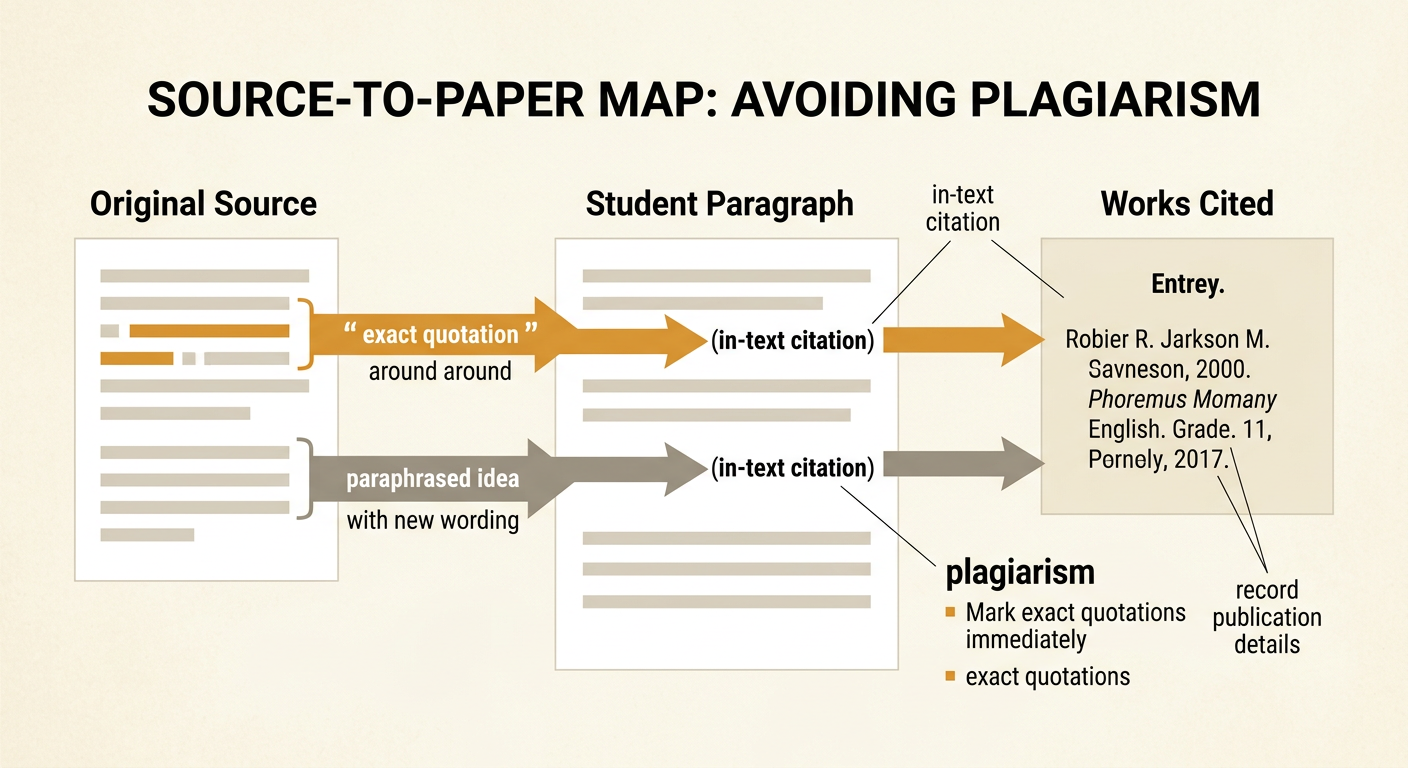
Citations give credit, help readers locate sources, and clearly separate borrowed material from the writer’s own ideas. Cite direct quotations, paraphrases, summaries, statistics, and distinctive ideas. Common knowledge, such as the fact that Earth orbits the Sun, usually does not require citation. In MLA style, a student might write, Regular sleep supports attention during the school day (Garcia 42). The corresponding Works Cited entry provides full publication information so readers can find the source. Plagiarism occurs when a writer presents another person’s words or ideas as original work. It can result from copying, patchwriting, missing quotation marks, or failing to cite a paraphrase. To avoid it, take careful notes, mark exact quotations immediately, record publication details, paraphrase without looking at the original wording, and check that every in-text citation matches an entry in the Works Cited list.