Invasive Species and Ecosystem Stability
Students analyze evidence about an invasive species, explain how it disrupts ecosystem relationships, and recommend an evidence-based management response.

Illustrations are auto-generated and may be placeholders. They can be refreshed to match the narration.
What Makes a Species Invasive?
A species is invasive when it is introduced outside its native range, establishes a reproducing population, spreads, and causes environmental, economic, or human harm. A species can be nonnative without being invasive. Lionfish are native to the Indo-Pacific Ocean but became invasive in the western Atlantic, Caribbean Sea, and Gulf of Mexico, probably after aquarium releases. They reproduce rapidly, eat many small fish and crustaceans, and face relatively little predation in invaded reefs. These traits help lionfish populations grow and spread. Their presence can reduce native fish populations and alter reef food webs. Scientists determine whether a species is invasive by examining evidence about its origin, population growth, spread, and effects rather than judging it only by where it lives.

Tracing Ecosystem Disruptions
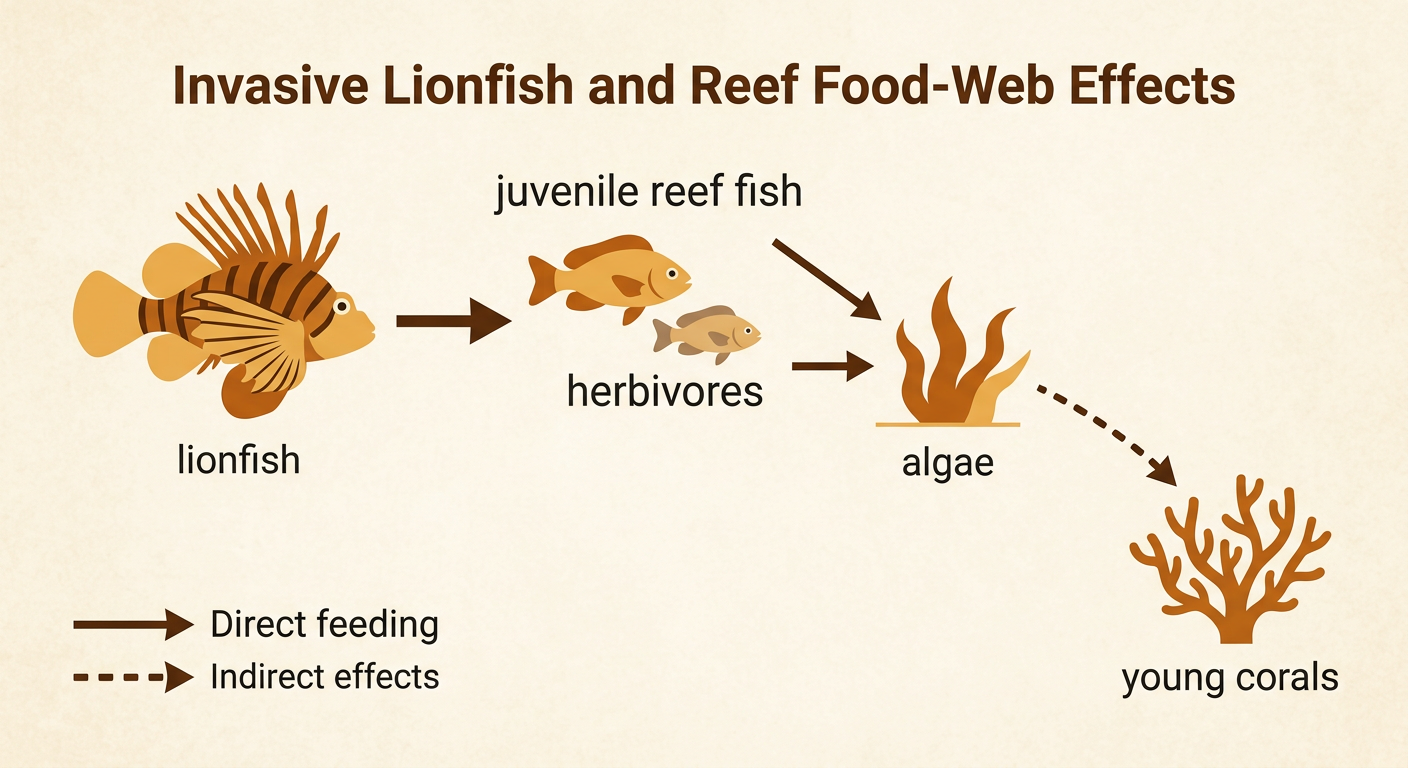
An invasive species can disrupt an ecosystem through a chain of direct and indirect effects. On Atlantic coral reefs, lionfish directly consume juvenile reef fish, including herbivores that normally eat algae. When herbivorous fish become less abundant, algae may grow more freely on reef surfaces. Excessive algal growth can compete with young corals for space and light, making coral recovery more difficult. Lionfish also compete with native predators for prey. These changes can affect biodiversity, fishing opportunities, and the stability of the food web. A cause-and-effect model should distinguish direct effects, such as lionfish eating juvenile fish, from indirect effects, such as reduced grazing leading to more algae. Following each connection helps explain why one introduced predator can influence many organisms.
Analyzing Evidence from a Case Study
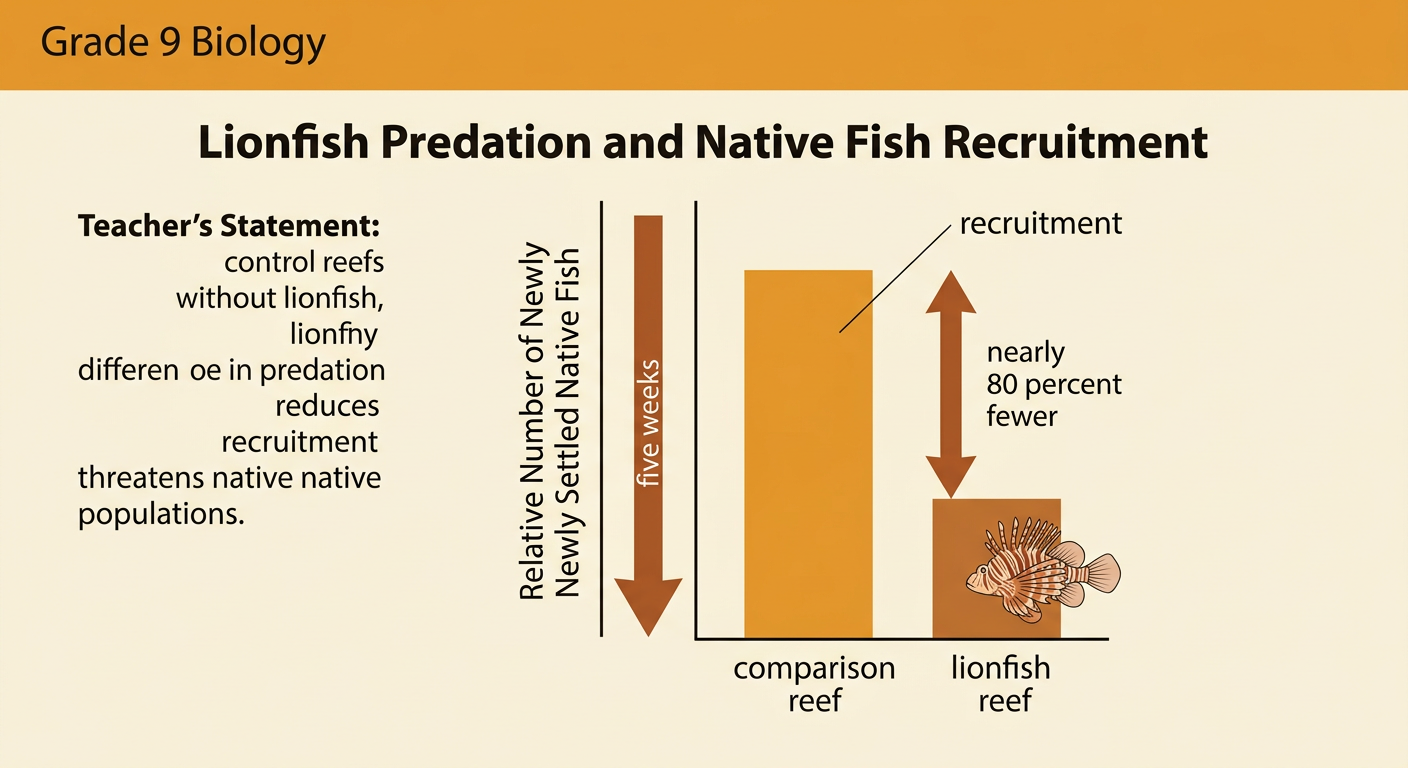
Evidence must support each claim about an invasive species. In one controlled reef study, researchers placed a single lionfish on selected small reefs and compared them with similar reefs without lionfish. After five weeks, the reefs with lionfish had nearly 80 percent fewer newly settled native fish. This result supports the claim that lionfish can sharply reduce recruitment, which is the addition of young fish to a population. However, students should also examine the study’s duration, reef size, sample size, and whether the results apply to larger ecosystems. A strong analysis cites the exact evidence and explains its meaning. For example: “Reefs with lionfish had nearly 80 percent fewer newly settled fish after five weeks, showing that lionfish predation can reduce the next generation of native reef fish.”
Comparing Management Strategies
Management strategies should be compared using ecological effectiveness, cost, safety, feasibility, and fairness. Trained divers can remove lionfish with spears, producing an immediate local reduction, but repeated dives are expensive and limited to accessible depths. Organized removal events can combine control with public education, although they require safety rules and careful handling of venomous spines. Encouraging commercial harvest may support continued removal, but demand must not create incentives to transport or raise lionfish. Specialized traps could reach deeper water, yet poorly designed traps might capture native species. Prevention programs that discourage aquarium release reduce future introductions but do not remove existing populations. Because complete eradication across the invaded Atlantic is unlikely, managers often combine prevention, targeted removal, monitoring, and public outreach to protect high-priority reefs.

Recommending an Evidence-Based Solution
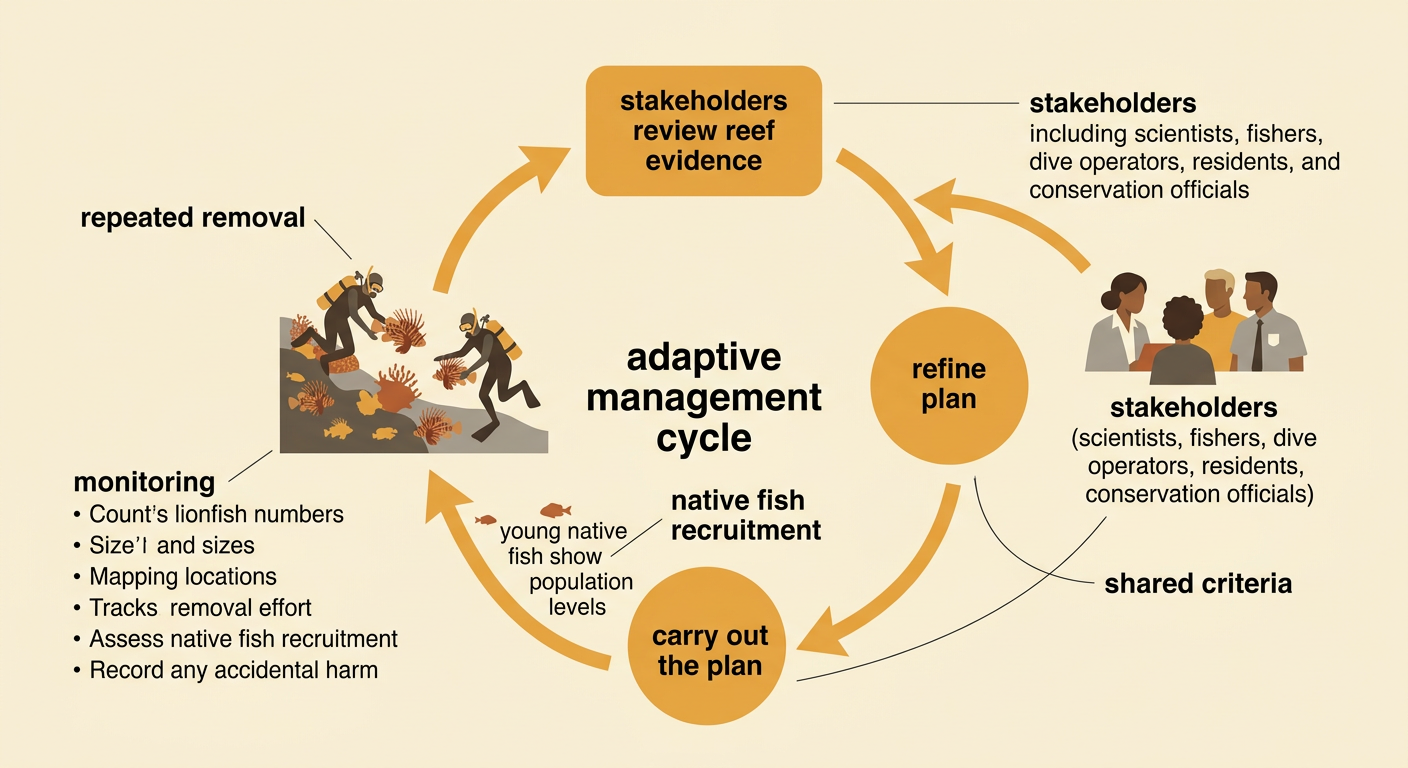
A defensible recommendation connects evidence to a realistic action. For a protected reef visited regularly by divers, a community could recommend repeated removal by trained teams, supported by monitoring and aquarium-release education. The study showing nearly 80 percent fewer newly settled fish on reefs with lionfish supports acting where young native fish need protection. Teams should record lionfish numbers, size, location, removal effort, native fish recruitment, and accidental harm before and after each removal. Stakeholders, including scientists, fishers, dive operators, residents, and conservation officials, should review the evidence in a public meeting. They can establish shared criteria, hear different perspectives, and vote or seek consensus on the plan. If monitoring shows little recovery or unacceptable costs, the group should refine the schedule, location, or method rather than continuing an ineffective approach.