Investigating Friction on Different Surfaces
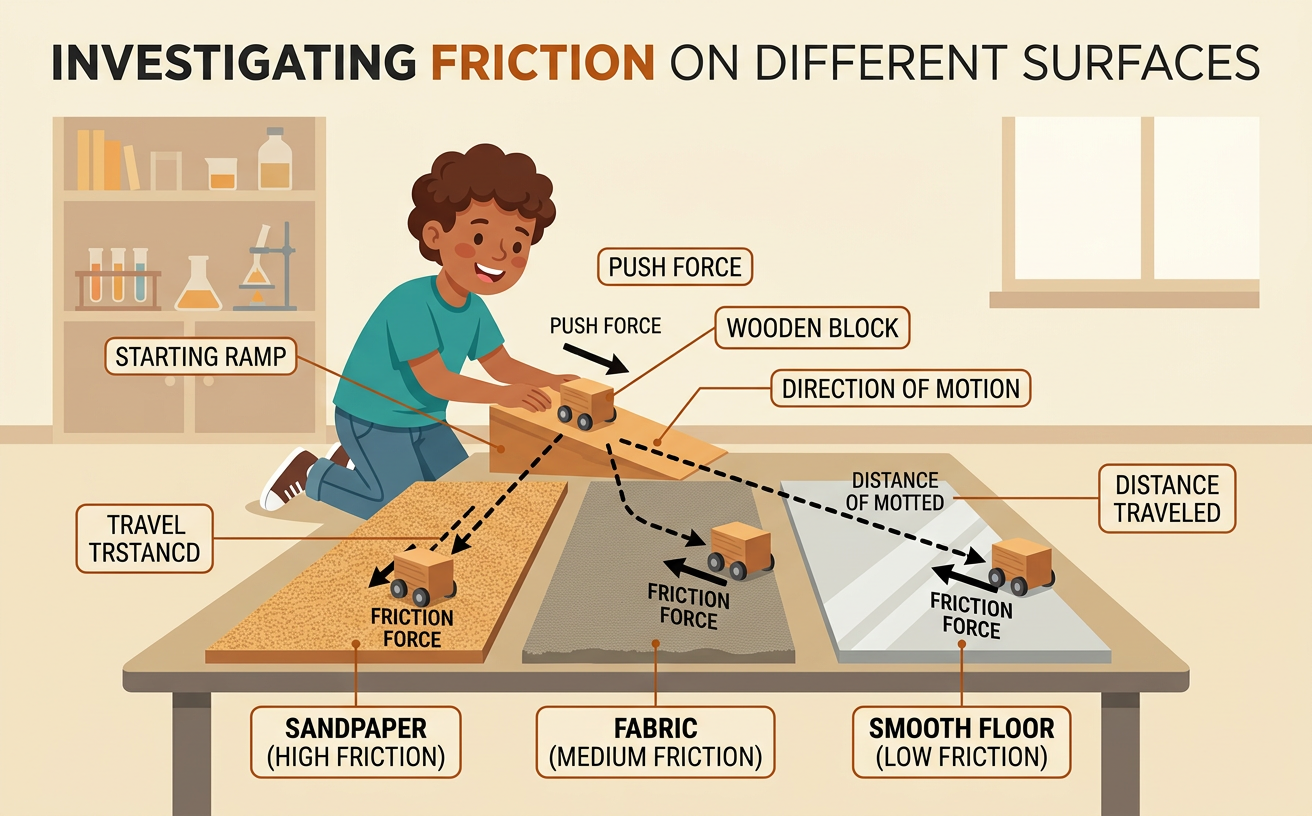
Students test how far an object slides across different surfaces and use evidence to explain how friction affects motion.
Illustrations are auto-generated and may be placeholders. They can be refreshed to match the narration.
What Is Friction?
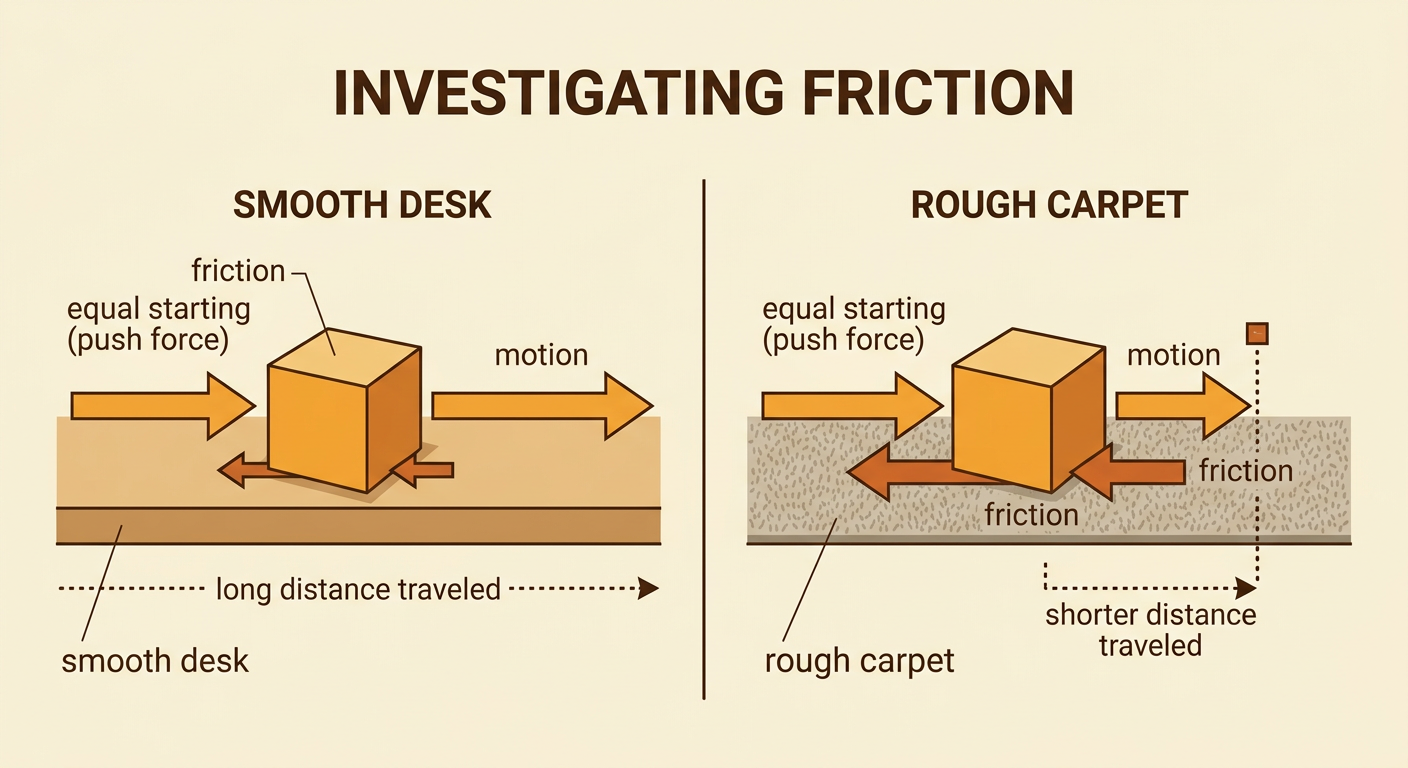
Friction is a force that happens when two surfaces touch and move, or try to move, past each other. Friction acts against motion, so it can slow or stop a moving object. A rough surface usually creates more friction than a smooth surface, although the materials and the object also matter. Imagine sliding a toy block across a smooth desk. The block may travel several feet before stopping. The same block may stop sooner on a rough carpet because the carpet produces more friction. Friction is useful, too. It helps your shoes grip the floor so you do not slip. In this lesson, you will investigate friction by comparing how far the same object slides on different surfaces.
Predicting Which Surface Slows Motion Most
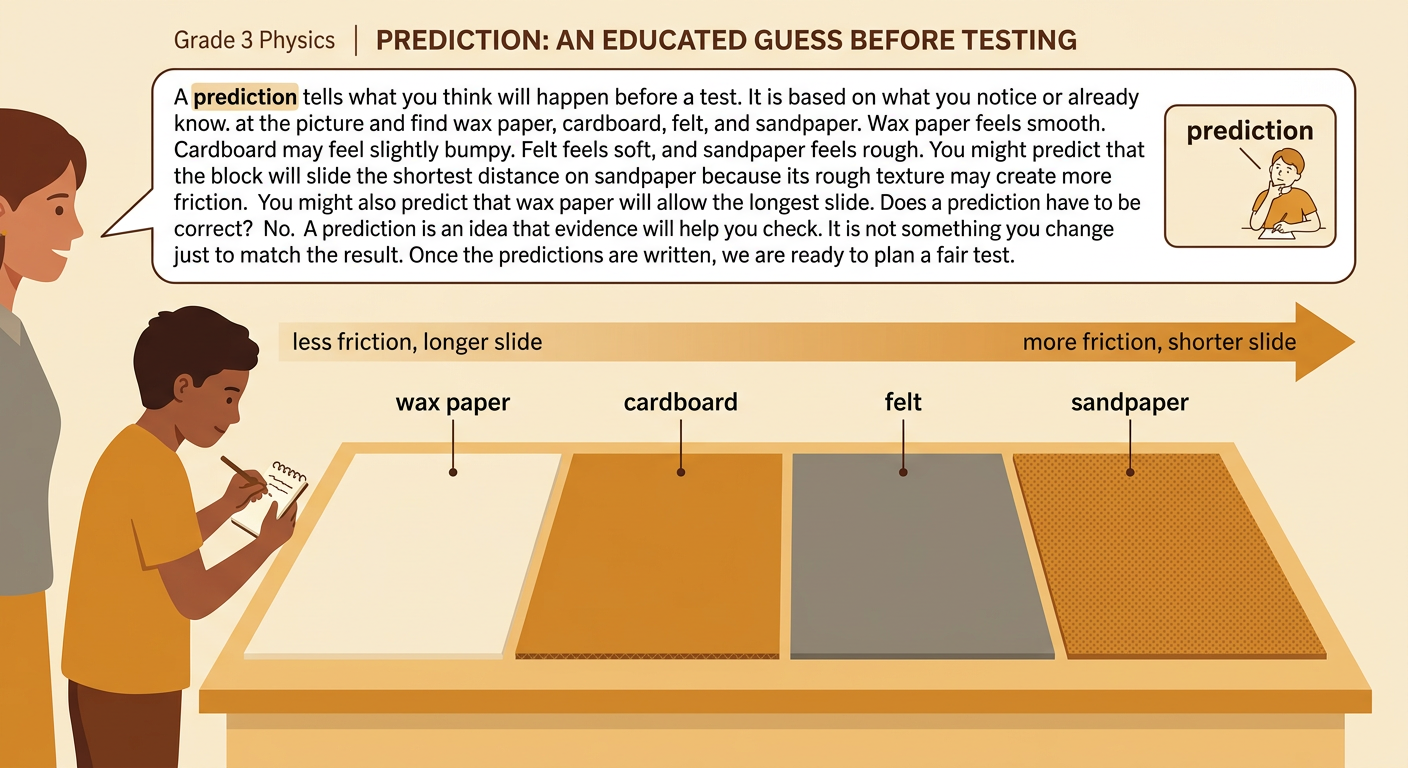
A prediction tells what you think will happen before a test. It should be based on what you observe or already know. Examine surfaces such as wax paper, cardboard, felt, and sandpaper. Gently touch each one and notice whether it feels smooth, bumpy, soft, or rough. Then predict which surface will make a toy block stop in the shortest distance. You might write, “I predict the block will slide the shortest distance on sandpaper because its rough texture may create more friction.” Also predict which surface will allow the longest slide. Do not worry if a prediction is incorrect. A prediction is not a guess that must be right. It is an idea that you will check by collecting evidence during a fair test.
Testing an Object on Different Surfaces
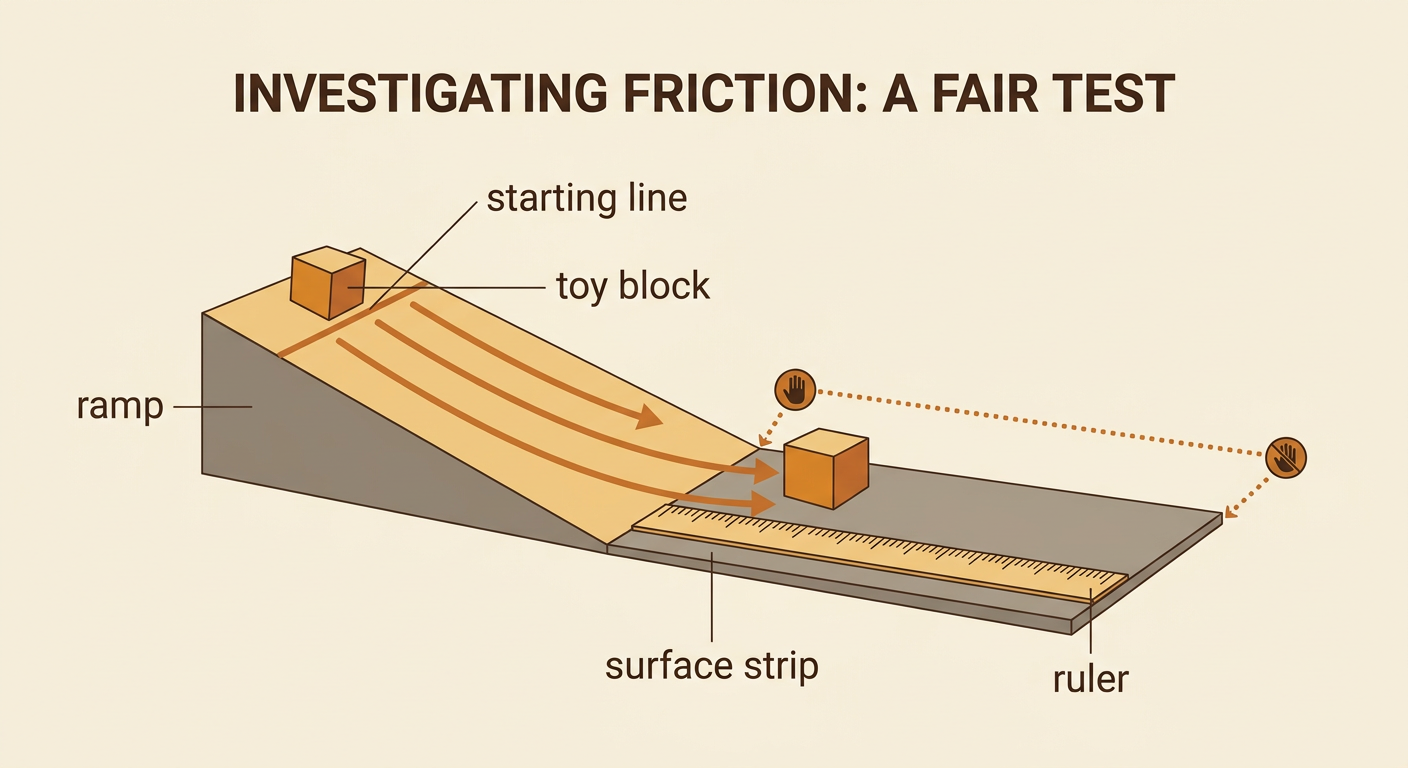
Plan a fair test so the surface is the only thing that changes. Place one surface strip at the bottom of a ramp. Mark the same starting line on the ramp for every trial. Set the same object at that line and release it without pushing. The ramp gives the object a similar start each time. Measure how far it slides after leaving the ramp. Test each surface at least three times because results can vary slightly. Keep the ramp height, object, starting line, surface length, and measuring method the same. For example, do not use a wooden block on felt and a toy car on sandpaper. Changing the object would make it difficult to tell whether the surface or the object caused the difference in motion.
Measuring and Recording Slide Distances
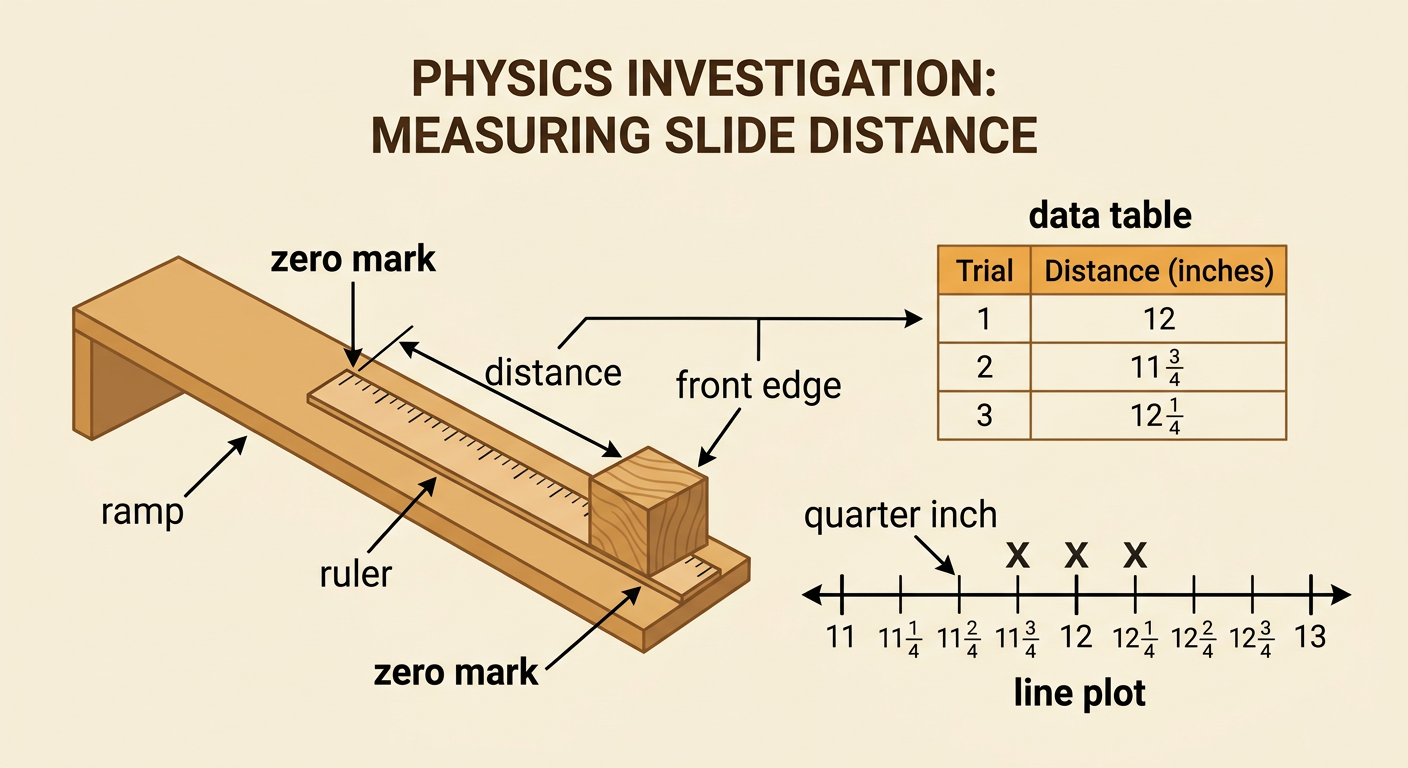
Measure from the end of the ramp to the front edge of the stopped object. Place the zero mark of a ruler at the end of the ramp and measure in inches to the nearest quarter inch. Record every result in a data table. For example, three felt trials might measure 12 inches, 11 3/4 inches, and 12 1/4 inches. Do not change a measurement just because it looks different from the others. Check the ruler and record what you observe. After testing, represent the measurements on a line plot. Write the distances along the number line and place an X above each matching distance. A line plot makes it easier to compare repeated trials and see which surfaces usually produced shorter or longer slides.
Explaining Results with Evidence
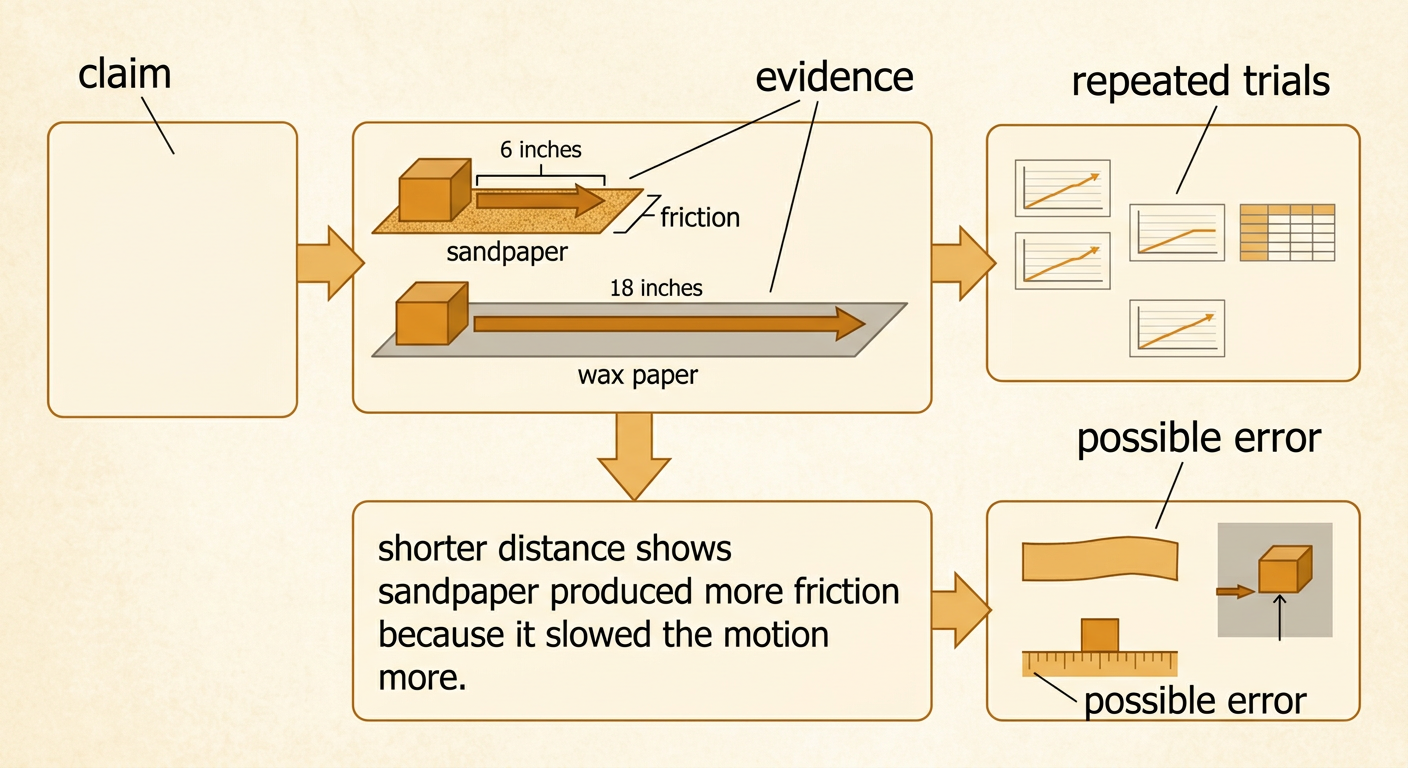
Use your measurements as evidence to explain how friction affected the block’s motion. First, make a claim that answers the investigation question. Next, include numbers from your data. Finally, connect the evidence to the science idea of friction. For example: “The sandpaper produced the most friction. The block slid about 6 inches on sandpaper but about 18 inches on wax paper. Because the block stopped in a shorter distance on sandpaper, the data show that sandpaper slowed its motion more.” Mention repeated trials instead of choosing only one measurement. If the results do not match your prediction, report them honestly and explain what the evidence shows. You may also describe possible errors, such as an uneven surface strip or measuring from the wrong starting point.
Choosing Surfaces for Real-World Uses
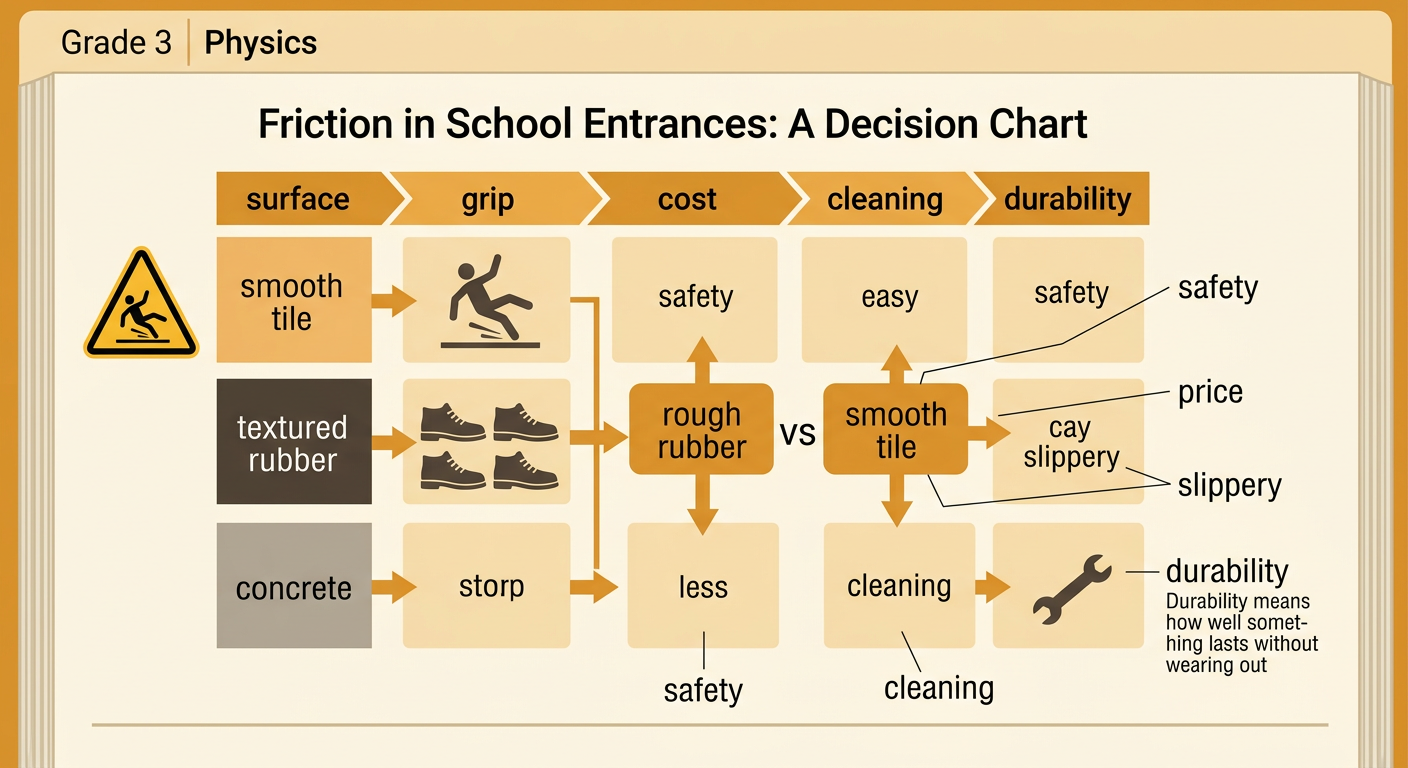
Different surfaces have benefits and costs, so the best choice depends on the job. A playground slide should be smooth enough for children to move, but it must also be safe and durable. Rough rubber on a playground walkway creates more friction and can reduce slipping, but it may cost more than plain concrete. Smooth tile may be easy to clean and less expensive, but it can become slippery when wet. Tire treads use friction to help vehicles grip roads, while a sled’s smooth bottom helps it move across snow. Imagine choosing a floor for a school entrance. Compare safety, price, cleaning, and how long each material lasts. Use evidence about friction to recommend a surface, and explain both its benefits and its costs.