Life Cycles: From Beginning to New Beginning
Students sequence and compare plant and animal life-cycle stages, use stage-duration data, and create a model showing birth, growth, reproduction, and death.
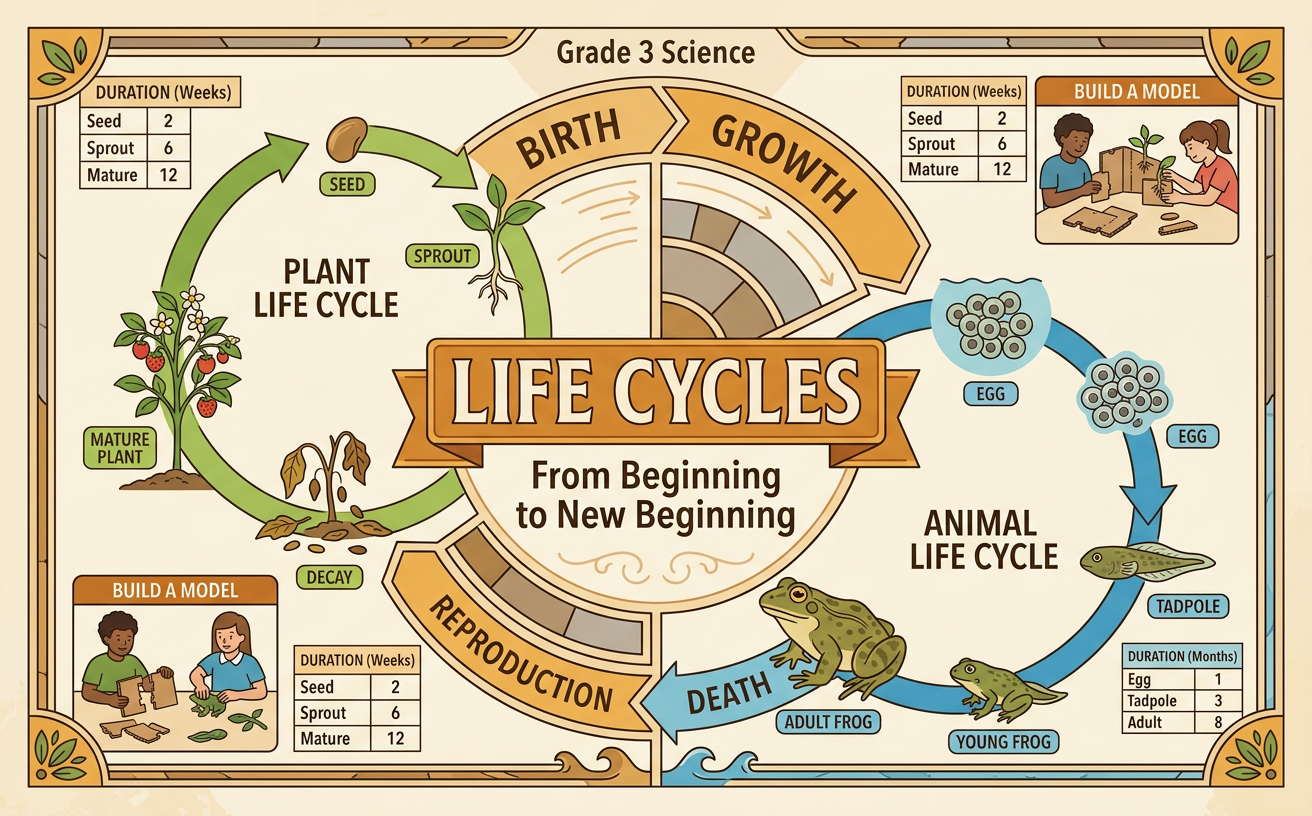
Illustrations are auto-generated and may be placeholders. They can be refreshed to match the narration.
What Is a Life Cycle?
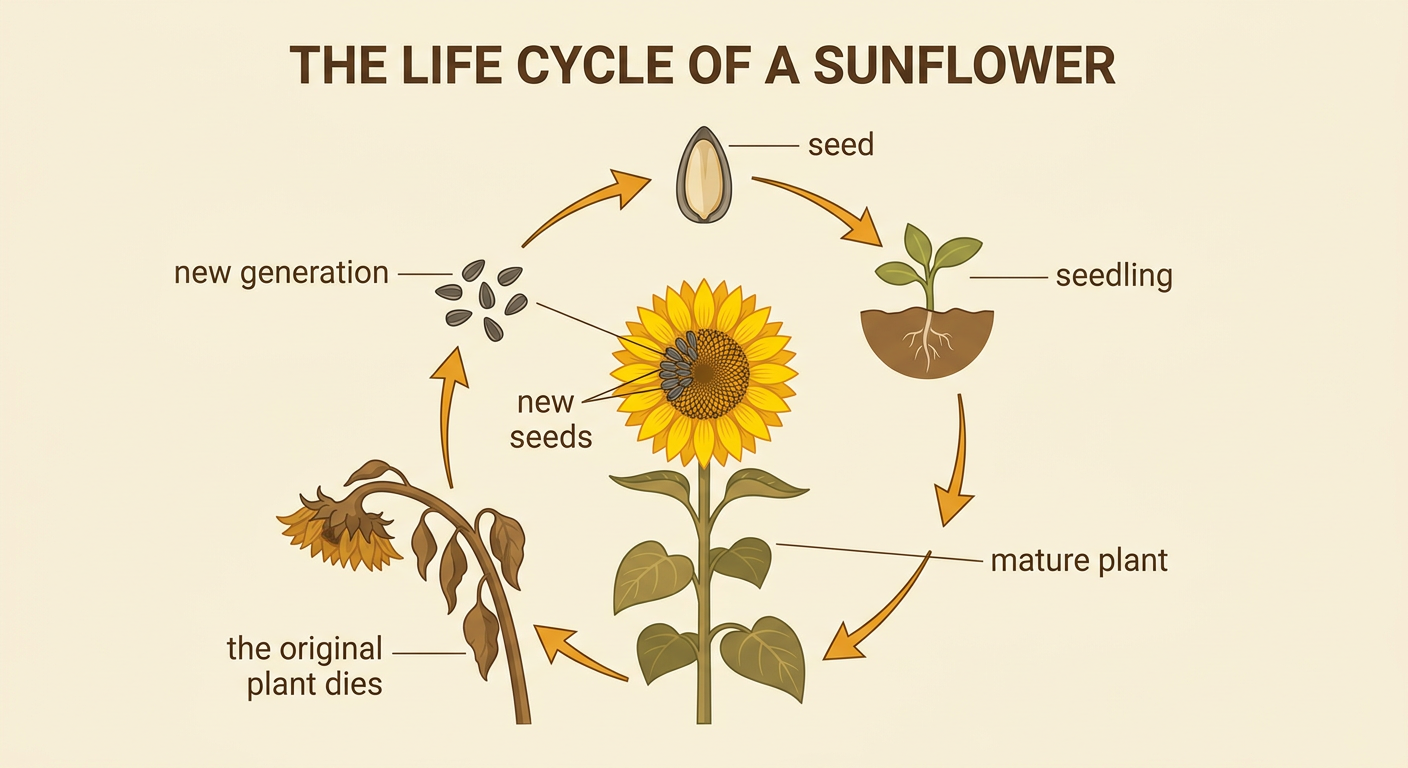
A life cycle is the ordered series of stages an organism experiences during its life. Every organism has a beginning, grows and changes, may reproduce, and eventually dies. Reproduction means producing new organisms of the same kind. For example, a sunflower begins when a seed sprouts. The seedling grows into a mature plant with flowers. The flowers produce new seeds, which can begin the next generation of sunflowers. Later, the original plant dies. The cycle continues because its seeds can grow into new plants. The new plant is not the same individual plant beginning again. It is part of a new generation. Different organisms have different stages and life spans, but they share this overall pattern.
Sequence the Stages
To sequence life-cycle stages, arrange them in the order in which they happen. Look for clues about what must happen earlier or later. A monarch butterfly begins as an egg laid on a milkweed leaf. A caterpillar hatches from the egg and eats as it grows. Next, it forms a chrysalis. Inside the chrysalis, its body changes into an adult butterfly. The adult emerges, mates, and a female may lay eggs. Eventually, the adult dies, but its offspring continue the pattern. The egg must come before the caterpillar because the caterpillar hatches from it. The adult must come after the chrysalis because the adult develops inside it. Numbering stages and using arrows can make the chronological sequence clear.

Read Stage-Duration Data
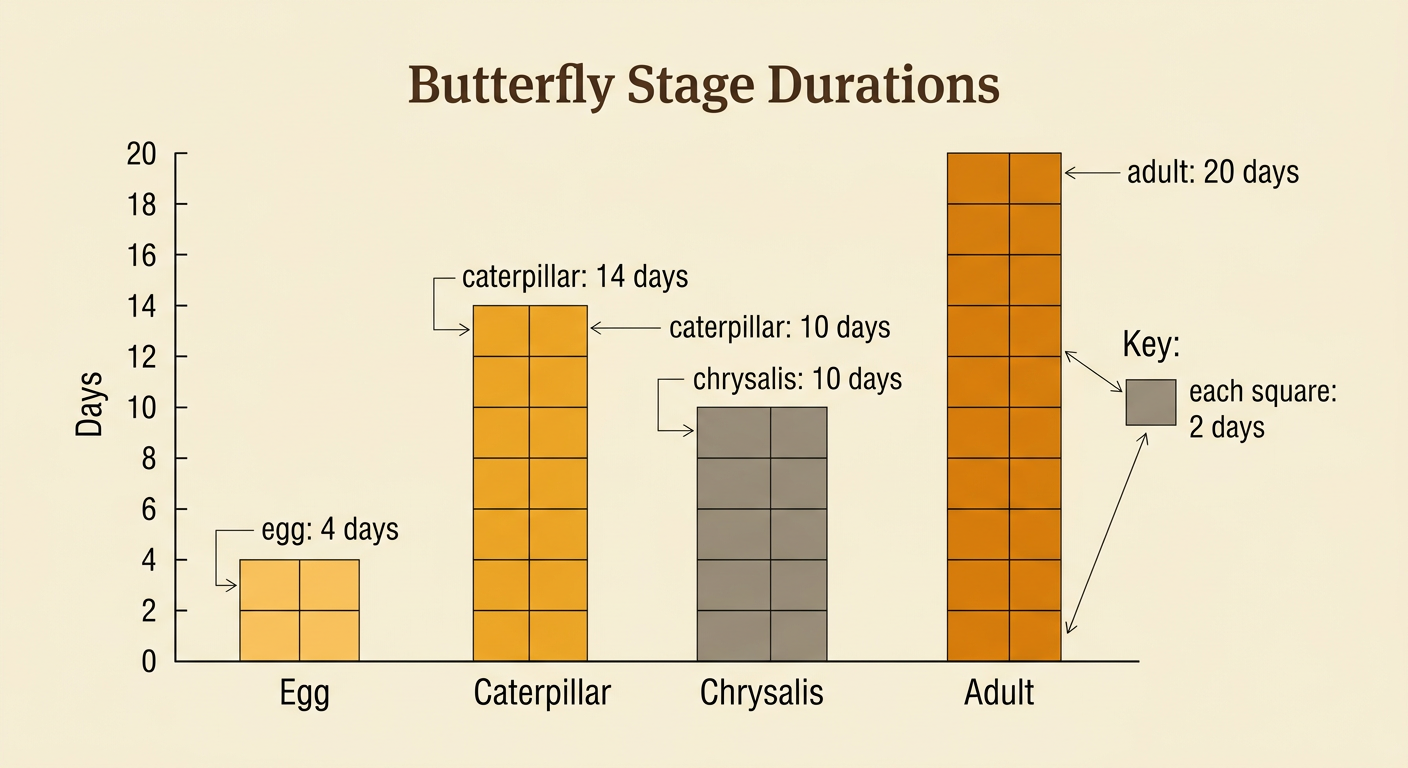
Stage-duration data tell how long an organism remains in each life-cycle stage. A scaled bar graph can display these data. Suppose a butterfly spends 4 days as an egg, 14 days as a caterpillar, 10 days as a chrysalis, and 20 days as an adult. On a graph where each square represents 2 days, the egg bar covers 2 squares and the adult bar covers 10 squares. The adult stage is the longest, and the egg stage is the shortest. The caterpillar stage lasts 4 days longer than the chrysalis stage because 14 minus 10 equals 4. Altogether, the four stages last 48 days in this example. Always read the graph title, category labels, number scale, and key before comparing bars.
Build a Life-Cycle Model
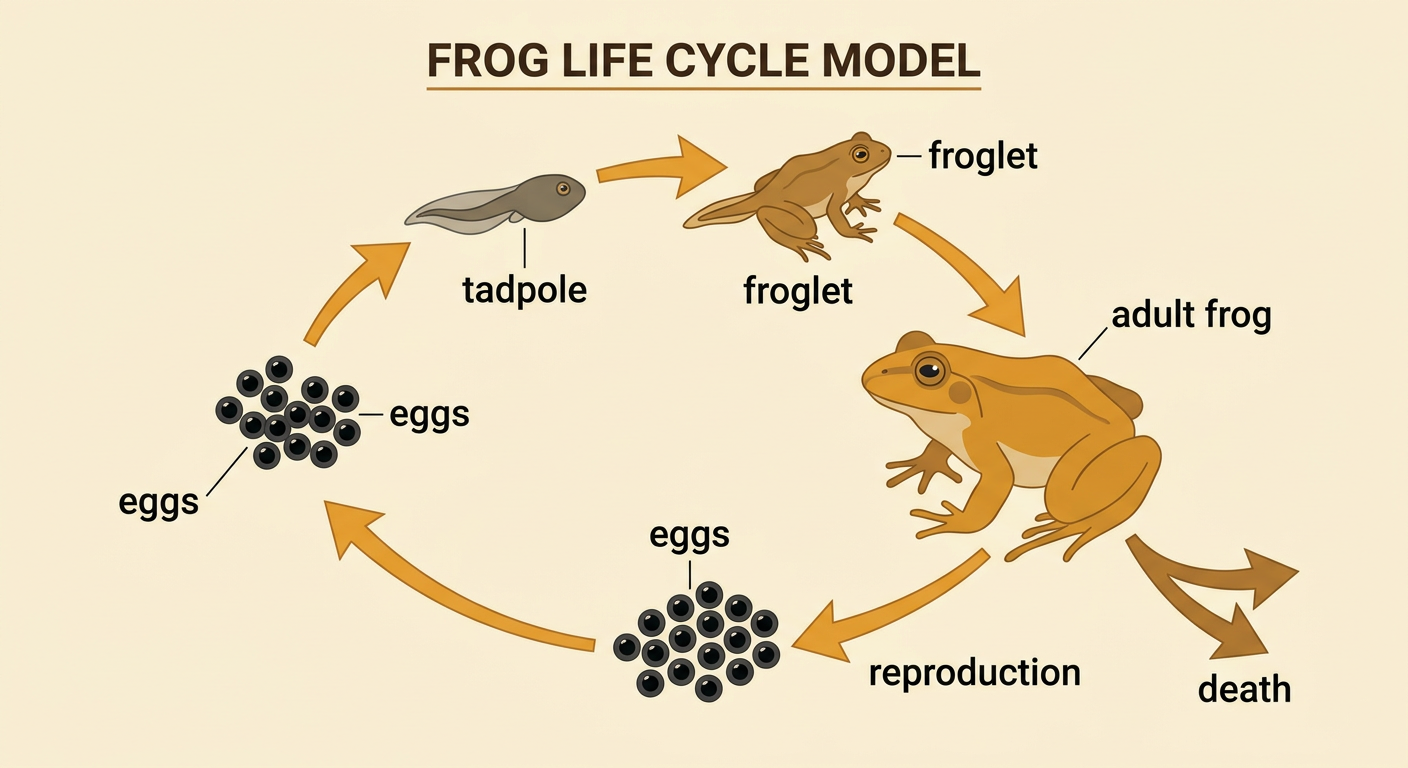
A scientific model represents important parts of a process. To build a life-cycle model, choose an organism and show its stages in the correct order. Draw or place a picture for each stage, then connect the stages with arrows. For a frog, the model can show eggs, a tadpole, a froglet, and an adult frog. Label where the frog begins life, grows, reproduces, and dies. The adult lays eggs, so an arrow can point from the adult to the eggs of the next generation. Include death as part of the adult’s life, but do not draw an arrow suggesting that the dead frog becomes an egg. Use the model to explain what changes at each stage and how reproduction allows the life-cycle pattern to continue.
Compare Plants and Animals
Plant and animal life cycles are different in their details, but they follow a shared pattern. A bean plant begins as a seed, sprouts into a seedling, grows into a mature plant, and produces flowers and beans containing new seeds. A frog begins as an egg, hatches as a tadpole, develops legs as a froglet, and becomes an adult that can reproduce. The bean plant makes seeds, while the frog lays eggs. The plant stays rooted in one place, while the frog moves and changes from living only in water to living mostly on land. Both organisms begin life, grow, become able to reproduce, and eventually die. A comparison chart helps identify unique stages without losing sight of the pattern shared by living things.

Explain the Shared Pattern
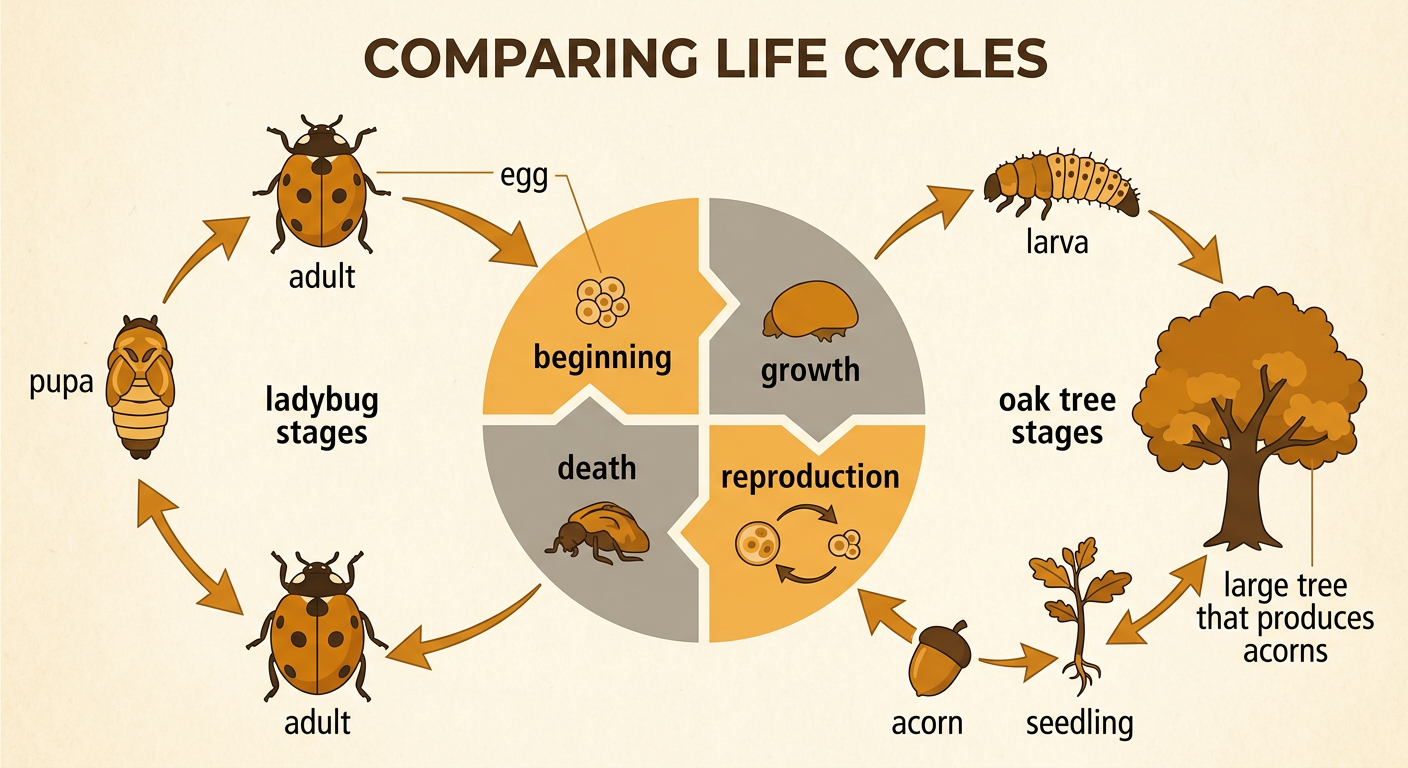
All organisms share four major life-cycle events: birth or beginning, growth, reproduction, and death. The exact stages, timing, and appearance can be very different. A ladybug begins as an egg, passes through larva and pupa stages, and becomes an adult. An oak tree begins as an acorn, grows into a seedling, and may become a large tree that produces acorns. The evidence shows the shared pattern because both have a beginning, grow into mature forms, reproduce, and die. Reproduction connects one generation to the next. Death ends the life of one individual, but offspring may continue the life cycle. When explaining a life cycle, name the stages in chronological order and describe their relationships. Words such as first, next, because, later, and finally help make the explanation clear.