Life Cycles: Growing and Changing
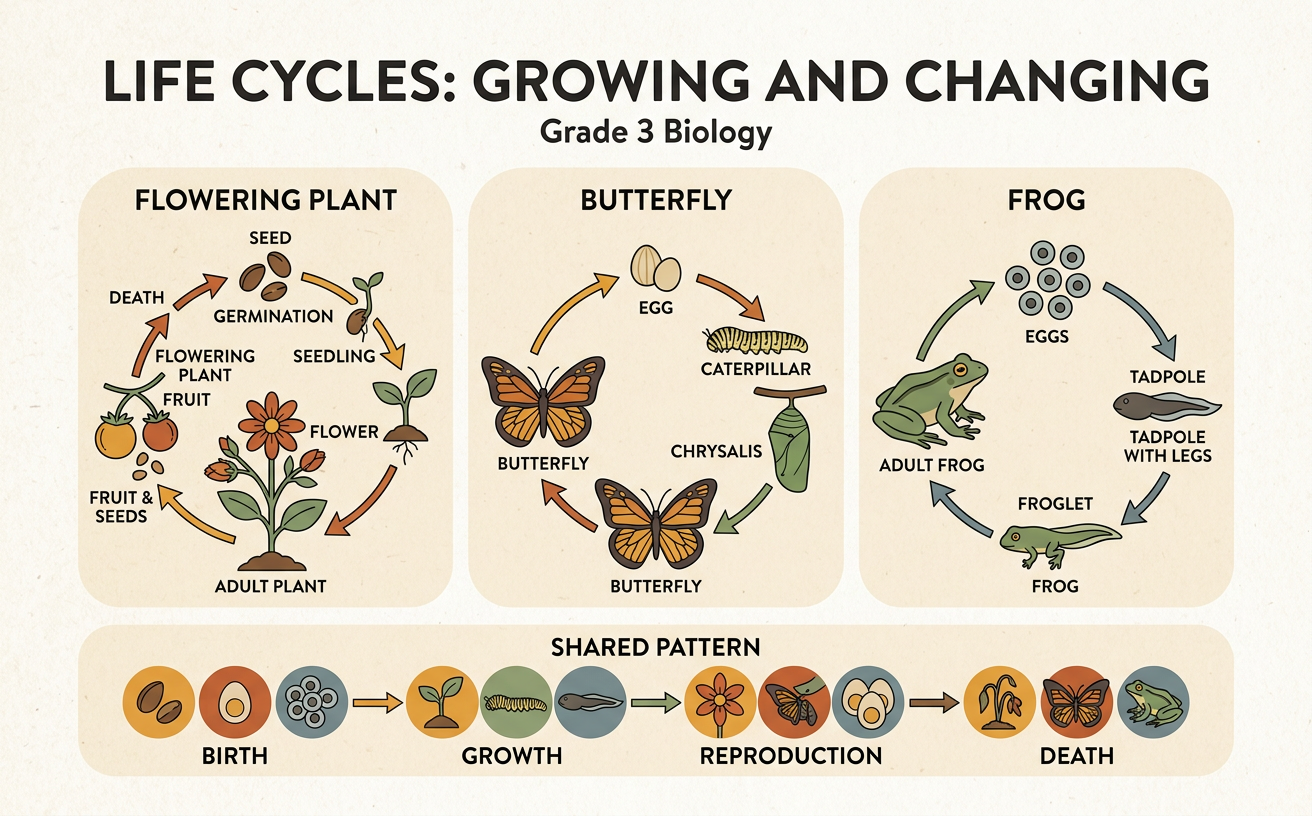
Students compare the life cycles of a flowering plant, butterfly, and frog to identify the shared pattern of birth, growth, reproduction, and death.
Illustrations are auto-generated and may be placeholders. They can be refreshed to match the narration.
What Is a Life Cycle?
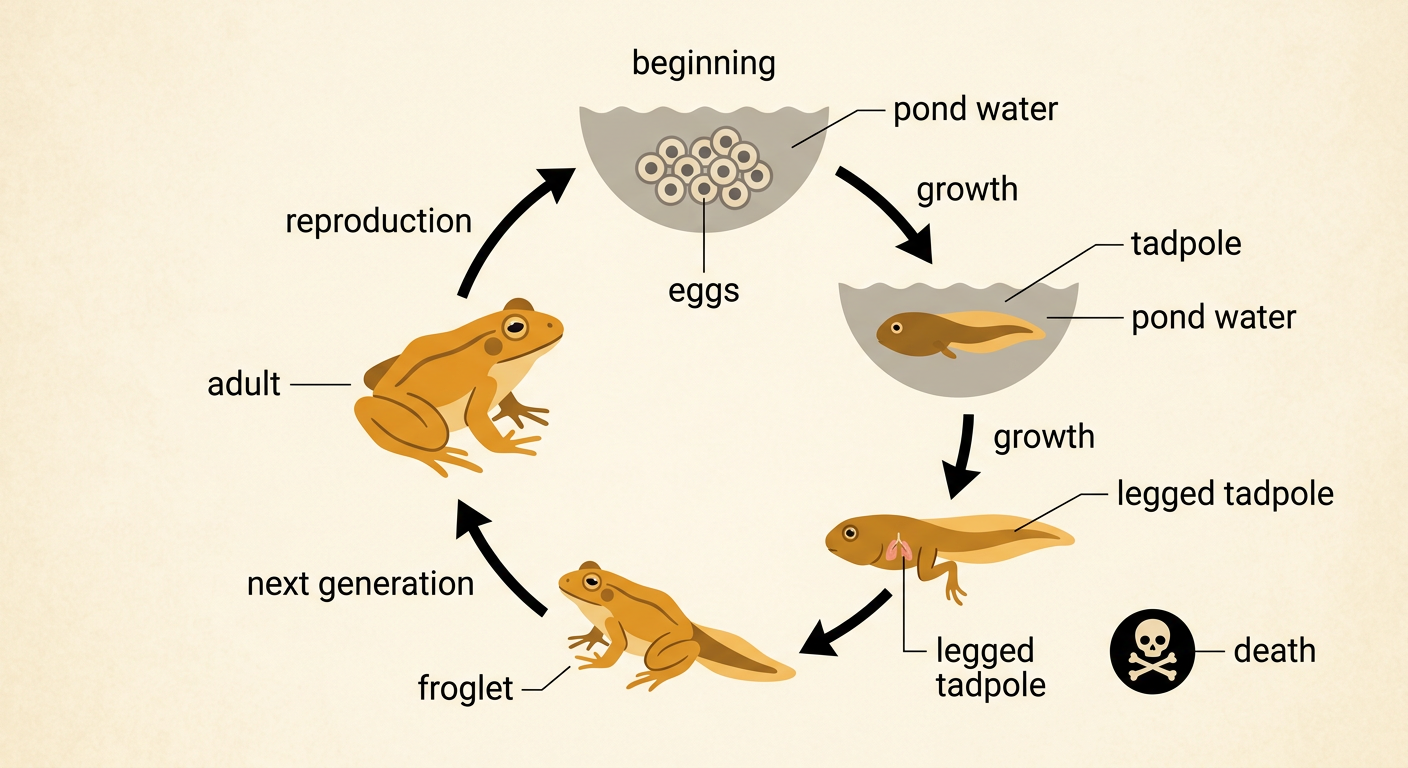
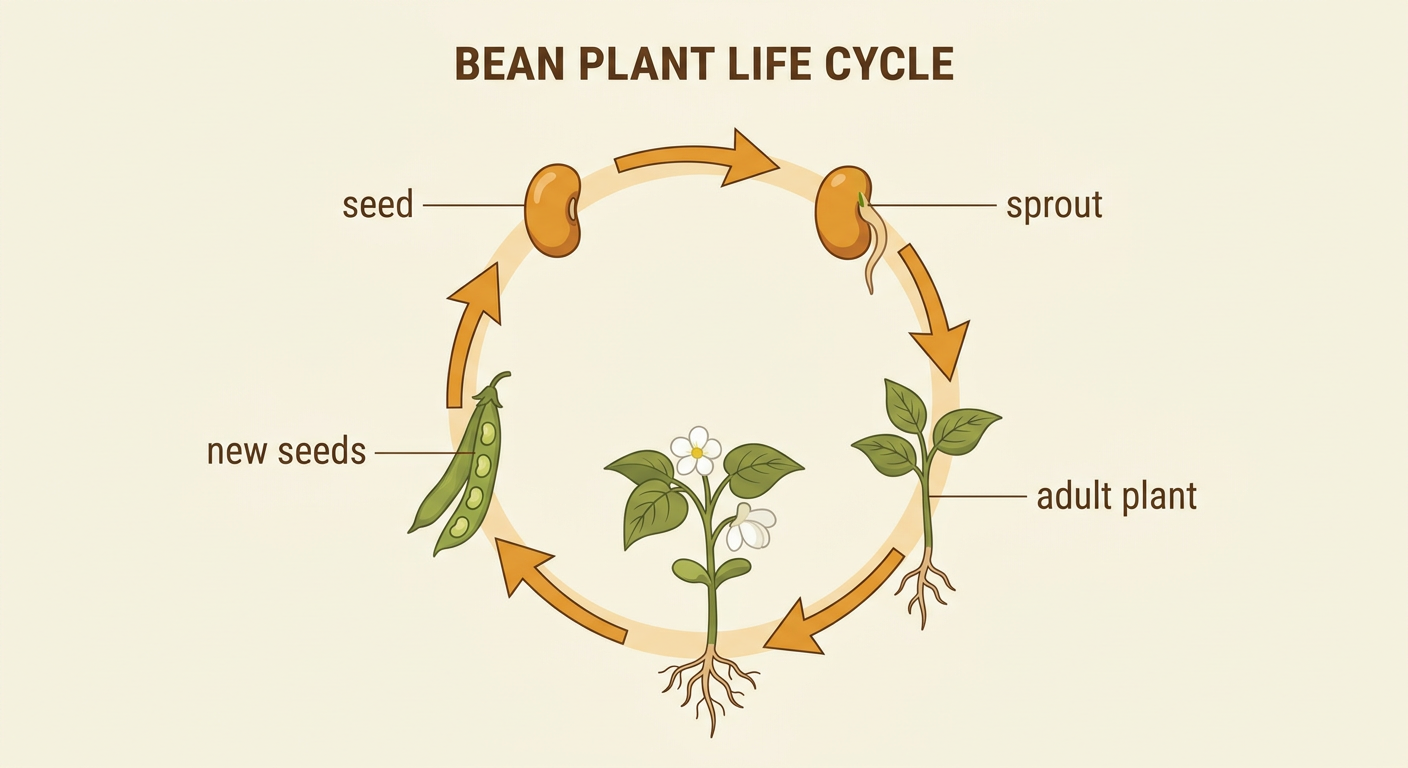
A life cycle is the series of stages a living thing passes through during its life. Every organism begins life, grows, becomes able to reproduce, and eventually dies. Reproduction starts a new generation, so a life cycle is often shown as a circle. Different organisms change in different ways and at different speeds. For example, a bean plant begins as a seed. The seed germinates, or sprouts, when it has enough water, air, and warmth. The young plant grows roots, a stem, and leaves. Later, the adult plant produces flowers. The flowers help the plant make new seeds. Those seeds may grow into new bean plants. Although one plant eventually dies, its seeds can continue the repeating life cycle.
Plant, Butterfly, and Frog Stages
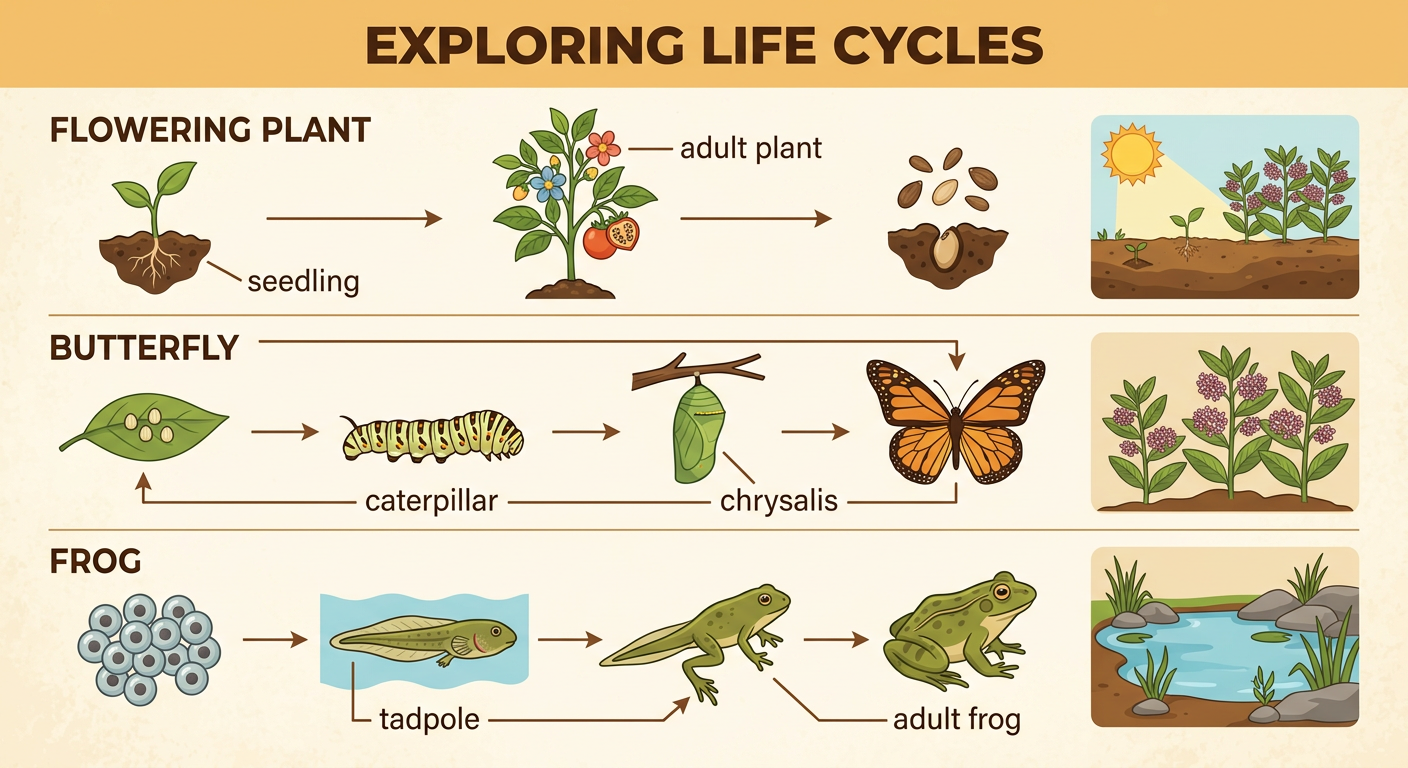
Flowering plants, butterflies, and frogs have different life cycle stages. A flowering plant begins as a seed, grows into a seedling, becomes an adult plant, and makes flowers, fruits, and new seeds. A butterfly begins as an egg, hatches into a caterpillar, forms a chrysalis, and emerges as an adult butterfly that lays eggs. A frog begins as an egg in water. It hatches into a tadpole with gills and a tail. As it grows, it develops legs and lungs, loses most of its tail, and becomes an adult frog that lays eggs. Habitats provide what each organism needs. A milkweed plant grows in sunny soil, a monarch caterpillar eats milkweed leaves, and frog eggs and tadpoles need pond water.
Put the Stages in Order
To order a life cycle, look for clues that show what happens before and after each stage. Words such as first, next, then, and finally help explain the relationships among events. For a butterfly, an adult first lays an egg on a plant. Next, a caterpillar hatches and eats leaves as it grows. Then, the caterpillar forms a chrysalis. Inside, its body changes. Finally, an adult butterfly emerges, dries its wings, and later lays eggs. The stages should not be ordered by size alone because a chrysalis may look smaller than a caterpillar. Use biological changes as evidence. After arranging stage cards, connect the last stage to the first with an arrow. This shows that reproduction begins the life cycle of a new generation.

Compare Life Cycle Patterns
The three life cycles look different, but they share a pattern. Each organism begins life, grows and changes, becomes an adult that can reproduce, and eventually dies. Reproduction creates offspring that begin a new generation. A plant makes seeds, a butterfly lays eggs, and a frog lays eggs. Their young forms are also different. A seedling resembles a smaller plant, but a caterpillar does not look like an adult butterfly, and a tadpole does not look like an adult frog. We can record these differences as categorical data. For example, make a chart with the categories seed beginning, egg beginning, water needed for early stages, and major body-form change. Mark which category fits each organism. Then count the marks or create a bar graph to compare the three life cycles.

Create and Explain a Life Cycle Model
A model is a useful representation of how a life cycle works. Choose a flowering plant, butterfly, or frog. Draw each important stage in a circle and connect the stages with arrows. Make the arrows point in the correct direction. Label where the organism lives during each stage, such as soil, a leaf, or pond water. Then write or tell an explanation using sequence and cause-and-effect words. For example: “First, a frog hatches from an egg as a tadpole. Because it grows legs and lungs, it can spend more time on land. Next, it becomes a froglet and then an adult. The adult reproduces by laying eggs in water.” Include birth or beginning, growth, reproduction, and death in the model. A curved arrow to the next generation shows that the pattern repeats.