Light Detectives: Which Materials Let Light Pass Through?
Students test and sort common materials by how much light passes through them, then use observations to identify patterns.
Illustrations are auto-generated and may be placeholders. They can be refreshed to match the narration.
Notice Light Around Us
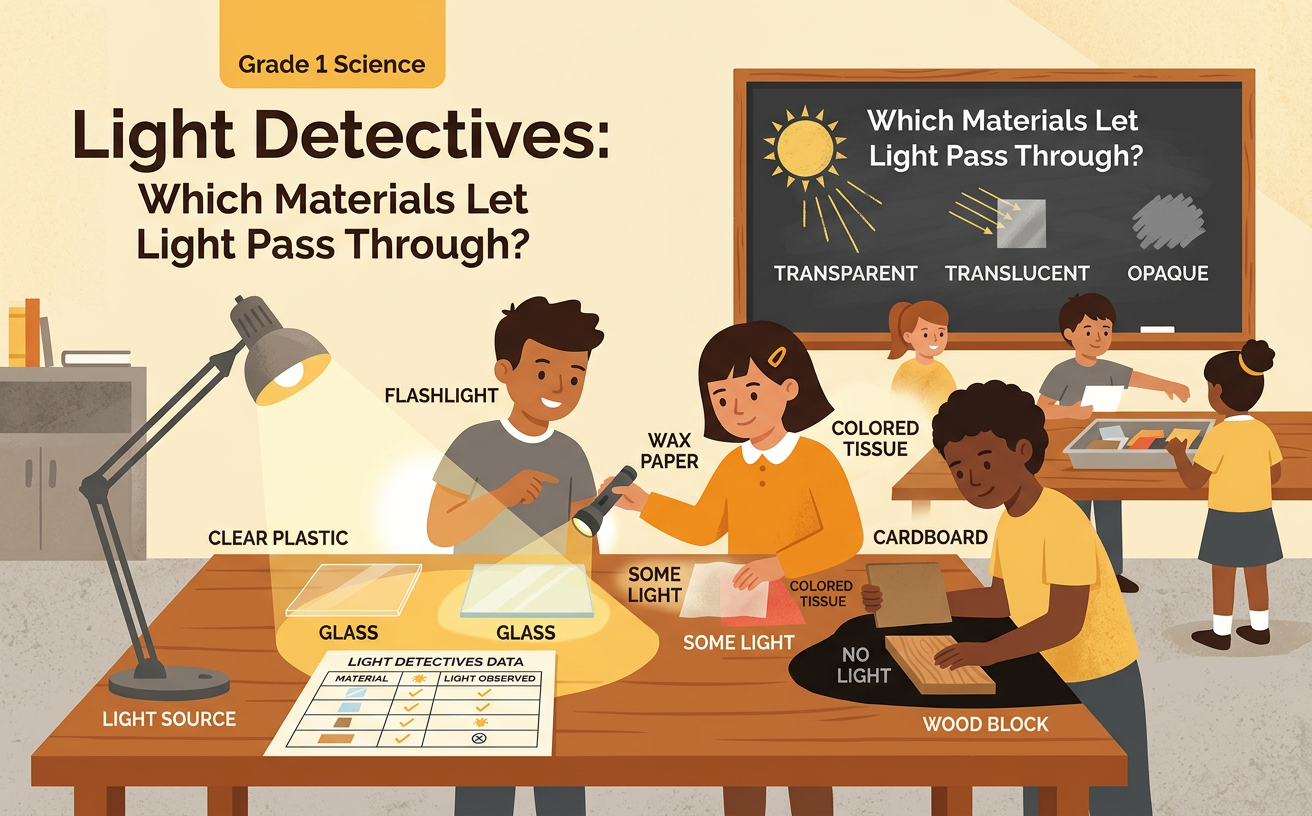
Light helps us see objects. Some light comes from sources such as the Sun, lamps, and flashlights. Light travels away from a source and can reach our eyes after it reflects from objects. Look around the classroom for places where light is bright or dim. For example, sunlight may pass through a clear window and make a bright shape on the floor. A curtain may let only some light through, while a book blocks the light and makes a shadow. Materials do not all interact with light in the same way. We can become light detectives by observing carefully, asking questions, and describing what we notice. Never look directly at the Sun or shine a flashlight into anyone’s eyes.

Predict What Light Can Pass Through
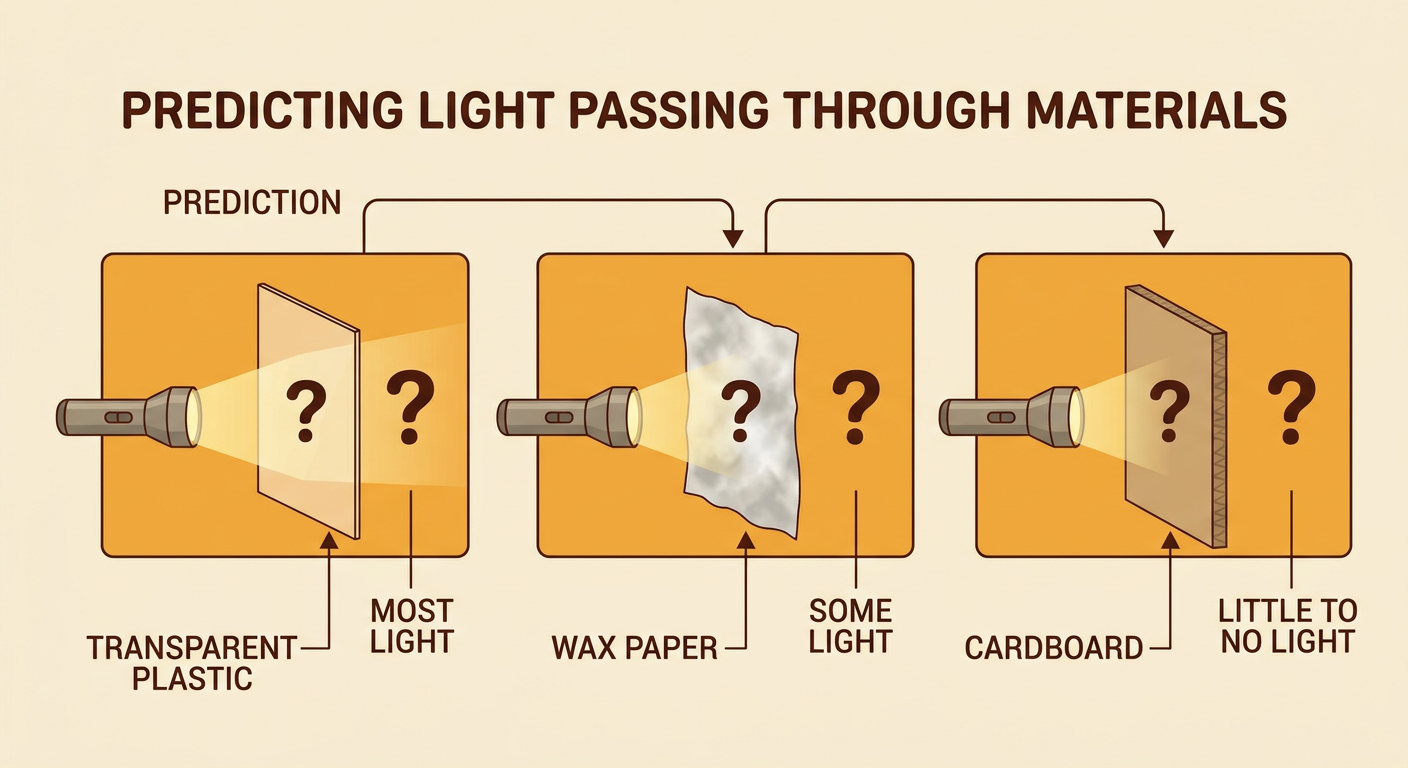
Before testing, make a prediction about each material. A prediction is what you think will happen based on what you already know. Use three categories: most light passes through, some light passes through, or little to no light passes through. Clear materials, such as a transparent plastic sheet, may let most light pass through. Cloudy materials, such as wax paper, may let some light through but scatter it. Thick materials, such as cardboard, may block nearly all the light. These are predictions, so it is fine if the test gives a different result. Take turns sharing ideas with a partner. Listen without interrupting, and explain your thinking with a reason, such as, “I predict light will pass through because I can see through the plastic.”
Test Different Materials
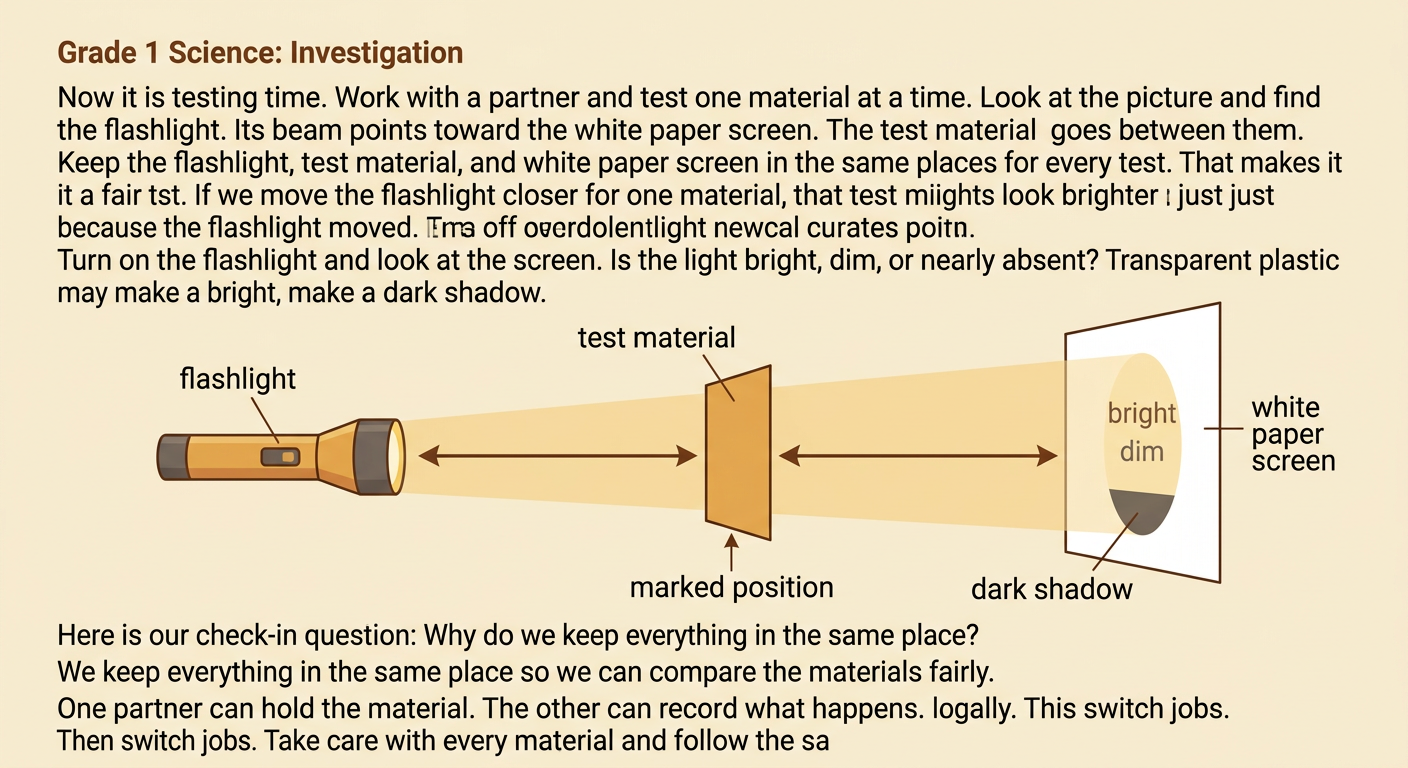
Work with a partner to test one material at a time. Place a flashlight on a table so its beam points toward a white paper screen. Put the first material between the flashlight and the screen. Keep the flashlight, material, and screen in the same places for every test so the comparison is fair. Turn on the flashlight and observe the screen. Is the light bright, dim, or nearly absent? For example, a clear plastic sheet may make a bright area, while cardboard may make a dark shadow. One partner can hold the material, and the other can record the observation. Then switch jobs. Handle materials carefully, follow the agreed steps, and never point the flashlight toward anyone’s eyes.
Sort and Record the Results
After each test, record what you observed instead of what you predicted. Sort the material into one of three result categories: most light, some light, or little to no light. Make a tally mark for each material in its category. Then count the tally marks and write the total. For example, suppose clear plastic and glass go in “most light,” wax paper and thin fabric go in “some light,” and cardboard and aluminum foil go in “little to no light.” Each category would have two materials. Compare the totals by asking which category has more, fewer, or the same number. A simple picture graph or three-column chart makes the data easy to see and helps the class identify patterns.

Discuss Patterns and Evidence
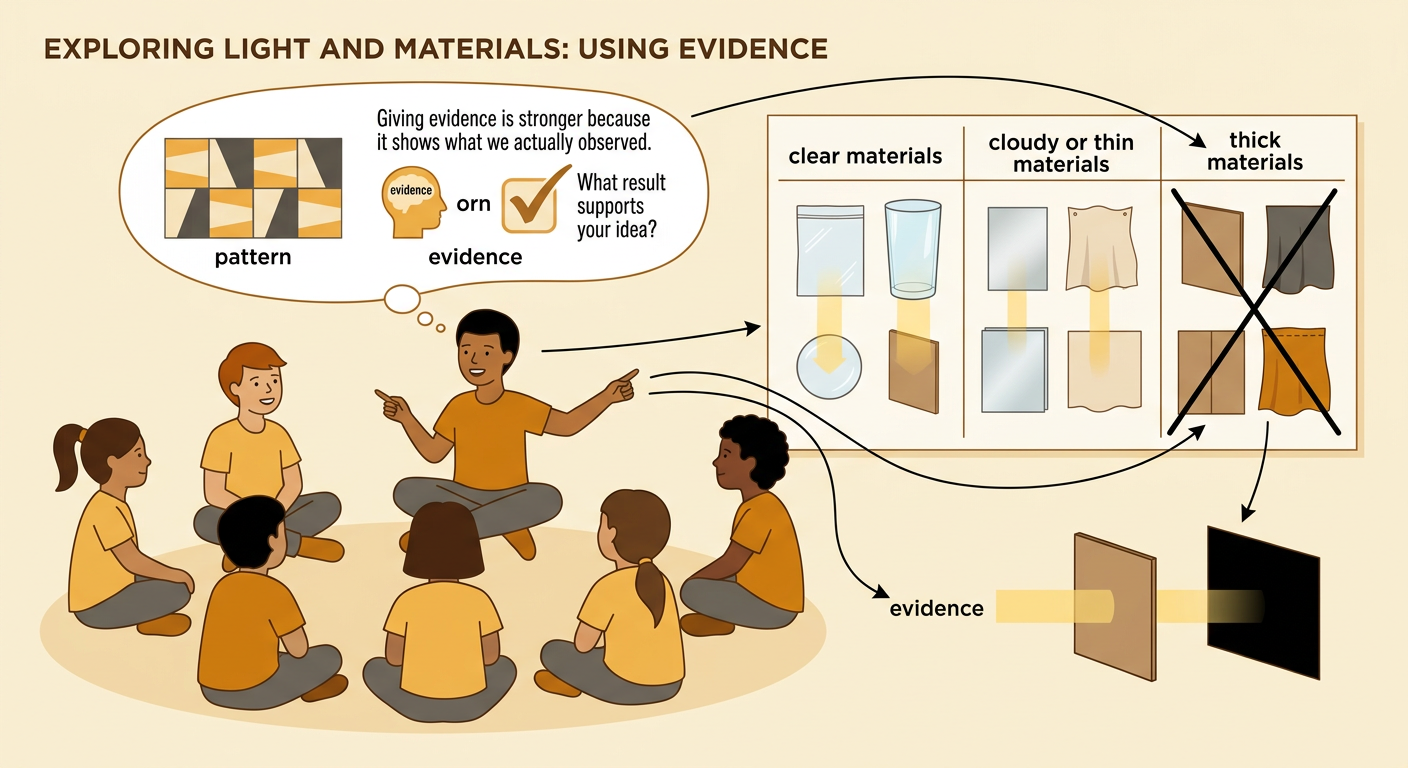
Use the class results to look for patterns. A pattern is something that happens again and again. Clear materials often let most light pass through, cloudy or thin materials often let some light through, and thick materials often block nearly all the light. Support each idea with evidence from the investigation. For example, you might say, “I think cardboard blocks light because the screen stayed dark during our cardboard test.” During the discussion, take turns, listen attentively, and respond to what others say. You can agree, disagree kindly, or ask a question. Try saying, “I noticed that too,” or “What result supports your idea?” If two groups got different results, compare their setups and observations. Evidence helps the class build a stronger explanation together.