Light Helps Us See Objects
Students observe objects in light and darkness to discover that objects can be seen only when light shines on them or they give off their own light.

Illustrations are auto-generated and may be placeholders. They can be refreshed to match the narration.
What Do We Need to See?
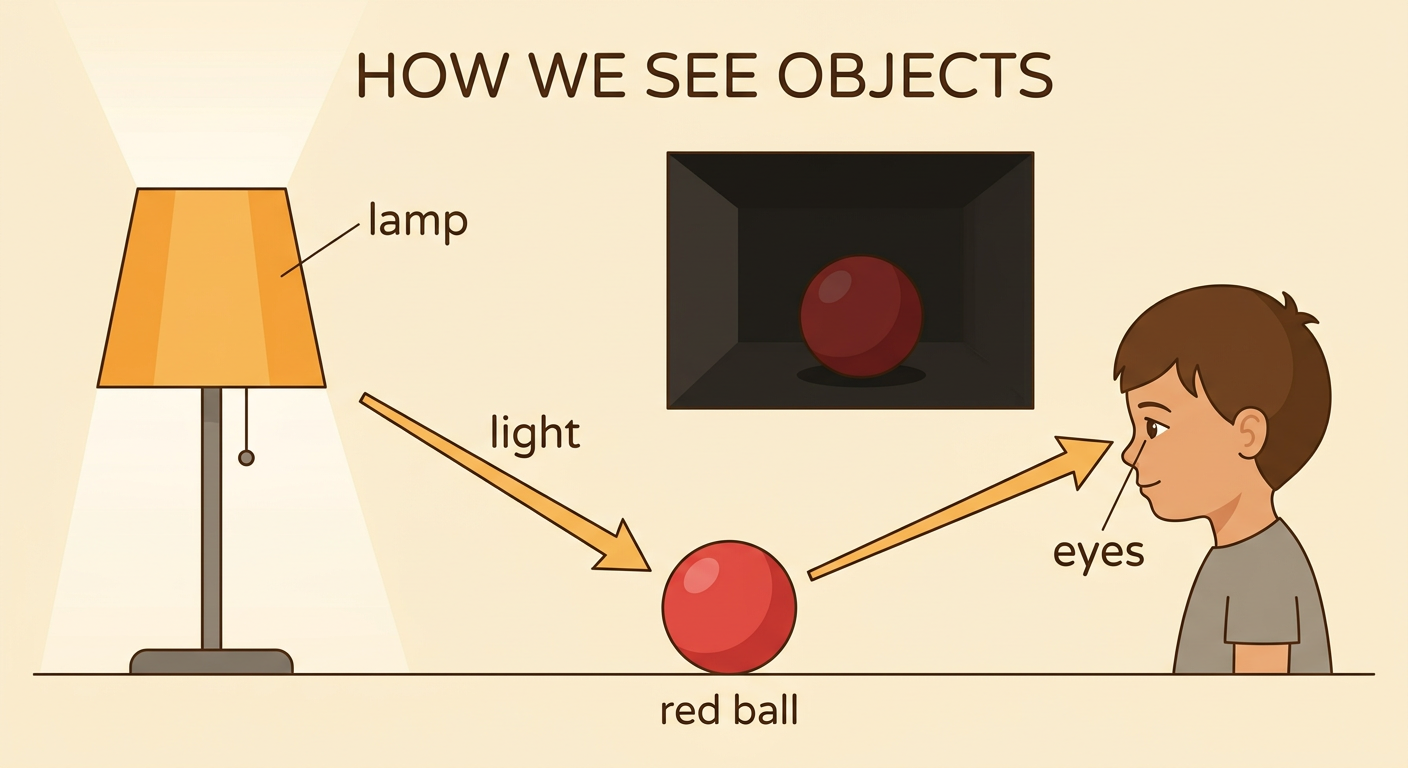
We use our eyes to see, but our eyes also need light. Some objects, such as the Sun, a glowing lightbulb, and a flashlight that is turned on, give off their own light. Most objects do not make light. A red ball, for example, can be seen when light shines on it. Light from a lamp reaches the ball and then travels from the ball to our eyes. If there is no light, we cannot see the ball, even though it is still there. Think about this question: What helps us see an object? We can answer it by observing objects under different amounts of light and using our observations as evidence.
Observe an Object in Darkness
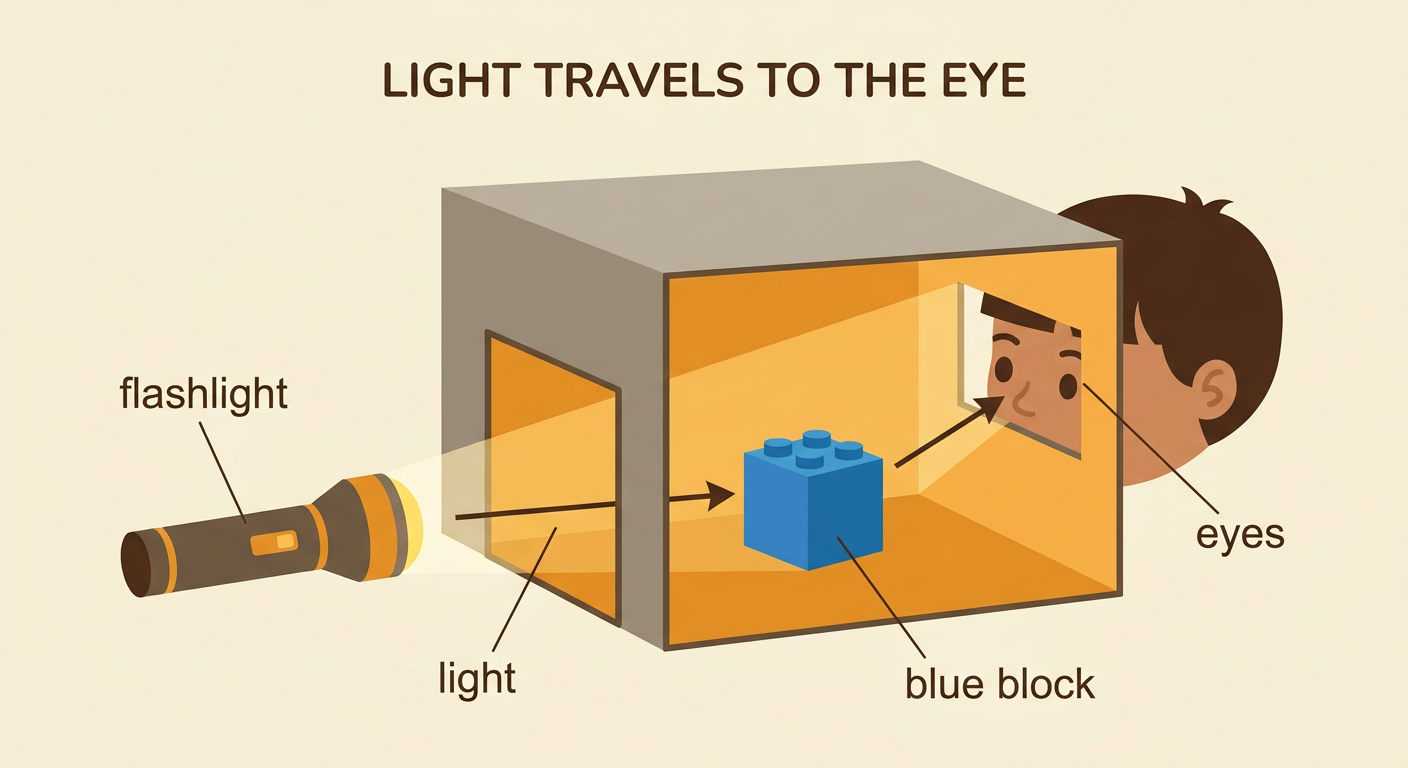
Place a small toy inside a box with a lid. Let your teacher prepare the box so no light can enter. Look through a safe viewing opening without turning on a flashlight. Can you tell the toy's color or shape? In complete darkness, you will not be able to see it. The toy has not disappeared. Your hand may still feel it, but your eyes do not receive light from it. Record what you observe by drawing a dark box or writing, “I could not see the toy.” This observation is a useful source of information. It helps answer the question, “Can we see an object when no light shines on it?” Never enter a dark room alone; complete this investigation with your teacher.

Add Light and Observe Again
Now let your teacher shine a flashlight through a small opening in the box. Look through the viewing opening again. You may see the toy's shape, color, and location. The toy did not begin making its own light. Light from the flashlight shone on the toy, and some of that light traveled to your eyes. Compare this observation with the first one. Before adding light, you could not see the toy. After adding light, you could see it. This change is evidence that light is needed to see the toy. Record details such as, “The block is blue and has four bumps.” Careful notes and drawings help you remember what happened and answer the investigation question using information from your own experience.
Compare Light Sources and Reflectors
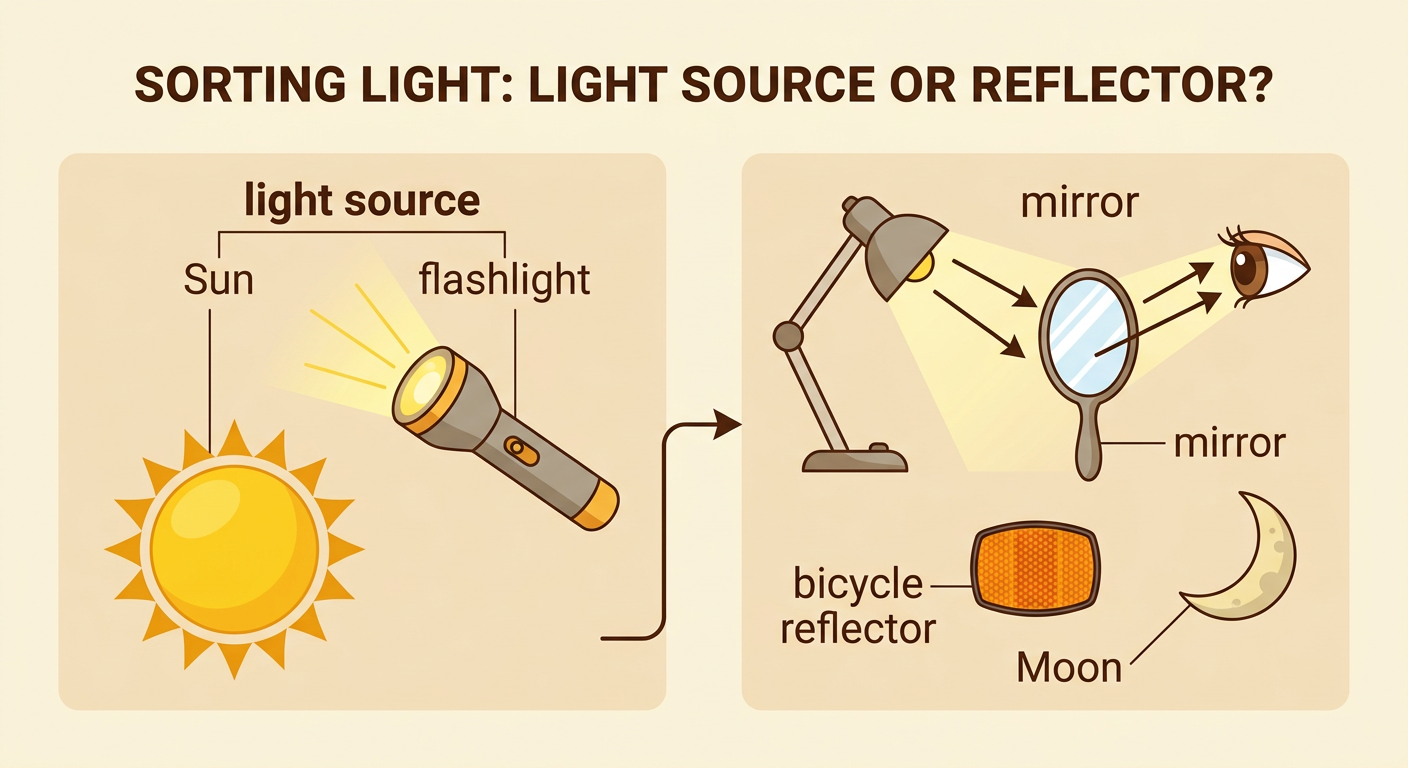
A light source gives off its own light. The Sun, a glowing lightbulb, and a turned-on flashlight are light sources. A reflector does not make its own light. It sends back light that shines on it. A mirror, a bicycle reflector, and the Moon are reflectors. For example, a mirror may look bright when a lamp shines on it, but the mirror is not producing the light. Turn off the lamp in a completely dark space, and the mirror cannot be seen. To decide whether something is a source or a reflector, ask, “Does it give off light, or does another light shine on it?” Observations, photographs, and age-appropriate science books are useful sources of information for answering this question.
Draw and Explain the Evidence
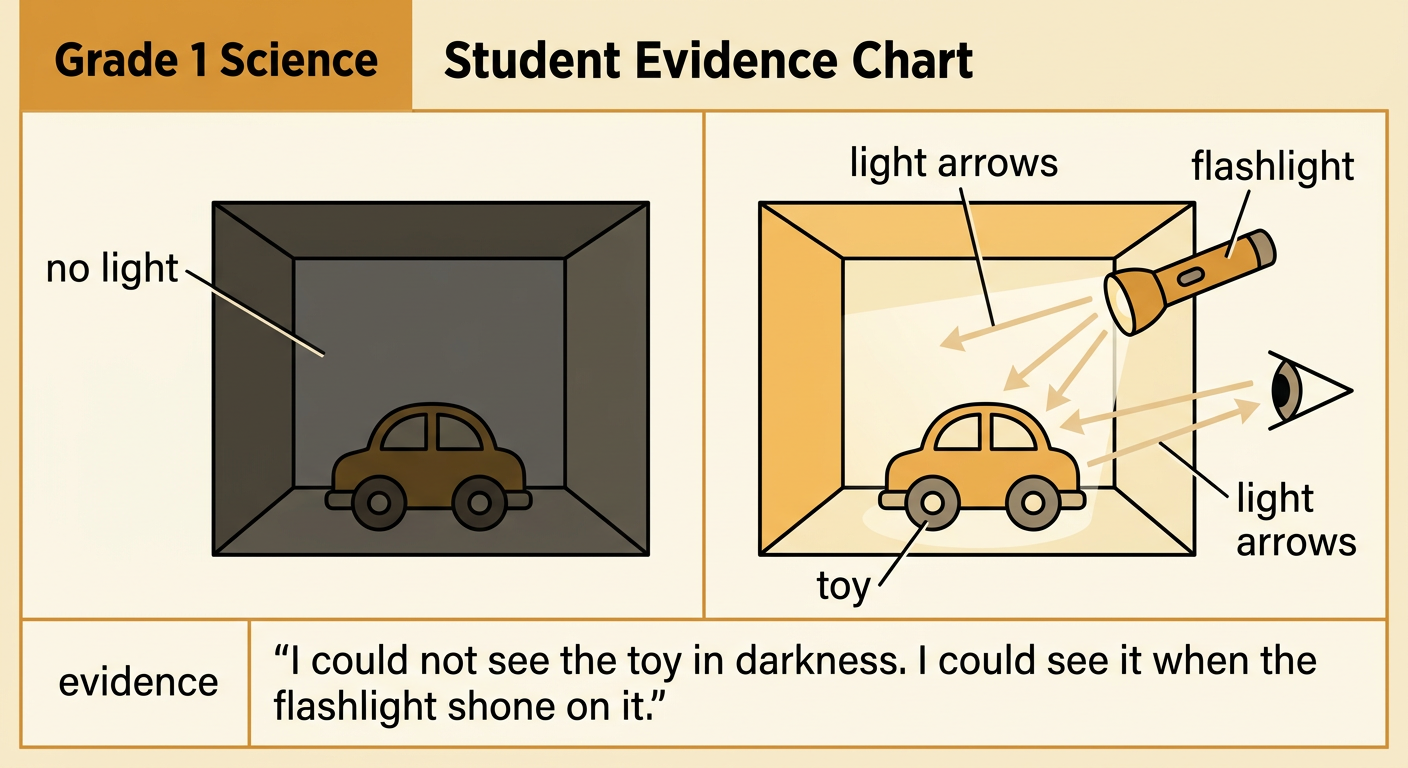
Use your observations to make an evidence-based account. Fold a paper into two parts. In the first part, draw the toy inside the box with no light. Show that the toy could not be seen. In the second part, draw the flashlight shining on the toy and the toy becoming visible. Add arrows to show where the light travels. Then write or tell an explanation: “I could not see the toy in darkness. I could see it when the flashlight shone on it. This is evidence that an object must have light shining on it, or give off its own light, to be seen.” Your drawings, notes, and memory of the investigation are sources that help you answer the question clearly.