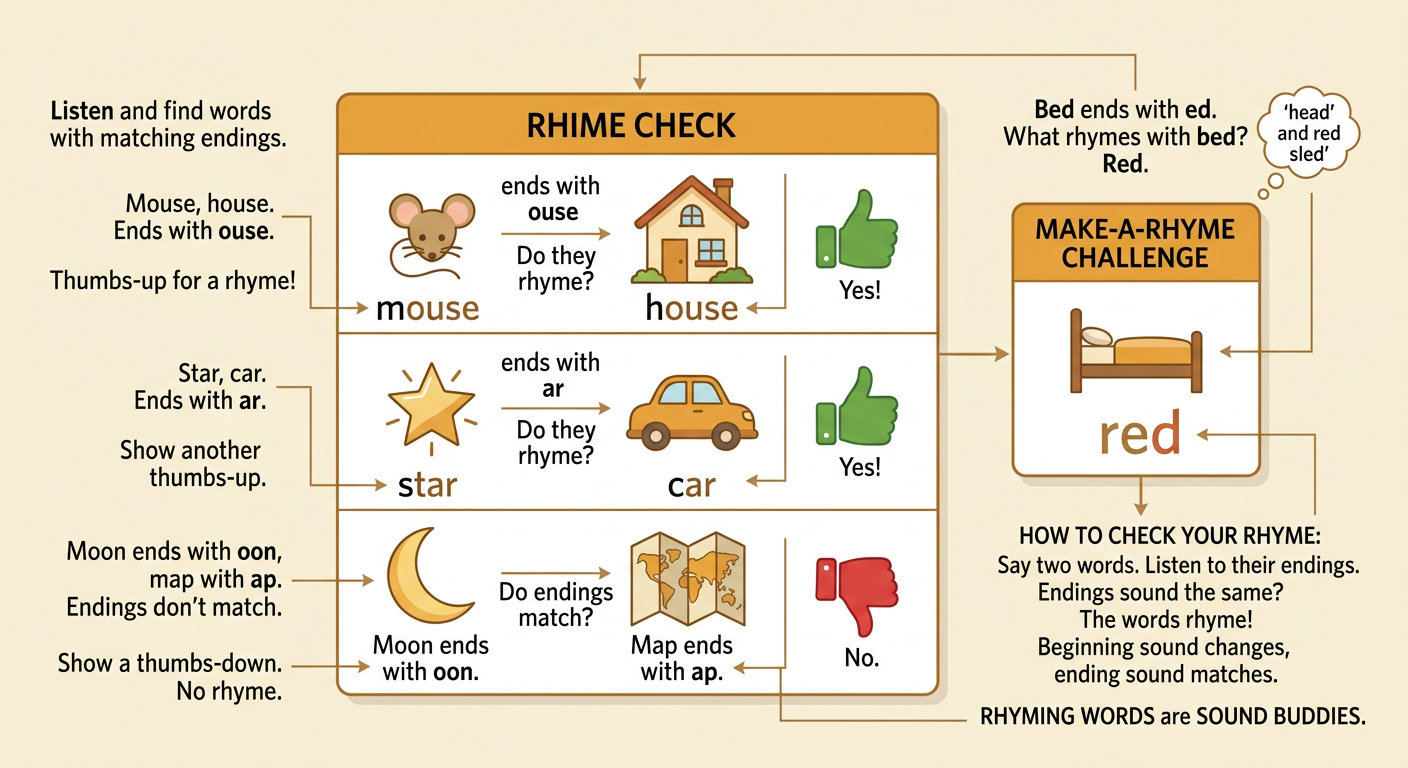
Listening for Rhyming Words
Students listen for matching ending sounds, identify rhyming word pairs, and produce simple rhymes of their own.
Illustrations are auto-generated and may be placeholders. They can be refreshed to match the narration.
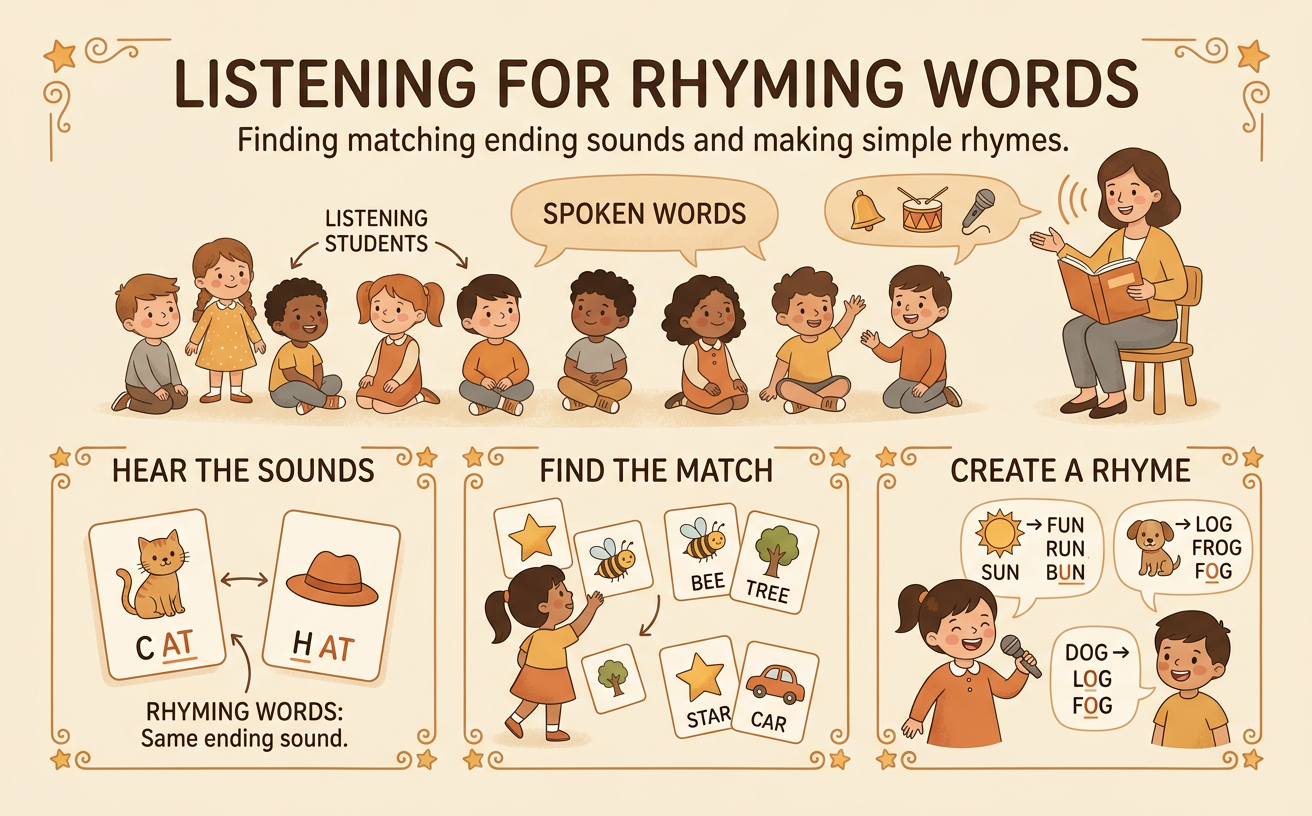
Warm-Up with Word Sounds
Words are made of sounds. Today, listen closely to the sounds at the ends of words. Say cat slowly: ccc-at. Now say hat slowly: hhh-at. Cat and hat begin with different sounds, but both end with at. That matching ending sound makes the words rhyme. Try saying the pair together: cat, hat. Let your voice make the ending sound clear. Next, listen to sun and sock. Sun ends with un, while sock ends with ock. Their ending sounds do not match, so they do not rhyme. Remember to use your ears. Rhyming words may start differently, but their ending sounds match.
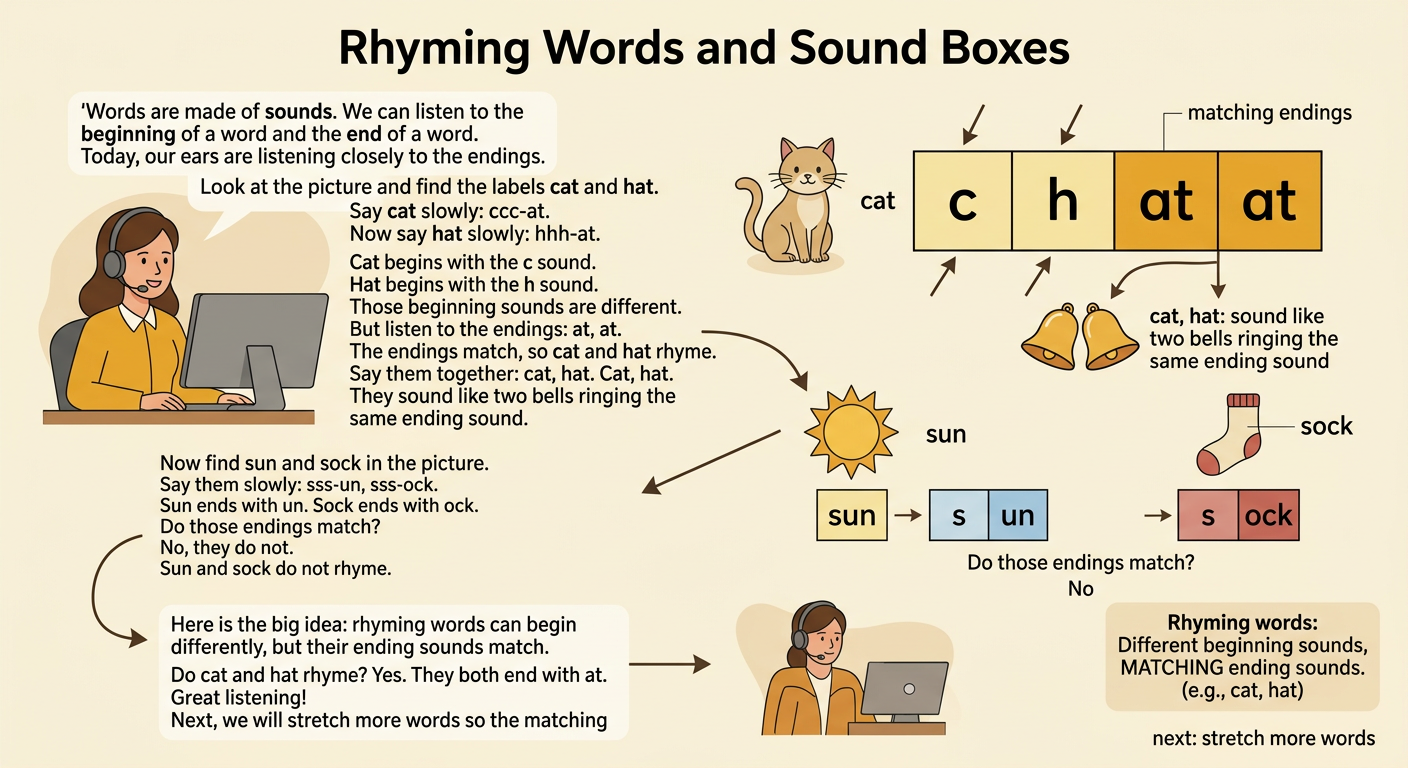
Hear the Matching Endings
To hear a rhyme, pay attention to the ending part of each word. Listen: log, frog. Stretch the words a little: lll-og, frrr-og. Can you hear og at the end of both words? Log and frog rhyme. Now listen to log and leaf. Log ends with og, but leaf ends with eaf. They do not rhyme. You can test words by saying them one after the other. Keep the ending sounds clear: log, frog; log, leaf. You may tap once when you hear two words that rhyme. Keep your hands still when the endings do not match. Listening carefully helps your ears find the sound pattern.
Identify Rhyming Pairs
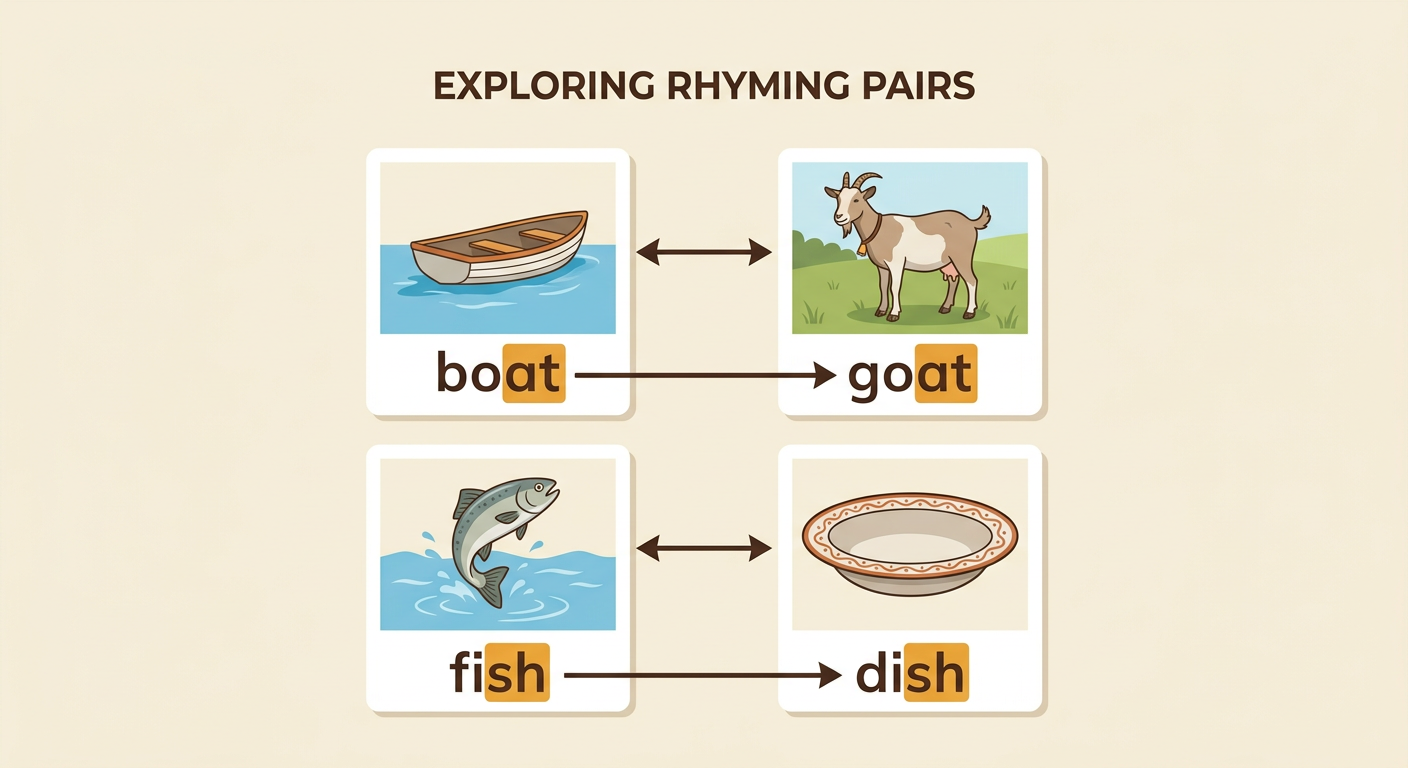
A rhyming pair is a set of two words with the same ending sound. Look at these picture words: boat, goat, fish, and dish. Say each word aloud. Boat and goat both end with oat, so they are one rhyming pair. Fish and dish both end with ish, so they are another rhyming pair. The first sounds do not need to match. In fact, boat and goat begin differently, but their endings sound alike. To find a pair, name each picture, listen to the ending, and match the two words that sound alike. Draw an imaginary line between each rhyming pair. Then say the pairs aloud: boat, goat; fish, dish.
Make a Rhyme
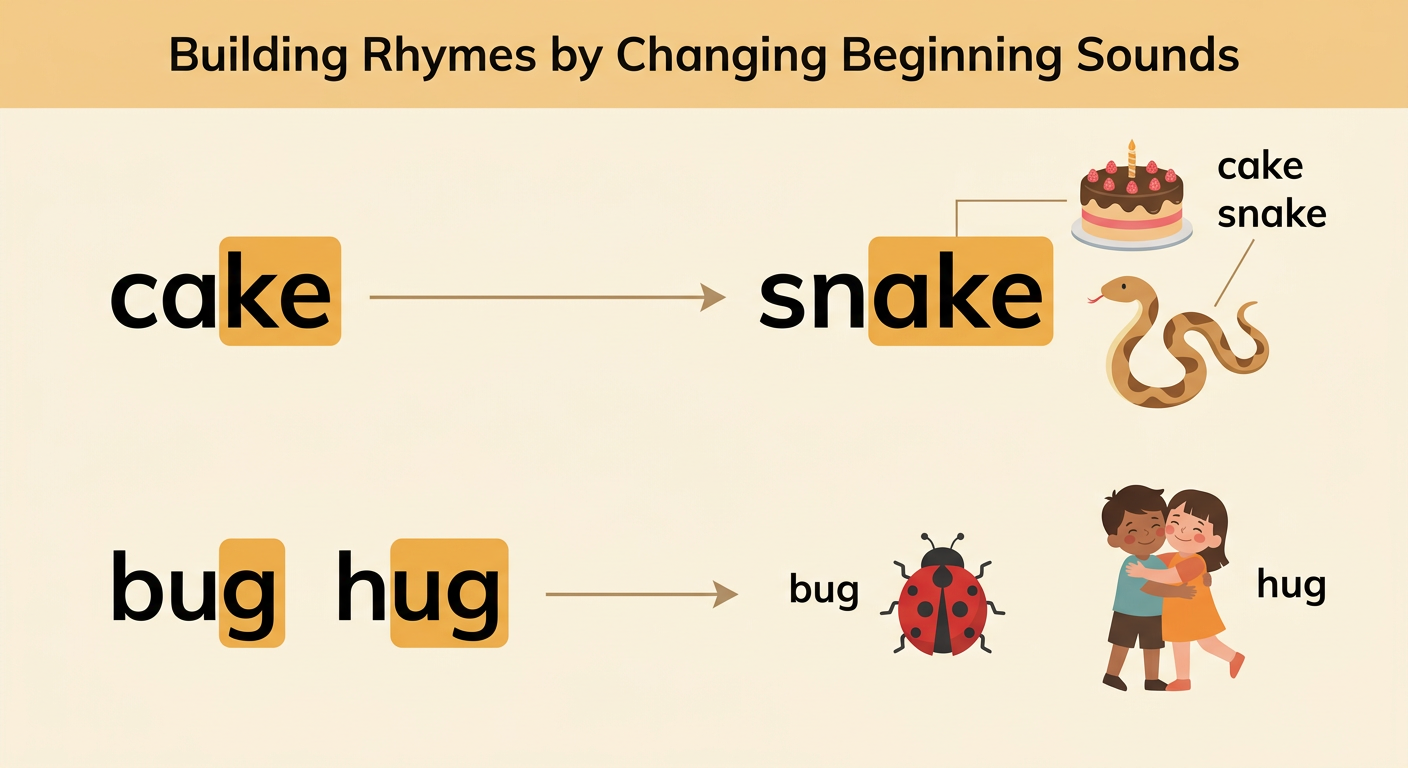
You can make a rhyme by thinking of a new word with the same ending sound. Start with cake. Listen to its ending: ake. Think of another word that ends with the same sound. Snake rhymes with cake. Say the pair: cake, snake. Try another word: bug. What word ends with ug? Hug rhymes with bug. Sometimes it helps to keep the ending sound and change the beginning sound. For bug, keep ug and change b to h. The new word is hug. You can use a real word that names a person, place, thing, or action. Say your rhyme clearly, and check it with your ears: Do the ending sounds match?
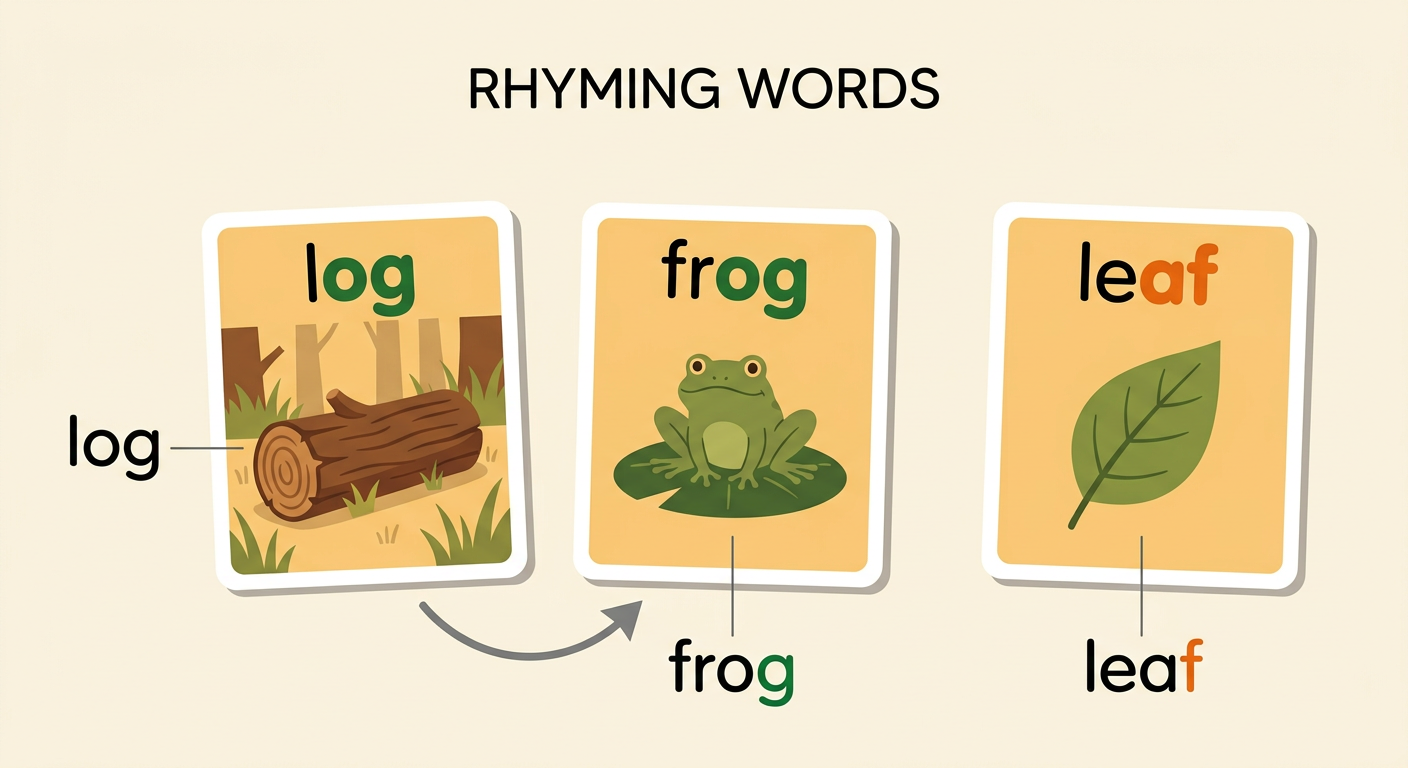
Rhyming Word Check
Now check what you know about rhyming words. Listen to each pair and decide whether the ending sounds match. Mouse and house both end with ouse, so they rhyme. Star and car both end with ar, so they rhyme. Moon and map do not have the same ending sound, so they do not rhyme. Give a thumbs-up for a rhyming pair and a thumbs-down for a pair that does not rhyme. Finally, make one rhyme of your own for the word bed. You might say red. Bed and red both end with ed. Say your two words aloud and listen again. If the endings sound the same, you made a rhyme. Great listening helps you recognize and produce rhyming words.