Listening for Rhyming Words
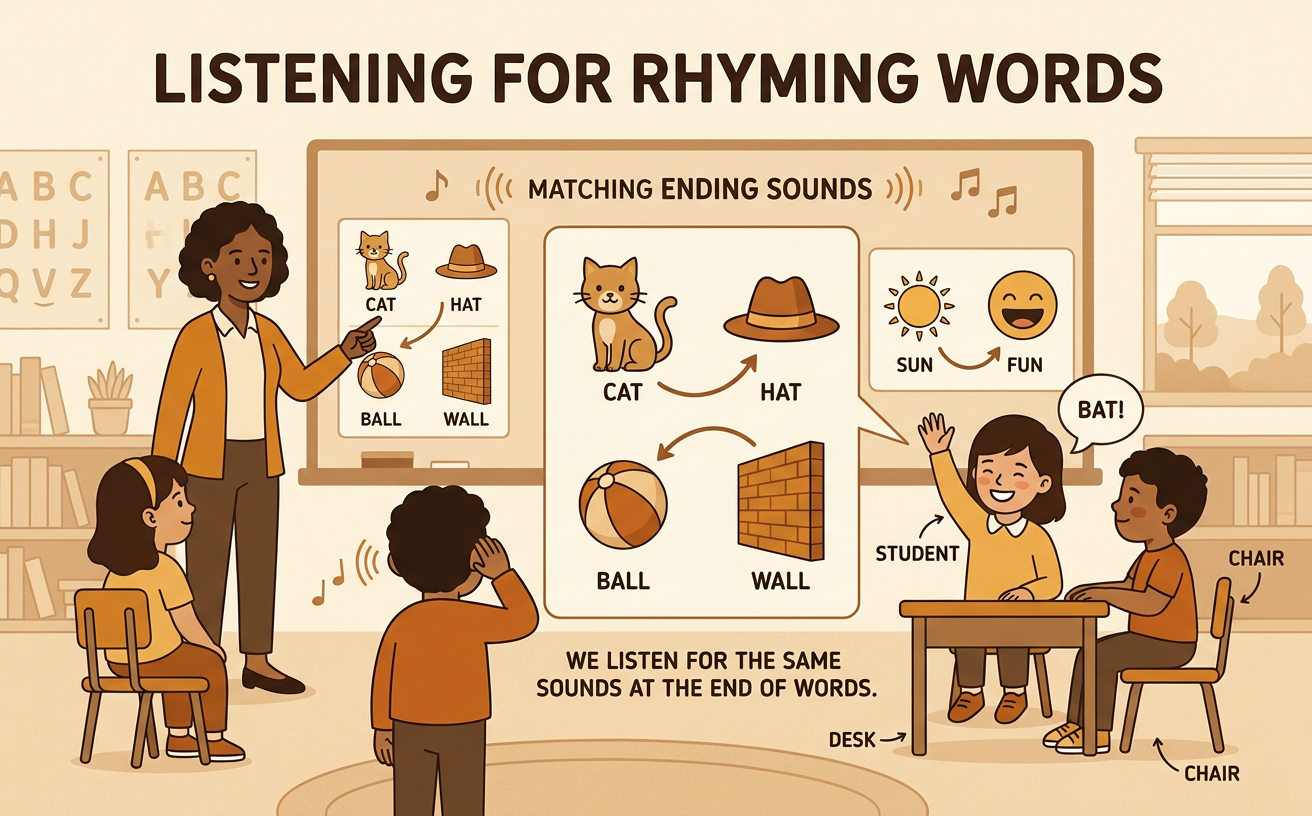
Students listen for matching ending sounds and practice recognizing and producing simple rhyming words.
Illustrations are auto-generated and may be placeholders. They can be refreshed to match the narration.
Warm-Up with Word Sounds
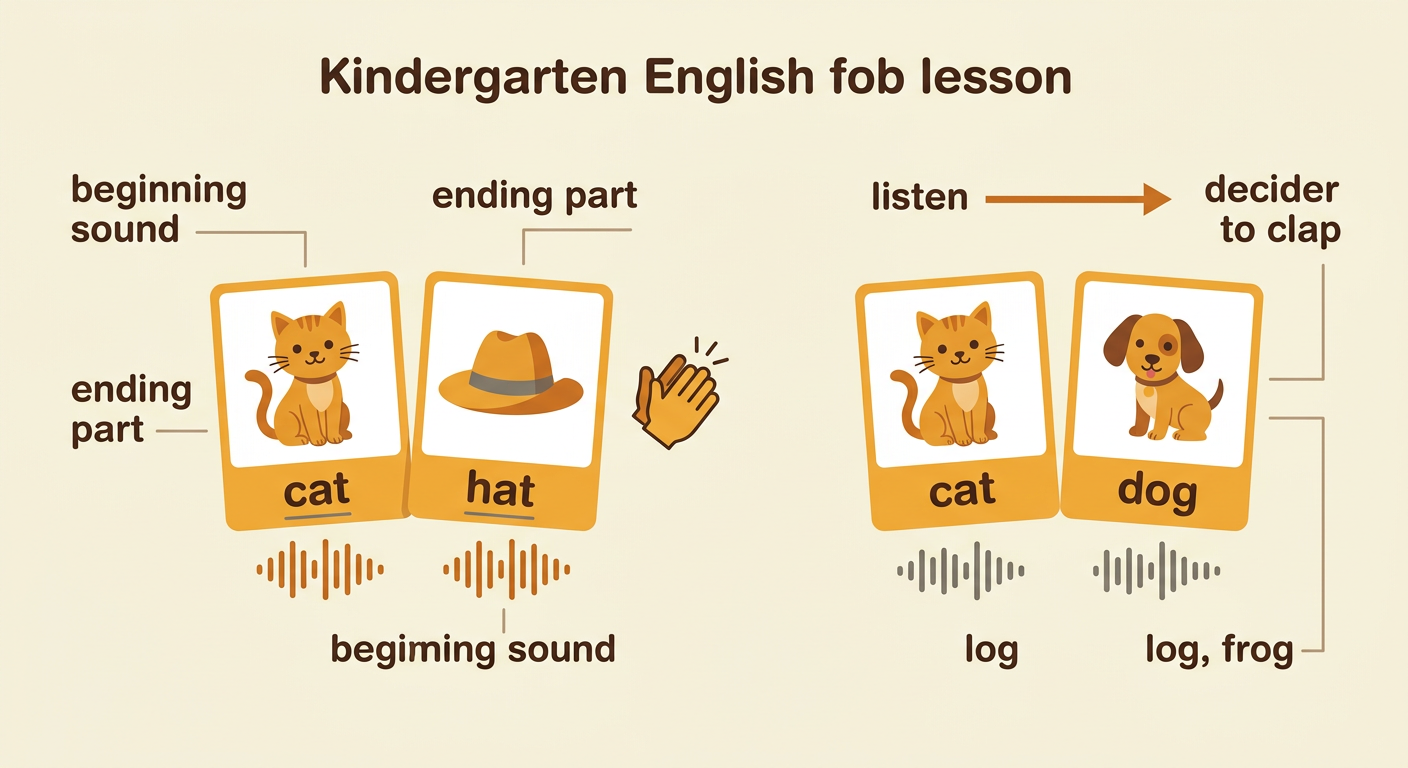
Get your ears ready to listen closely. Words are made of sounds. Say the word cat slowly: ccc-at. Now say sun slowly: sss-un. You can hear a beginning sound and an ending part in each word. Let us play a listening game. When two words sound the same at the end, clap once. Listen: cat, hat. Clap! Both words end with at. Now listen: cat, dog. Do not clap because their ending sounds are different. Try another pair: log, frog. Clap! Both words end with og. You do not need to see the words. Use your ears to notice how they sound. Say each pair aloud, listen to the endings, and decide whether to clap.
What Makes Words Rhyme?
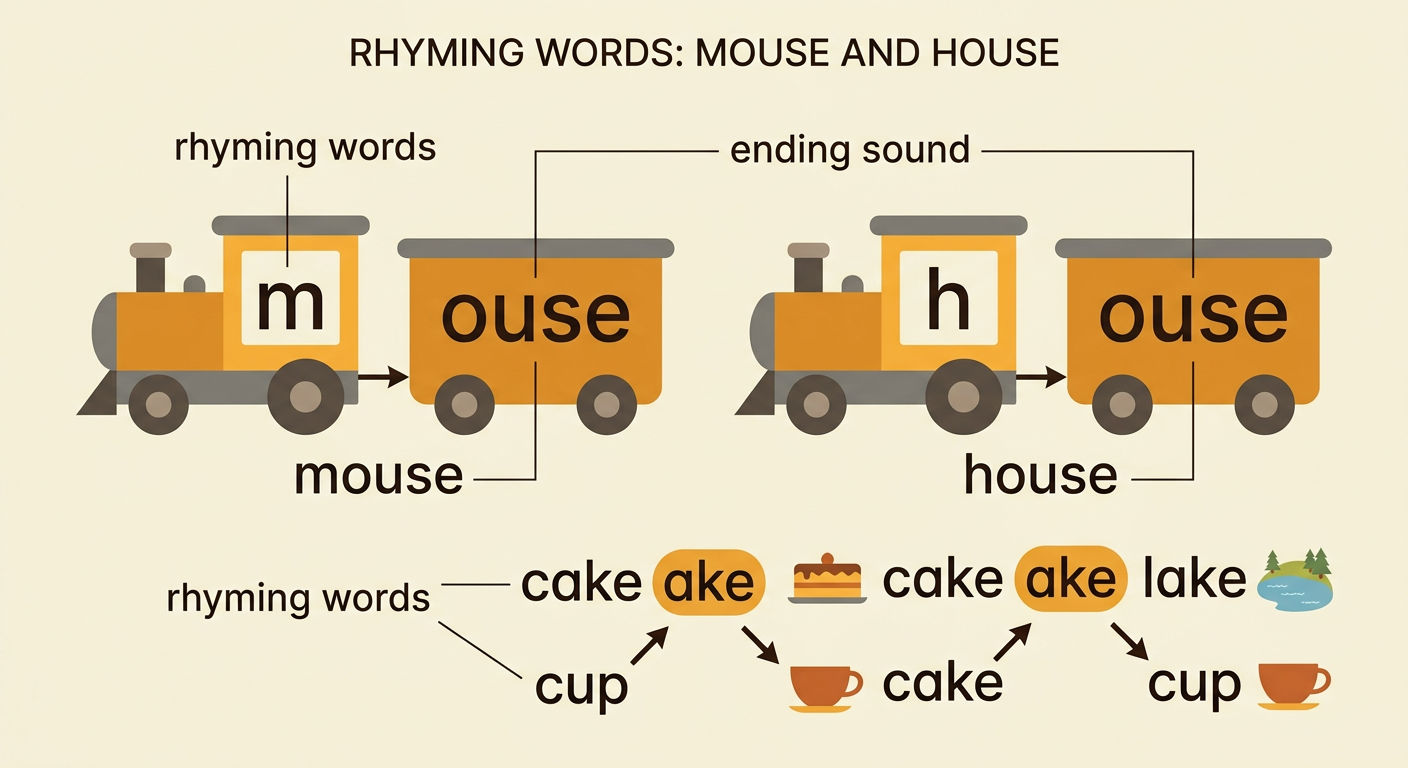
Rhyming words have the same ending sounds. They usually begin with different sounds. Listen to mouse and house. Mouse begins with m, and house begins with h. Both words end with the sound ouse, so they rhyme. The words do not need to mean the same thing. A mouse is an animal, and a house is a place to live, but the words still rhyme. Listen carefully to the whole ending sound, not just the last letter. Cake and lake rhyme because they share the ending sound ake. Cake and cup do not rhyme because ake and up sound different. To check a rhyme, say both words slowly and clearly: cake, lake. If the endings match, the words rhyme.
Listen and Match Rhyming Words
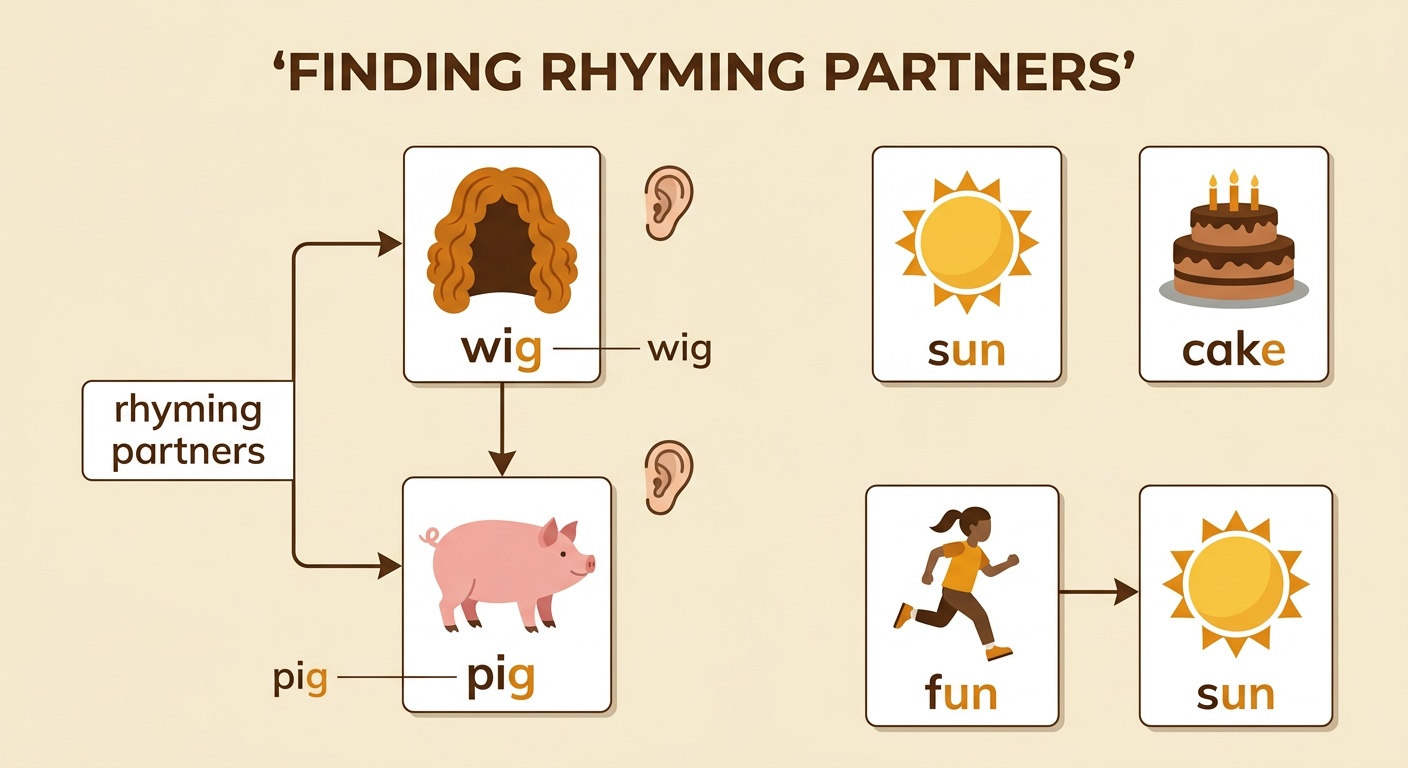
Now listen and match words that rhyme. Imagine three picture cards: pig, sun, and cake. Listen to the word wig. Which picture word rhymes with wig? Say the choices aloud: pig, sun, cake. Wig and pig share the ending sound ig, so pig is the match. Try another one. Listen to fun. Which word matches: log, sun, or bed? Fun and sun both end with un, so sun is the rhyming match. It helps to repeat each pair slowly. Say fun, sun. Then listen to the part that stays the same. Do not choose a match because the pictures look alike. A sun and a cake can both be round, but sun and cake do not rhyme. Match by sound.
Create a Rhyme
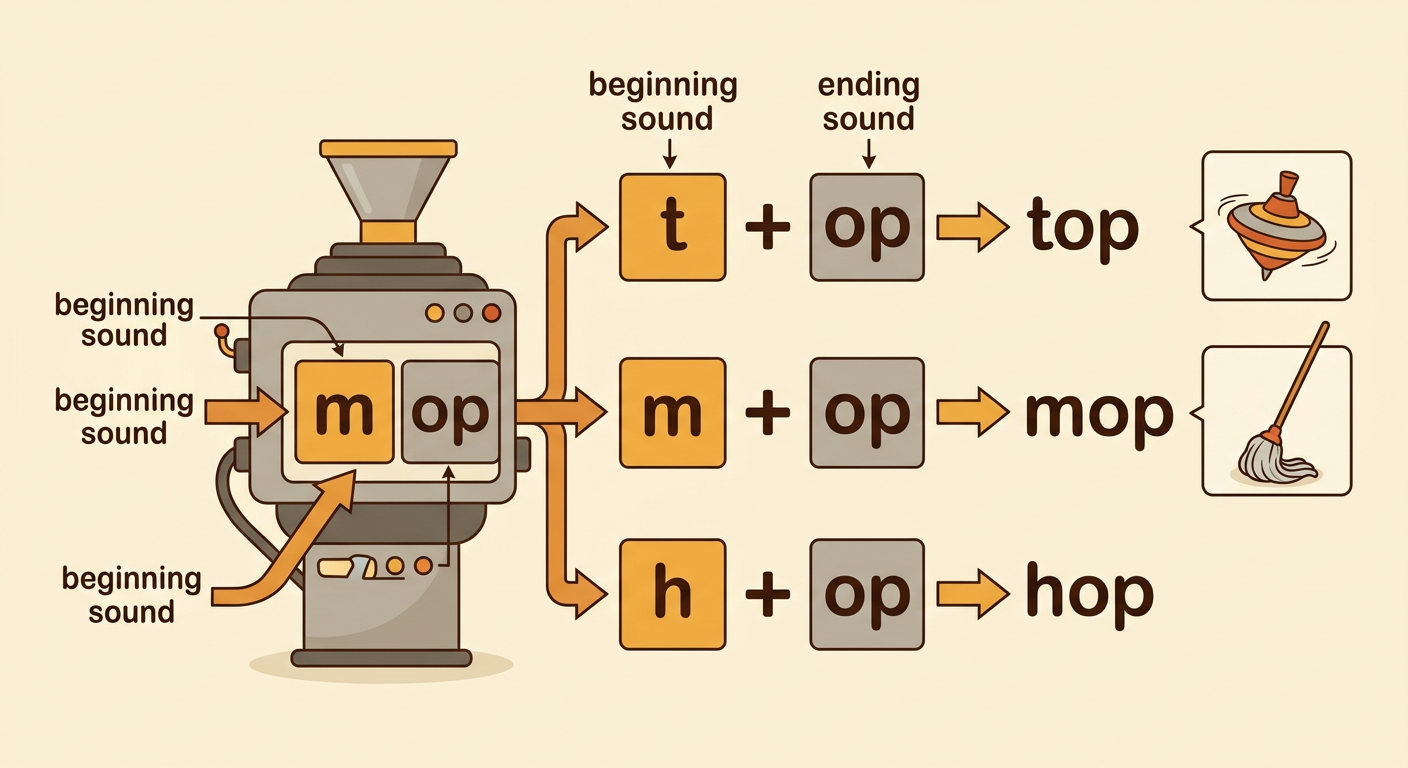
You can make your own rhyming word. Start with a simple word such as top. Keep the ending sound op and change the beginning sound. Change t to m. The new word is mop. Top and mop rhyme. You can also make hop, pop, and stop. Say the words in a row: top, mop, hop, pop. Hear how op stays the same each time. Now try the word fan. Keep an and choose a new beginning sound. Change f to m to make man. Fan and man rhyme. A rhyming word should be a real word when the teacher asks for real words. Look around the room or think of familiar people, animals, places, and things to help you create a rhyme.
Rhyming Word Review
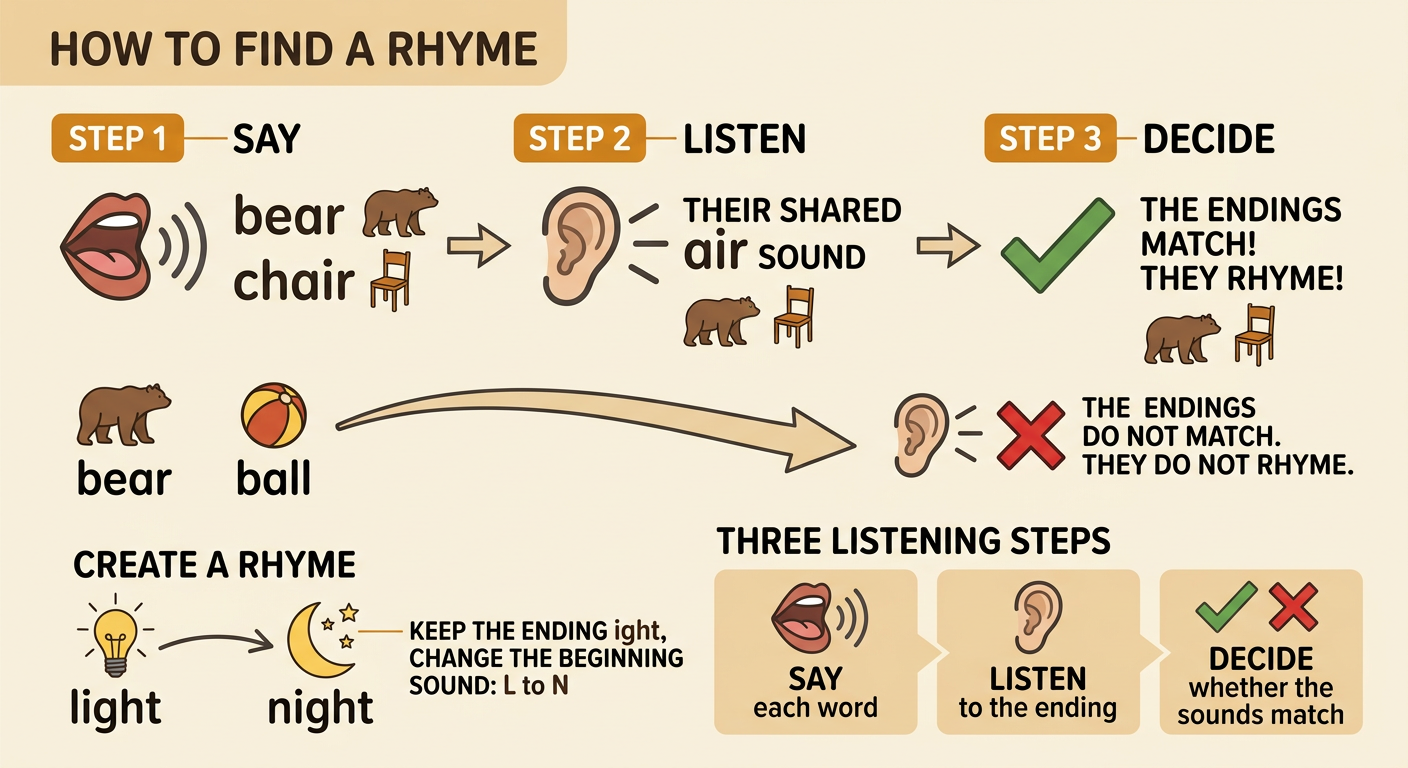
Let us review what you learned. Rhyming words have matching ending sounds. To find a rhyme, say the words, listen to their endings, and compare what you hear. Test this pair: bear, chair. Both words end with the sound air, so they rhyme. Now test bear, ball. The endings sound different, so they do not rhyme. You can also produce a rhyme by keeping an ending sound and changing the beginning. For example, change the beginning of light to make night. Light and night rhyme. Remember three steps: say, listen, and decide. Say each word clearly. Listen to the ending sounds. Decide whether the sounds match. Use your voice and ears to become a rhyming-word expert!