
Listening for Rhyming Words
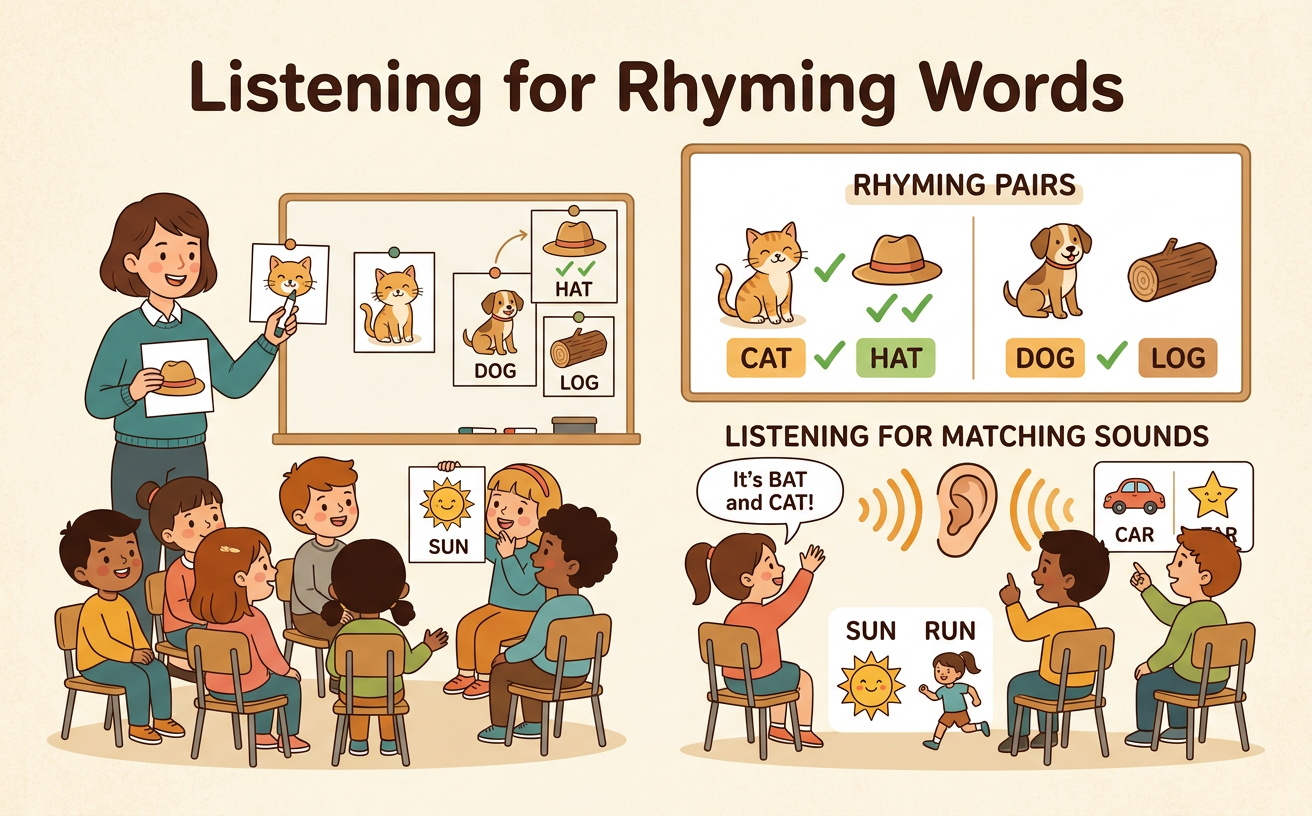
Students listen for matching ending sounds and identify and produce simple rhyming words.
Illustrations are auto-generated and may be placeholders. They can be refreshed to match the narration.
Warm-Up Sound Play
Let’s warm up our ears with sound play. Listen as a teacher says two words slowly: cat, hat. Say them aloud together. What sound do you hear at the end of both words? Cat and hat both end with at. Now listen to sun and fun. They both end with un. Tap your knees when you hear the matching ending sounds. Try it once more with pig and wig. Stretch the words as you say them: p-ig, w-ig. The beginning sounds are different, but the ending sounds match. Listening closely helps you notice rhyming words. Get your ears ready to catch more matching sounds!

What Makes Words Rhyme?
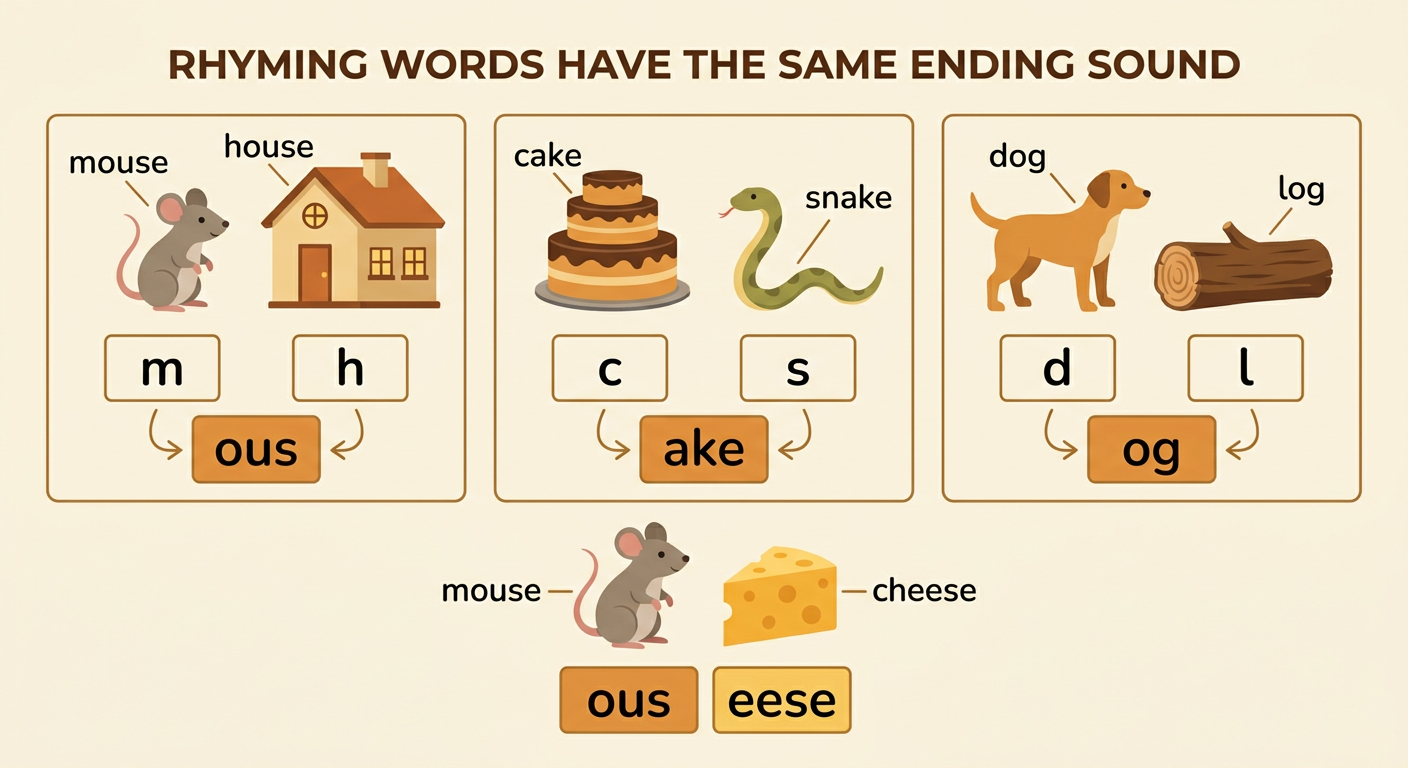
Rhyming words have the same ending sound. They usually have different beginning sounds. Listen to mouse and house. Mouse begins with the sound m, and house begins with the sound h. Both words end with the sound ous, so they rhyme. Words do not rhyme just because they belong together. Mouse and cheese belong together, but their ending sounds do not match. Also, listen to words instead of looking only at their letters. Your ears help you decide whether words rhyme. Say each pair aloud: cake and snake, dog and log, bee and tree. In every pair, the beginning changes and the ending sound stays the same.
Listen and Find the Rhyme
Listen carefully to a group of words and find the two that rhyme. Here are three words: fish, dish, sun. Say each word slowly. Fish and dish share the ending sound ish. Sun has a different ending sound, so it does not rhyme with them. Try another group: boat, moon, goat. Boat and goat rhyme because both end with the sound oat. You can use a simple listening routine. First, say each word. Next, listen to the ending. Then, choose the two endings that match. Point to the matching pictures or clap when you hear the rhyme. Remember that you are matching sounds, not objects or meanings.

Make a Rhyming Word
You can make a rhyme by changing the beginning sound of a word. Start with cat. Keep the ending sound at, but replace the beginning sound c with h. The new word is hat. Cat and hat rhyme. Now start with log. Keep og and change l to f. The new word is fog. Log and fog rhyme. Sometimes you can make a playful made-up word, too. Zog rhymes with log because both words end with og, even though zog is not a real word. Try making a rhyme for sun, cake, or hop. Say the new word aloud and listen. Does its ending sound match the first word?

Rhyming Check
Let’s check what you know about rhyming words. Listen to each pair and show thumbs up if the words rhyme. Show thumbs down if they do not rhyme. Star and car rhyme because both end with ar. Star and moon do not rhyme because their ending sounds are different. Next, finish a rhyme. If you hear, “I see a fox inside a…,” choose box instead of bag. Fox and box have matching ending sounds. Finally, make your own rhyme for bed. You might say red, fed, or sled. Check your answer by saying both words slowly and listening to the endings. If the ending sounds match, you found or made a rhyme!
