
Living or Nonliving? Look for Life’s Clues
Students observe and classify familiar things as living or nonliving, then count and discuss the items in each group.

Illustrations are auto-generated and may be placeholders. They can be refreshed to match the narration.
What Does Living Mean?
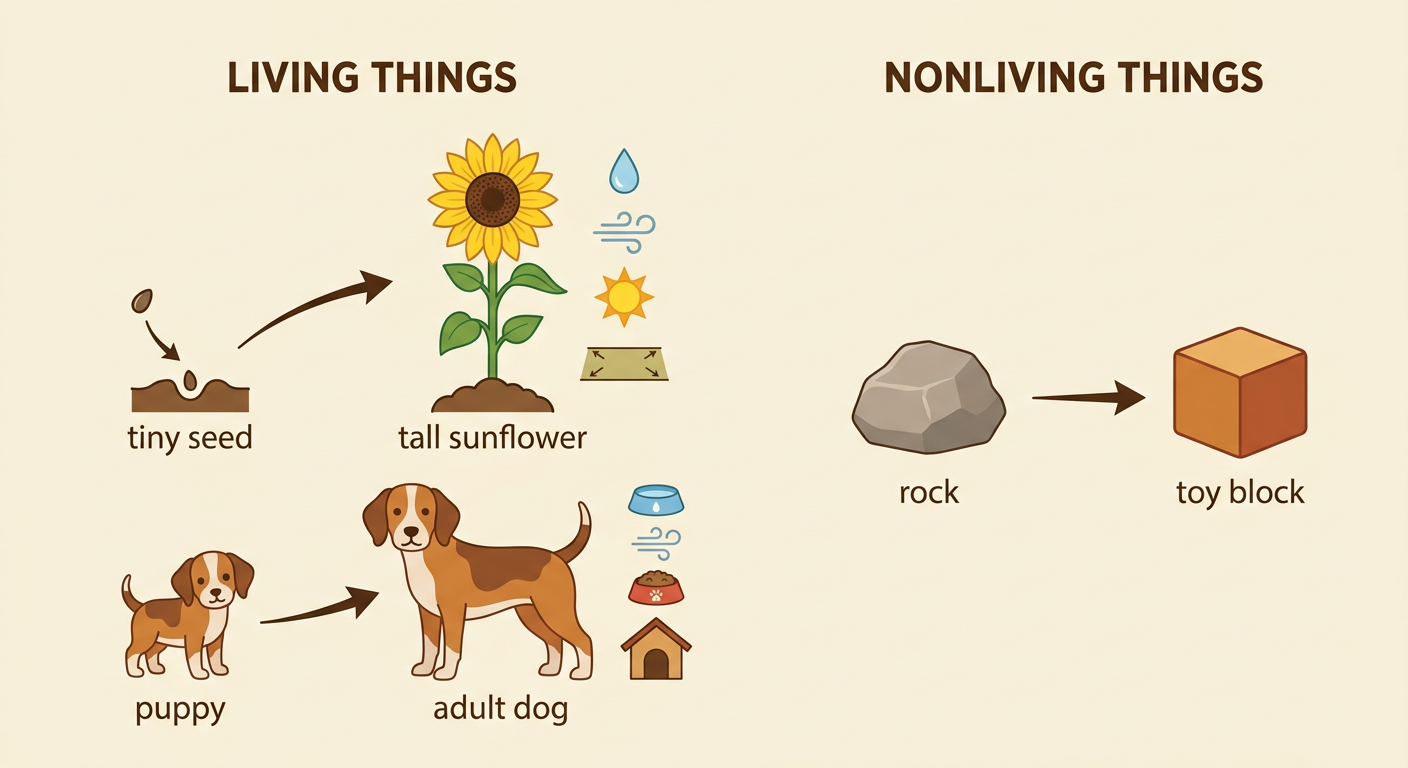
Living things are alive. Plants and animals are living things. They have needs that help them survive. Animals need air, water, food, and a safe place to live. Plants need air, water, light, and space to grow. Living things grow and change over time. A tiny seed can grow into a tall sunflower. A puppy can grow into an adult dog. Nonliving things are not alive. They do not eat, drink, or grow by themselves. A rock may look bigger when mud sticks to it, but the rock is not growing. Look for several life clues before deciding whether something is living. Ask: Does it need water or air? Does it grow and change?
Observe the Picture Clues
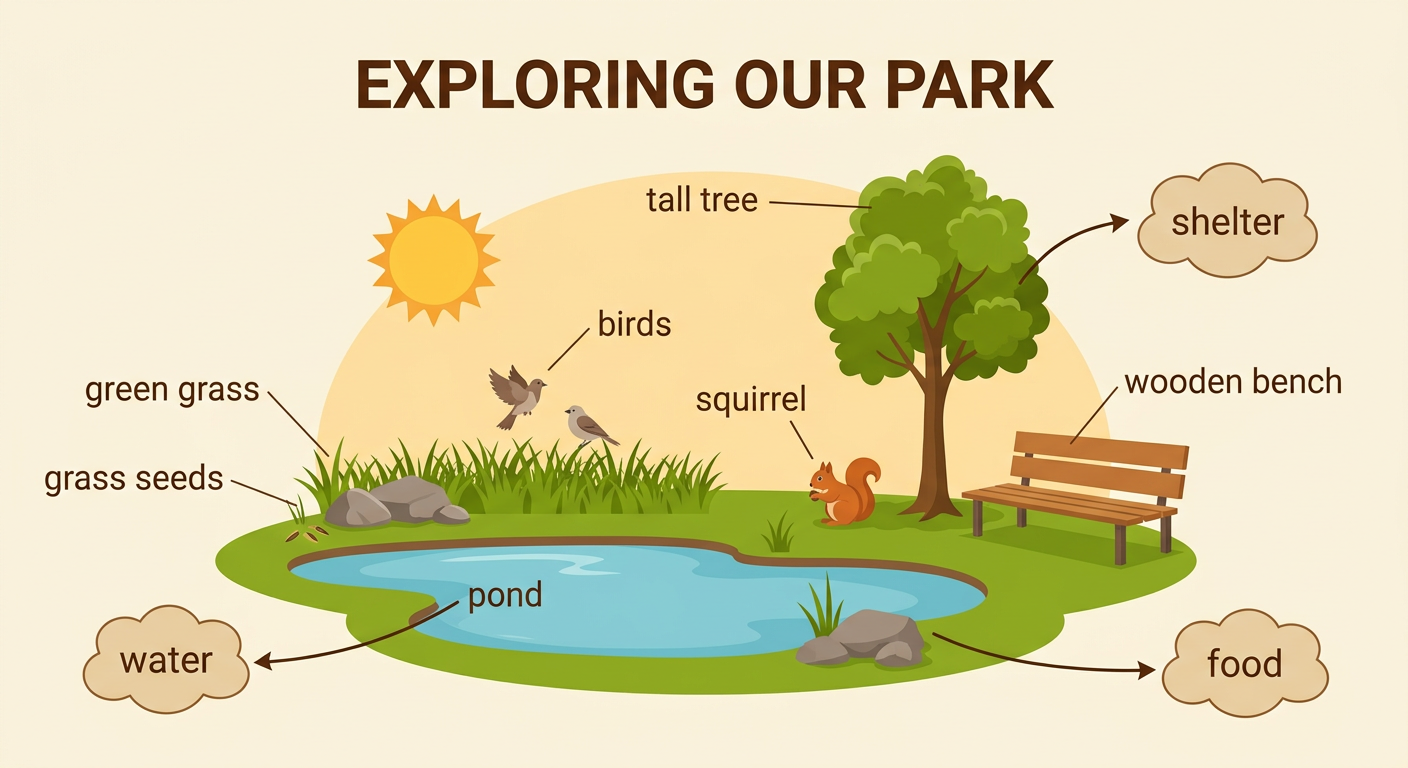
Scientists look closely and describe what they notice. Imagine a photograph of a sunny park. You can see green grass, a tall tree, two birds, a squirrel, a wooden bench, rocks, and a pond. The photograph also gives clues about the place. The pond provides water. The tree provides shade and a place for birds or squirrels to rest. Grass and seeds can be food for some animals. First, name each thing you see. Then look for life clues. The tree has leaves and branches that have grown. The squirrel needs food, water, and air. The bench does not need any of these things. Use what you can see in the photograph, not just a guess, to describe the park and its living and nonliving parts.
Sort Living and Nonliving Things
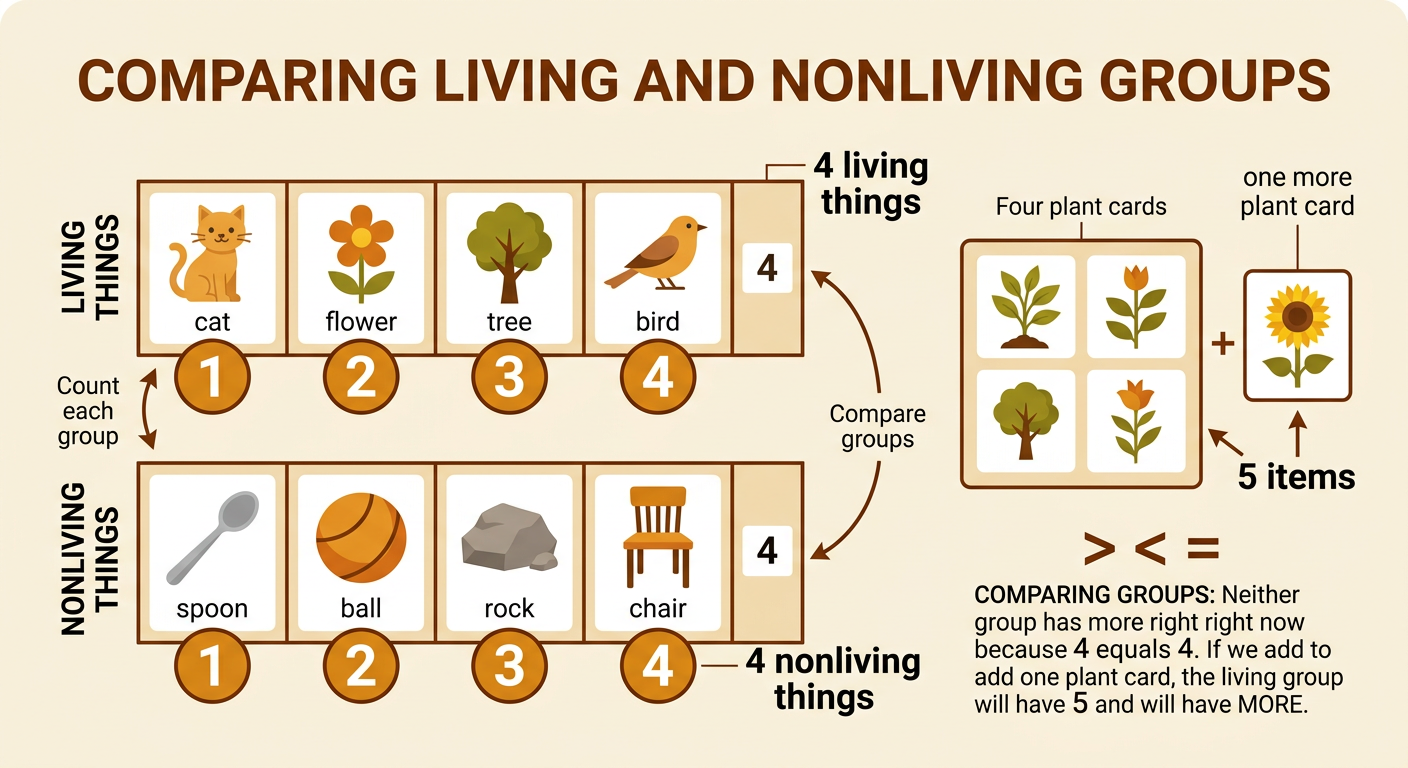
Sorting means putting things into groups by a rule. Our rule is: Put living things in one group and nonliving things in another group. Look at each picture and think about life clues. A cat is living because it needs food, water, and air, and it grows. A flower is living because it needs water and light, and it grows. A spoon is nonliving because it does not need food or water and cannot grow by itself. A ball is also nonliving. It may move when someone kicks it, but it cannot move on its own. Sort pictures of a cat, flower, tree, bird, spoon, ball, rock, and chair. After sorting, check each group and make sure every item follows the rule.

Count Each Group
After sorting, count how many items are in each group. Touch or point to each picture once as you say the counting words. In the living group, count the cat, flower, tree, and bird: one, two, three, four. There are 4 living things. In the nonliving group, count the spoon, ball, rock, and chair: one, two, three, four. There are 4 nonliving things. The groups have the same number because both groups have 4 items. If one more plant card is added to the living group, that group will have 5 items. Then the living group will have more. Counting each category helps us compare the groups and clearly report what we observed.
Explain Your Thinking
Tell a partner how you classified one item. Name the item, state your group, and give a life clue as evidence. You might say, “I put the bird in the living group because it needs food, water, and air.” Your partner can listen and ask, “What did you notice?” You can also explain a nonliving choice: “I put the bench in the nonliving group because it does not grow or need water.” Take turns speaking and listening. It is okay to think again if a classmate points out a new clue. Remember that movement alone does not show life. A toy car moves when someone pushes it, but it is nonliving. Clear explanations use observations and tell why an item belongs in its group.
