
Living Things Change Their Surroundings
Students use pictures and observations to explain how plants, animals, and people change their surroundings to meet their needs.
Illustrations are auto-generated and may be placeholders. They can be refreshed to match the narration.
Notice Changes in a Place
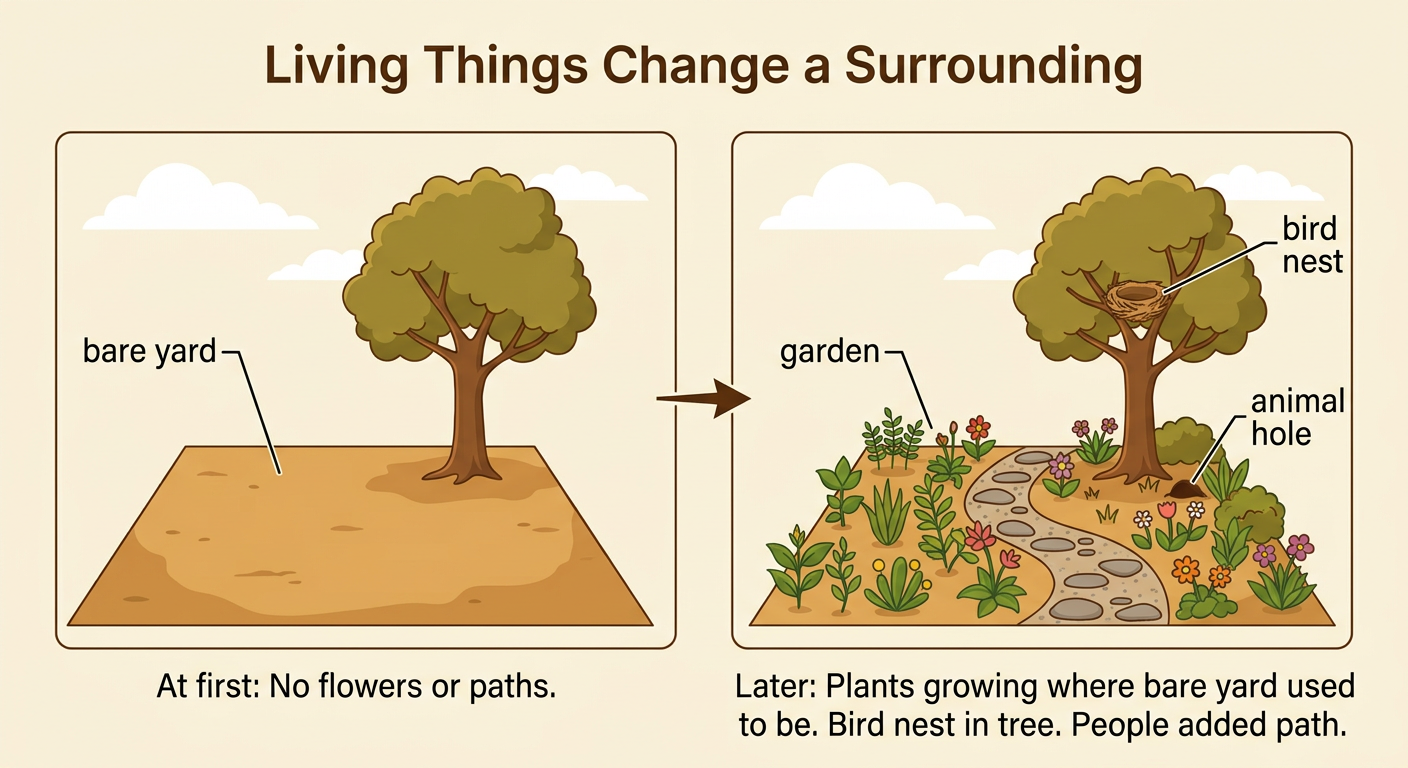
A surrounding is everything around a living thing. It includes air, water, soil, rocks, plants, animals, and buildings. Living things can change their surroundings as they meet their needs. Look closely at two pictures of the same place. What is different? A bare yard may later have a garden with tall plants. A tree may have a bird nest that was not there before. People may add a path or a house. These differences are evidence that the place changed. We can also observe changes outdoors. Look for holes, nests, roots, tracks, cut grass, or moved soil. Ask, “What changed this place?” Then think about how the change helps a plant, animal, or person get food, water, air, shelter, or space.
How Plants Change the Ground
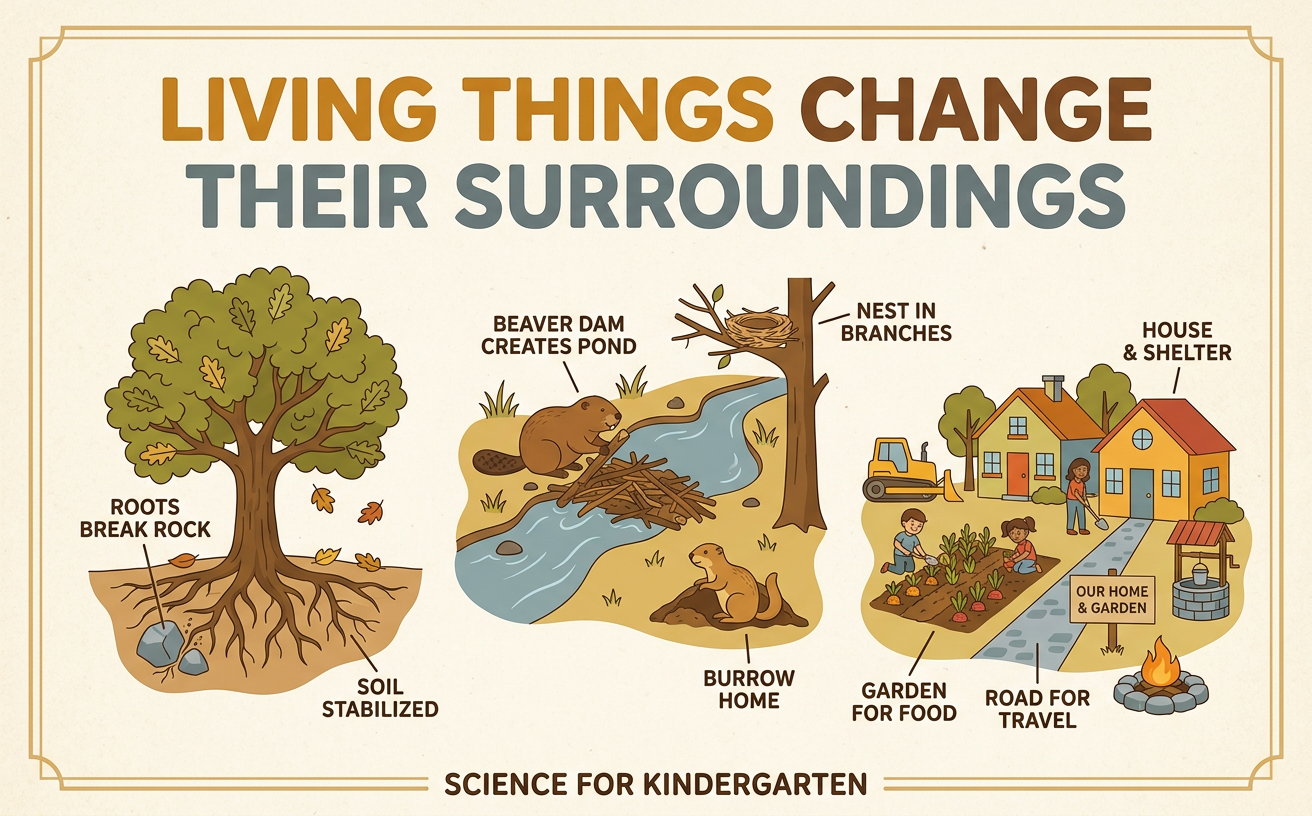
Plants change the ground as they grow. A seed begins to grow when it gets water, air, and the right temperature. Its roots push down and spread through spaces in the soil. The roots help the plant take in water and stay in place. As roots grow, they can move small bits of soil and widen tiny cracks. Roots also help hold soil so rain and wind do not carry as much of it away. For example, grass growing on a hill forms many roots under the ground. The roots hold the soil together during rain. Above the ground, leaves can shade the soil and help it stay cooler. The plant changes its surroundings while getting the water, light, and space it needs.

How Animals Build and Dig
Many animals build or dig to get shelter, raise young, find food, or stay safe. A bird gathers twigs and grass to make a nest. The nest changes a tree because new materials are placed among its branches. A rabbit uses its paws to dig a burrow in the soil. Digging moves soil and makes an underground space where the rabbit can hide and rest. Beavers make an even larger change. They use branches, logs, stones, and mud to build a dam across moving water. The dam slows the water and can form a pond. The deeper, calmer water helps beavers reach their lodge and food safely. Nests, burrows, and dams are evidence that animals can change their surroundings to meet their needs.

How People Change Their Surroundings
People are living things, and they change their surroundings to meet their needs. People build homes for shelter. They dig wells and lay pipes to get water. They clear paths and build bridges so they can travel. People also change land to grow food. For example, a family can turn part of a grassy yard into a vegetable garden. They remove some grass, loosen the soil, plant seeds, and add water. Later, the garden may provide tomatoes, beans, or carrots. These actions change the plants and soil in the yard. People should think about how their changes affect other living things. They can leave space for wildlife, plant trees, save water, and avoid littering while meeting their own needs.

Use Evidence to Explain
An explanation tells what you think and why. First, make a claim, or an idea you think is true. Next, give evidence from a picture or observation. Evidence is something you can see, hear, measure, or record. Finally, tell how the evidence supports your claim. Imagine a picture of a stream with a wall of sticks and a pond behind it. You might say, “A beaver changed the stream.” Your evidence is the cut branches, the stick dam, and the water gathered behind the dam. Then explain, “The dam slowed the stream and made deeper water that helps the beaver reach its home and food.” Use words such as because and so to connect your evidence to your idea. Strong explanations use details, not guesses.
