
Make Shade to Keep It Cool
Students compare sunny and shaded surfaces, then create a simple shade structure that reduces warming from sunlight.

Illustrations are auto-generated and may be placeholders. They can be refreshed to match the narration.
Notice Sunny and Shady Places
Sunlight can warm the ground and other objects. A sunny place receives direct light from the Sun. A shady place is blocked from direct sunlight by an object, such as a tree, building, or umbrella. Look around the schoolyard with a partner. Point out one sunny place and one shady place. Take turns telling what you notice. For example, a slide in the Sun may feel warmer than the ground under a tree. The location of shade can change as the Sun appears to move across the sky. Shade is important because it can help people, animals, and objects stay cooler on sunny days. People may sit beneath a tree or use an umbrella when the weather is hot and bright.

Compare Warm and Cool Surfaces
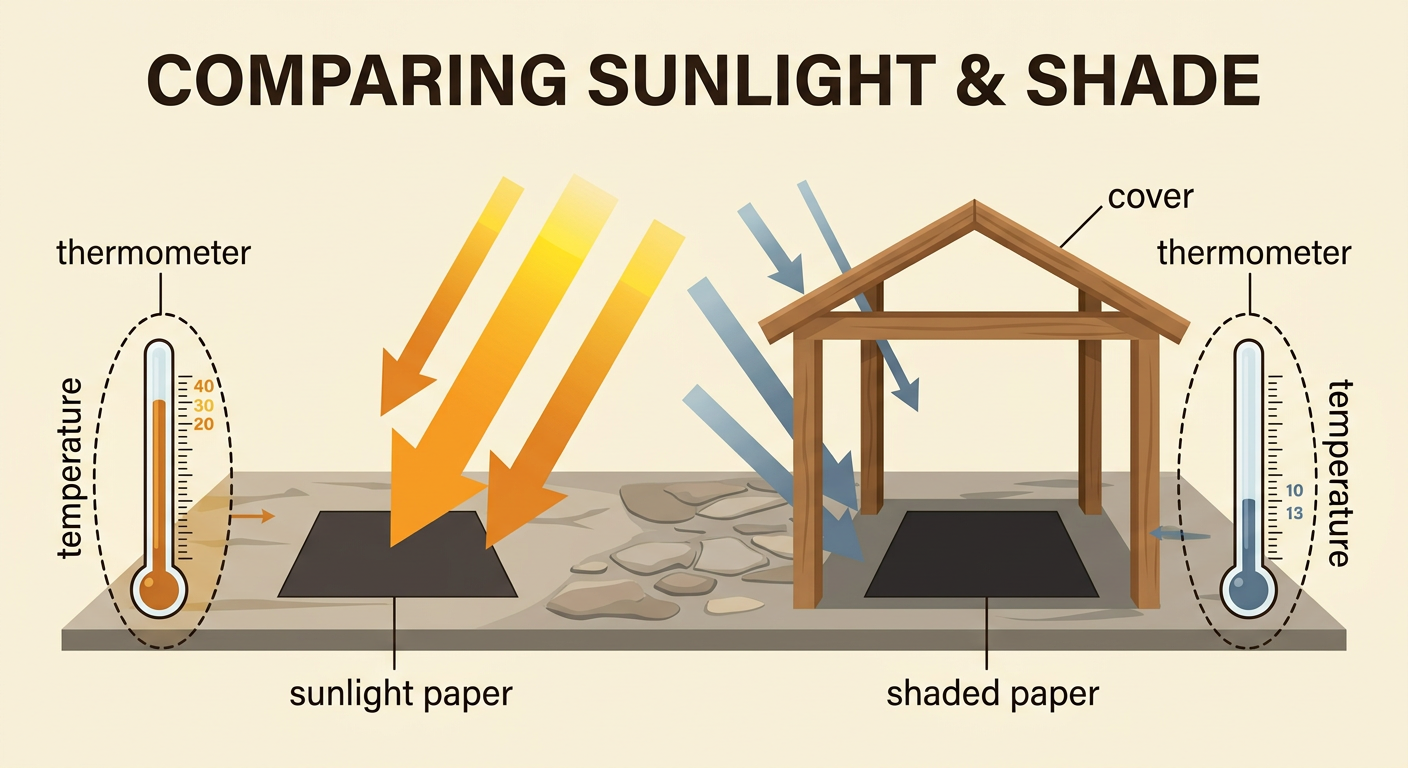
We can compare surfaces in sunny and shady places. Choose two objects made from the same material, such as two squares of dark paper. Put one square in direct sunlight and the other beneath a shade cover. Wait the same amount of time. An adult can help use a thermometer to measure each surface safely. Temperature tells how warm or cool something is. Describe the temperatures with words such as warmer, cooler, or the same. You can also compare the numbers on the thermometers. The paper in sunlight will often become warmer because it receives light from the Sun. The shaded paper will often stay cooler because the cover blocks much of the direct sunlight. Do not touch a surface that an adult says may be too hot.
Explore Shade-Making Materials
Different materials make different amounts of shade. Hold each test material above a paper square while a flashlight shines toward it. The flashlight models sunlight for this indoor test. Try cardboard, fabric, wax paper, and clear plastic. Do not shine the flashlight into anyone’s eyes. Look at the paper below each material. A material that blocks most light makes a dark shadow. Cardboard may make a darker shadow than clear plastic because less light passes through it. Also compare each material’s size, shape, stiffness, and weight. A wide piece may cover more space, while a stiff piece may be easier to hold up as a roof. Talk with your group about which material could make useful shade and why. Listen while each person shares an idea.

Build a Shade Structure
A shade structure needs a cover that blocks sunlight and supports that hold the cover up. Work with your group to plan a structure for a small paper figure or toy animal. You might use craft sticks for posts, cardboard for a roof, and clay or tape to join the parts. First, decide how large the covered space must be. Compare the length and width of the roof with the object below it. Next, build a base that does not tip easily. Place the roof high enough to cover the object without touching it. For example, four craft-stick posts can support a square cardboard roof. Test the structure gently as you build. Ask group members for ideas, take turns using materials, and make changes when a part bends, falls, or leaves the object in sunlight.

Test and Share the Design
Place your shade structure in sunlight with the toy or paper square beneath it. Put an identical object nearby in direct sunlight. Make sure both objects start in the same place at the same time and are tested for the same number of minutes. An adult can help measure each temperature with a thermometer. Record which object is warmer and which is cooler. If the shaded object is cooler, the structure reduced warming from sunlight. If sunlight reaches the object, change the roof’s size, position, or material and test again. Share your results with the class. Say what your group built, what happened, and what you would improve. Explain how shade structures, trees, hats, and umbrellas help people in places with hot, sunny weather.
