Making Inferences with Text Evidence
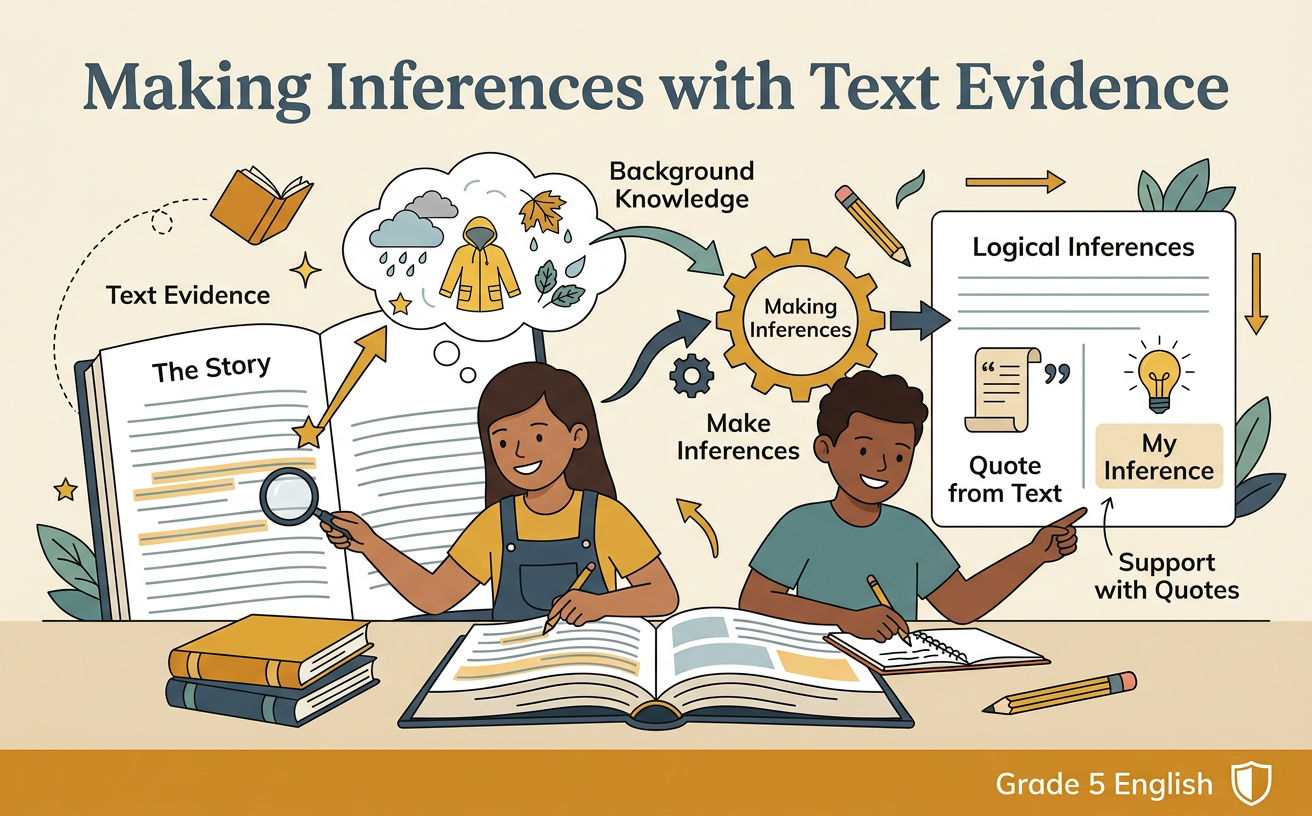
Students combine story details with their background knowledge to make logical inferences and quote accurately from the text to support them.
Illustrations are auto-generated and may be placeholders. They can be refreshed to match the narration.
Explicit Details and Inferences
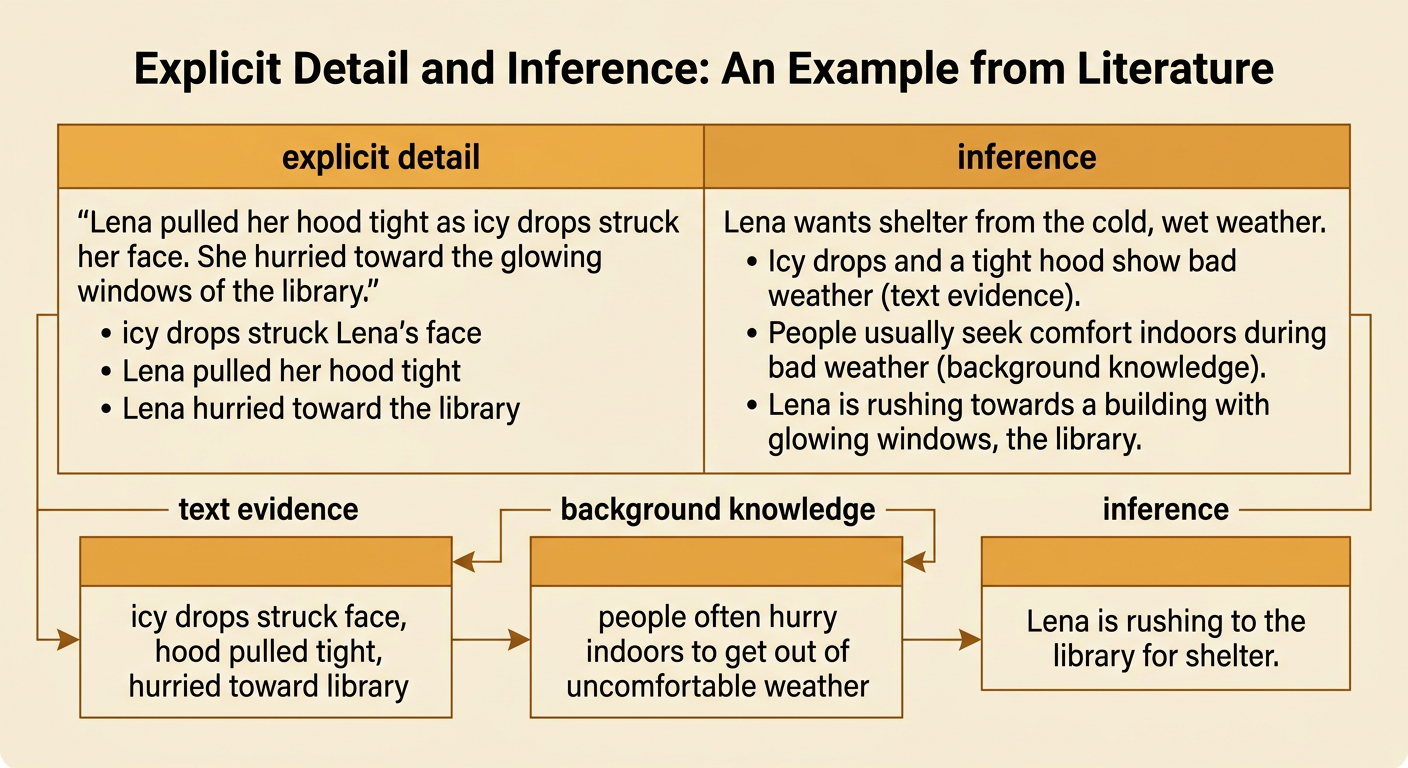
An explicit detail is information the author states directly. An inference is a logical idea you form by combining details from the story with what you already know. Suppose a story says, “Lena pulled her hood tight as icy drops struck her face. She hurried toward the glowing windows of the library.” The text explicitly states that Lena tightens her hood and hurries to the library. It does not directly say that she wants to escape bad weather. However, icy drops and a tightly pulled hood suggest cold, wet conditions. You also know that people often hurry indoors during uncomfortable weather. From these pieces, you can infer that Lena is rushing to the library for shelter. A strong inference is not a random guess. It must fit the story details and be supported by evidence from the text.
Clues from the Text
Text clues are words, actions, dialogue, descriptions, and events that help you understand something the author does not state directly. Look for details that seem important or appear more than once. Imagine a story says, “Marcus stared at the untouched slice of cake. When his friends began singing, he lowered his head and slipped his hands under the table.” The author never says how Marcus feels. However, his actions are clues. He stares instead of eating, lowers his head, and hides his hands. These details may suggest that he feels uncomfortable, shy, or upset. One clue alone may support several ideas, so gather multiple clues before deciding. Also pay attention to the situation. Because his friends are singing, Marcus may dislike being the center of attention. Strong readers notice patterns among clues instead of choosing an inference from a single word.

Connecting Clues to Background Knowledge
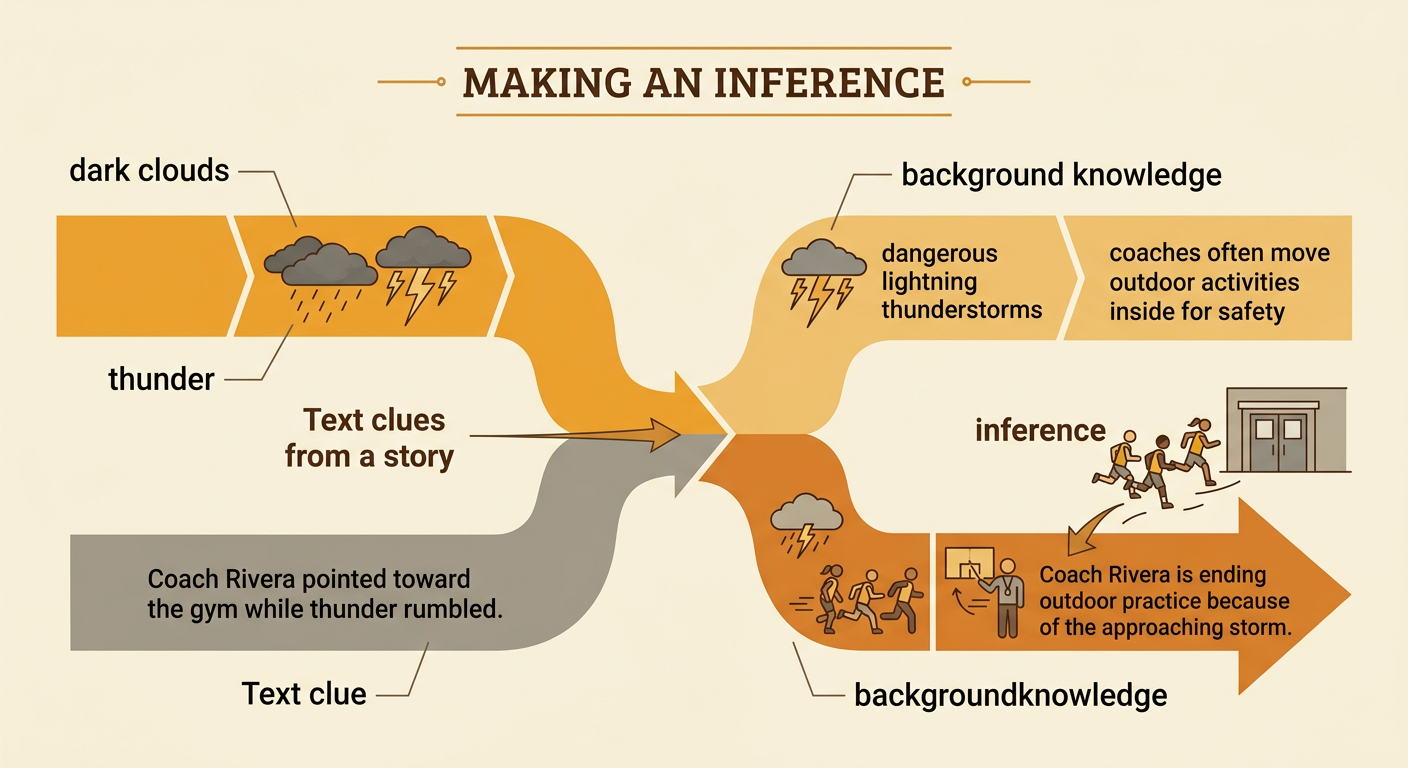
Background knowledge includes facts, experiences, and ideas you already understand. To make an inference, connect that knowledge to clues from the text. Suppose a story says, “Dark clouds covered the field. Coach Rivera blew the whistle and pointed toward the gym while thunder rumbled.” The clues are the dark clouds, thunder, the whistle, and the coach pointing indoors. From background knowledge, you may know that thunderstorms can bring lightning and that outdoor activities are often moved inside for safety. Combining the clues and your knowledge, you can infer that Coach Rivera is ending outdoor practice because a storm is approaching. Use background knowledge carefully. It should help explain the text, not replace it. If you inferred that the team had won a game, the clues would not support that idea. The best inference connects both sources and stays close to what the story shows.
Quoting Evidence Accurately
When you quote evidence, copy the author’s exact words and place quotation marks around them. Introduce the quotation so the reader knows how it supports your idea. For example, you might write: I infer that Ava is nervous about performing because the text says, “Ava checked the curtain three times and rubbed her trembling hands together.” The words inside the quotation marks must match the story exactly. Do not change “trembling” to “shaking,” even though the words have similar meanings. Choose only the part that clearly supports your inference. A quotation should not be so long that the important clue becomes difficult to find. After quoting, explain the connection. You could add: Checking the curtain repeatedly and having trembling hands are signs that Ava feels nervous. Accurate quotation plus clear explanation shows both what the text says and how you used it.

Explaining and Checking an Inference
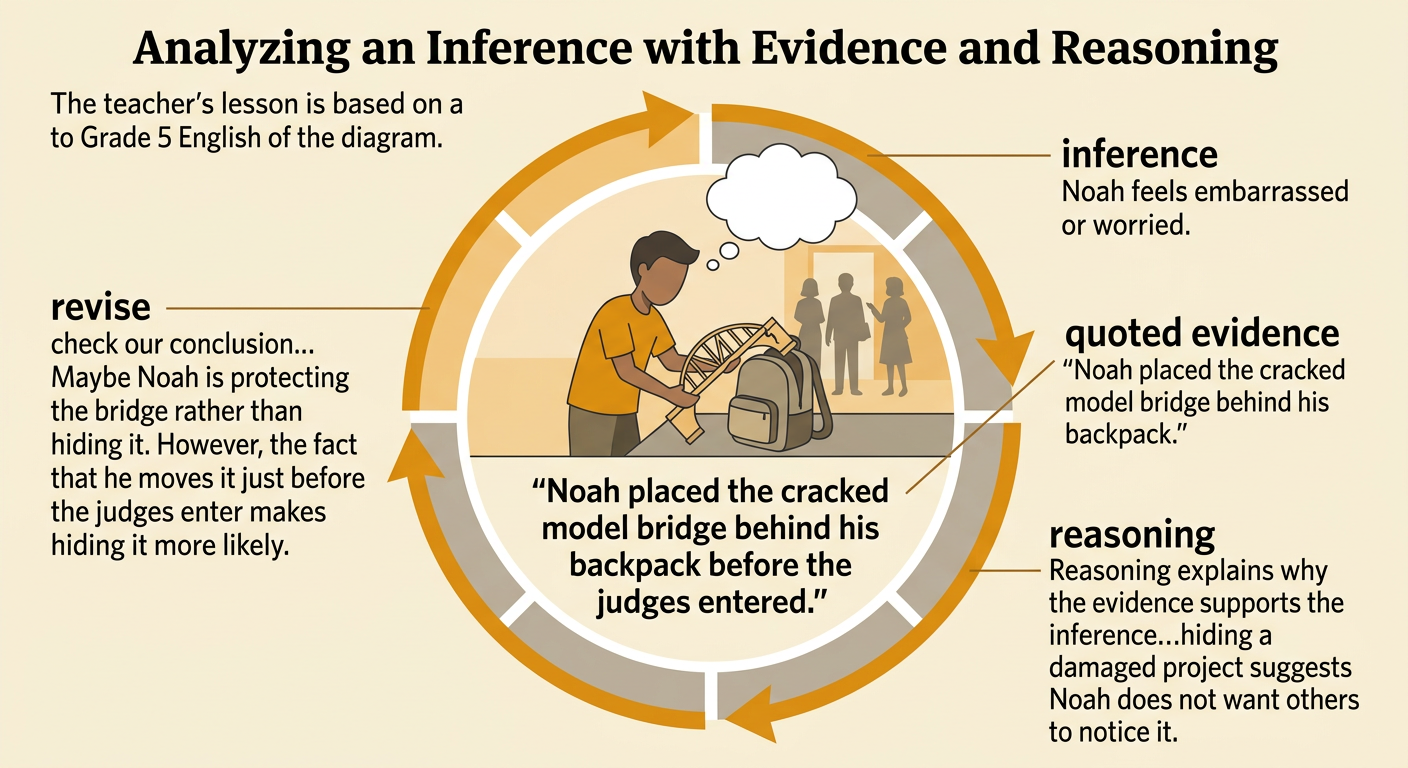
A complete inference response includes an inference, quoted evidence, and reasoning that connects them. Suppose a story says, “Noah placed the cracked model bridge behind his backpack before the judges entered.” You might respond: I infer that Noah is embarrassed or worried about the judges seeing his model. The text states, “Noah placed the cracked model bridge behind his backpack.” Hiding a damaged project suggests that he does not want others to notice it. After writing, check your inference. Ask whether the quotation is exact, whether it truly supports the idea, and whether another explanation fits better. Perhaps Noah is protecting the model, but placing it behind a backpack just before the judges arrive makes hiding it more likely. If new details disagree with your inference, revise it. Good readers treat an inference as a conclusion that can become stronger or change as they collect more evidence.