
Many Objects from the Same Pieces
Students disassemble a simple block model, sort and graph its pieces, and use the same pieces to build a different object.

Illustrations are auto-generated and may be placeholders. They can be refreshed to match the narration.
Observe the Original Model
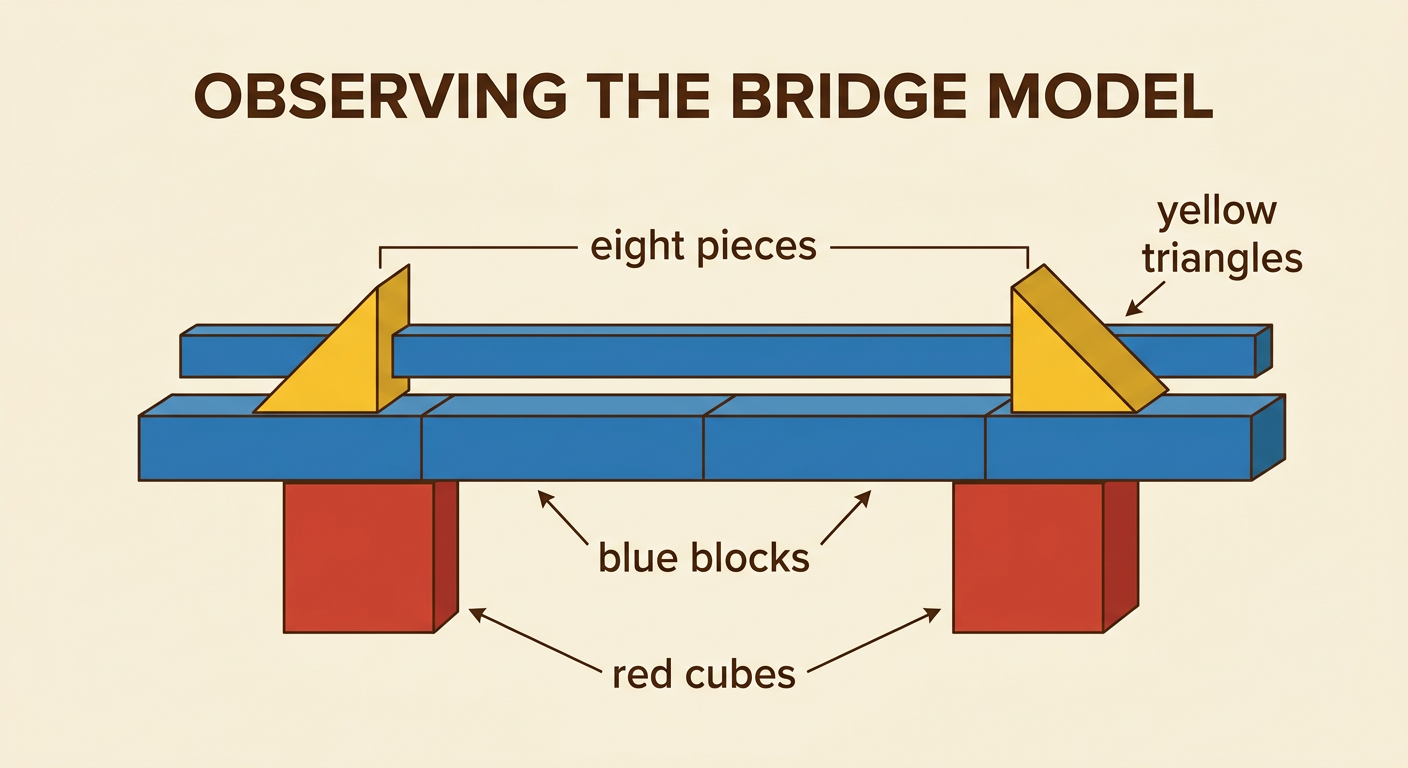
Look closely at the model before touching or changing it. Notice what the object represents, how its pieces are connected, and which colors and shapes you see. For example, imagine a small bridge model made from eight blocks. It has four long blue blocks, two red cube blocks, and two yellow triangle blocks. The blue blocks form the roadway and rails. The red cubes support the bridge, and the yellow triangles sit on top. Turn the model carefully so everyone can see each side. Share observations with your group. You might say, “I notice two red supports,” or ask, “How are the blue blocks connected?” Careful observations help you remember the original model and gather evidence about its parts.
Take the Model Apart
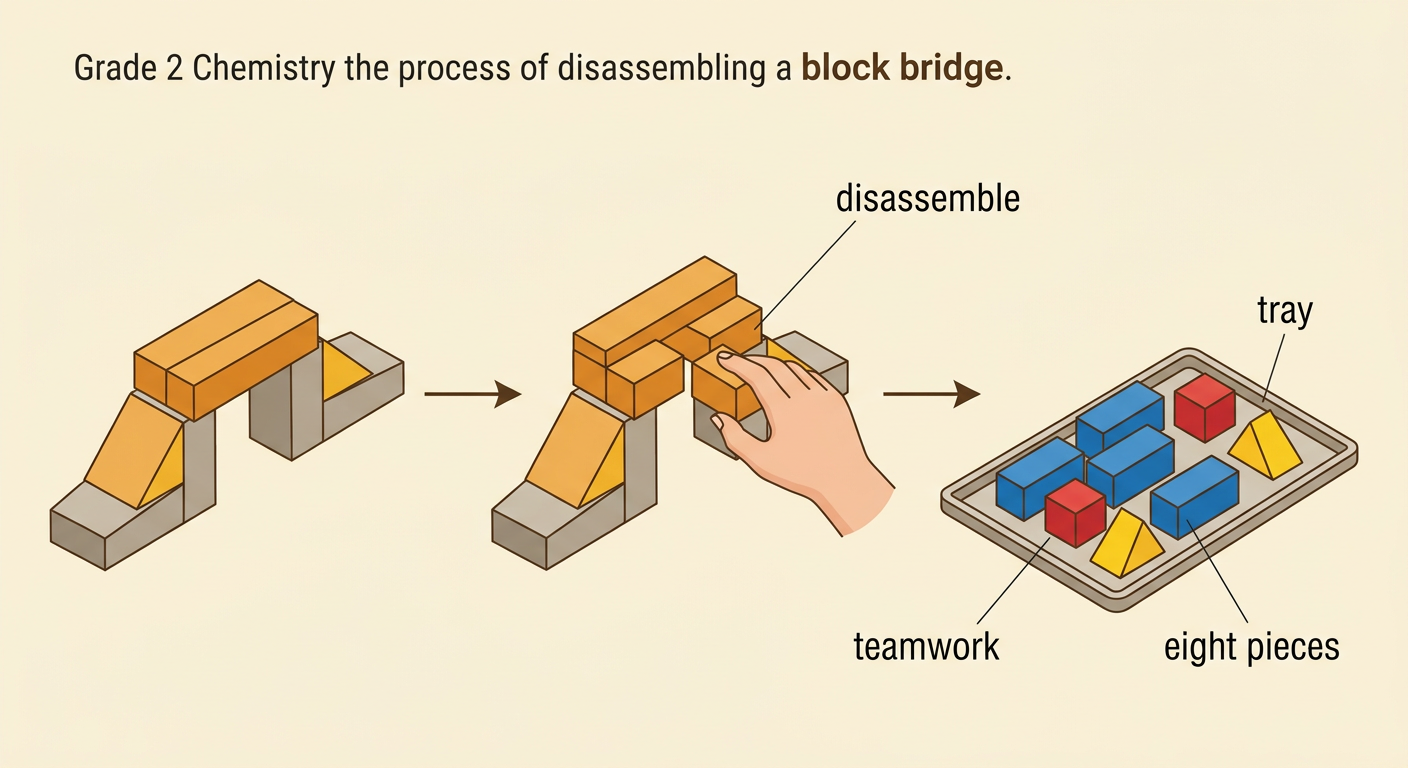
Disassemble means to take an object apart into separate pieces. Before you begin, place a tray or mat beside the model so no pieces are lost. Group members can take turns removing one block at a time. Pull gently instead of twisting or throwing the pieces. As each piece comes off, place it on the tray. Check hidden spaces and the floor to make sure you still have all eight pieces from the bridge. Count aloud together: four blue blocks, two red cubes, and two yellow triangles. Taking apart a model requires useful skills, including careful hand movements, counting, patience, and teamwork. It also teaches you how the pieces were connected. Do not build yet because the class needs to sort and record the pieces first.
Sort and Graph the Pieces
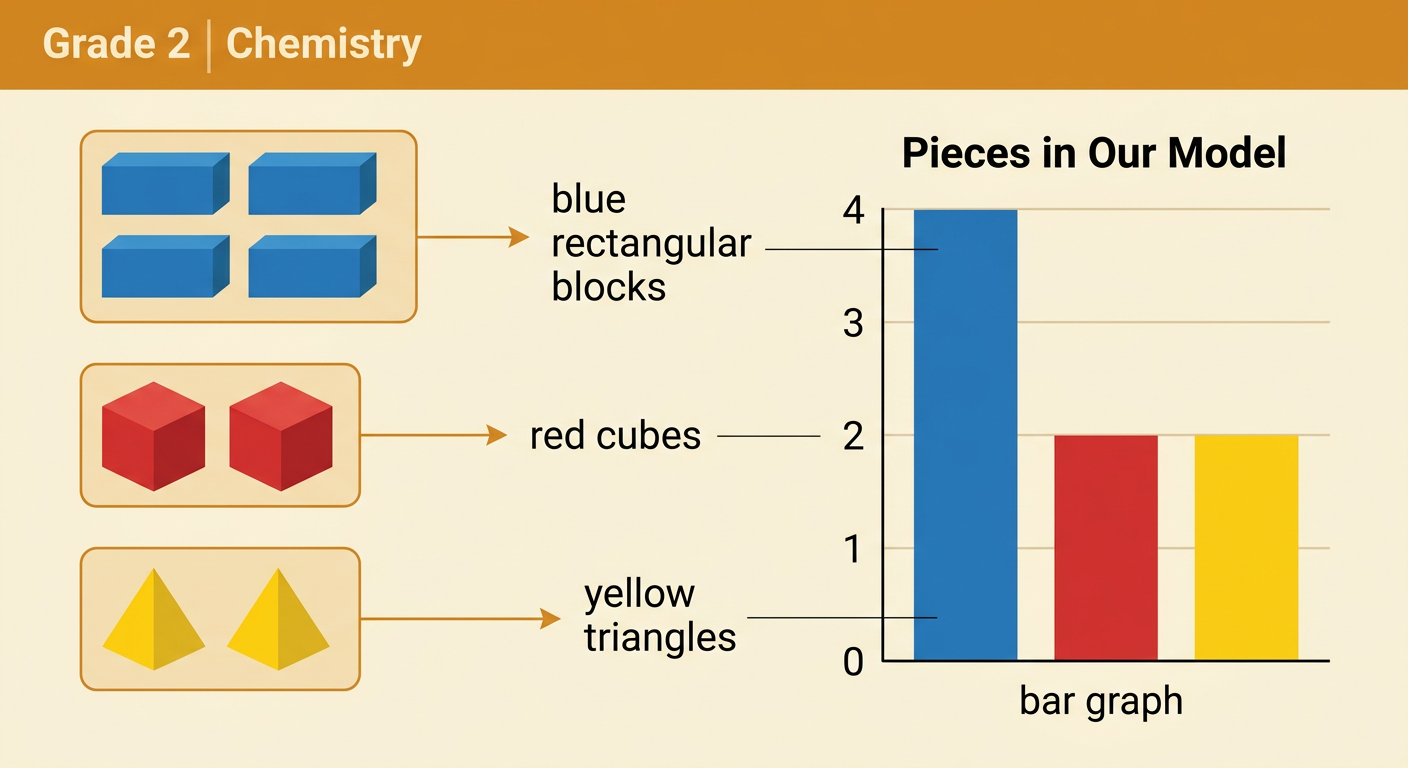
Sort the pieces into categories that make sense. You can sort by block type and color because each type in this example has its own color. Make one group of blue rectangular blocks, one group of red cubes, and one group of yellow triangles. Count each group. Then draw a bar graph with one category along the bottom and numbers along the side. The blue bar should reach 4. The red bar should reach 2, and the yellow bar should reach 2. Give the graph a title, such as “Pieces in Our Model.” Use the graph to answer questions with your group. Which category has the most pieces? Blue blocks have the most. How many pieces are there altogether? There are eight. The graph records evidence that you can check after rebuilding.
Build a New Object
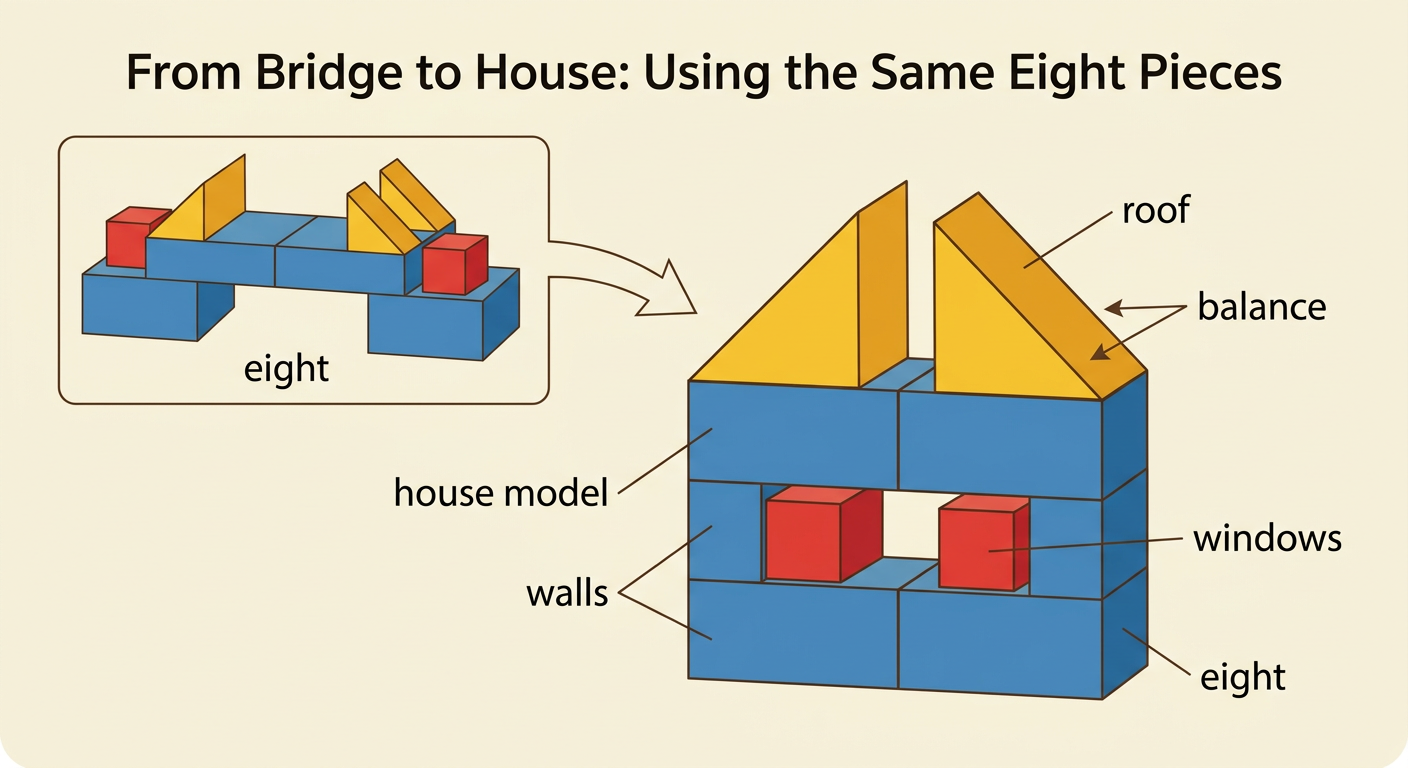
Now use the same eight pieces to make an object that is different from the bridge. Do not add pieces or leave any out. For example, your group can build a house model. Arrange the four blue blocks as walls, use the two red cubes as windows, and place the two yellow triangles at the top as a roof. You may need to test several arrangements before the model stands or looks the way you planned. Builders use knowledge of shapes, balance, and connections. They also use skills such as planning, measuring by eye, solving problems, and working safely. These skills help people produce goods, or useful things, and provide building or design services for others. When the house is finished, count its pieces and compare the count with your graph.
Share Evidence and Ideas
Present your new object to the class and explain how you know it uses the same pieces. Hold up the graph or point to each block as evidence. You might say, “Our bridge and house each use four blue blocks, two red cubes, and two yellow triangles.” Explain what changed and what stayed the same. The arrangement and purpose changed, but the number and kinds of pieces stayed the same. Listen while classmates speak, take turns, and ask helpful questions. You could ask, “What building skill did your group use?” A classmate might answer, “We used planning and teamwork to keep the roof balanced.” Compare the different objects made by other groups. The models show that a small set of pieces can be disassembled and rearranged to make many new objects.
