
Mirrors Can Redirect Light
Students investigate how a mirror reflects light and changes the direction in which light travels.
Illustrations are auto-generated and may be placeholders. They can be refreshed to match the narration.
Notice Light on a Mirror
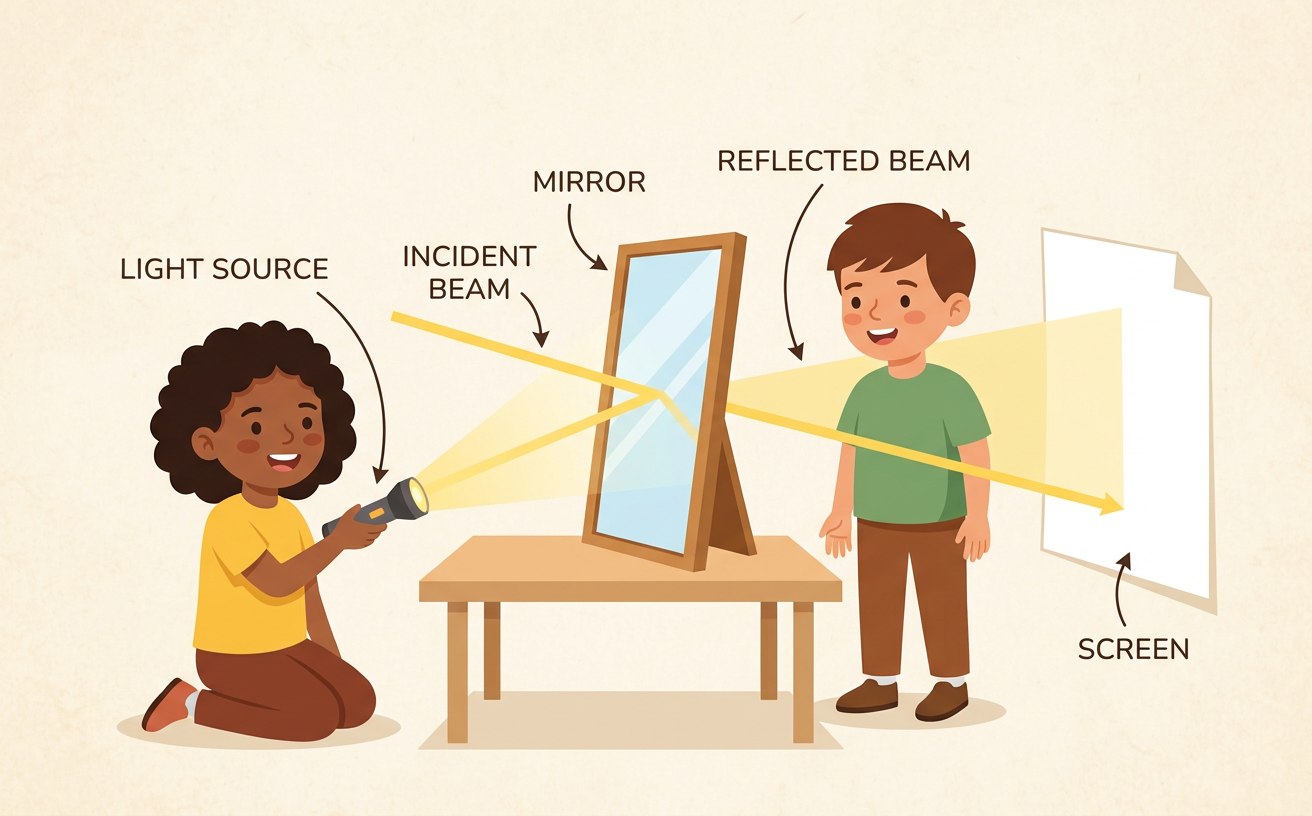
Light travels from a light source, such as a flashlight. When light reaches a mirror, the shiny surface reflects it. This means the light changes direction instead of passing through the mirror. In a dim room, shine a flashlight at a mirror while a partner looks for the bright spot on a nearby wall. Use only a flashlight, and never shine light into anyone’s eyes. Notice where the flashlight points and where the reflected light appears. For example, a flashlight may point toward a mirror on a table, while the mirror sends the light toward a wall. Talk with your group about what you see. Listen to each idea, take turns speaking, and use the words light source, mirror, and reflected light.

Predict Where the Light Will Go
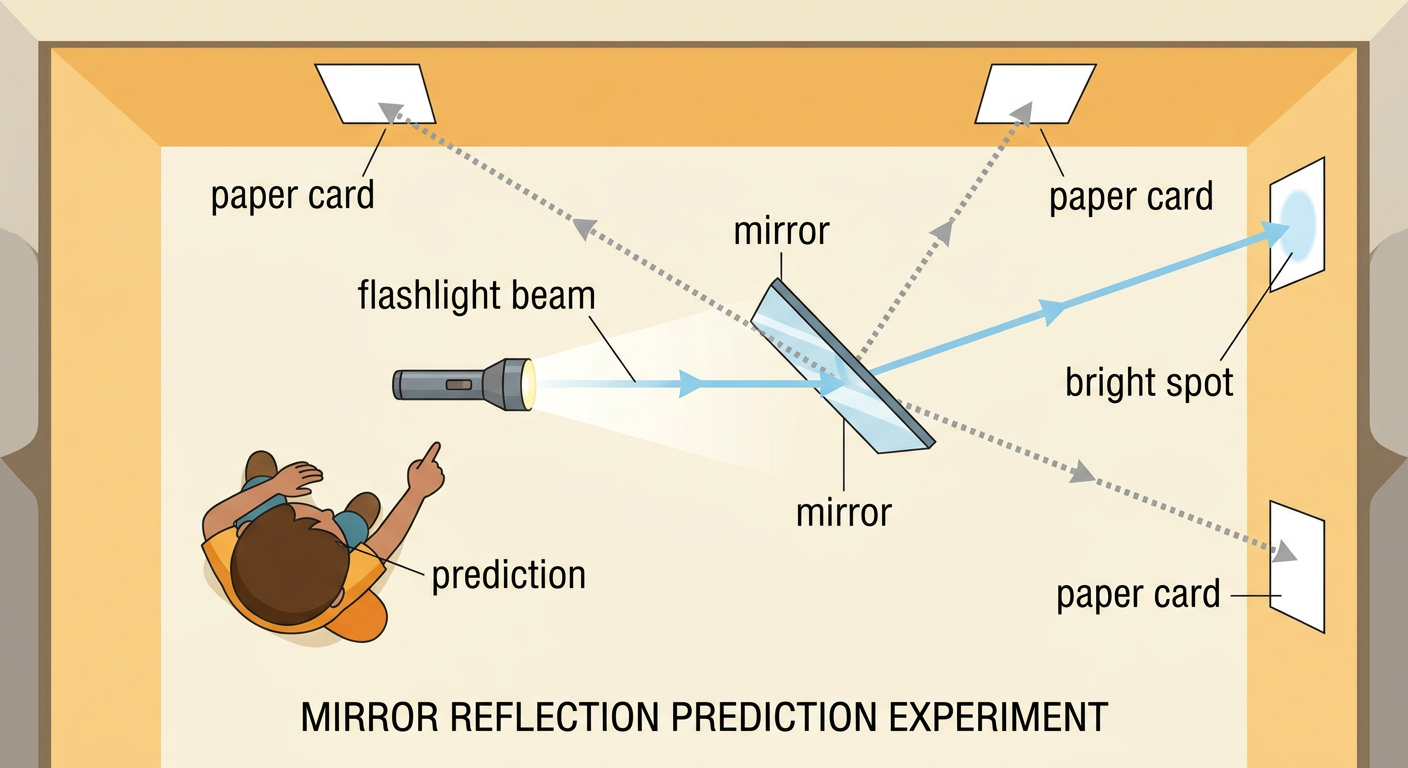
Before moving the mirror, make a prediction about where the reflected light will go. A prediction is what you think will happen. Look at the direction of the flashlight beam and the way the mirror is turned. Point to one place where you think the bright spot will appear. You can place a paper card there to mark your choice. Tell your group why you chose that place. For example, you might say, “I think the light will go to the left side of the wall because the mirror is turned left.” Then test the prediction by turning on the flashlight. Was the bright spot on your card, near it, or far from it? A prediction does not have to be correct. It helps you compare your idea with what you observe.
Redirect Light with a Mirror
Now investigate how turning a mirror redirects light. Place a flashlight so it stays still. Aim it at a small mirror standing in modeling clay. Put paper targets in three safe places, such as the left, middle, and right parts of a wall. Slowly turn the mirror until the reflected bright spot reaches one target. Then turn the mirror again to reach another target. Keep the flashlight in the same place so only the mirror changes. Work with a partner: one person adjusts the mirror, and the other watches the targets. Then switch jobs. For example, when the mirror turns a little to the right, the reflected beam may move across the wall. Never look directly into the beam. Your test shows that changing the mirror’s direction changes where the reflected light travels.

Record and Compare Observations
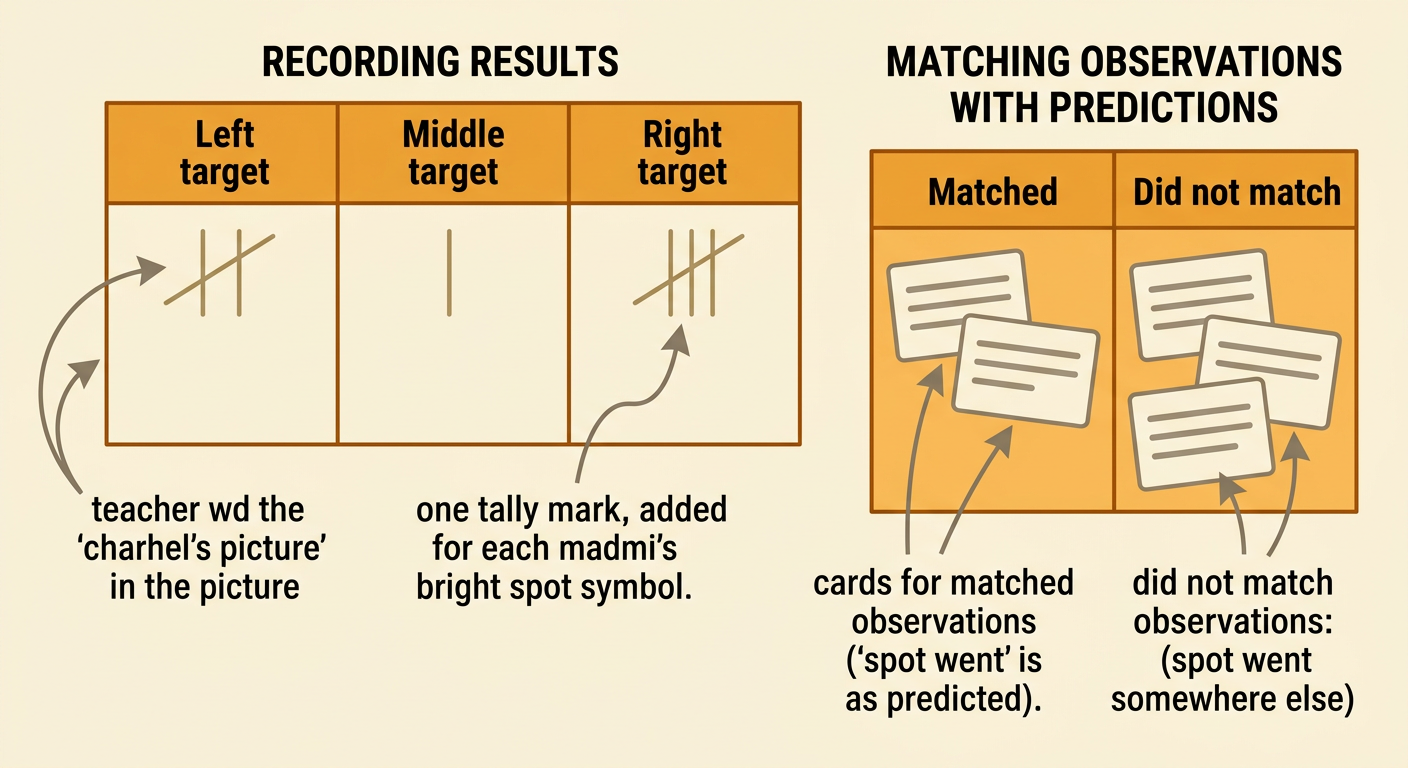
Scientists record what happens during a test. Make three categories: light reached the left target, light reached the middle target, and light reached the right target. After each trial, place one tally mark in the matching category. If you complete six trials, count the tally marks in each group. You might record two left, one middle, and three right. Compare the numbers with your classmates. Which category has the most observations? Which has the fewest? Are any categories equal? Also compare each result with your prediction by sorting it as matched or did not match. Explain one pattern you notice. For example, you may notice that turning the mirror toward a new position moves the bright spot to a new part of the wall. Take turns sharing evidence from the class chart.
Find Uses for Reflective Materials
People use reflective materials to help others see objects and places. Road signs can reflect car headlights, making the signs easier to see at night. Reflective strips on a crossing guard’s vest help drivers notice the person. Mirrors inside buildings can help people see around a corner. Small reflectors on bicycles and backpacks can make riders and walkers more visible. Look at a simple map of a community with a road, school, park, and building. Find places where reflective materials could help. For example, you might place a reflector symbol near a school crosswalk. Explain who uses that place and how reflection helps. Work with your group to sort examples into roads, buildings, and community spaces. Remember that these materials do not make their own light. They reflect light from another source.
