Modeling How Plants Make Food
Students collaboratively build and revise a plant model showing how light energy, carbon dioxide, and water are used in photosynthesis to produce sugar and oxygen.
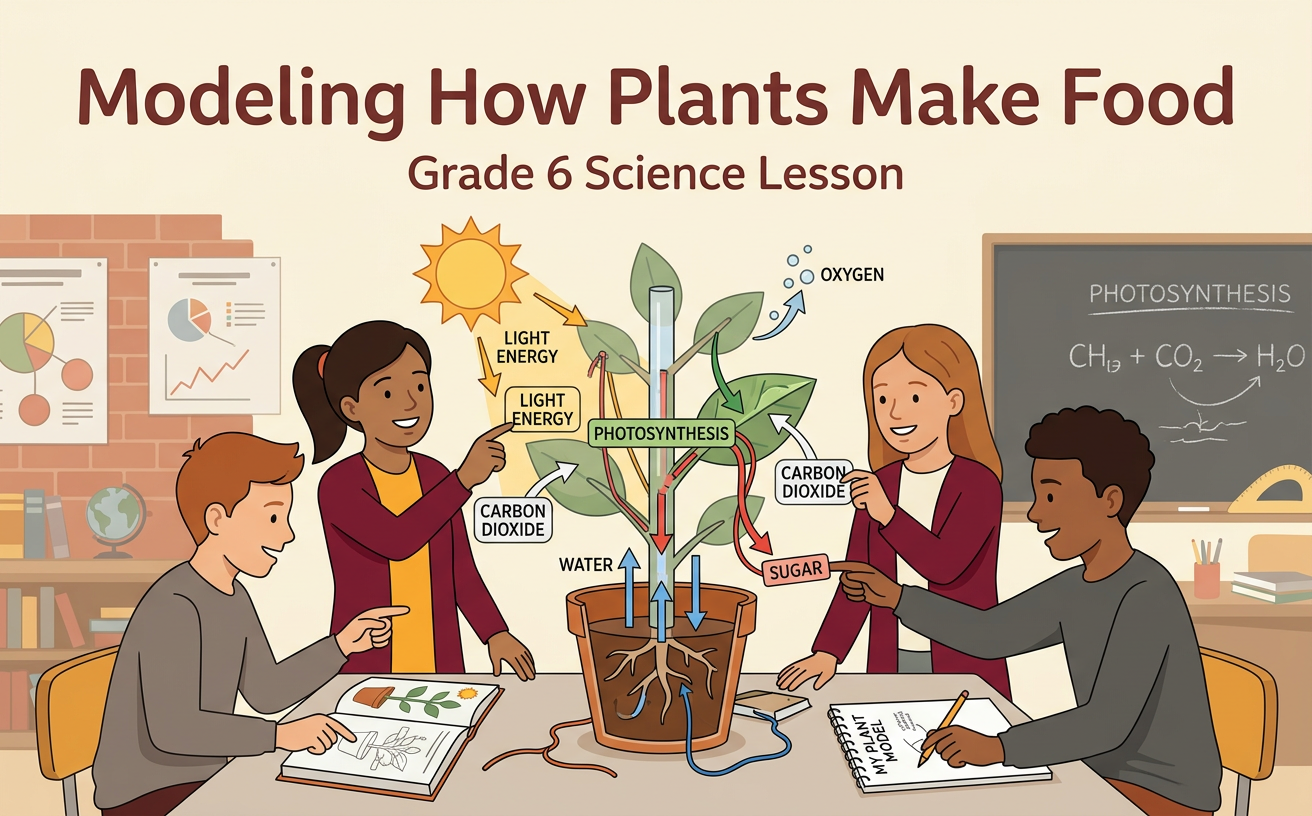
Illustrations are auto-generated and may be placeholders. They can be refreshed to match the narration.
Observe a Plant and Ask Questions
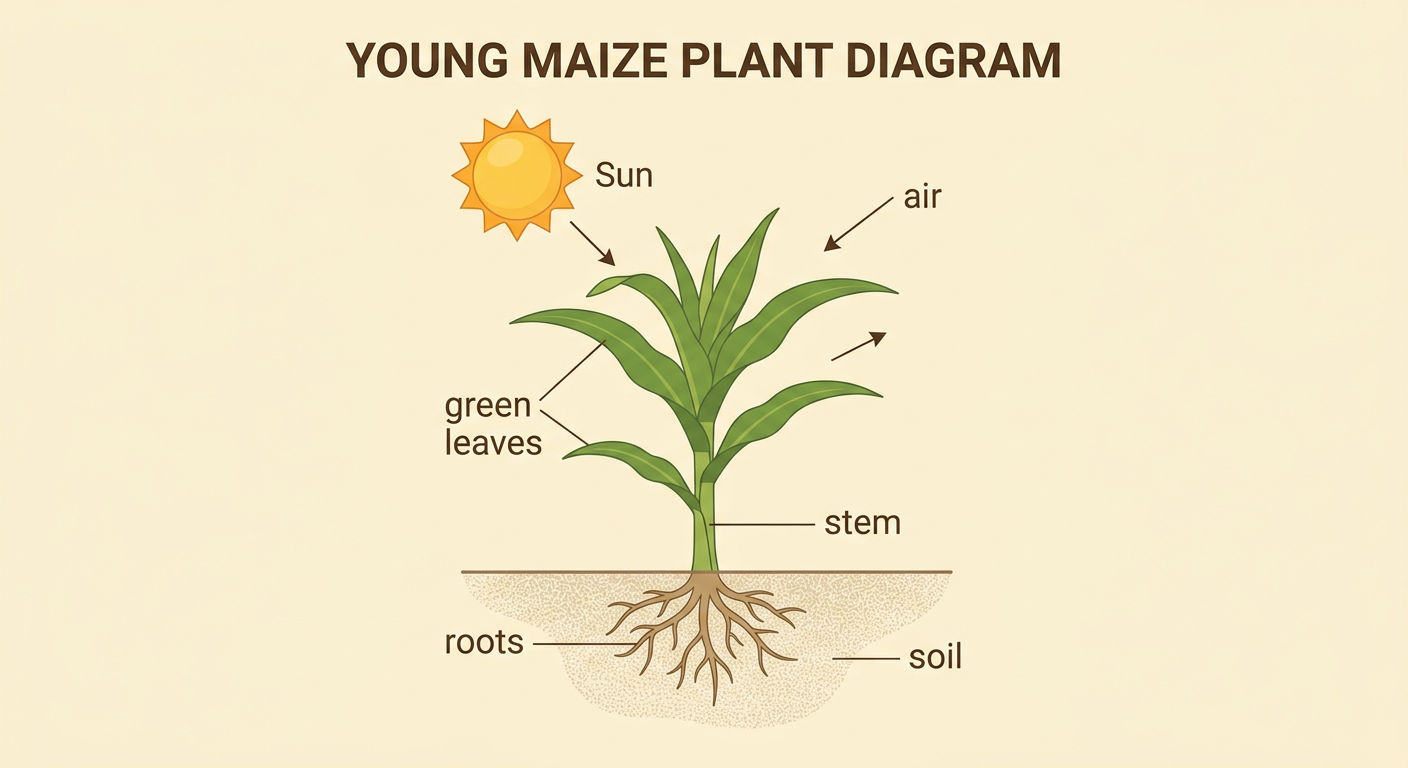
Look closely at a healthy green plant, such as a young maize plant. Notice its roots, stem, and broad green leaves. The roots are usually hidden in soil, while the leaves are exposed to sunlight and air. Ask questions about how the plant gets the materials and energy needed to grow. Does all its food come from the soil? Why are most leaves green? What enters and leaves a leaf? Plants do not take ready-made food from soil. Instead, green leaves make sugar through photosynthesis. Begin a model by drawing the plant and its surroundings. Include the Sun, air, and soil, but leave space for arrows and labels. Your questions will guide what the arrows should show and where each material moves.
Identify Photosynthesis Inputs
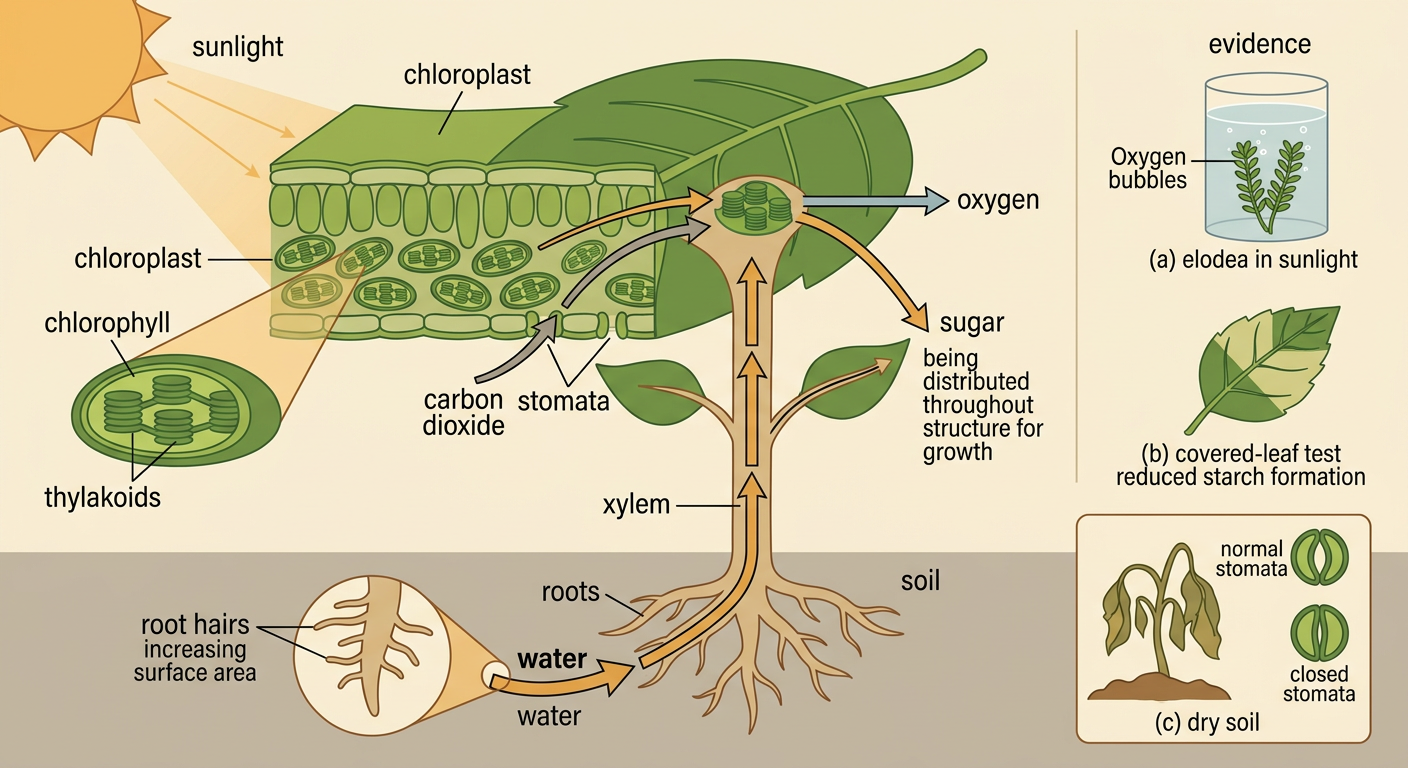
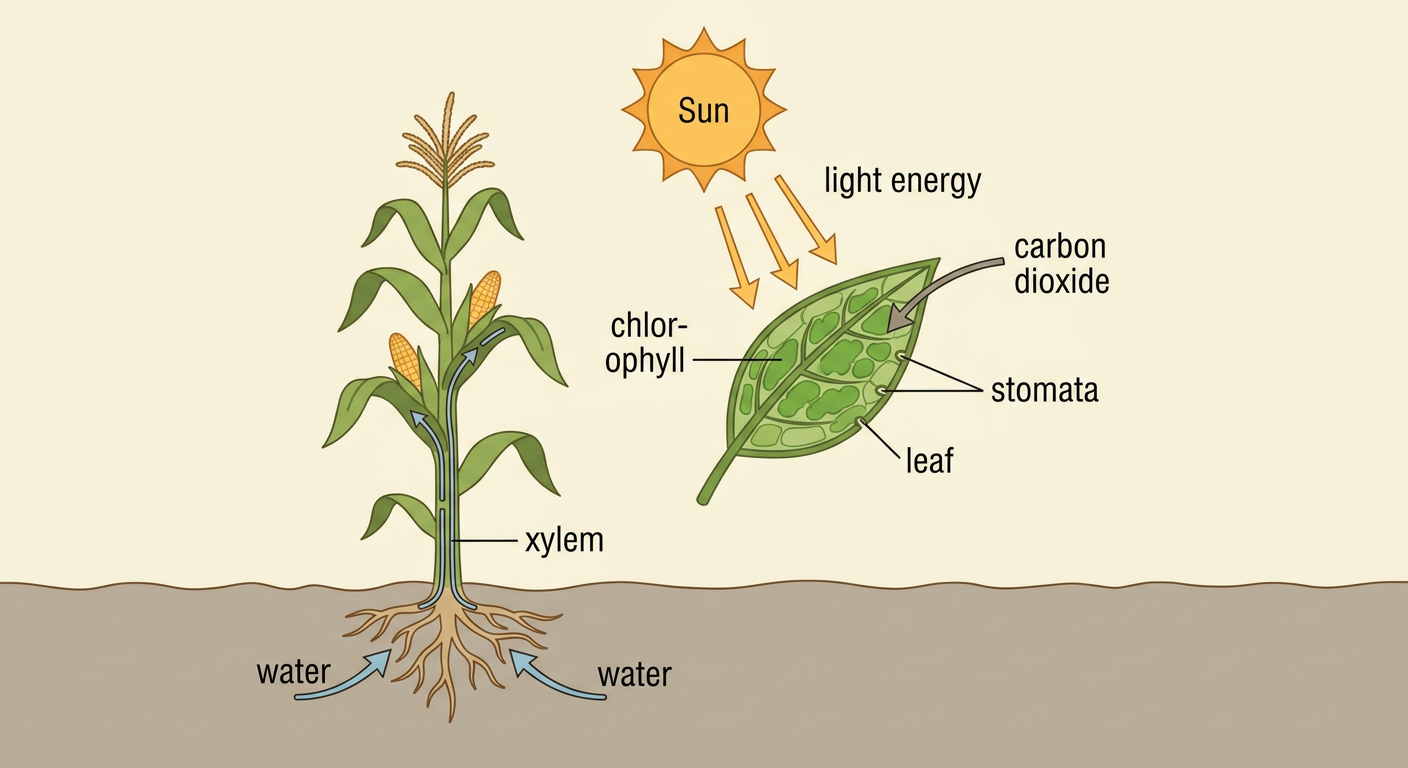
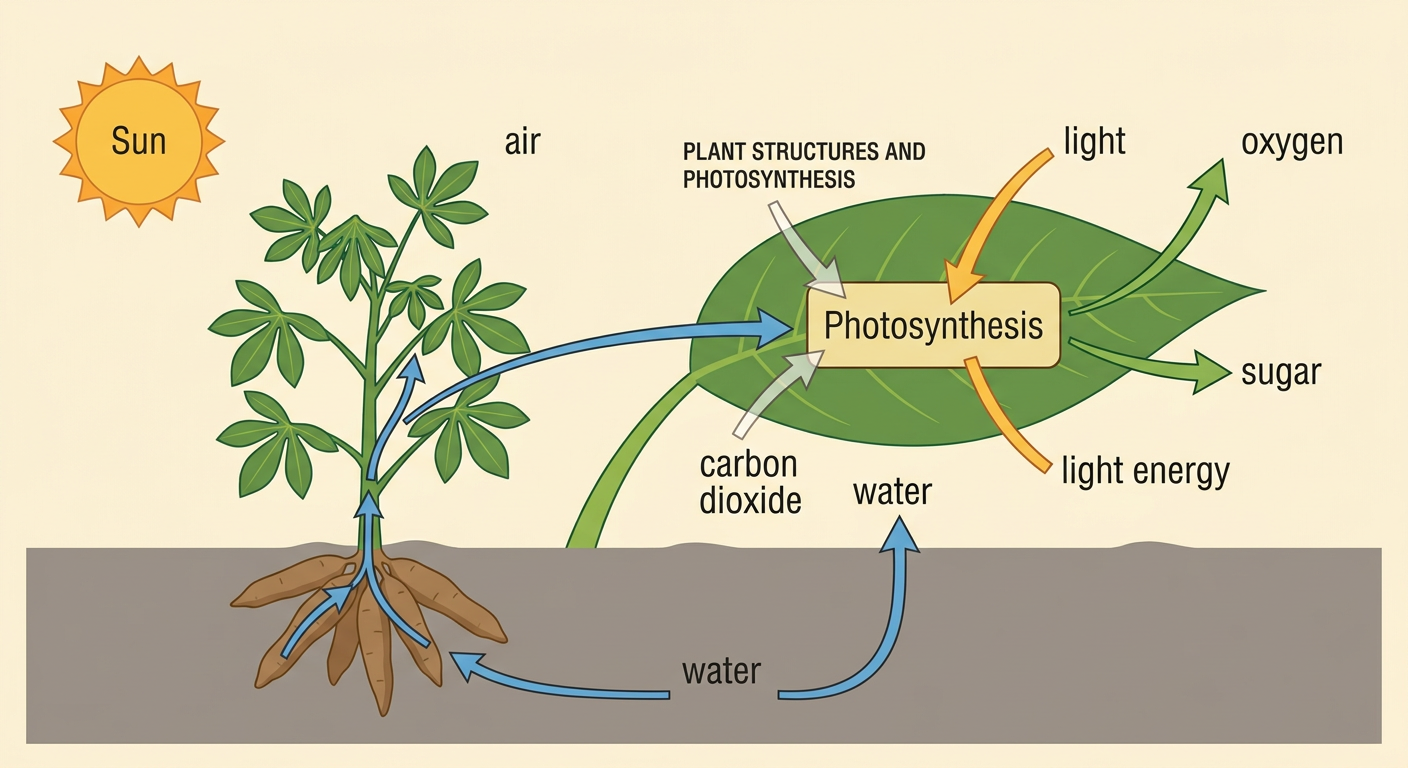
Photosynthesis requires three main inputs: light energy, carbon dioxide, and water. Light energy travels from the Sun and is absorbed by chlorophyll, the green substance in leaf cells. Carbon dioxide is a gas in the air. It enters a leaf through tiny openings called stomata. Water is absorbed from the soil by roots and moves upward through tubes called xylem. For example, a maize plant growing in moist soil receives water through its roots while its leaves receive carbon dioxide from the air and light from the Sun. These inputs do not all enter through the same plant part. In your model, use arrows to show sunlight reaching a leaf, carbon dioxide entering the leaf, and water moving from the soil through the roots and stem to the leaf.
Build a Plant Photosynthesis Model
Work with your group to build a model that connects plant structures to photosynthesis. Draw or arrange a Sun, a plant, soil, and air. Add arrows for each input and output. Inside a green leaf, include a box labeled “Photosynthesis.” Show carbon dioxide and water moving into this process and light energy being absorbed. Then show sugar and oxygen being produced. A useful word equation is: carbon dioxide plus water, using light energy, produces sugar plus oxygen. For example, the model can show water traveling from a cassava plant’s roots to its leaves and carbon dioxide entering those leaves from the air. Use different arrow colors for matter and energy. Check that every arrow has a direction and that no arrow suggests the plant absorbs food from the soil.
Trace Matter and Energy
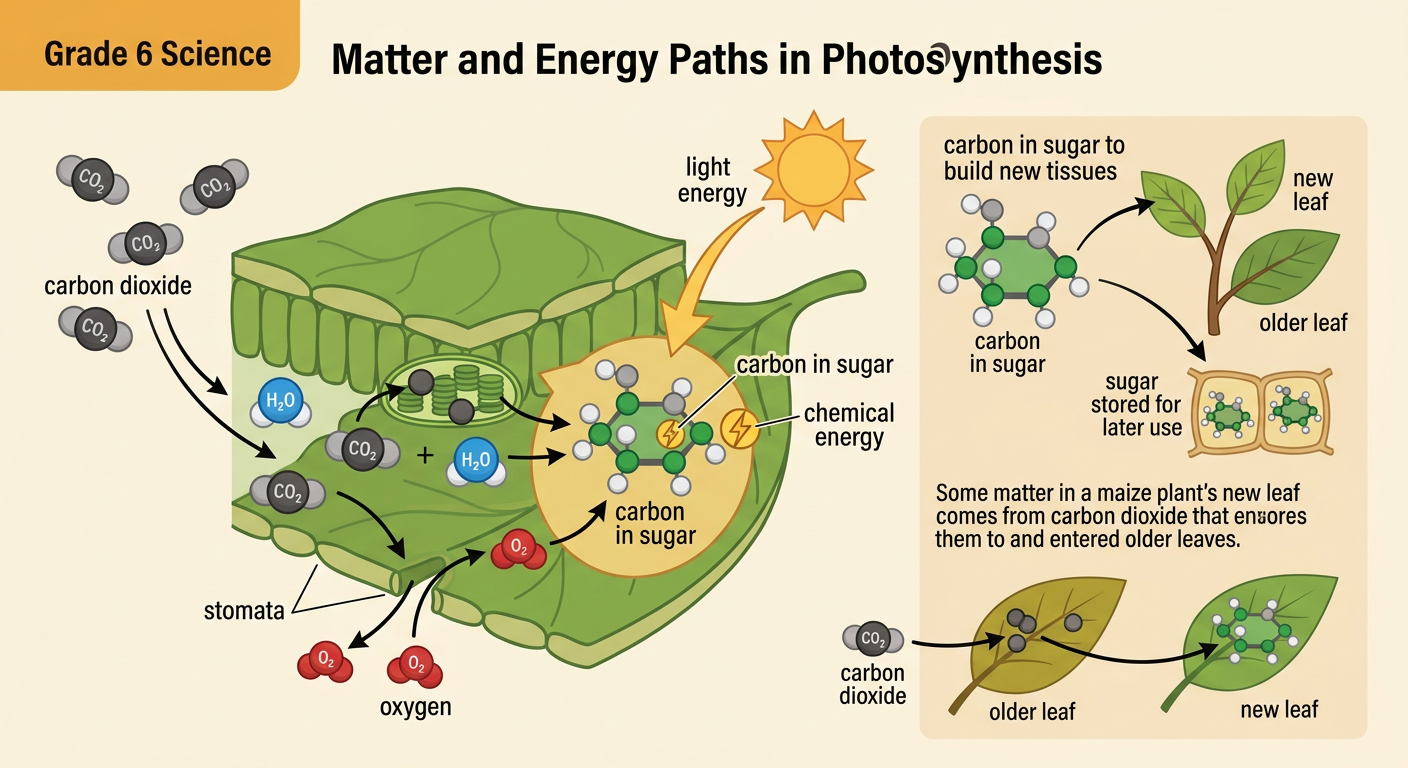
Matter and energy follow different paths during photosynthesis. The atoms in carbon dioxide and water are rearranged to form sugar and oxygen. They do not disappear or turn into energy. Carbon from carbon dioxide becomes part of sugar, which can be used to build plant tissues or stored for later. Some oxygen is released through stomata into the air. Light energy is not matter. It is transferred from sunlight into chemical energy stored in sugar. For example, when a maize plant grows a new leaf, some matter in that leaf came from carbon dioxide that entered older green leaves. Trace matter with solid arrows from air and soil into the plant and toward the products. Trace energy with a separate arrow from the Sun to the leaf and then to the chemical energy in sugar.
Test and Revise the Model
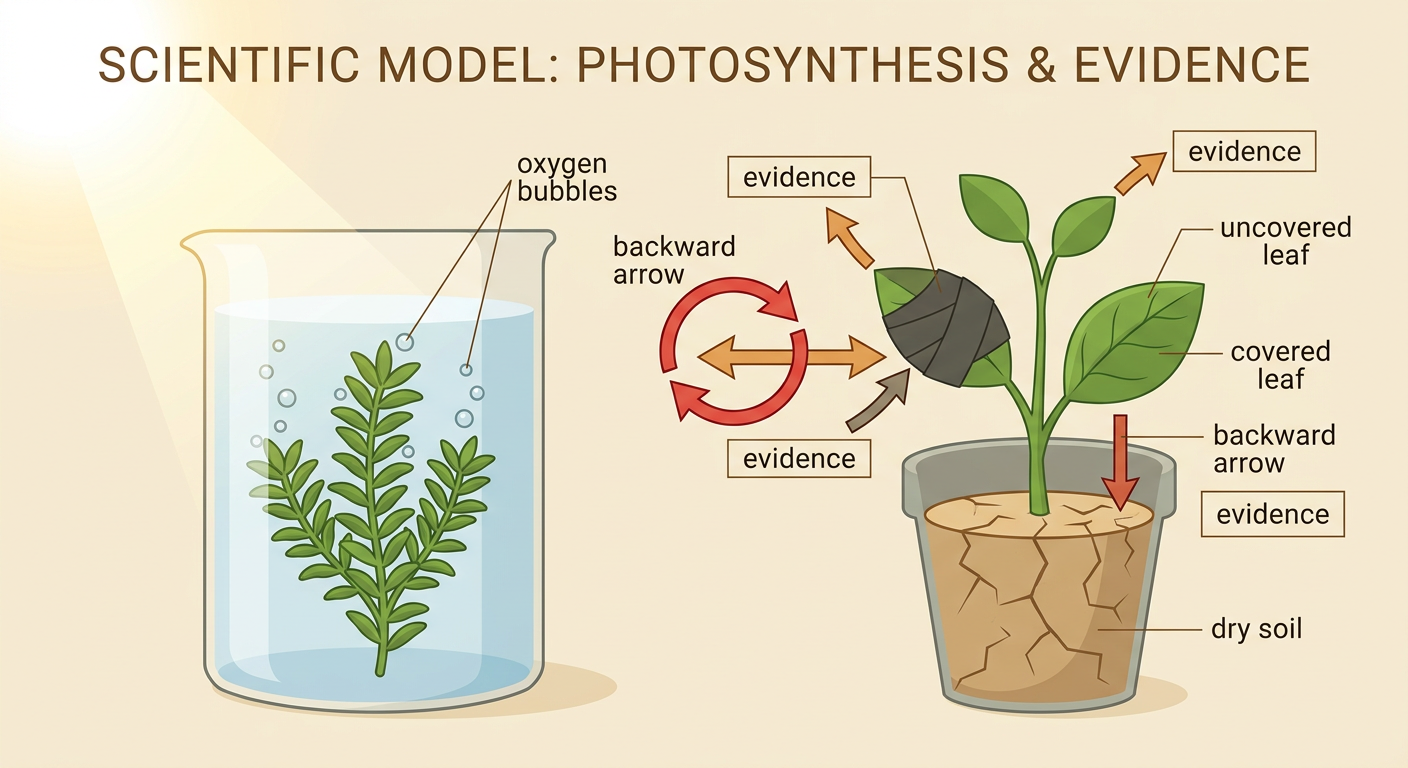
A scientific model should agree with evidence and can be revised when it does not. Test your model by comparing it with observations. A green water plant placed in bright light may release visible gas bubbles. Tests show that this gas includes oxygen, supporting an arrow that shows oxygen leaving the plant. A covered leaf receives less light and makes less stored sugar than an uncovered leaf, supporting the need for light. Wilting soil can also reduce the water available for photosynthesis. Examine your group’s model. Does it show carbon dioxide entering through stomata? Does water move from roots toward leaves? Is light shown as energy rather than matter? Are sugar and oxygen shown as products? Correct missing, unclear, or backward arrows. Add a note beside each revision stating the evidence that supports the change.
Share an Evidence-Based Explanation
Use your revised model to explain how a green plant makes food. Point to each arrow as you speak so your explanation matches the model. State that roots absorb water, xylem carries it to leaves, and carbon dioxide enters leaves through stomata. Explain that chlorophyll absorbs light energy. During photosynthesis, the plant rearranges carbon dioxide and water to produce sugar and oxygen. The sugar stores chemical energy and can be used for growth, while oxygen can leave through stomata. Support each claim with evidence. For example, oxygen bubbles from a green water plant in light support the claim that photosynthesis produces oxygen. End by distinguishing matter from energy: matter moves into, through, and out of the plant, while energy is transferred from sunlight to sugar. Invite classmates to ask whether every claim is shown in the model.