Monarchs on the Move: Life Cycle and Migration
Students model the monarch butterfly life cycle and use a migration map to connect each life stage with the habitats monarchs need.
Illustrations are auto-generated and may be placeholders. They can be refreshed to match the narration.
Meet the Migrating Monarch
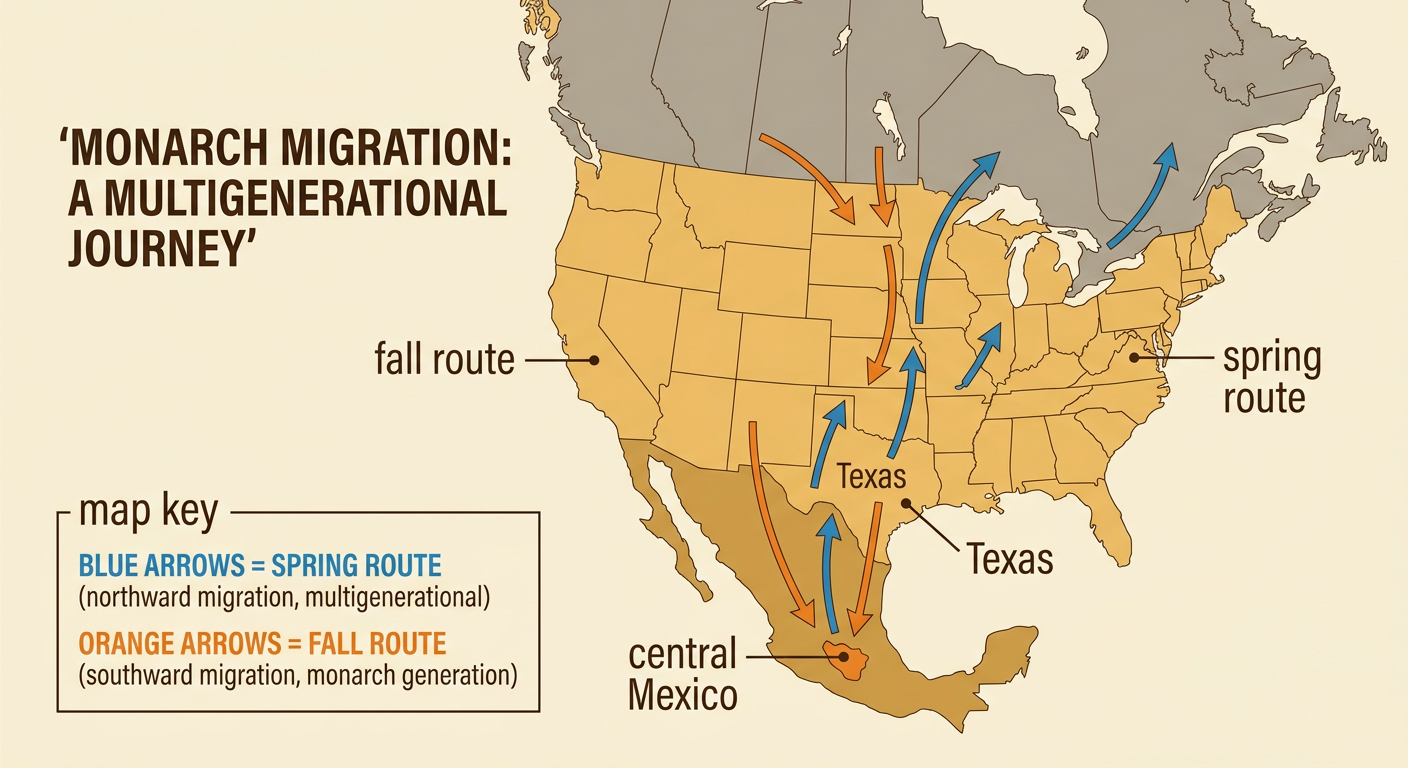
A monarch butterfly is easy to recognize by its orange-and-black wings with white spots. Monarchs are insects that change form as they grow. They are also famous travelers. Each fall, millions of monarchs from the eastern United States and Canada fly south to mountain forests in central Mexico. Some travel thousands of miles. In spring, monarchs begin moving north again. No single butterfly completes the entire round trip. Several generations continue the northward journey, but one long-lived fall generation makes the southward flight. For example, a monarch seen drinking nectar in Texas during spring may be part of a new generation traveling north. Migration helps monarchs reach places with suitable temperatures, food, and shelter.

Four Stages of the Life Cycle
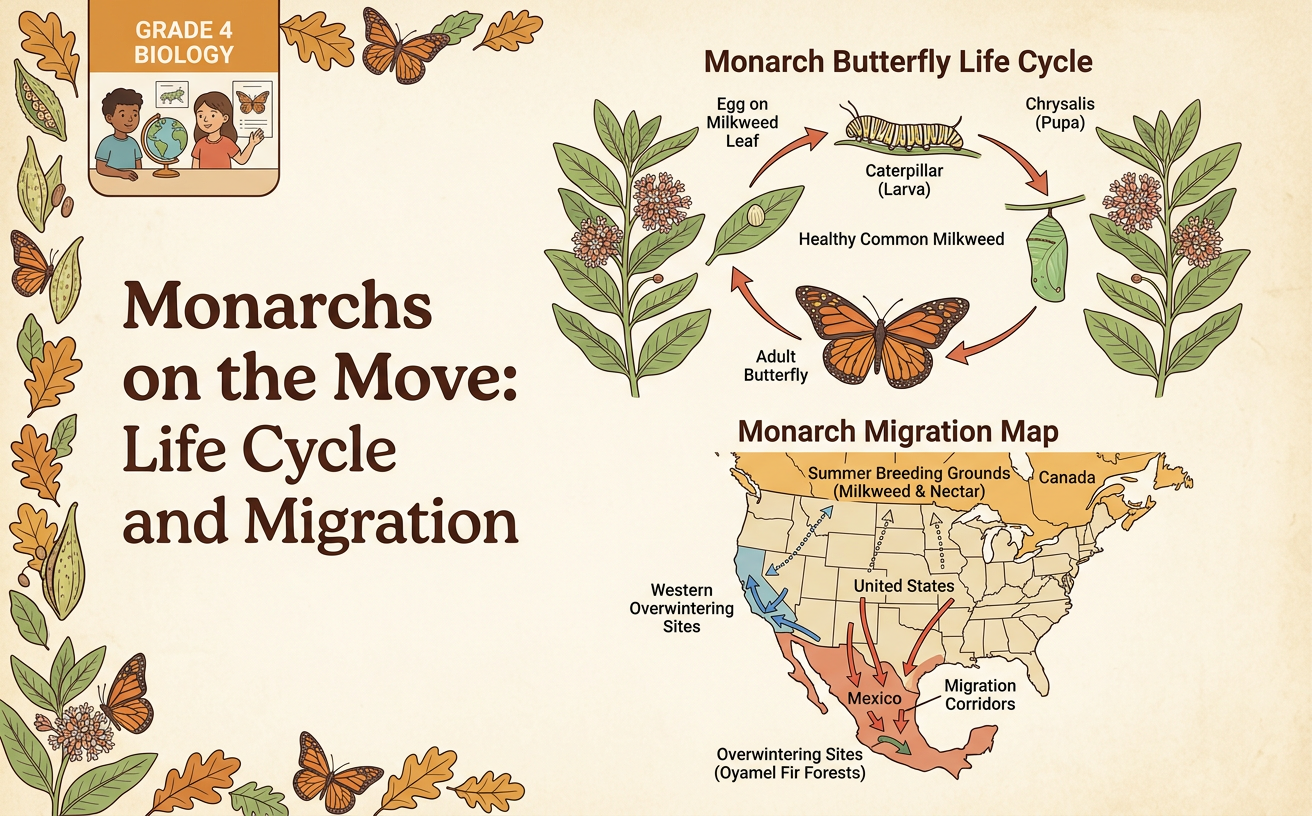
The monarch life cycle has four stages: egg, larva, pupa, and adult. First, a female adult lays a tiny egg on a milkweed leaf. A caterpillar, also called a larva, hatches from the egg and eats milkweed as it grows. Next, the caterpillar forms a green pupa called a chrysalis. Inside, its body changes into an adult butterfly. The adult emerges, opens its wings, and later may reproduce by mating and laying eggs. For example, an adult female can begin a new life cycle by placing eggs on milkweed. Each monarch is born, grows, may reproduce, and eventually dies. However, new offspring continue the repeating life cycle.

From Egg to Adult
A monarch changes greatly as it develops. The tiny egg usually hatches after about four days. The striped caterpillar spends roughly two weeks eating milkweed and shedding its outer covering as it grows. It then hangs in a J shape and forms a chrysalis. After about one to two weeks, an adult butterfly emerges. At first, its wings are soft and folded. The monarch pumps fluid into them and waits for them to dry before flying. This complete change in body form is called metamorphosis. For example, a caterpillar has chewing mouthparts and no wings, while an adult has wings and drinks liquids through a tube-like proboscis. Each body form helps the monarch meet different needs.

Mapping the Monarch Journey
A migration map uses locations, colors, and arrows to show where monarchs travel. For the eastern population, fall arrows lead from southern Canada and the United States toward high mountain forests in central Mexico. Spring arrows point north through Texas and into other parts of the United States and Canada. Different generations complete sections of the spring journey. The map also connects movement with environmental conditions. Monarchs move north as temperatures warm and milkweed grows. They fly south before winter cold removes flowers and milkweed from northern areas. For example, Texas is an important spring stop because monarchs can find nectar and newly growing milkweed there. Reading the map key helps students connect each season, route, and habitat.
Habitats Needed for Survival
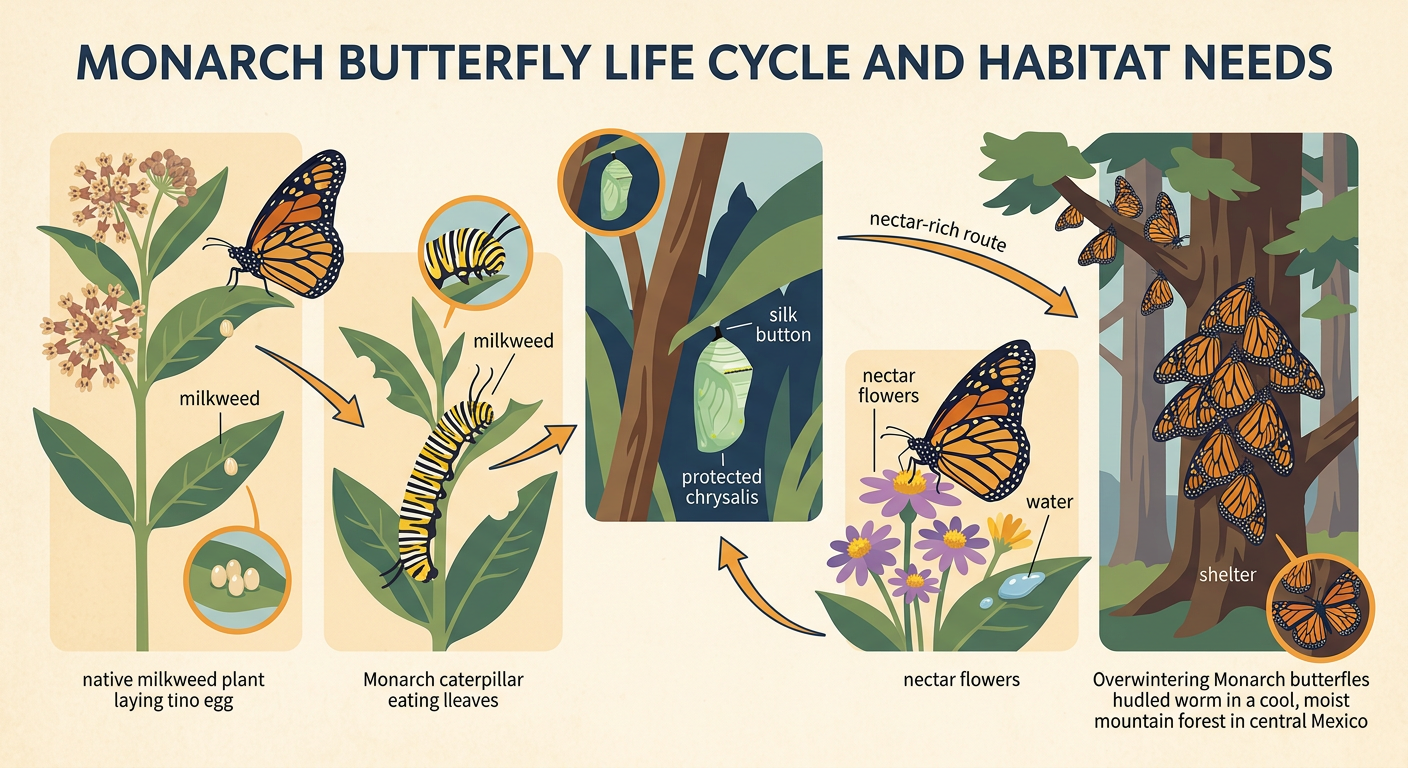
Monarchs need different habitat features during their life cycle and migration. Eggs and caterpillars need milkweed because female monarchs lay eggs on it and caterpillars eat it. Adults need nectar from many kinds of flowers for energy. During migration, adults also need safe resting places, water, and shelter from strong wind and storms. In winter, eastern monarchs gather in cool, moist mountain forests in central Mexico. The trees protect them while temperatures remain cool enough to slow their activity without freezing them. For example, a school garden with native milkweed and nectar flowers can provide breeding and feeding habitat. A habitat model should connect each life stage to its needs: milkweed for eggs and larvae, protected chrysalis sites, and nectar-rich routes for adults.