Natural Selection by the Numbers: Tracking Populations Over Time
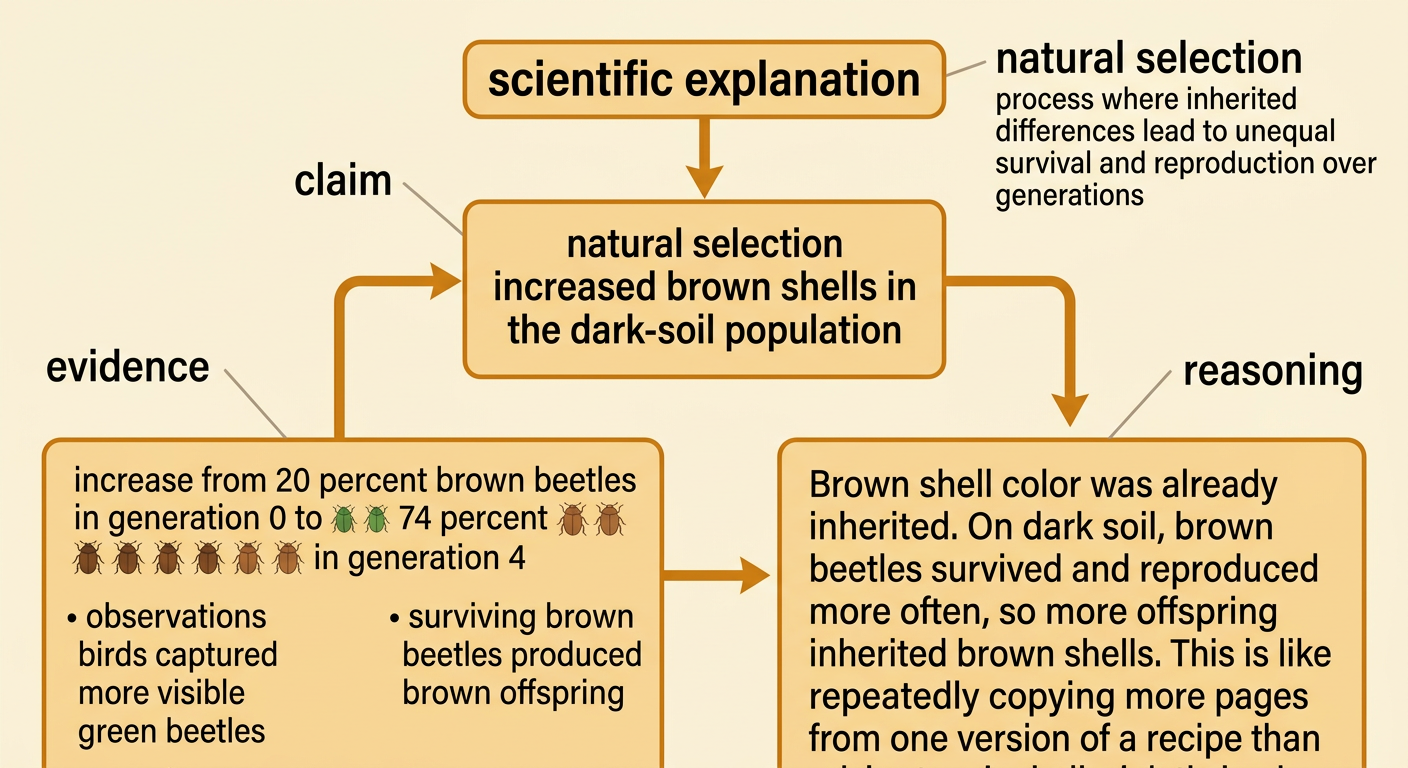
Students analyze trait-frequency data across generations to explain how environmental conditions can make certain inherited traits more common in a population through natural selection.
Illustrations are auto-generated and may be placeholders. They can be refreshed to match the narration.
Variation Within a Population
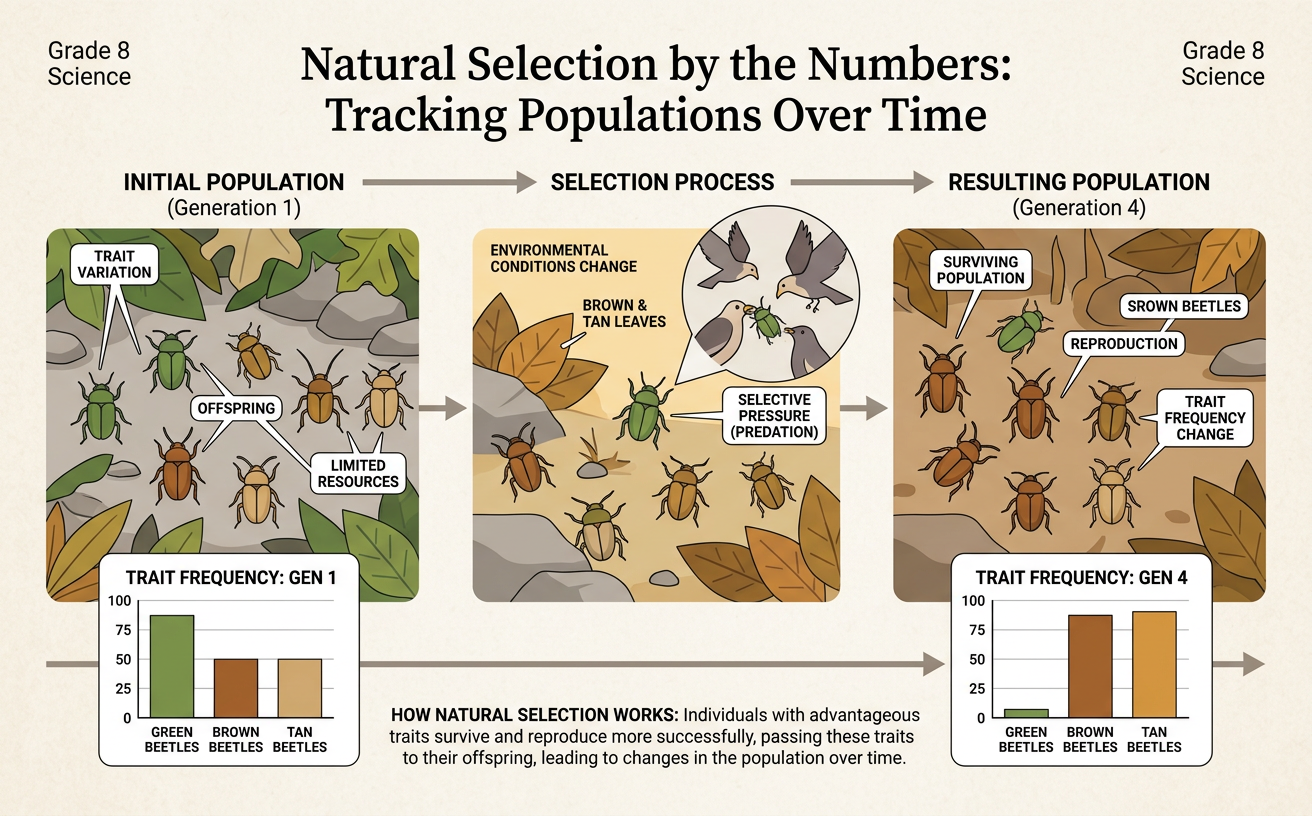
A population is a group of organisms of the same species living in the same area. Individuals within a population are not identical. They may differ in body size, color, speed, or other traits. Some variation is inherited because genes pass from parents to offspring. Other differences, such as a scar, are acquired during life and are not inherited. For example, a beetle population may include green beetles and brown beetles because the beetles carry different inherited versions of genes affecting shell color. If shell color influences which beetles survive and reproduce, the variation can affect future generations. Natural selection can occur only when a population has inherited variation. It acts on individuals, but its results are measured as changes in trait frequencies across the population over generations.
Reading Trait-Frequency Data
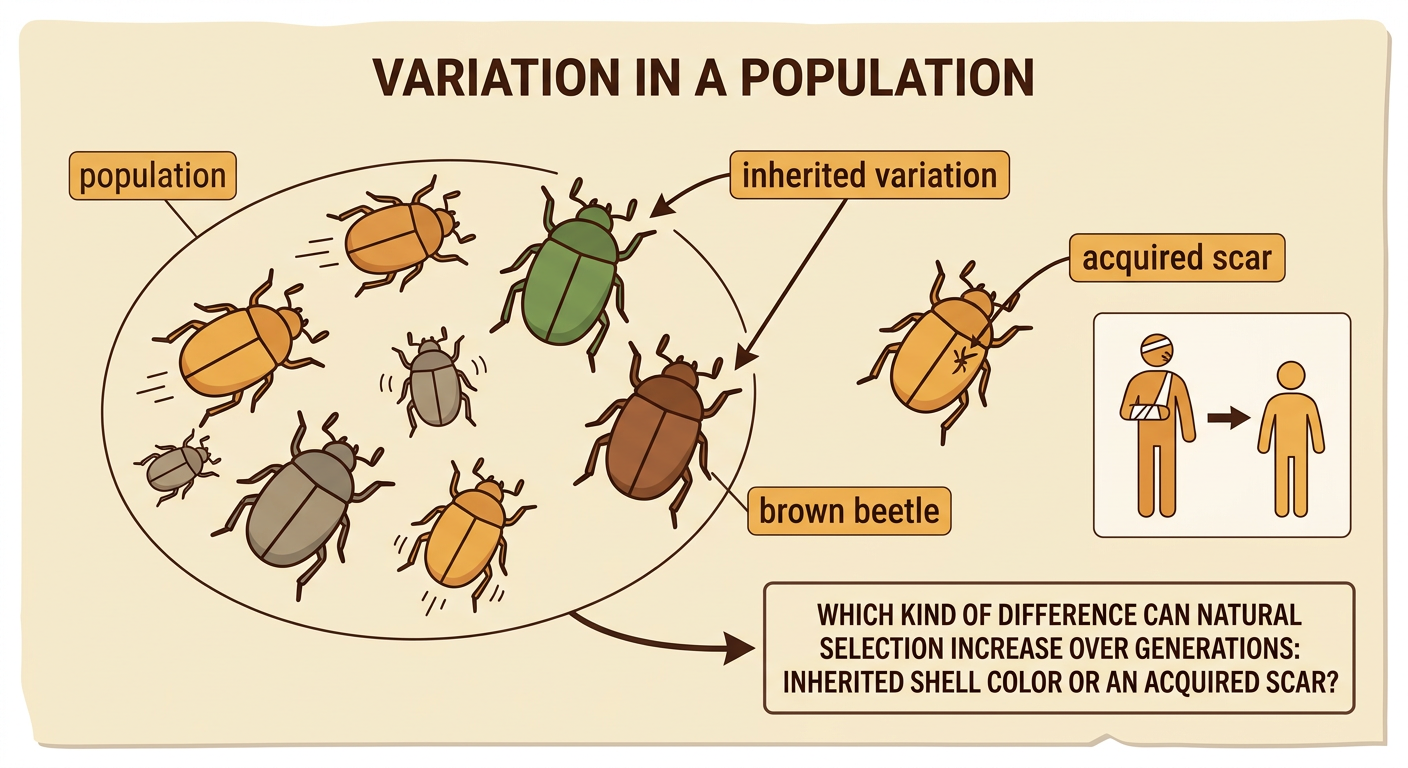
Trait frequency describes how common a trait is in a population. It can be written as a fraction, decimal, or percentage. Suppose 20 of 100 beetles have brown shells in generation 0. The brown-shell frequency is 20/100, or 20 percent. Later measurements show 32 percent in generation 1, 47 percent in generation 2, 61 percent in generation 3, and 74 percent in generation 4. A scatter plot can display these data with generation on the horizontal axis and brown-shell frequency on the vertical axis. Each point represents one generation. An upward pattern shows that the trait became more common over time. However, the graph alone does not explain why the change happened. Scientists also need evidence about inheritance, environmental conditions, survival, and reproduction before identifying natural selection as a cause.
Comparing Populations Across Generations
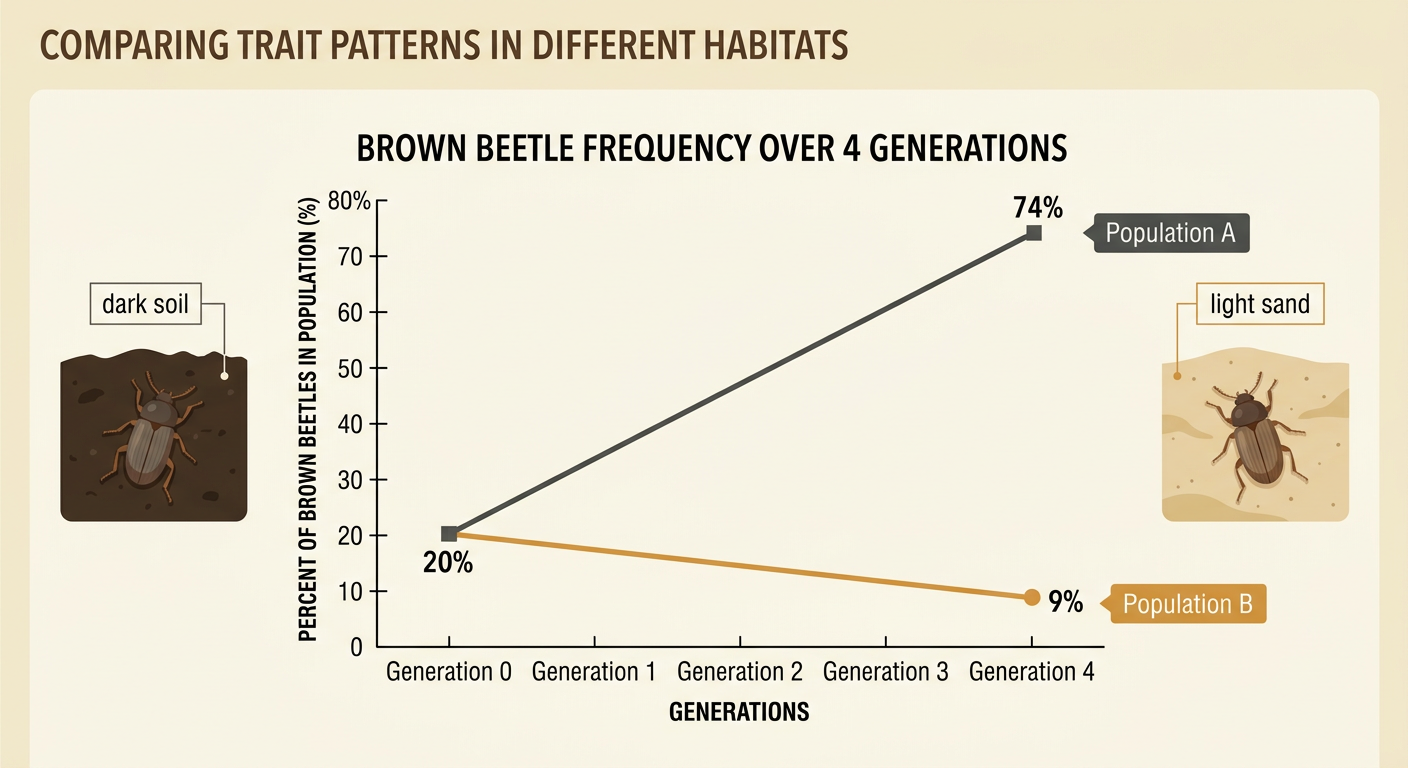
Comparing populations can reveal whether trait frequencies follow the same pattern under different conditions. Imagine two beetle populations that both begin with 20 percent brown beetles. Population A lives on dark soil, while Population B lives on light sand. After four generations, brown-shell frequency rises to 74 percent in Population A but falls to 9 percent in Population B. Plotting both data sets on the same axes makes the contrast easy to see. The opposite trends suggest that habitat conditions may affect the value of the trait. Scientists should also consider other causes, including migration, random events, disease, or differences in the starting populations. Repeated measurements, large samples, and information about the habitats strengthen the comparison. A pattern across generations is evidence of population change, but explaining the cause requires additional observations.
Connecting Environmental Conditions to Survival
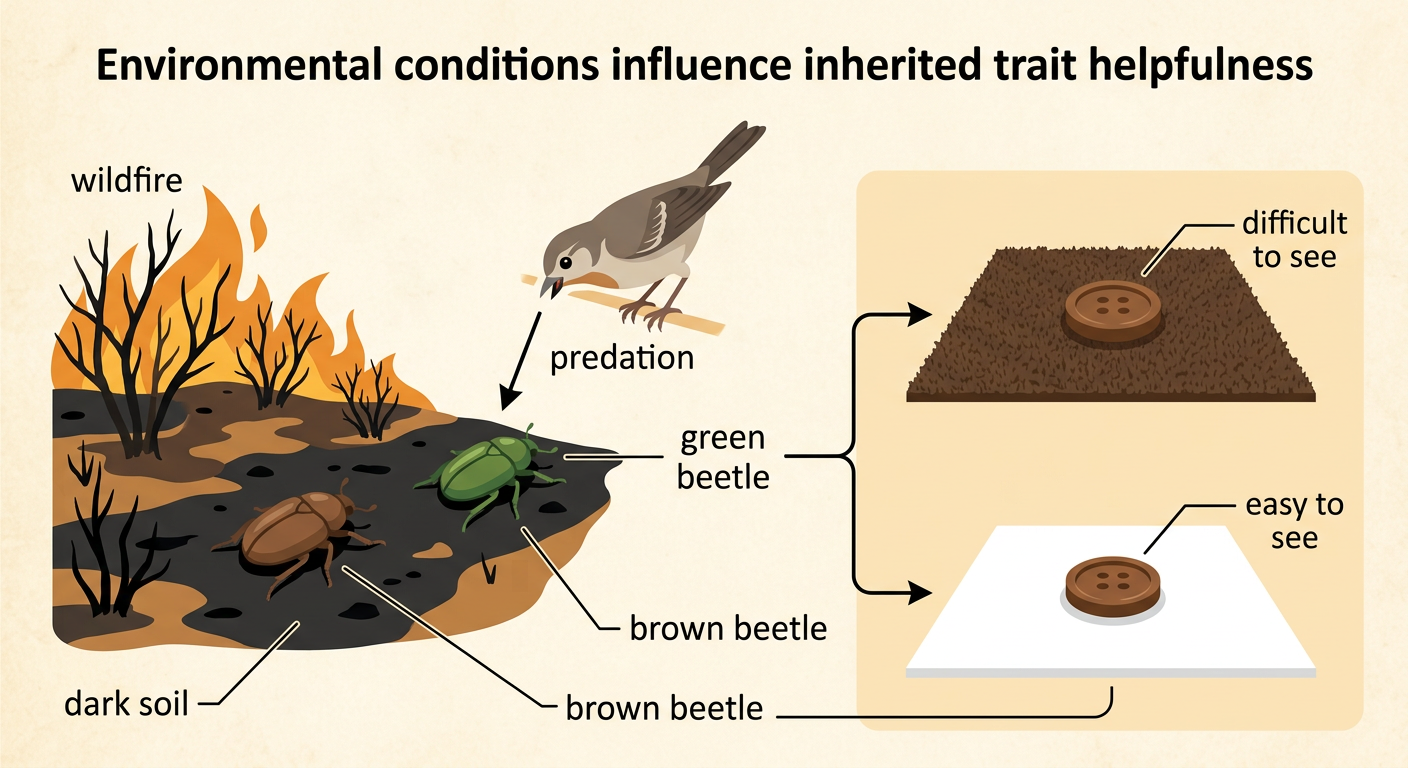
An inherited trait can become more common when environmental conditions help organisms with that trait survive and reproduce. Suppose a wildfire removes light vegetation and exposes dark soil in Population A's habitat. Brown beetles are harder for insect-eating birds to see against the dark background, while green beetles are easier to spot. If more brown beetles survive, they have more opportunities to reproduce and pass genes for brown shells to offspring. Predation, background color, food supply, weather, and migration may all influence the population, so scientists examine multiple causes and effects over time. The environment does not cause individual beetles to change shell color because they need camouflage. Instead, existing inherited variation leads to different survival and reproductive outcomes. Over generations, those unequal outcomes can change the frequency of shell-color traits in the population.
Explaining Population Change Through Natural Selection
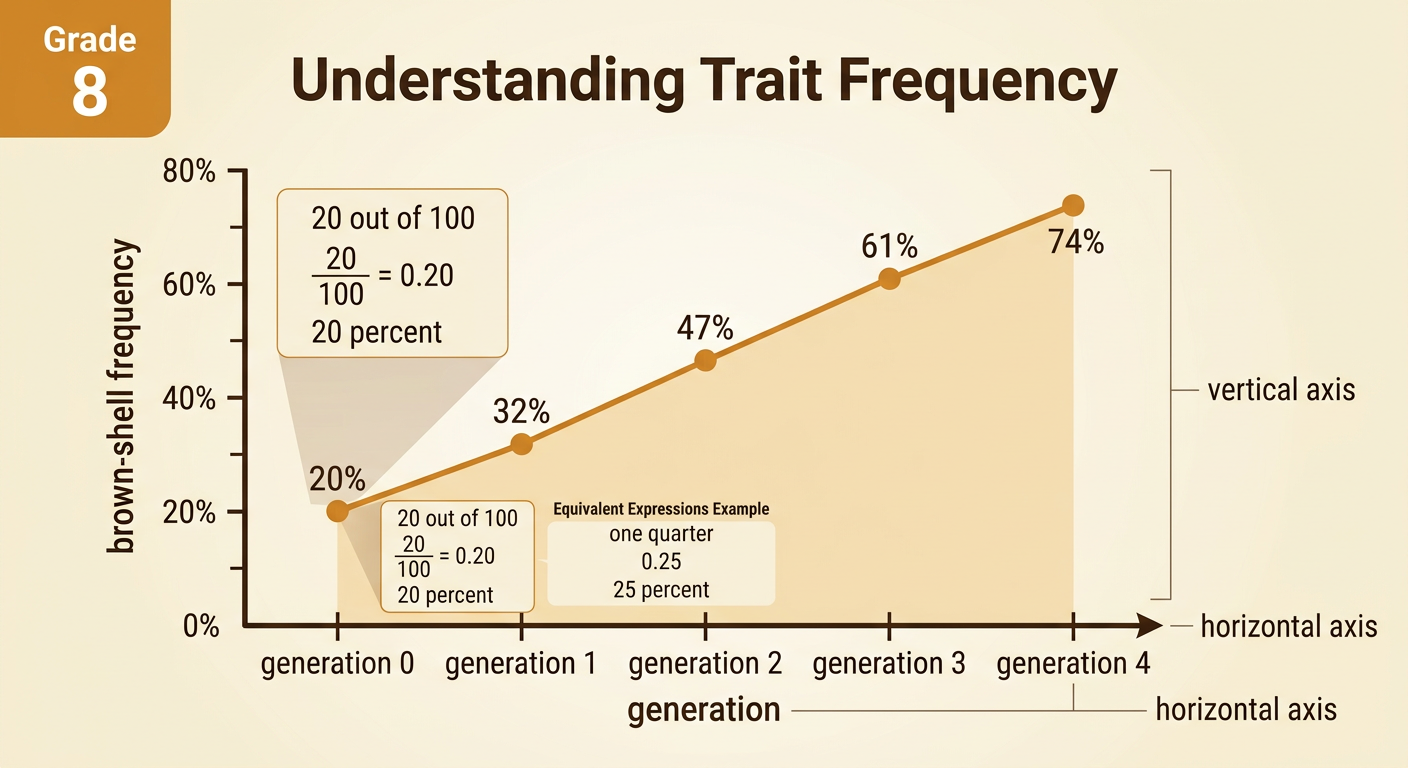
A strong scientific explanation includes a claim, evidence, and reasoning. The claim might be that natural selection increased the frequency of brown shells in the dark-soil beetle population. Evidence includes the rise from 20 percent brown beetles in generation 0 to 74 percent in generation 4, observations that birds captured more visible green beetles, and records showing that surviving brown beetles produced offspring with inherited brown shells. The reasoning connects these facts: inherited variation existed before the environmental change, and brown beetles had greater survival and reproductive success on dark soil. As their offspring inherited the trait, brown-shell frequency increased across generations. The population evolved; individual beetles did not transform during their lifetimes. Scientists should acknowledge other possible influences, such as migration or chance, and explain why repeated survival, reproduction, and inheritance data make natural selection the best-supported explanation.