
Needs, Wants, and Choices
Students sort examples of needs and wants and explain how people make choices using available resources.

Illustrations are auto-generated and may be placeholders. They can be refreshed to match the narration.
What Do People Need?
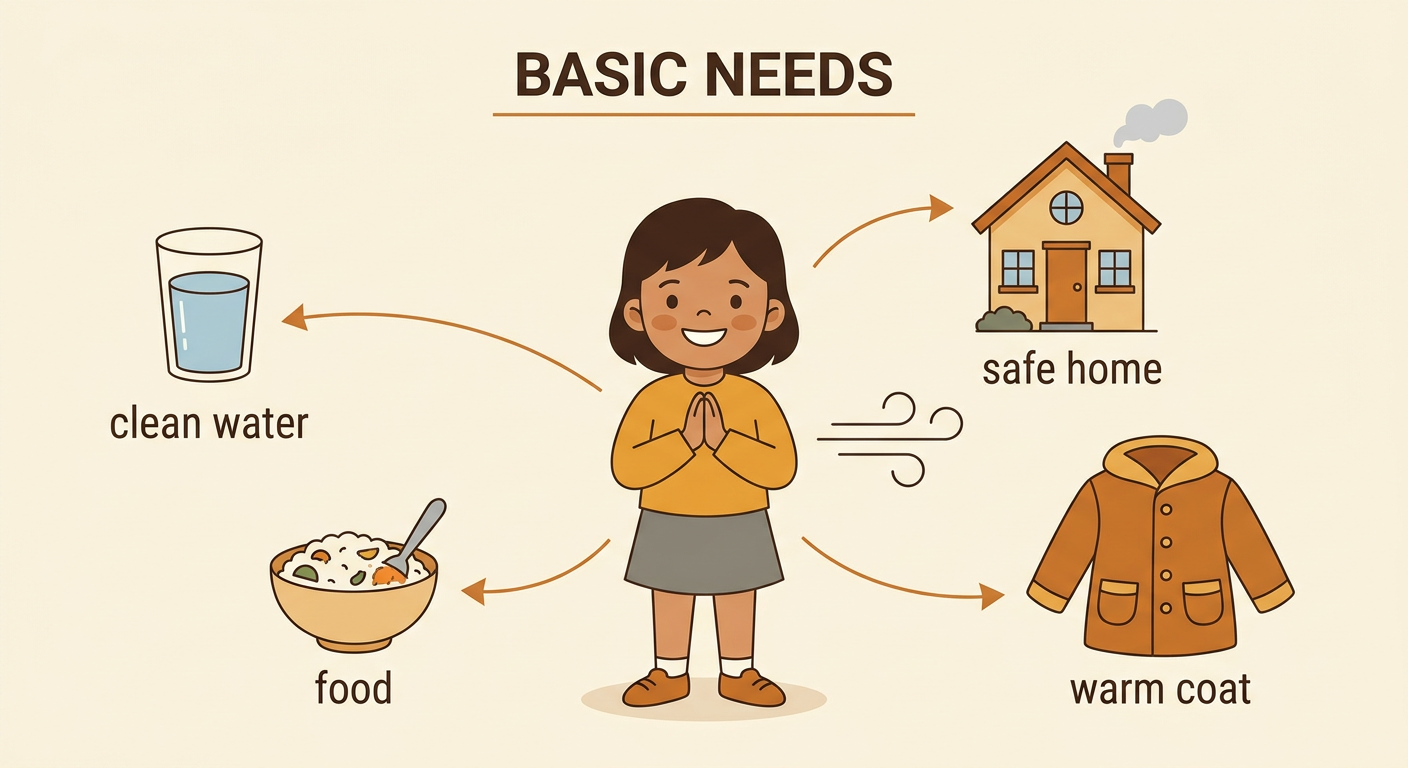
A need is something a person must have to live, grow, stay healthy, or stay safe. People need clean air, water, food, and a safe place to live. They also need clothing that protects them from the weather. Needs can change with the place or situation. A warm coat is needed on a freezing day, but it is not needed on a hot summer day. Imagine that Maya feels thirsty after playing outside. Drinking clean water meets an important need. A fancy water bottle may be fun, but Maya can meet her need with water in a simple cup. Talk with a classmate about one thing you need each day. Listen while your classmate shares an idea, and take turns speaking.
Needs Versus Wants
Needs and wants are not the same. A need is necessary for health or safety. A want is something a person would like to have, but can live safely without. For example, Sam needs food for lunch. A sandwich can meet that need. Sam may want a frosted cupcake because it tastes sweet, but the cupcake is not necessary. Wants can make life enjoyable, and it is okay to have them. However, people usually take care of important needs before buying wants. Sometimes an item depends on the situation. Shoes are a need for protecting feet outside, but a second pair of glittery shoes may be a want. When classmates sort an item differently, they can take turns explaining their reasons and listening to one another.

Resources We Use
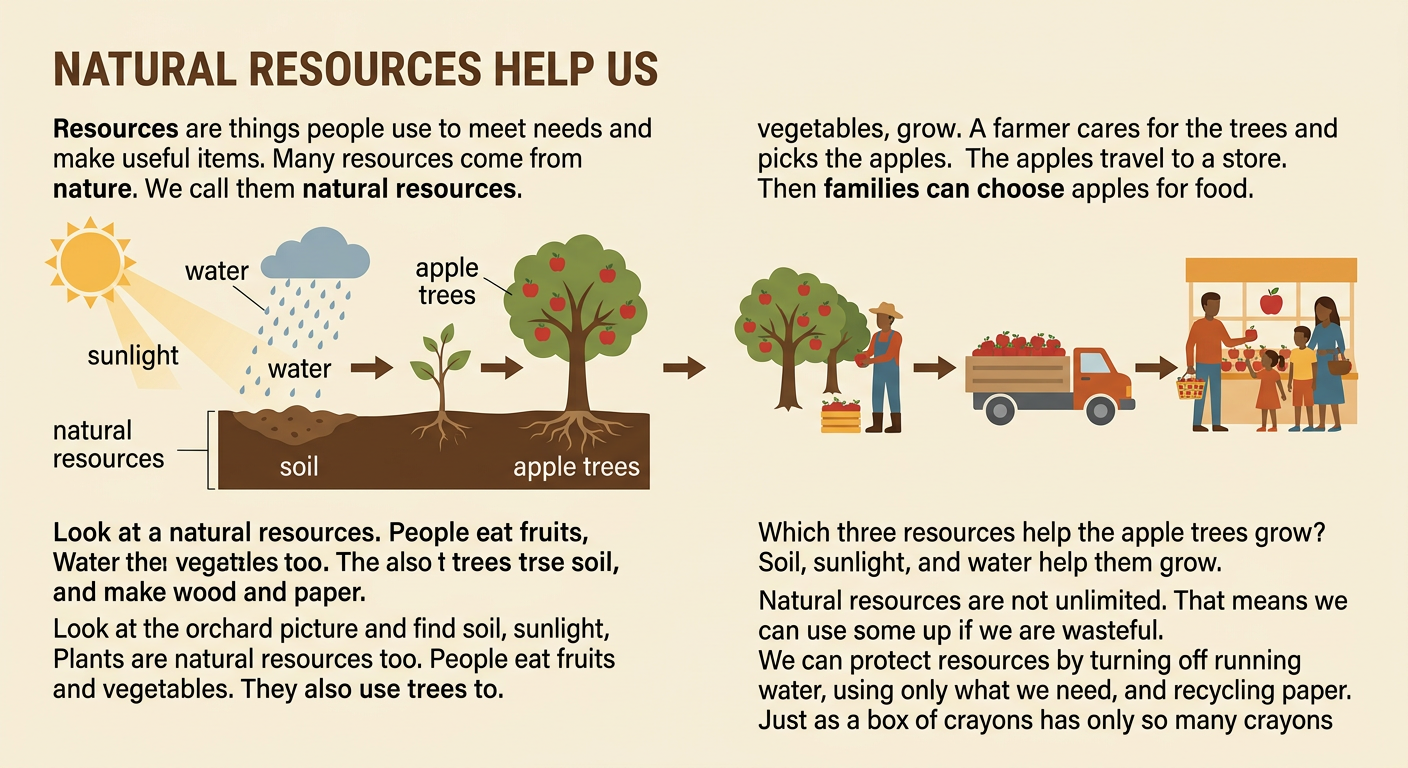
Resources are things people use to meet needs and make useful items. Many resources come from nature. Water is a natural resource that people drink and use to grow food. Plants are natural resources too. People eat fruits and vegetables, and they use trees to make wood and paper. Soil, sunlight, and water help plants grow. Imagine a farmer growing apples. The apple trees need soil, sunlight, and water. People care for the trees, pick the apples, and carry them to stores. Families can then choose apples for food. This is a simple model of how natural resources help meet a need. Natural resources are not unlimited, so people can protect them by using only what they need, saving water, and recycling paper.
Making a Choice
People cannot always have everything they need and want. Money, materials, and time are limited resources. When there is not enough of a resource for every possible use, people must make a choice. This is called scarcity. Suppose a family has three dollars left for shopping. The family needs bread for breakfast, and a child wants a sheet of stickers. If each item costs three dollars, the family cannot buy both. The family may choose the bread because food is an important need. Choosing bread means giving up the stickers for now. People may make different choices because their needs and resources are different. When discussing a choice, take turns speaking. Explain what you would choose, give a reason, and listen carefully to your classmates' ideas.

Needs and Wants Sort
Now sort picture cards into two groups: Needs and Wants. Look at one card at a time and think about whether the item helps a person live, stay healthy, or stay safe. A card showing clean water belongs with Needs because people must drink water. A card showing a kite belongs with Wants because flying a kite is fun, but people can live safely without one. Place a healthy meal, a safe home, and a warm coat for cold weather with Needs. Place a toy train, candy, and a party hat with Wants. Then compare your groups with a partner. Take turns choosing one card and explaining your reason in a complete sentence. If you disagree, listen politely and talk about the situation before deciding where the card belongs.
