Needs, Wants, and Making Choices
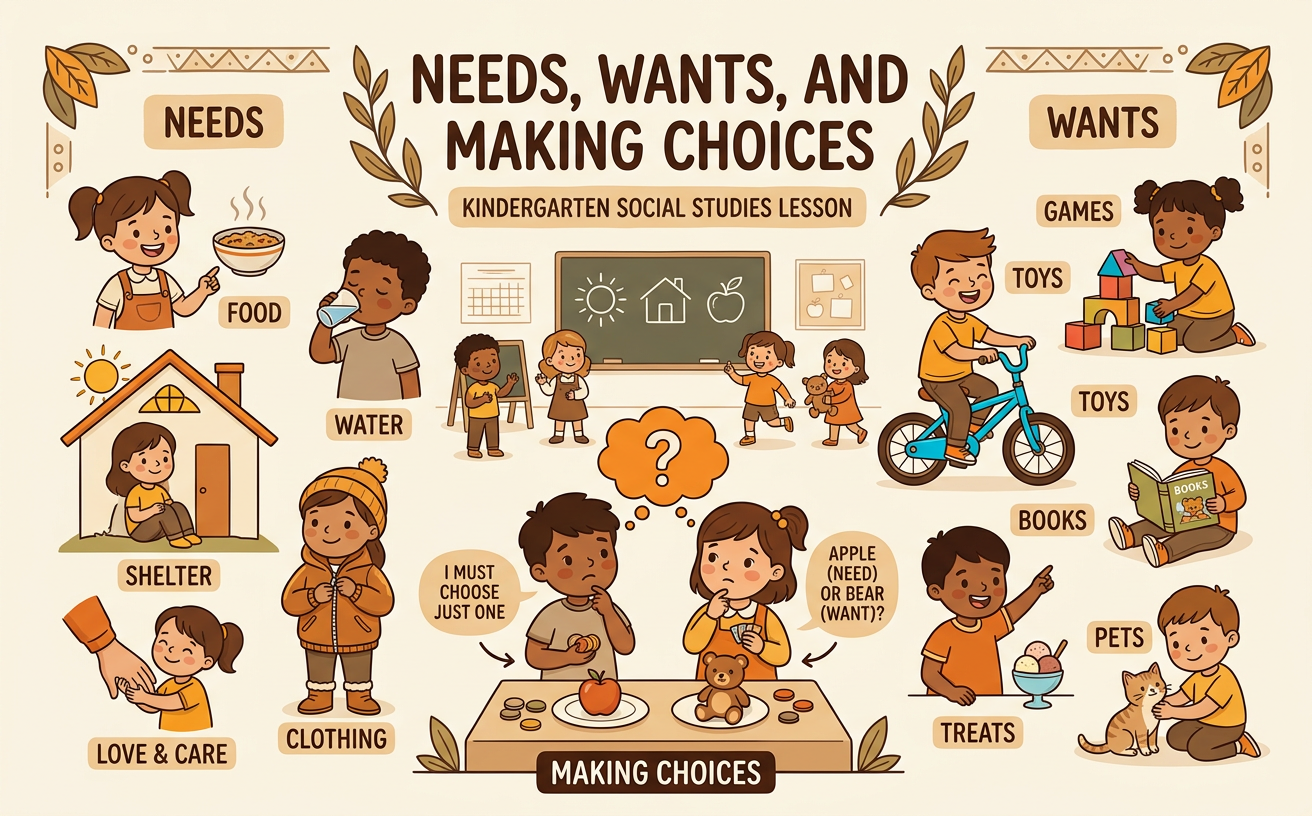
Students identify needs and wants and practice making a choice when they cannot have everything at once.
Illustrations are auto-generated and may be placeholders. They can be refreshed to match the narration.
What Do People Need?
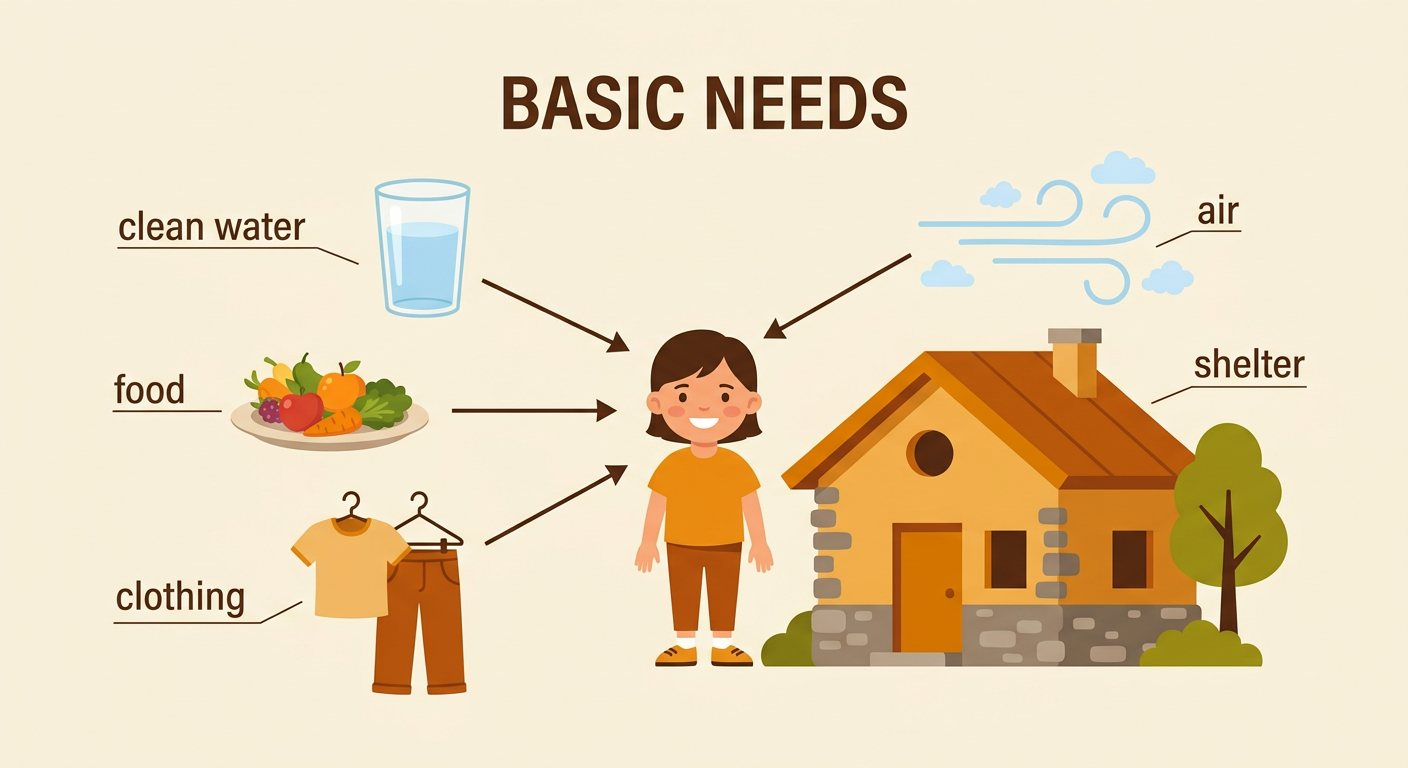
Needs are things people must have to live, stay safe, and stay healthy. Everyone needs clean water, food, clothing, shelter, and air. People meet these needs by using resources from Earth and their community. For example, a family needs water for drinking and washing. Water may come from a river, lake, well, or community water system. A home provides shelter from rain, wind, heat, and cold. Clothing helps protect the body from weather. Different places may provide resources in different ways, but all people share basic needs. Think about your day. You drink water, eat food, wear clothes, and spend time in a safe building. These are examples of needs being met.
Needs Versus Wants
A need is something necessary for health and safety. A want is something a person would like to have but can live without. A warm coat on a cold day is a need because it protects the body. A toy robot is a want because it may be fun, but it is not needed to stay healthy or safe. Sometimes an item can depend on the situation. Shoes are a need, but a second pair chosen only because it sparkles may be a want. People can ask questions to tell the difference: Do I need this to be safe? Do I need it to be healthy? Can I live without it? Talking and listening to classmates can help everyone compare ideas respectfully.

When We Cannot Choose Everything
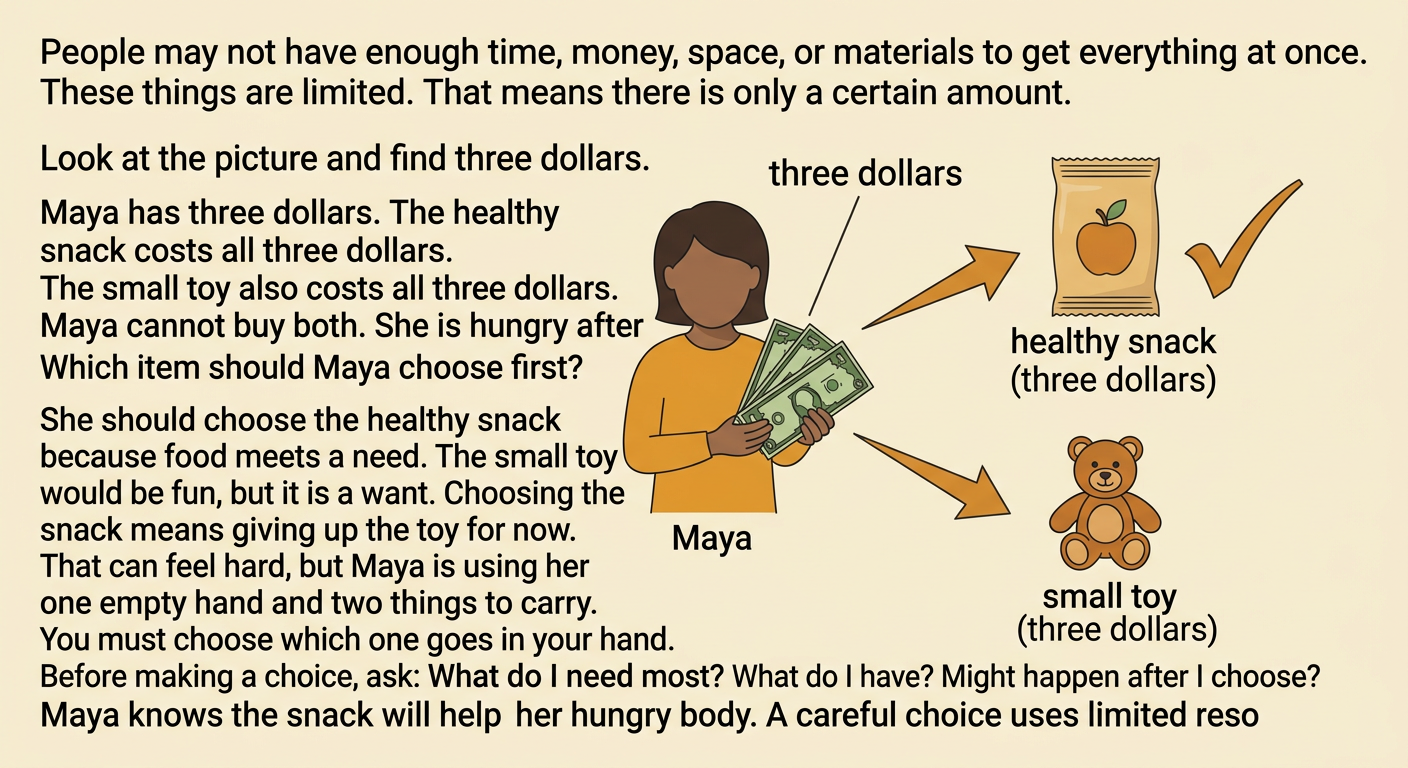
People do not always have enough time, money, space, or materials to get everything they need and want at once. These resources are limited, so people must make choices. Imagine Maya has three dollars. A healthy snack costs three dollars, and a small toy also costs three dollars. Maya cannot buy both. She is hungry after school, so she chooses the snack. The toy would be fun, but the snack meets her need for food. Choosing one thing often means giving up another thing for now. Before choosing, people can think about what they need most, what resources are available, and what may happen after the choice. A careful choice uses limited resources wisely.
Picture-Sorting Activity
Look at each picture and decide whether it shows a need or a want. Place pictures of clean water, healthy food, basic clothing, and safe shelter in the Needs group. Place pictures of a toy train, candy, a fancy costume, and a video game in the Wants group. Take turns with a partner. When it is your turn, choose one picture, place it in a group, and explain your thinking. You might say, “I put clean water under Needs because people need it to live.” Your partner should listen, then agree or politely share another idea. If a picture could depend on the situation, talk about it together. Use the questions “Does it keep someone healthy?” and “Does it keep someone safe?” to help sort.

Make and Explain a Choice
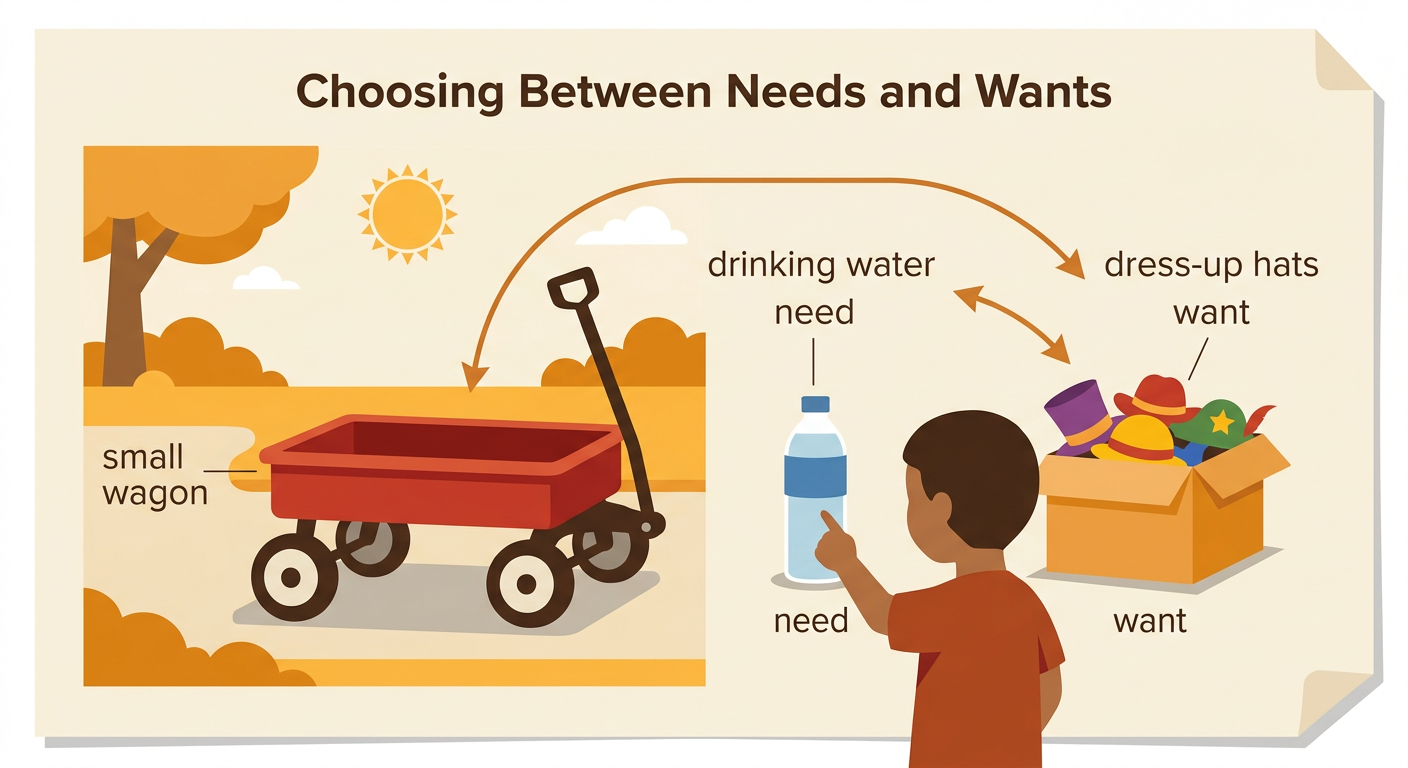
Now practice making a choice with limited resources. Imagine your class has space in a small wagon for only one item on a short park trip. You may choose a container of drinking water or a box of dress-up hats. Think about the place, the people, and what they will need. The park may be warm, and everyone needs water to stay healthy. The hats could make a game more fun, but the class can visit the park without them. Choose one item and explain why. Say, “I choose the water because drinking water meets a need.” Then listen as classmates explain their choices. You may agree or disagree politely. A strong explanation names the choice, tells whether it meets a need or a want, and gives a clear reason.