
Patterns That Repeat in Programs
Students identify a repeating pattern of actions and use a repeat card to represent the pattern as a simple program.
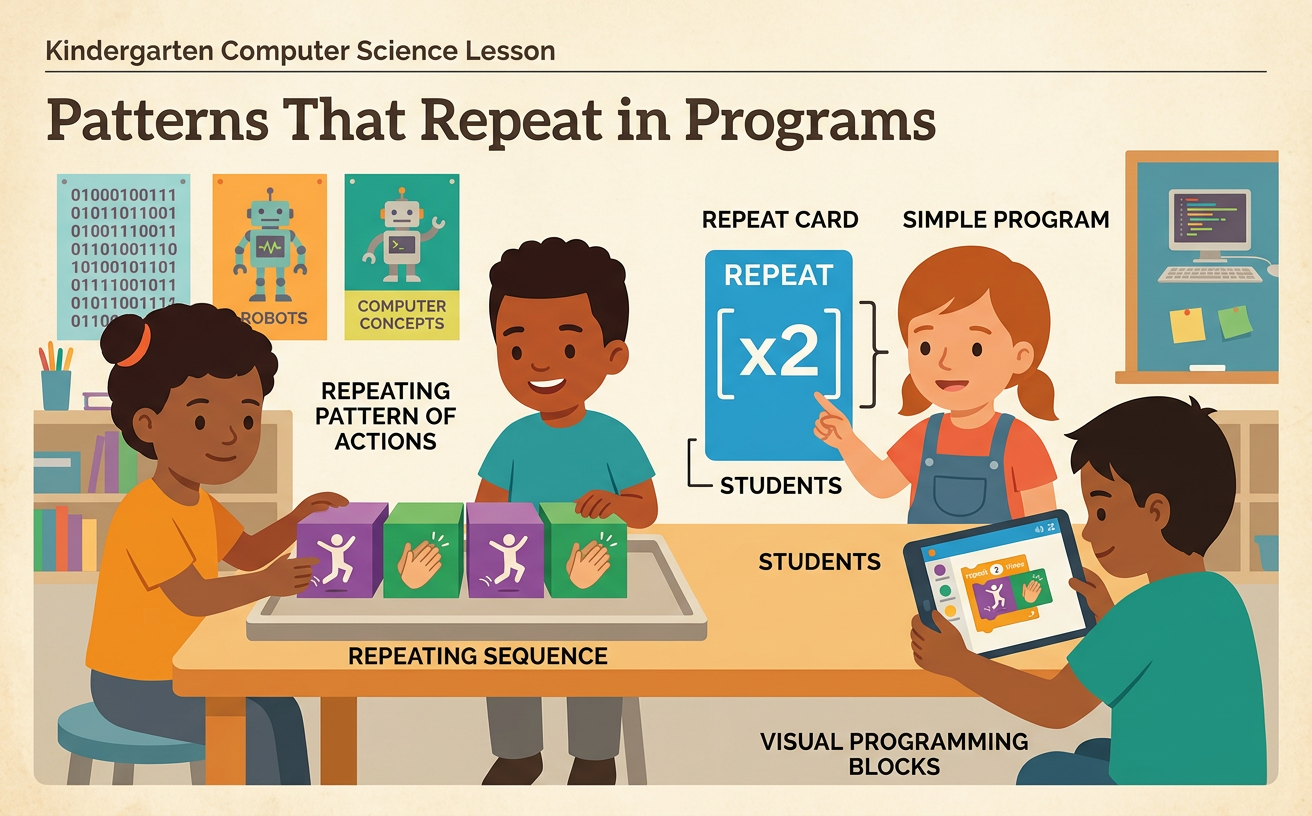
Illustrations are auto-generated and may be placeholders. They can be refreshed to match the narration.
Act Out a Repeating Pattern
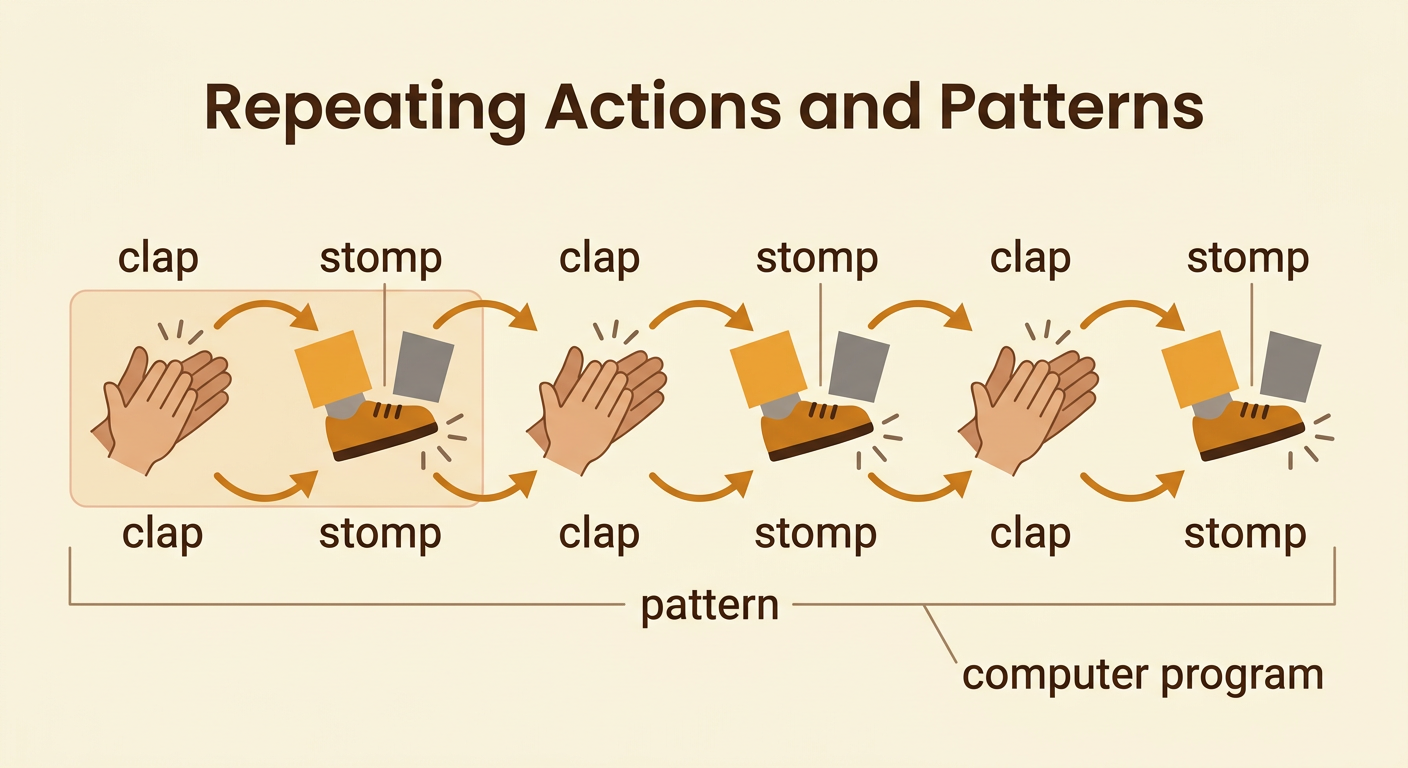
A pattern is something that happens in the same order again and again. Let us make a pattern with two actions: clap, then stomp. Stand with enough space around you. Clap once. Stomp once. Now do the same two actions again: clap, stomp. Keep going: clap, stomp, clap, stomp. Listen and watch for the order. The clap always comes before the stomp. Work with a partner and take turns leading the pattern. Follow your class rules by listening, waiting for your turn, and keeping your hands and feet in your own space. If your partner changes an action by mistake, kindly say, “Let us try clap, stomp again.” Repeating actions in order is like following a simple computer program.
Find What Repeats
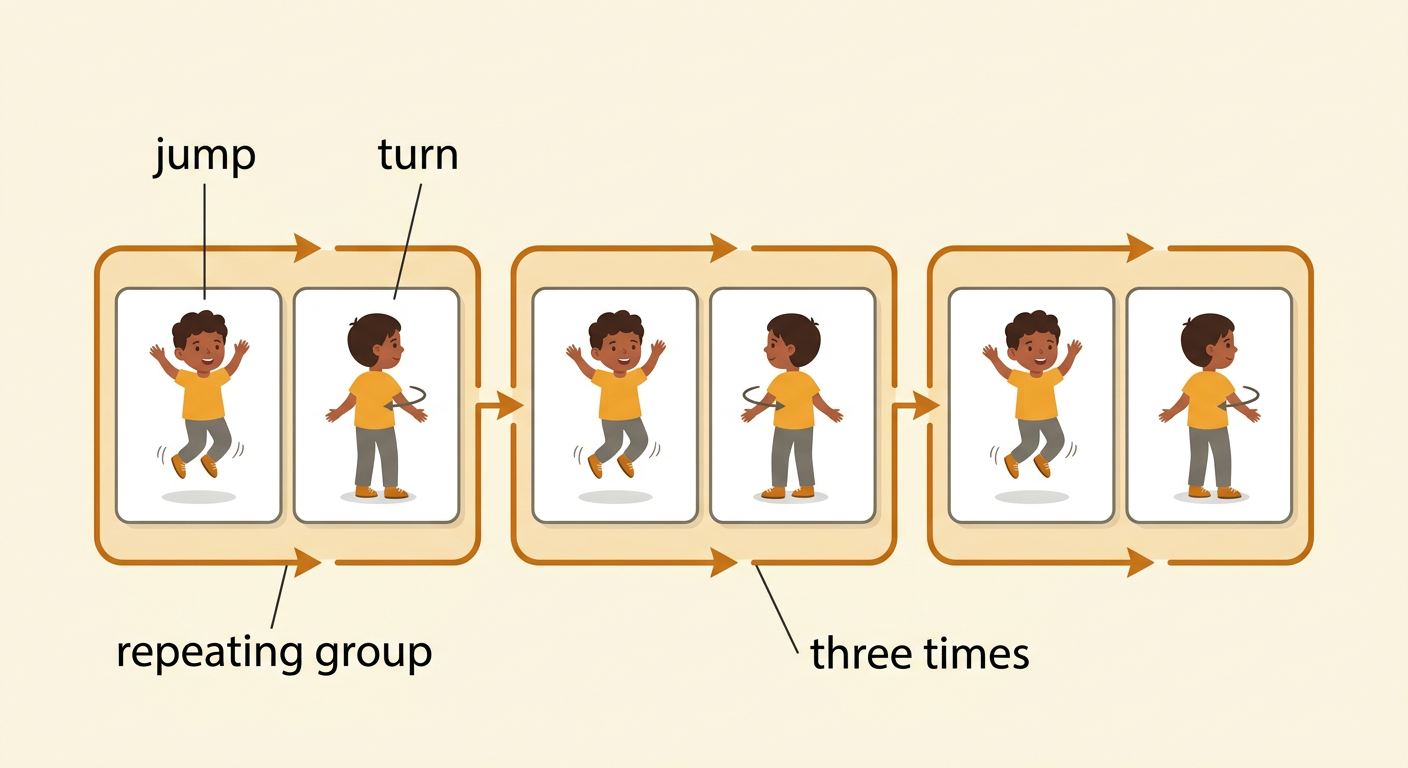
To find what repeats, look for the smallest group of actions that comes back in the same order. Try this pattern: jump, turn, jump, turn, jump, turn. Point to each action as you say it. What group keeps coming back? The repeating group is jump, turn. We do not need to name all six actions one at a time. We can name the two-action group and say that it repeats three times. Check your answer by covering the first jump and turn. Do the actions that remain still make the same group? Yes. Talk with a classmate about what you notice. One person can explain while the other listens. Then switch roles. Use a complete idea such as, “Jump and turn are the actions that repeat.”
Meet the Repeat Card
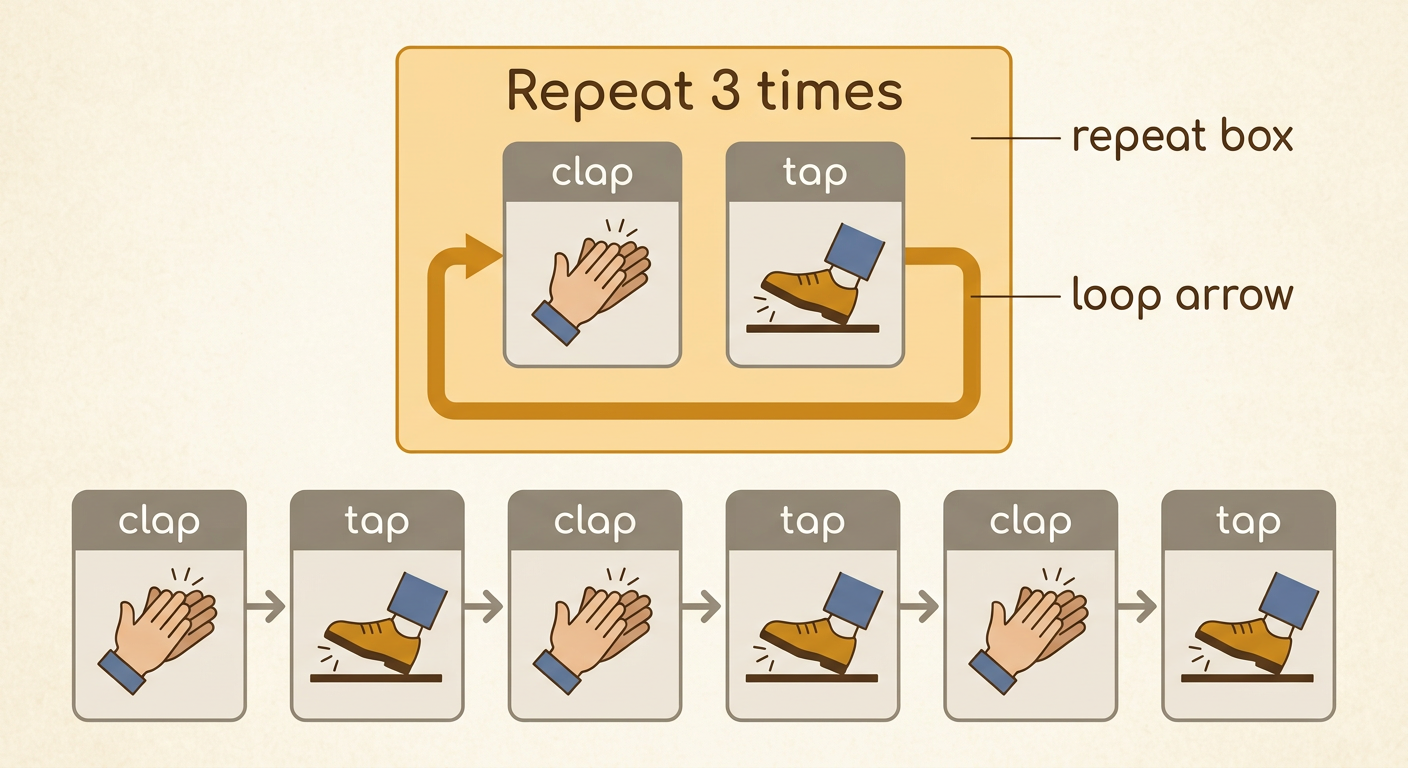
A program is a set of directions for what to do. A repeat card makes a program shorter by telling us to do the same group again. Imagine a card that says, “Repeat 3 times.” Put the actions clap and tap inside its box. The program means: clap, tap, clap, tap, clap, tap. We follow the actions inside the repeat box three times. The number tells how many times to do the whole group, not just the last action. Trace the program with your finger. Start at clap, move to tap, and then follow the loop arrow back to clap. Repeat cards help people show an idea clearly. They also help classmates test the same program and see whether it works as planned.
Build a Movement Program
Now build a program with movement cards. Choose two safe actions, such as step forward and wave. Place the cards in order inside a repeat card. Choose how many times to repeat the group. For example, “Repeat 2 times: step forward, wave” means step forward, wave, step forward, wave. Draw your program before anyone moves. Your drawing is a model that shows how the program should work. Check that there is open space for each step. Then give the program to a partner. Ask your partner to point to each card while acting it out. If the actions do not make the pattern you planned, change the card order or the repeat number. Designers often improve a model after testing it.

Share and Test the Pattern
Share your program with a small group. First, show the cards without acting out the pattern. Ask your classmates to predict what will happen. Next, choose one person to follow the program while the others watch. Use agreed-upon rules: take turns speaking, listen to the speaker, and respond kindly. Compare the movement with the cards. Did every action happen in the correct order? Did the whole group repeat the correct number of times? For example, a repeat card may say, “Repeat 3 times: hop, clap.” The tester should do hop, clap three times. If the tester does only two groups, point to the repeat number and try again. End by saying one thing that worked and one helpful idea for improving the program.
