Plant Parts Have Important Jobs
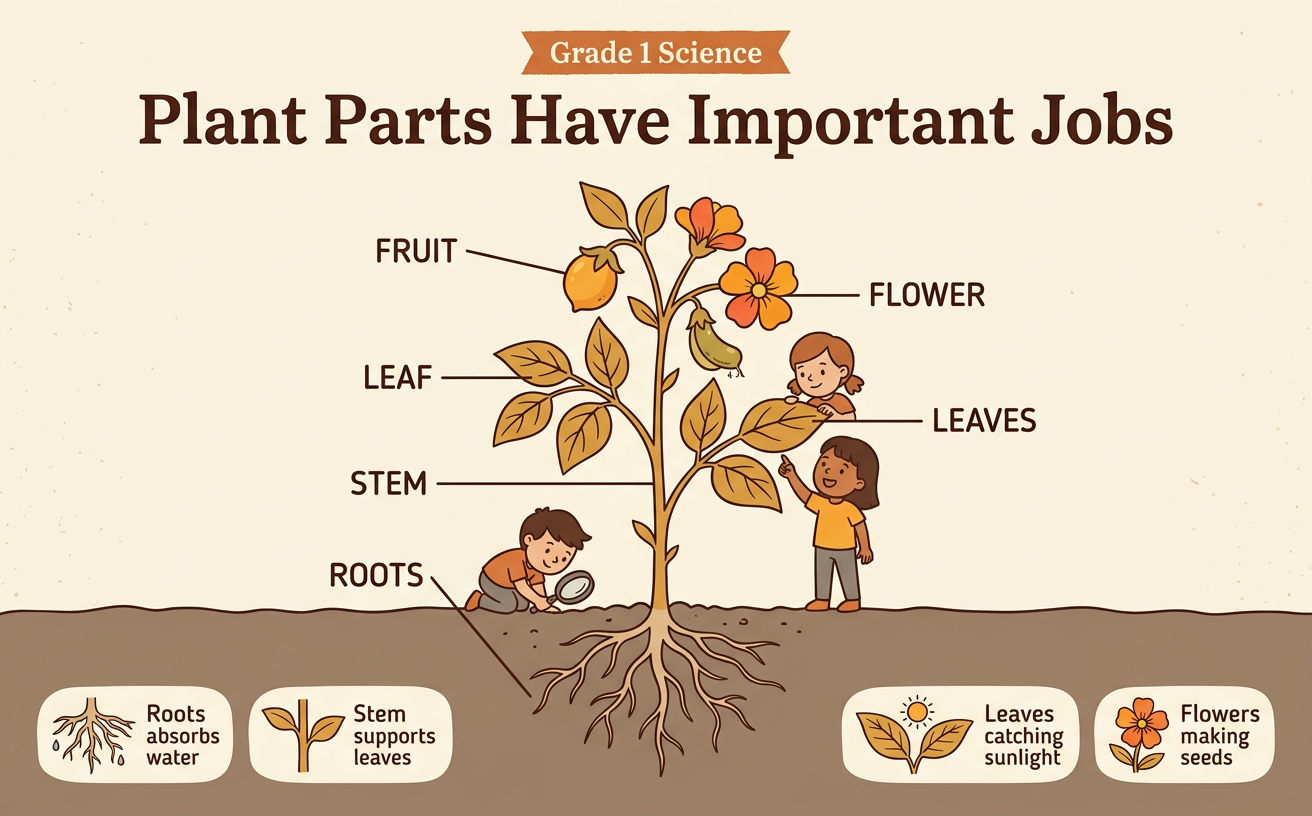
Students observe roots, stems, leaves, and flowers and explain how each plant part helps the plant survive and grow.
Illustrations are auto-generated and may be placeholders. They can be refreshed to match the narration.
Notice the Plant Parts
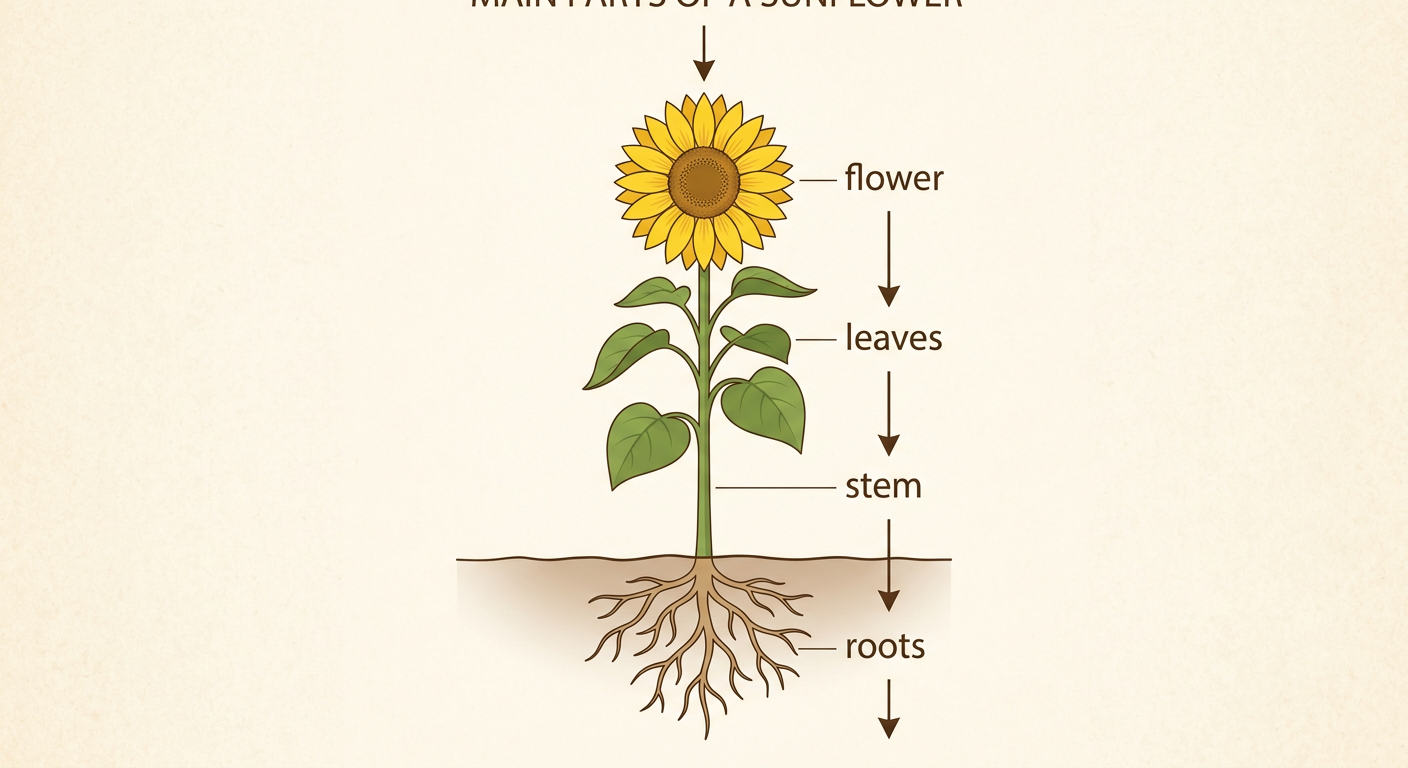
Look closely at a plant from top to bottom. Most plants have roots, a stem, leaves, and sometimes flowers. Roots usually grow under the soil, where they hold the plant in place. The stem grows upward and supports the leaves and flowers. Leaves often spread out from the stem. Flowers may be colorful and can help the plant make seeds. These parts may look different on different plants, but each part has an important job. For example, a sunflower has many roots below the soil, a tall, strong stem, broad green leaves, and a large flower at the top. Point to each visible part. Then describe its color, shape, size, or location using a complete sentence.
Match Each Part to Its Job
Every plant part has a job that helps the plant survive and grow. Roots take in water and minerals from the soil and help anchor the plant. The stem supports the plant and carries water from the roots to the leaves. Leaves use sunlight, air, and water to make food for the plant. Flowers help many plants make seeds, which can grow into new plants. Imagine a bean plant after rain. Its roots absorb water from the wet soil. The stem carries the water upward. The leaves collect sunlight, and the flowers may later form bean pods with seeds. Match each part to its job by asking, “What does this part help the plant do?”

Observe a Real Plant
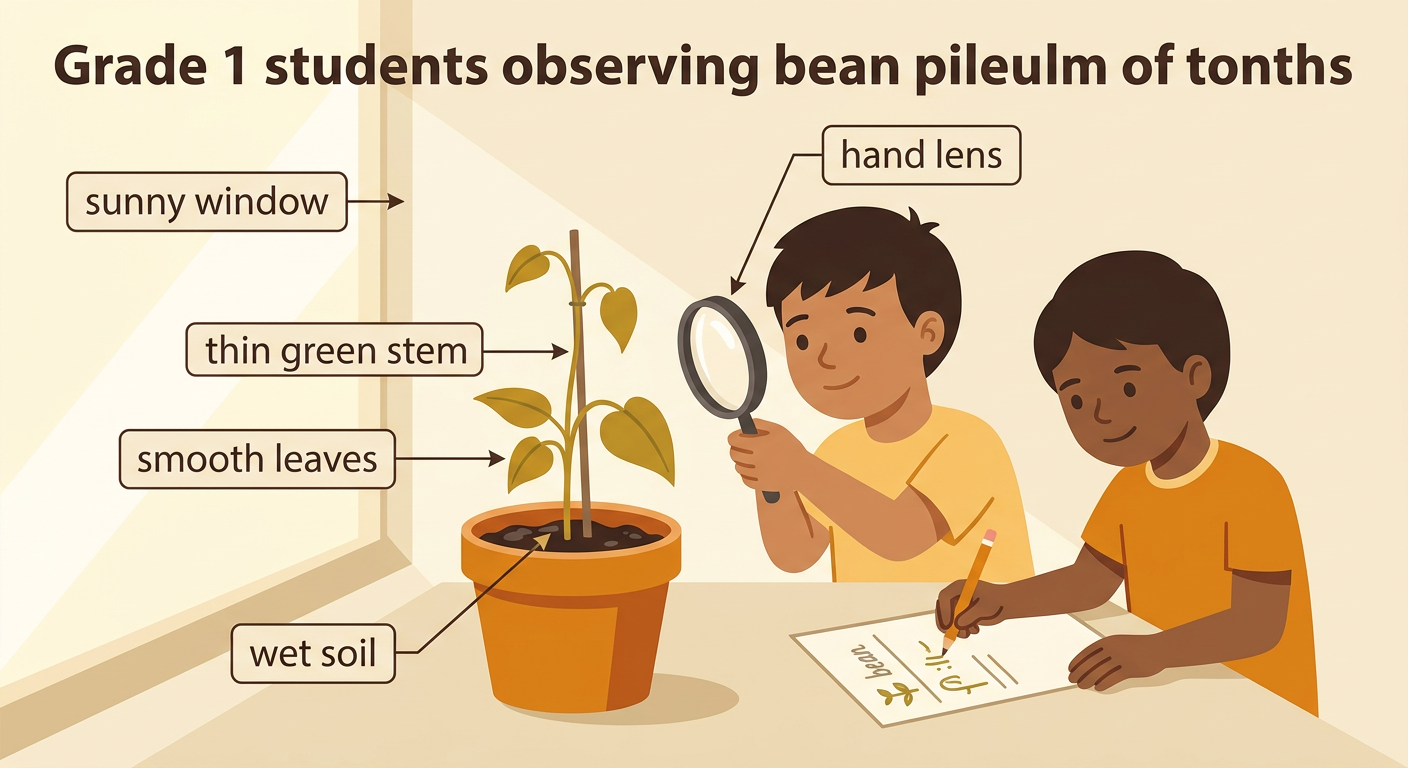
Work with a partner to observe a safe classroom or outdoor plant. Look carefully, but do not pull off its parts. Find the stem, leaves, flowers, and any roots that can be seen. Some roots may be hidden in soil. Use a hand lens if one is available. Record what you notice together. You might write, “Our bean plant has a thin green stem and six smooth leaves.” Also notice the plant’s place. Is it sunny or shady, wet or dry, indoors or outdoors? These environmental characteristics affect how the plant grows. For example, a plant near a sunny window may bend toward the light. Ask questions, compare observations, and add one new fact to the class research chart.
Draw and Label the Plant
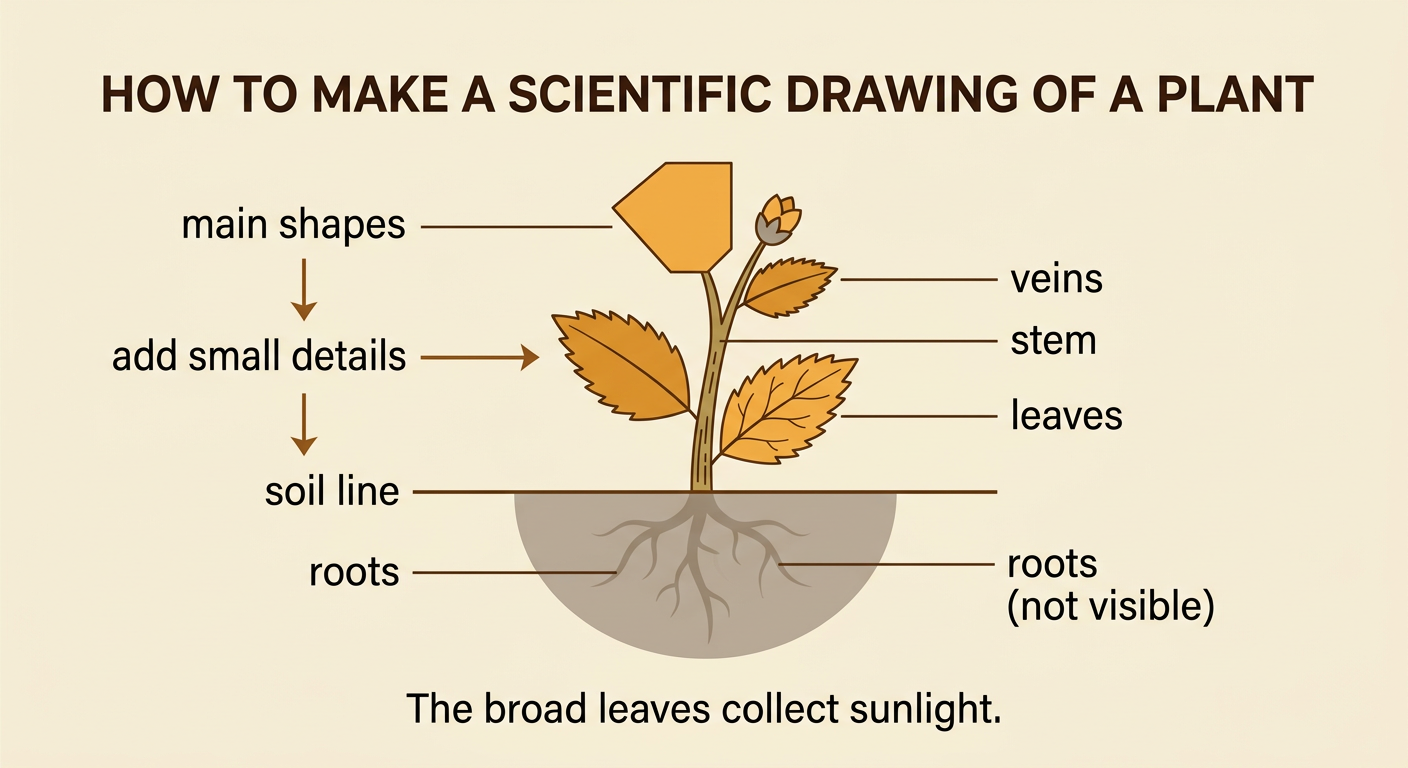
Make a scientific drawing of the plant you observed. Draw what you truly see instead of adding imaginary details. Begin with the main shapes and then add smaller details, such as leaf edges or lines on the stem. Include the soil line if the plant is growing in soil. Use straight label lines to identify roots, stem, leaves, and flower when those parts are present. If roots or flowers are not visible, write, “not visible,” instead of guessing. Add one sentence that connects a part to its job. For example, write, “The broad leaves collect sunlight.” Share drawing tools and ideas as part of a class research project. A clear drawing, accurate labels, and a fact sentence help other people understand your observation.
Share How Plant Parts Help
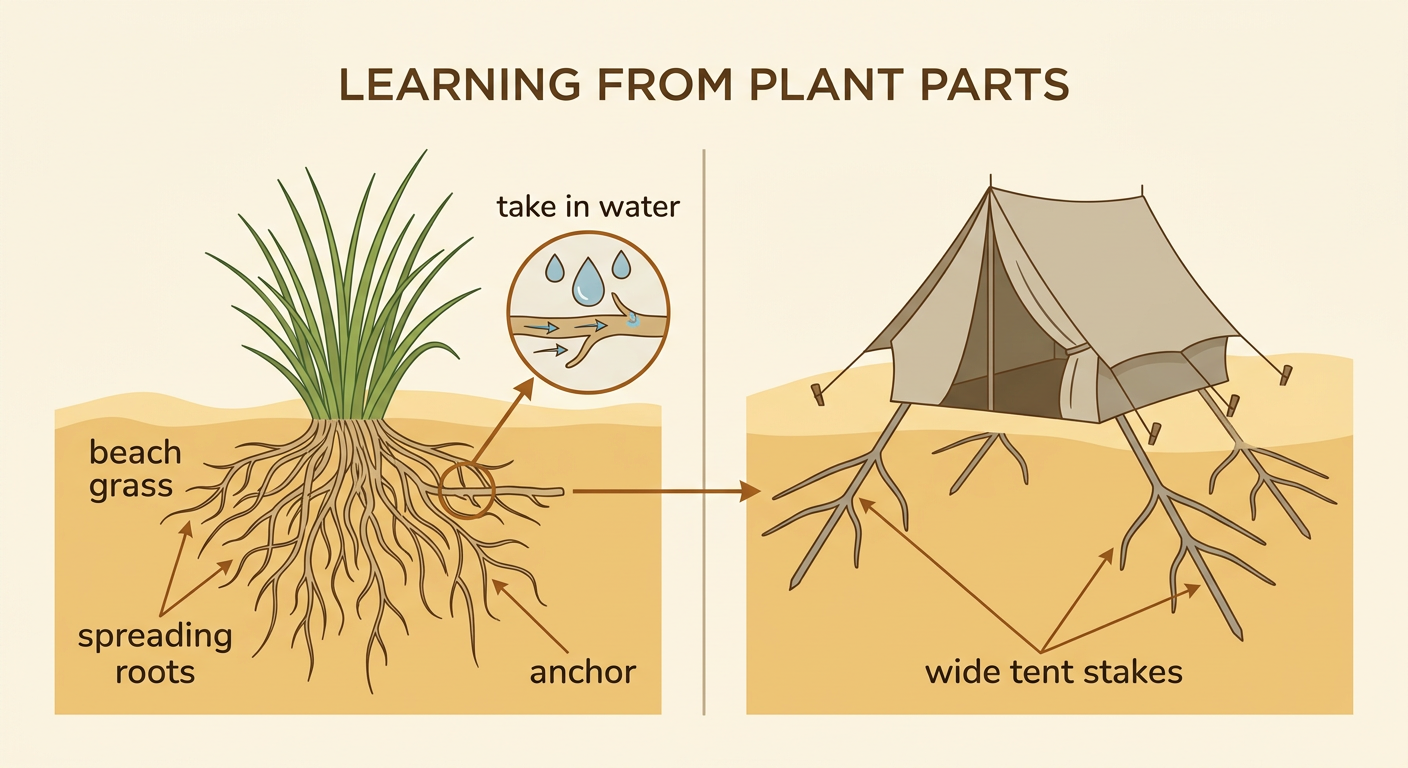
Show your drawing to a partner or the class. Name one plant part and explain how its job helps the plant. You might say, “Roots help this plant survive because they take in water and hold it in the ground.” Listen to another student and ask a question. Then think like an engineer. People can copy useful plant parts to solve problems. For example, beach grass has spreading roots that help it stay anchored in loose, windy sand. A person designing a tent for a windy beach could make wide, branching stakes that act like roots. Use paper, craft sticks, or clay to model the idea. Explain which plant part inspired the design and what human problem it helps solve. Plant structures can give people useful ideas.