Plant Parts Work Together
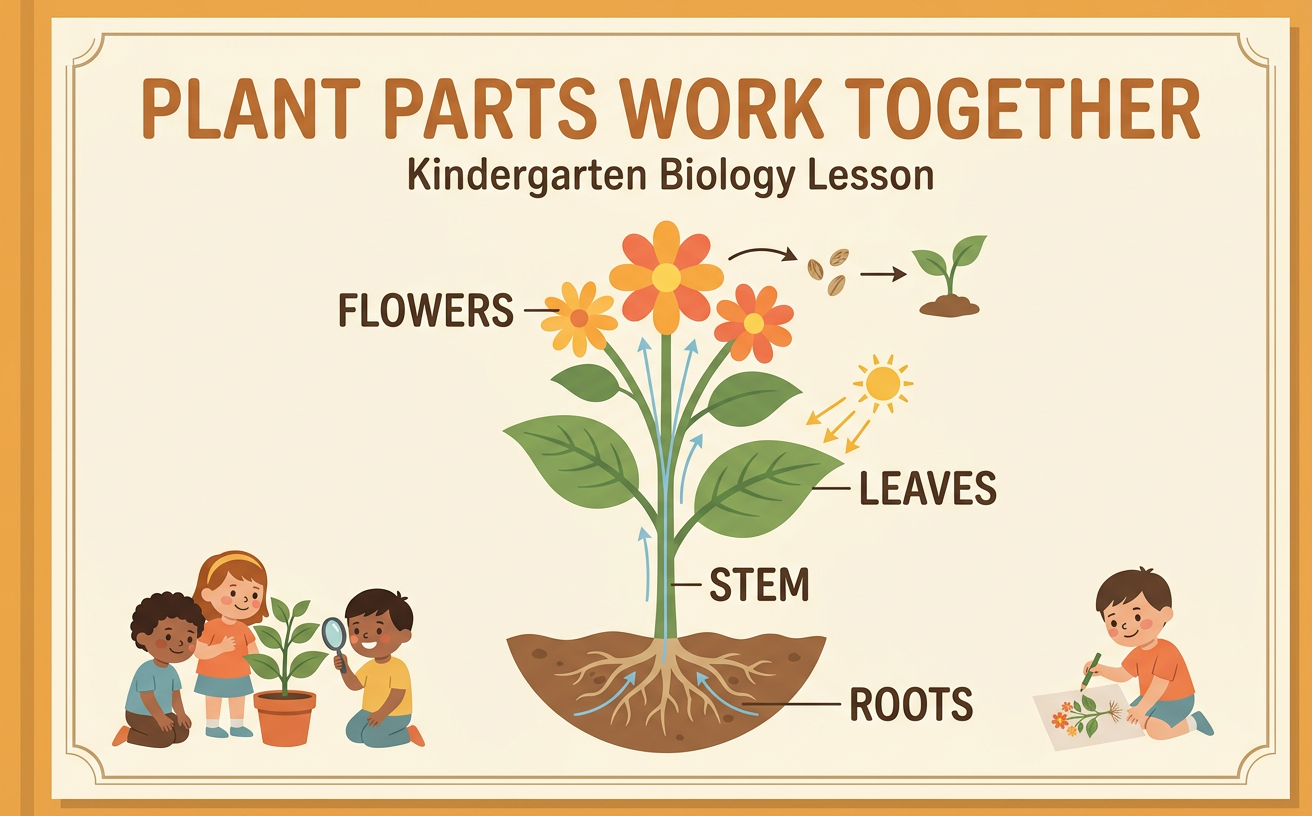
Students observe roots, stems, leaves, and flowers and explain how these parts help a plant get water and sunlight, grow, and make new plants.
Illustrations are auto-generated and may be placeholders. They can be refreshed to match the narration.
Meet the Whole Plant
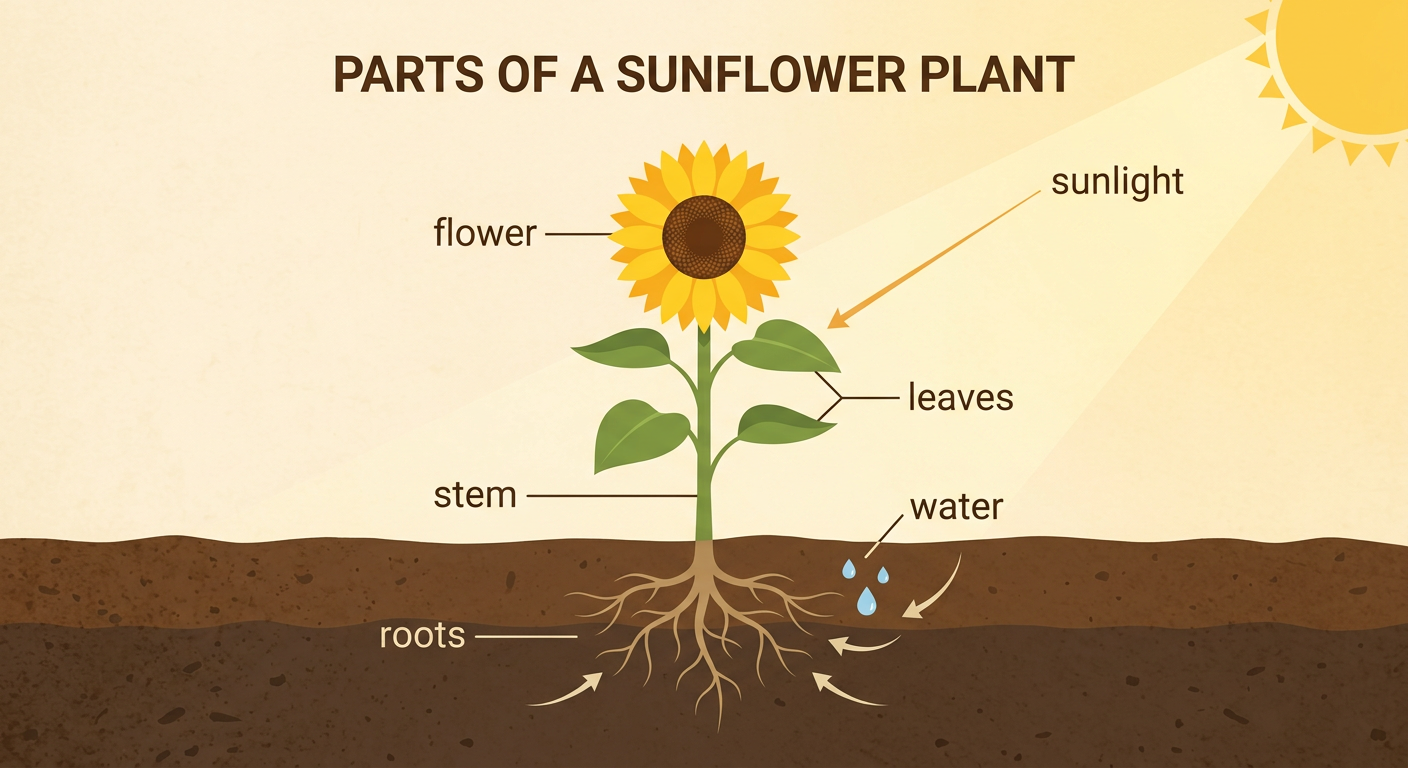
A plant has parts that work together like a team. Roots are usually under the soil. A stem grows above the roots. Leaves grow from the stem, and flowers may grow near the top. Each part has a special job. Most plants need water and sunlight to live and grow. Look at a photograph of a sunflower in a sunny garden. Its roots take in water from damp soil. Its stem holds the plant up. Its wide leaves collect sunlight. Its flower helps the plant make seeds. Now compare it with a plant growing in a shady forest. Both plants have similar parts, but their places have different amounts of light, water, and space. Observing where plants grow helps us notice patterns in what they need.
Roots Drink and Hold
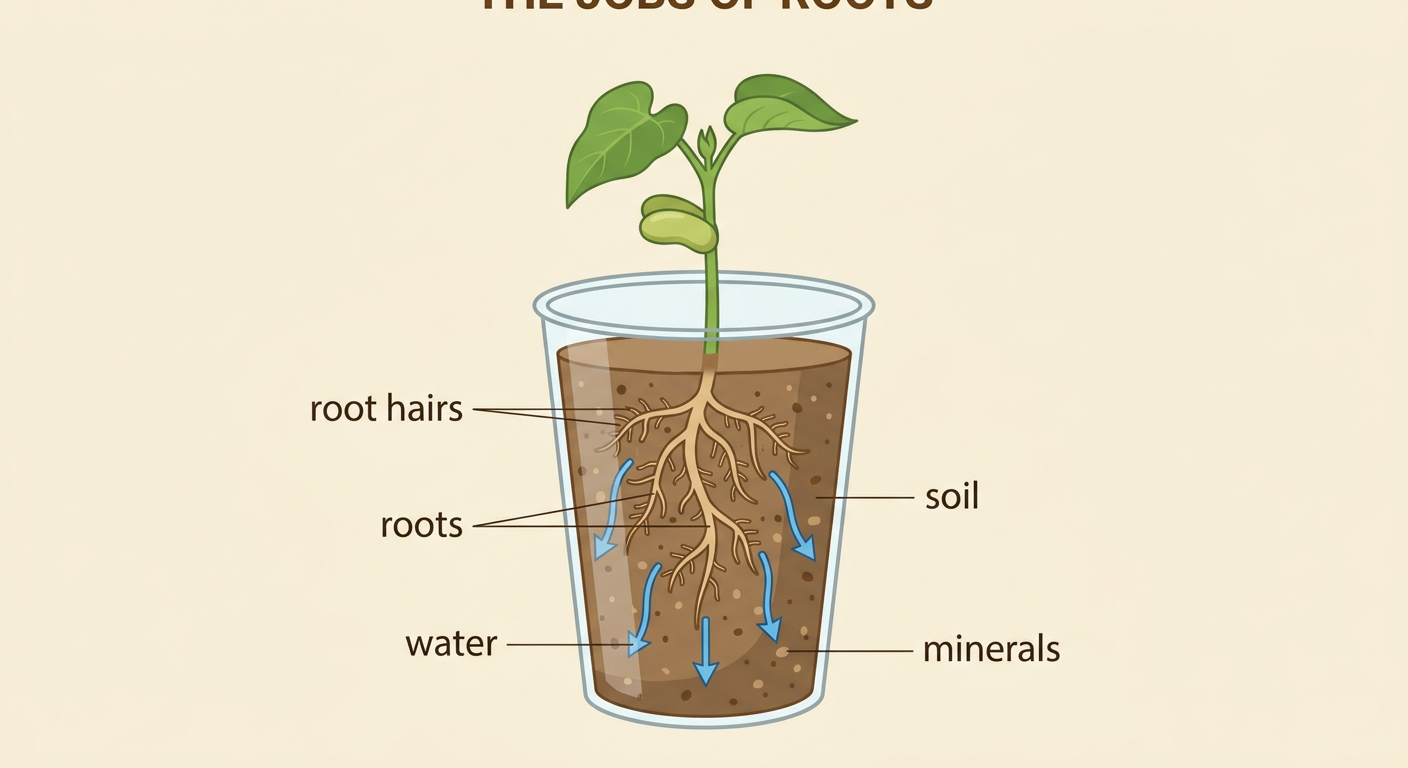
Roots usually grow down and out through the soil. They take in water and dissolved minerals that the plant needs. Tiny root hairs help collect water from spaces in the soil. Roots also hold the plant in place, so wind and rain do not easily knock it over. Imagine a bean plant in a clear cup with damp soil. You can see white roots spreading under the surface. When water is poured onto the soil, it moves into the soil and reaches the roots. The plant uses this water as it grows. Plants in dry places may have long or spreading roots that help them reach scarce water. Plants in wet places may not need to reach as far. The kind of place can affect how roots grow.
Stems Support and Carry
The stem connects the roots to the leaves and flowers. It supports the plant and holds its leaves where they can reach sunlight. Inside the stem are tiny tubes that carry materials through the plant. Water and minerals move up from the roots toward the leaves. Sugars made in the leaves can move to other plant parts. Try observing a celery stalk placed in water with food coloring. After some time, colored lines may appear in the stalk and leaves. The colored water shows where water traveled upward through the stem. Stems can look different. A sunflower has a tall, firm stem, while a pumpkin vine has a long stem that trails across the ground. Even though they look different, both stems support plant parts and carry materials.

Leaves Catch Sunlight
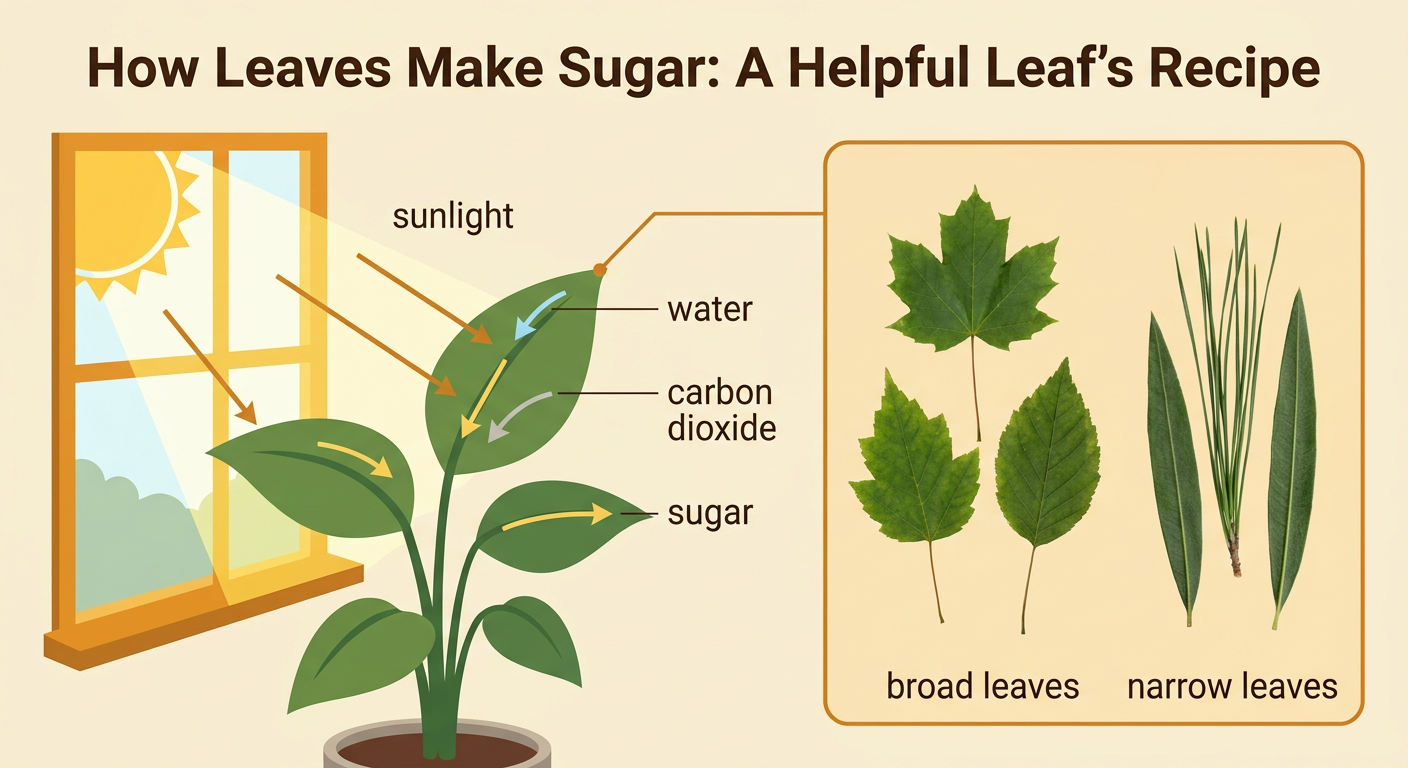
Leaves are often flat and wide, which helps them catch sunlight. A leaf uses energy from sunlight, along with water from the roots and carbon dioxide from the air, to make sugar for the plant. The sugar provides stored energy and materials for growth. Leaves also release oxygen into the air. Look at a houseplant near a bright window. Many of its leaves turn toward the light. A plant kept without enough light may become pale or grow poorly. Leaves come in many shapes and sizes. A maple leaf is broad, while a pine needle is narrow. Sort photographs of leaves into two categories: broad leaves and narrow leaves. Then count how many are in each category. Different leaf shapes can help plants live in different environments, but all green leaves need light to do their job.
Flowers Help Make New Plants
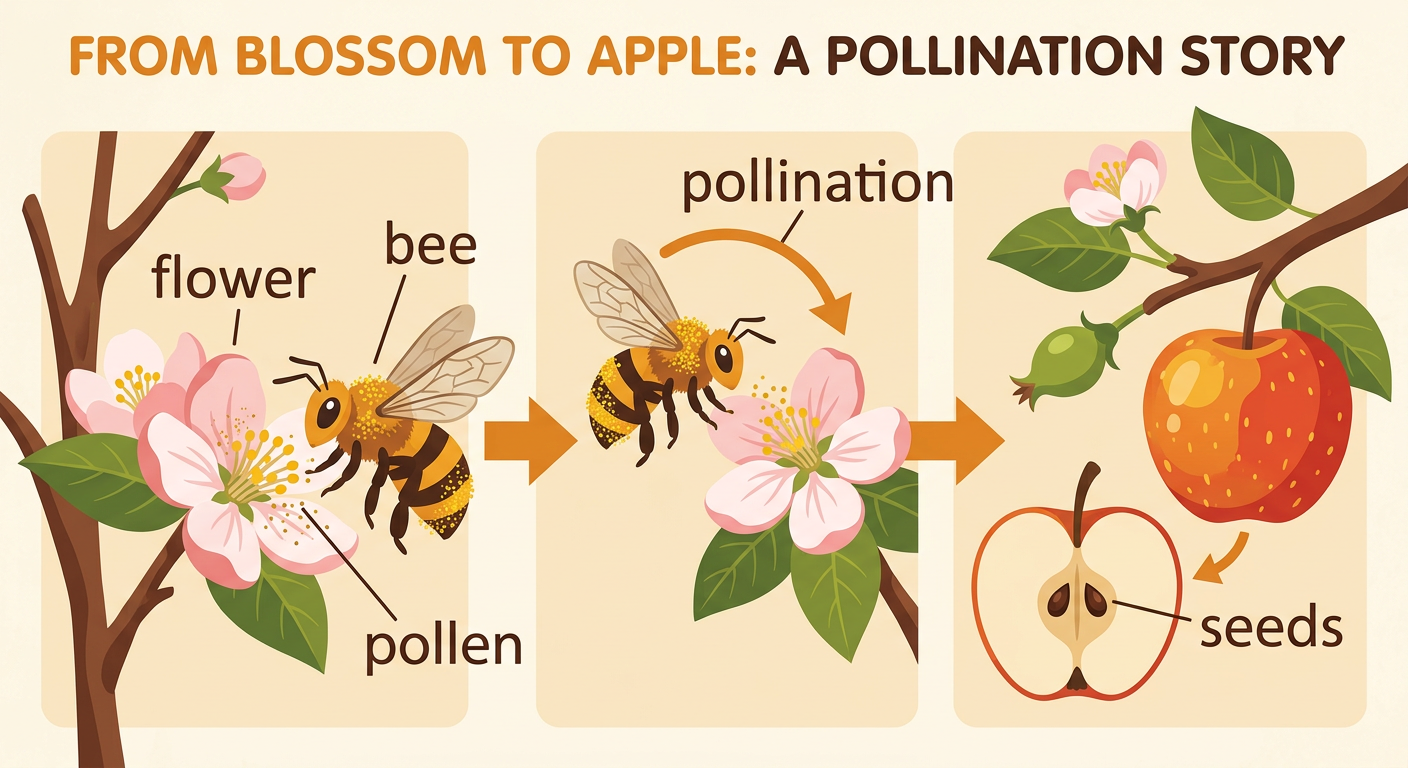
Flowers are the parts of many plants that help make new plants. A flower may have colorful petals, pollen, and parts that can form seeds. Bright colors and scents can attract bees, butterflies, and other pollinators. When a bee visits a flower, pollen can stick to its body. The bee may carry that pollen to another flower of the same kind. This is called pollination. After pollination, some flowers develop seeds, often inside a fruit. For example, a bee can visit an apple blossom. Later, part of the flower can grow into an apple with seeds inside. If a seed gets water, air, and a suitable temperature, it may sprout and become a new plant. Not every plant has flowers, but flowering plants use flowers to help reproduce.
Draw and Label a Plant
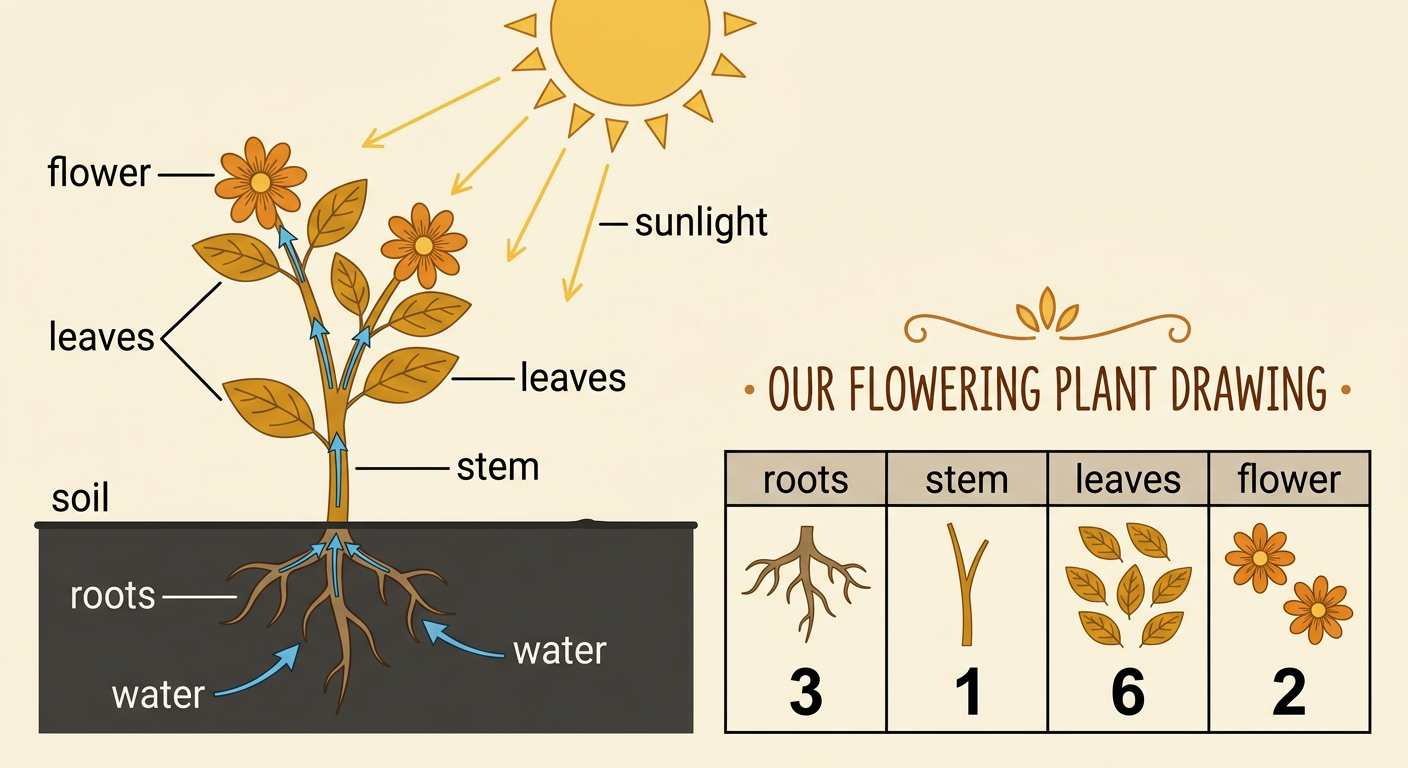
Use your observations to draw a whole flowering plant. Include roots below a soil line and a stem above it. Add leaves and at least one flower. Draw the sun in the sky and water in the soil to show what the plant needs. Then label the roots, stem, leaves, and flower. Add arrows to show water moving from the soil into the roots and up the stem. Draw sunlight reaching the leaves. Next, classify the parts in your drawing into four categories: roots, stems, leaves, and flowers. Count the parts you drew in each category and record each number. For example, your drawing might show three main roots, one stem, six leaves, and two flowers. Use your picture to explain how the parts work together and what the plant’s sunny, damp environment is like.